
Interview with Abraham Hernandez
Hello Abraham Hernández, it's a pleasure
to have you with us today for this interview. To begin, could you
share a bit about yourself and your artistic journey? We're
particularly interested to know if you're a self-taught artist and
when you first recognized your passion or talent for the arts.
I’m from Venezuela, I’m 31 years old, and art and drawing have
always been present in my life. However, they were never my main
focus, more like a hobby or something that didn’t get much of my
attention. That changed during my time at university. That’s when my
life took a turn, and I truly began to understand art as a way of
life. It was also during that period that I had my first real
encounter with the world of tattooing.
Q: Of all the artistic expressions out there, which resonate
with you most deeply? Also, could you tell us about any particular
artists who have significantly influenced your journey and inspired
you to delve further into the world of art?
A: I’d say that, above all, drawing and painting are the artistic
expressions that resonate most with me, they’re what I’ve done for
as long as I can remember. If we consider all the years I’ve been
involved in art, tattooing has only been a small part of that
timeline. One of my biggest influences in the world of art has
always been my father. Even though he’s not an artist himself, he
instilled in me a love for drawing and working with my hands. Manual
work and self-reliance were strong values in my upbringing and
always present at home, that’s why I mention him. If I had to name
some well-known classical artists, I’d mention Caravaggio, Goya,
Dalí, Velázquez, Rembrandt and I could go on and on. But in reality,
local art always held more importance for me. Just as my father
encouraged my brother and me to draw and paint, visiting museums and
cultural spaces was also key, it was something very common in my
childhood.
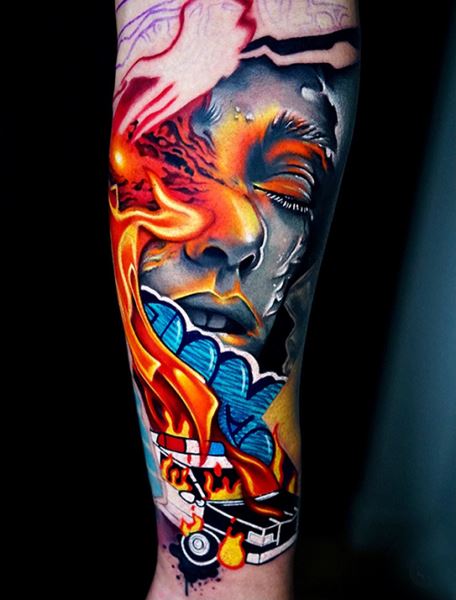
Q: When did tattooing first become a part
of your artistic path? What was it about the art of tattooing that
specifically drew you in?
A: It all started at university, specifically in my third year of
studies. I remember that time in my life very clearly because
tattooing changed everything for me almost overnight. After doing my
first tattoo, it became an obsession all I could think about was
tattooing. I was drawing tattoo designs, watching tattoo shows,
reading about it, researching, studying... everything revolved
around tattoos. That’s why I say it truly changed my life. What drew
me in the most, was the diversity, so many styles, so many
techniques.There was so much to explore.
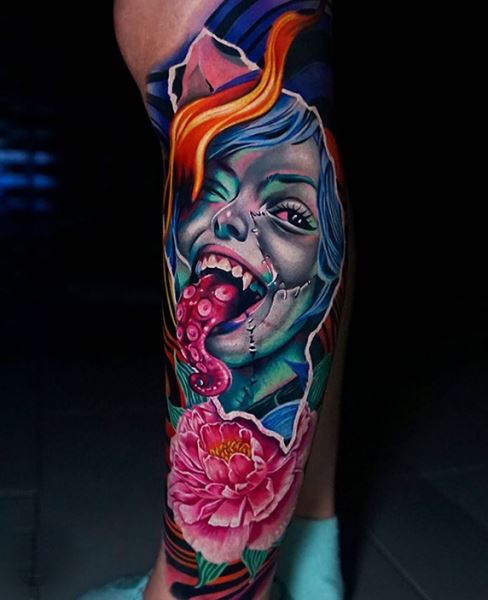
Q: Could you share a bit about your
initial learning experience with tattooing? Were there any
particular challenges in grasping the fundamentals? Did you have the
opportunity to learn from or be mentored by experienced artists?
A: To be completely honest, my experience learning to tattoo was
very difficult and demanding. I started with the worst materials
imaginable - old, already damaged coil machines, questionable
pigments, improvised or second-hand power supplies, and the list
goes on. I had no guidance or mentor. At the time, there were barely
any videos on YouTube, just a few in English (which I didn’t
understand well back then, and subtitles weren’t available) and
others in Russian, which I don’t understand at all. Learning to
tattoo in Venezuela back then was a real odyssey. The few skilled
and well-known tattoo artists at the time weren’t exactly eager to
teach. Naturally, they weren’t going to hand over all their
knowledge to a stranger walking into their shop asking to learn. But
despite all of that, and thanks to the passion I felt then, which
still drives me today, I’ve made it to where I am today.
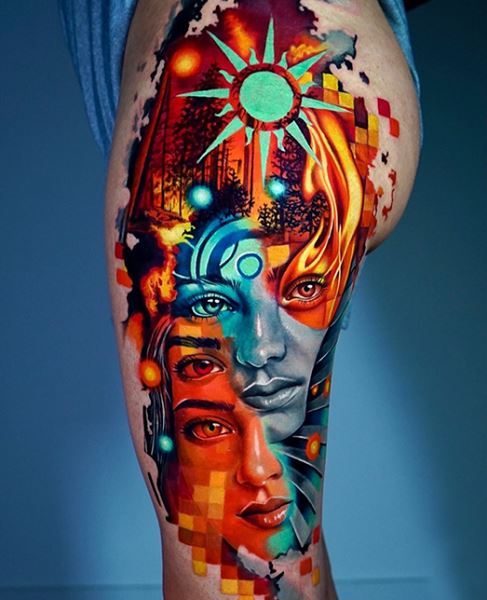
Q: How long did it take you to feel
confident in your craft and build a consistent clientele?
A: It took me several years to feel truly confident in my craft. In
the beginning, I wasn’t tattooing every day, it was more of a hobby
than a career (or at least that’s how I saw it at the time). I would
tattoo maybe two or three times a month. As the years went by and I
started tattooing more consistently, I began to feel more secure and
started experimenting more with styles and techniques. Building a
steady clientele, however, is a different story. Due to multiple
migrations, I’ve had to build up a client base and then lose it
again each time I had to move. That’s something many people from
Venezuela will understand very well. But right now, in Madrid,
Spain, I can finally say that after a few years, I’ve managed to
rebuild that steady clientele once again.
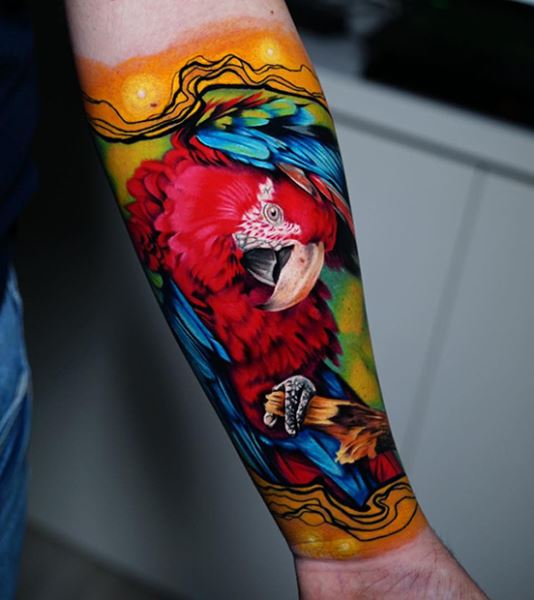
Q: Your work beautifully blends elements
of realism and surrealism, creating a unique and captivating
aesthetic. Could you elaborate on the key characteristics that
define your artistic style?
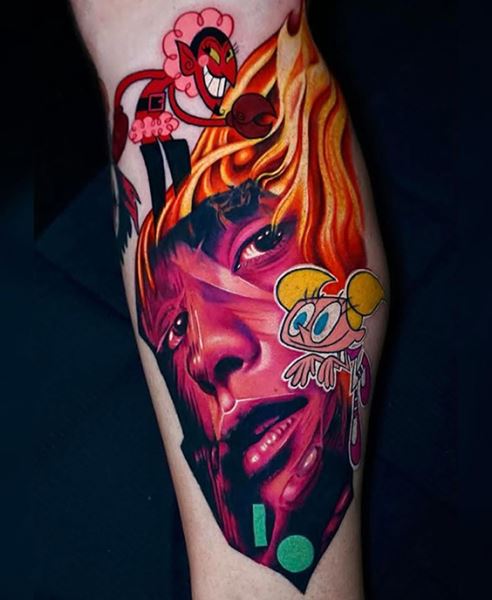
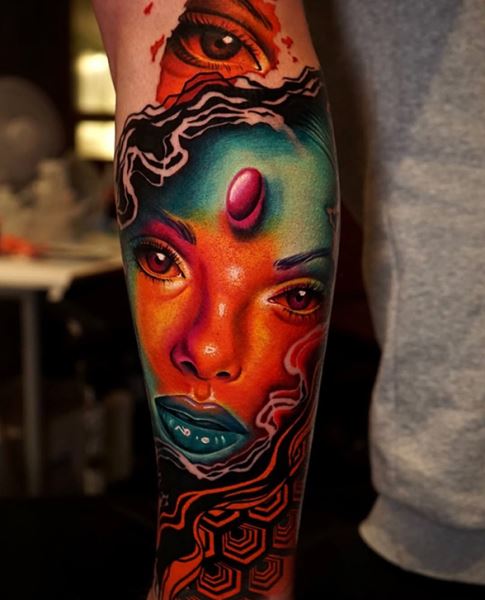
A: I consider many of my works to be “Collage Tattoos.” I always try
to combine different elements, textures, and layers to create a
sense of depth. I enjoy incorporating graffiti, comics, pop art,
mythology, modern art, realism, surrealism and lately, I’ve also
been including anime and abstract figures. I think that mix is what
best defines my style.
Q: What are some of your sources of inspiration when
conceptualizing your designs?
A: Most of my sources of inspiration come from contemporary artists
and painters, from painters, photographers, collage artists,
coworkers, and even friends who are musicians, rappers, or graffiti
artists. Honestly, inspiration can come from almost anything, you
just have to know how to channel it.
Q: Navigating client expectations and
design preferences can sometimes be a delicate process. Could you
share your approach to collaborating with clients on their ideas and
concepts? How do you find a balance between accommodating their
vision and staying true to your artistic integrity?
A: In my opinion, this might be one of the most challenging aspects
of being a tattoo artist. Many times, clients come to us with a very
fixed idea - something very specific (not all of them, of course),
and this is often influenced by platforms like Pinterest, Instagram,
and TikTok. Honestly, this didn’t happen as much in the past. But
that’s where the tattoo artist’s role becomes crucial, to guide,
advise, and transform that “basic” idea, so to speak, into something
deeper, something with real meaning and concept. That’s the key.
Q: Looking back at your portfolio, are
there any particularly funny, or especially memorable tattoo pieces
that stand out? If not, what kind of unique or unconventional
project would you love to take on in the future?
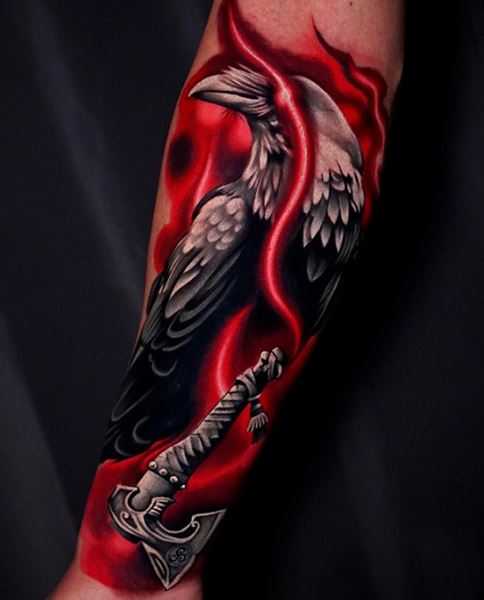
A: Yes, there are definitely a few. Every year, I find myself
looking back at my portfolio and realizing there are always people
who completely trust my vision and let me create almost whatever I
want. I think those are the most fun and memorable tattoos, the ones
where the creative freedom is absolute.
Q: Your creativity and talent are truly evident in your
work. In such a dynamic field, curiosity must play a significant
role. Considering your artistic capabilities, have you ever
considered exploring other tattoo styles, perhaps even venturing
into something completely different from your current approach?
A: This is a very important point. I definitely believe it's
important to explore and seek out new horizons, but at this stage in
my life, I feel focused on continuing to develop my own vision. I’m
already blending different styles and approaches, so exploring even
more styles at this point might be a bit excessive.
Q: In addition to your personalized
designs, do you keep a library of preliminary sketches or design
ideas that clients might find helpful in visualizing their tattoo
concepts?
A: I’d say yes and no at the same time. I have a lot flash designs
and traditional American-style pieces that I drew and developed back
when I was mostly focused on that style. These days, if someone asks
me to do one of those designs, I’m more than happy to do it, because
I still enjoy them a lot. In fact, I still tattoo traditional and
neo-traditional designs for many friends who’ve been coming to me
for years. So yes, you could say I have a library of pre-made
designs. But at the same time, I also love working with the client’s
idea to create something entirely new and unique.
Q: Your skill in both color and black and gray tattooing is
remarkable. Do you find that either of these styles presents unique
challenges or holds a particular fascination for you in terms of
technique or artistic expression?
A: Every good artist knows that both shading and color work while
not necessarily “difficult” each come with their own unique
technical demands.
It’s like saying that tattooing realism and traditional Japanese are
equally challenging, both require specific skills and qualities, but
those skills may not be the same for each style. I have a deep
respect for all tattoo styles, and I fully understand that each one
has its own technical complexities when it comes to execution.
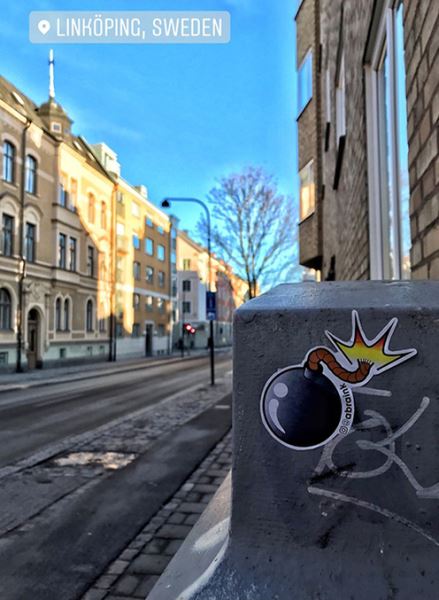
Q: Your "Bombing" highlight on Instagram is captivating!
It's fascinating to see your art making its mark in various
locations, from Sweden to other countries. Beyond its potential as a
unique form of outreach, could you share more about the inspiration
and artistic intent behind this ongoing project of leaving your
creative signature in different environments? What draws you to this
particular way of engaging with public spaces?
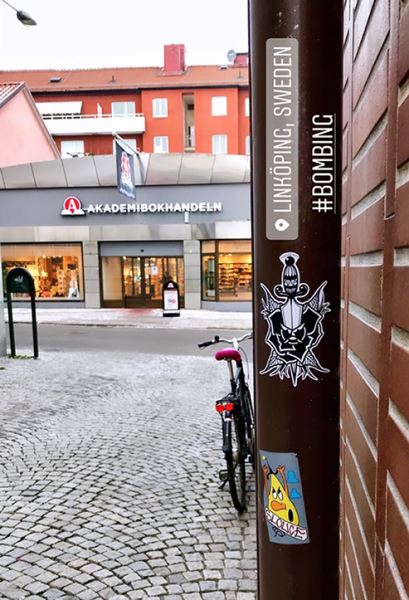
A: That “Bombing” section on Instagram is actually just a small
glimpse of what I leave behind in each city I visit, it’s like
leaving my mark. Even though only those who understand the code
truly appreciate it, what many might see as defacing or vandalizing
the city is, for us, a way of communicating and even connecting
within the community. This practice has been part of me for many
years, ever since I used to do graffiti when I was younger, on the
streets of my hometown. Now I’m slowly getting back into it, though
not quite in the same way as before.
Q: Having traveled extensively, how has
your experience in different countries influenced your art and
perspective? From your observations, are there particular places
that stand out as being especially conducive or inspiring for tattoo
artists to work?
A: From my experience, this is something very subjective, it varies
from one tattoo artist to another, depending on their style, the
type of work they do, the quality, and even their personality and
how they interact with their environment. But in general terms, I
can say that traveling is key, it helps you learn, grow, and gain
different perspectives and interpretations of both the world and
your art. That definitely pushes you to improve.
Q: As a sponsored tattoo artist, could you elaborate on the
significance of this kind of support for your artistic journey? In
what specific ways does it contribute to your growth and development
as an artist?
A: For me, being sponsored has marked a clear before and after
moment in this industry. Since Dragon Pestle began sponsoring and
supporting me, my artistic level and skills have grown
exponentially.
Having a needle brand that supports you as an artist means you don’t
have to worry so much about materials and can focus more on the
artwork itself, which, of course, increases the chances of creating
a truly impactful tattoo. After that, everything else just starts to
fall into place.
Q: As collaborative tattooing gains
popularity, are there any artists whose distinct style or approach
you find particularly compelling, and with whom you'd be interested
in exploring a shared creative venture?
A: That’s an excellent question. Honestly, I really enjoy doing
collaborations, I always say it’s a way to experiment and appreciate
tattooing on a whole different level, not to mention the immense
learning that comes with it. There are many great tattoo artists I’d
love to collaborate with, but at this point, I’m more focused on
doing more projects with friends I’ve already worked with and
planning new ones with close friends I haven’t yet collaborated
with, such as: @frank.salazart @edleontattoo @ras.morr.art
@brian_arizatattoo @crimenof96 @jesusalejoart and many others.
Q: What are your observations regarding the local and the
global tattoo community? Are you witnessing any significant
developments, such as the rise of new artists, evolving styles, or
innovative events?
A: From my perspective, the international tattoo scene is thriving.
Every day, there are more tattoo artists, more creatives, and more
people becoming passionate about tattoos.That’s amazing, because it
shows the industry is growing, but it also brings some challenges.
For example, there are people who don’t really respect the
profession, doing questionable or low-quality work, or charging
extremely low prices, which ends up hurting the market for those of
us who are truly in this for the passion and love of art. But
clients who truly value quality can tell the difference and that’s
why this industry always goes through ups and downs in terms of
seasons and demand.
Q: How has your passion for tattooing
manifested and evolved throughout your career? Have you experienced
a consistent level of enthusiasm, or has it deepened and transformed
over time?
A: To be completely honest, there have been moments in my career
when I’ve wanted to give it all up. I think every artist has gone
through something like that at least once, when you lose motivation
and feel stuck in monotony. That’s a dangerous place to be, because
intrusive thoughts can start to take over. But on the other hand, it
can also become a crucial turning point, a moment where you either
break down or find motivation where there seems to be none. I see
those moments as opportunities, as a kind of inflection point that
can push you forward and help you grow in every possible way, both
personally and professionally.
Q: Favorite career highlights?
A: I think the biggest highlights of my career have always been the
travels. Every time I move to a new city, a new country, or even a
new continent, and challenge myself to adapt, I feel like my work is
positively impacted. I’m always looking to grow, to push myself and
my surroundings. That's why I truly believe that each major journey
or migration has been a key moment in my career.
Q: If you could go back and give your younger self advice
about pursuing tattooing, what would it be?
A: I would tell my younger self to be more disciplined, more
consistent, and to always hold onto that same passion. I’d say:
"Drop everything else you’re doing and focus on what truly matters -
tattooing.” I feel like I personally wasted a lot of time that I
could’ve used to grow, but here we are. There’s no point dwelling on
what’s already passed, it’s better to focus on what’s ahead.


