
Interview with Adam Aslanoglou
Hello Adam Aslanoglou! Thank you so
much for taking the time to do this interview. Could you share a bit
about your artistic journey? When did you first realize you had a
passion for art, and what early experiences shaped your development
as an artist? My artistic journey began in childhood, I was
always drawn to creating and expressing myself visually. I had a
deep fascination for art, but I wasn’t sure how to channel that
passion into a career. My background in graphic design and animation
gave me a strong foundation in composition, shading, and form, which
later became essential in my tattoo work.
Q: What early influences sparked your interest in art? Were
there particular people, experiences, or even pop culture moments
that ignited your creative spirit?
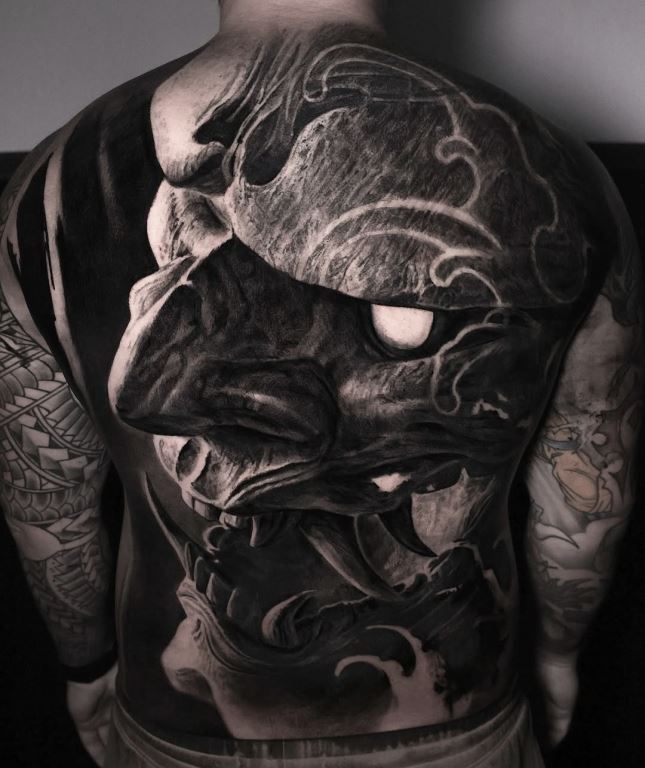
A: My interest in art was sparked at a very young age, influenced by
a mix of classical and contemporary inspirations. I was always drawn
to realism, fascinated by how artists could capture depth, emotion,
and storytelling through their work. Pop culture played a big role
in shaping my artistic vision, especially when mixed with my
admiration for Renaissance art. As a kid, I was fascinated by the
contrast between classical masterpieces and the bold, expressive
imagery found in comics, movies, and album covers. There was
something about that fusion of the old and the new that really
resonated with me.
Q: When tattooing came into the picture?
A: Tattooing came into the picture when I was searching for a way to
turn my passion for art into something more permanent and
meaningful. I had always been fascinated by tattoos, but I wasn’t
sure how to break into the industry. With no formal apprenticeship,
I started experimenting on my own, learning through trial and error.
Q: The path to becoming a skilled tattoo artist requires
dedication. What fueled your passion and kept you motivated to
pursue this art form, even when faced with obstacles?
A: My passion for tattoo artistry has been driven by a desire to
reach the level of the artists I admire. I aspired to offer my
clients tattoos of the same caliber that I observed and respected.
This commitment to quality motivates me to continually seek out and
master new techniques, ensuring that my work maintains high
standards.
Q: Your work often showcases realistic imagery. What
specific elements of realism, such as detail, shading, or texture,
do you find most fascinating to work with, and why?
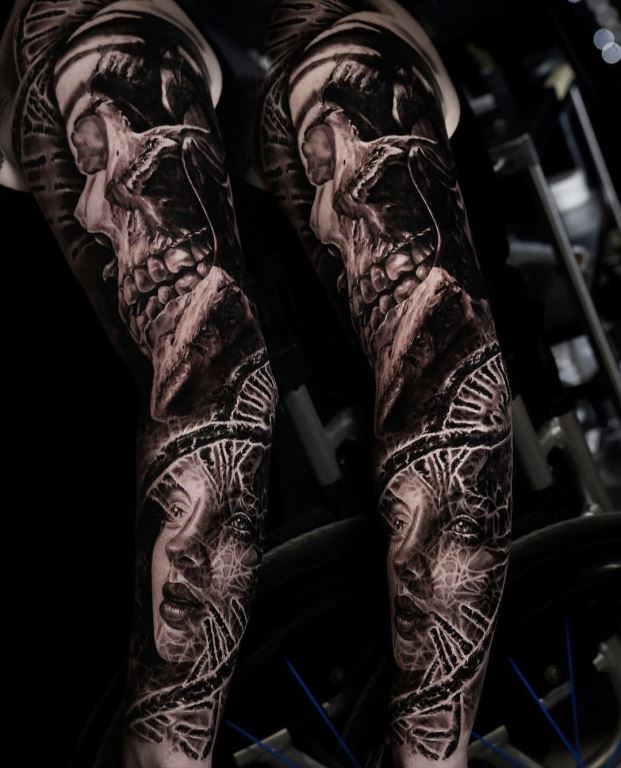
A: For me, creating volume through shading is particularly
fascinating. The ability to add depth and dimension to the design
using shadows brings the tattoo to life, making it stand out.
Additionally, capturing texture is equally important; it’s what adds
realism and vitality.
Q: Your portfolio showcases a beautiful
mastery of black and gray tattooing. Do you see yourself exploring
more color work in the future, or are you primarily focused on
continuing to develop your black and gray style?
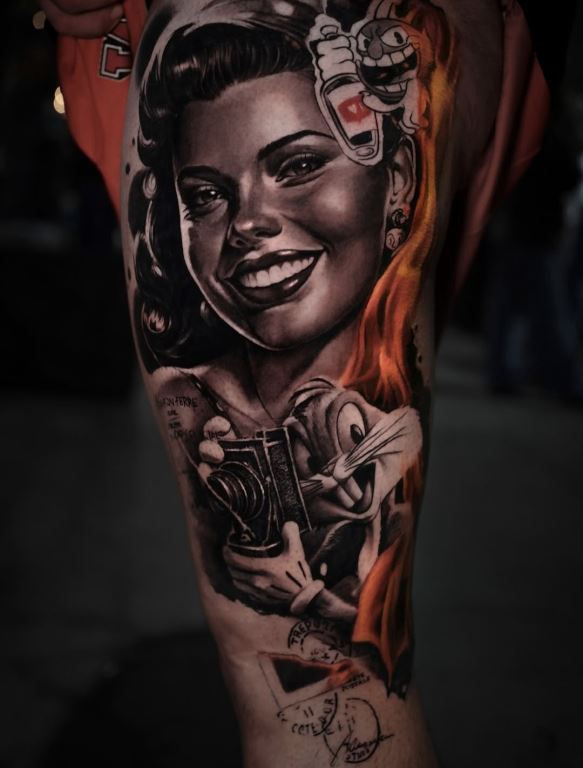
A: I’m eager to delve into color tattoos, as they truly excite me. I
want to explore new techniques in this realm. I love black and gray
but I think a good executed color tattoo can give a different view
on realistic tattoos.
Q: Portrait realism in tattooing demands a high level of
technical skill. What specific technical challenges do you encounter
when creating a portrait, and how do you address them to achieve
such accurate likenesses?
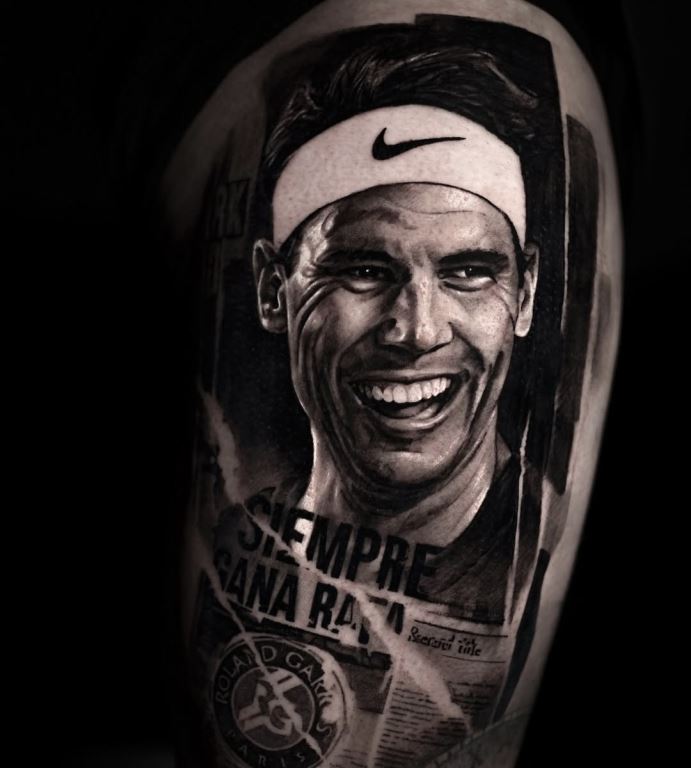
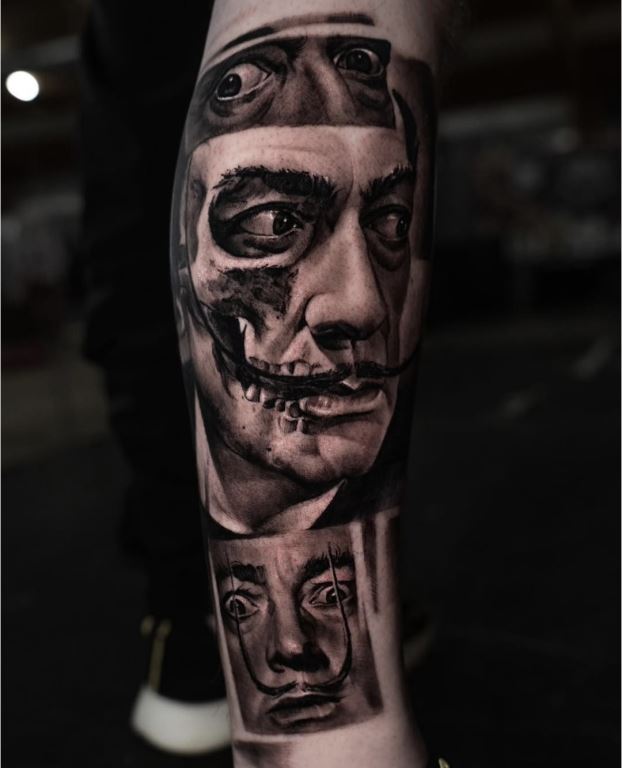
A: Portrait realism is one of the most technically demanding styles
because there’s no room for error, our brains are extremely
sensitive to facial proportions. The biggest challenges I face are
achieving accurate proportions and smooth tonal transitions. To
address this, I spend a lot of time in the preparation stage:
choosing the right reference, adjusting contrast, and breaking the
face down into light, mid-tones, and shadows. During the tattoo, I
work in controlled layers, using soft passes and consistent needle
depth to build values gradually rather than forcing contrast too
early. I also pay close attention to negative space and edge
softness.
Q: Are there particular features, such as eyes, hair, or
skin texture, that you find especially challenging to capture
accurately?
A: It might sound strange, but for me, the real challenge often lies
in capturing the chin and forehead in a portrait.These areas can be
tricky because they require a delicate balance of shading and
texture to ensure they don’t appear flat or overly exaggerated.
Q: Is there a particular tattoo you're
especially proud of, perhaps one that pushed your skills and
creativity, and what made it so rewarding?
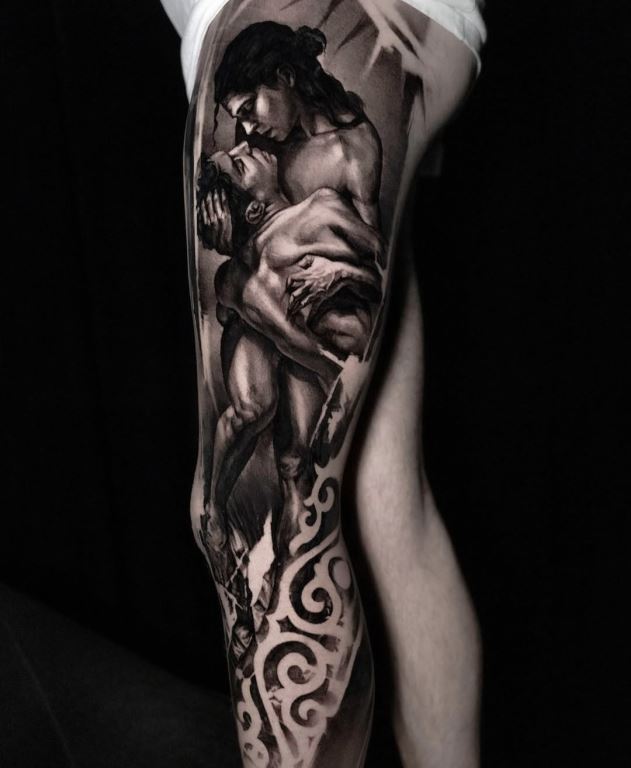
A: Yes, one of the tattoos I’m most proud of is a piece inspired by
a painting by Roberto Ferri. I deeply admire him as an artist, and
translating the depth, emotion, and painterly quality of his work
from canvas onto skin was a major challenge. Successfully adapting
that level of realism and atmosphere to a completely different
medium made the piece especially meaningful and rewarding for me.
Q: Tattooing large-scale pieces demands
significant time and dedication from both the artist and the client.
What are some of the logistical considerations involved in planning
and executing these multi-session projects?
A: Large-scale tattoos are long journeys rather than single
sessions, and they require trust, patience, and honest
communication. From the start, I make sure the client fully
understands the scope of the project, the time investment, multiple
sessions, healing cycles and the physical and mental demands
involved. One large piece I worked on required extended sessions due
to its scale and detail, and respecting the skin’s limits was just
as important as achieving the visual result. Planning goes beyond
scheduling; it’s about maintaining consistency, protecting the skin
and adapting to how the client feels throughout the process. During
those long hours, I focus on creating a calm and supportive
environment encouraging breaks, staying connected, and helping the
client push through when it gets tough. For me, these projects are
collaborations built on empathy as much as technique and that human
connection is what allows the artwork to truly come to life.
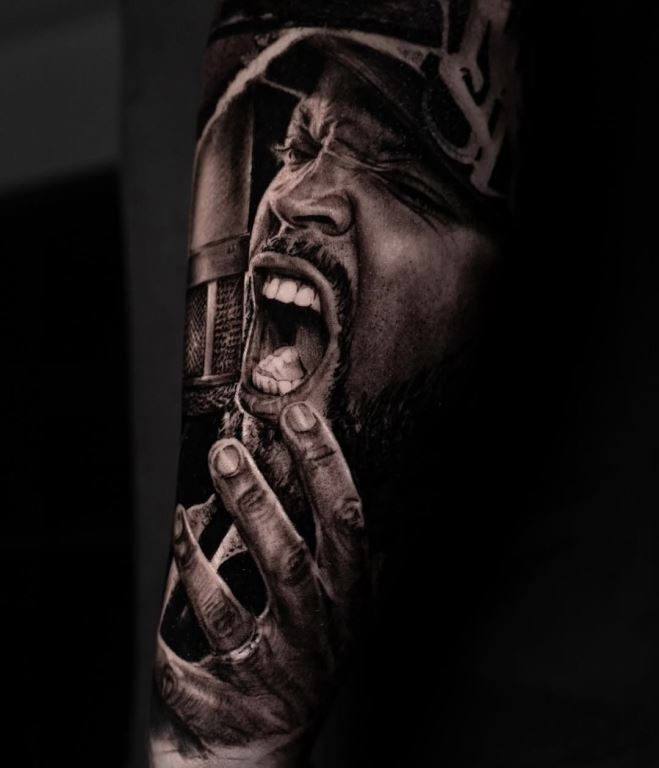
Q: That collaborative back piece with
@dast.one and @adam_tatt is truly stunning! How did the creative
process work for that project? Was there a single initial concept,
or did the design evolve through your combined input?
A: That back piece was a real team effort, and a lot of
back-and-forth in the best way possible. We started with a rough
shared idea, but from there it turned into a creative ping-pong
game. Everyone was throwing in ideas, tweaking elements, and
sometimes completely changing things mid-process when someone came
up with something better. There wasn’t a single “boss” concept just
constant collaboration, trust, and a lot of “what if we try this
instead?” moments. The design evolved naturally through that
exchange, and that playful, open energy is exactly what gave the
piece its final character.
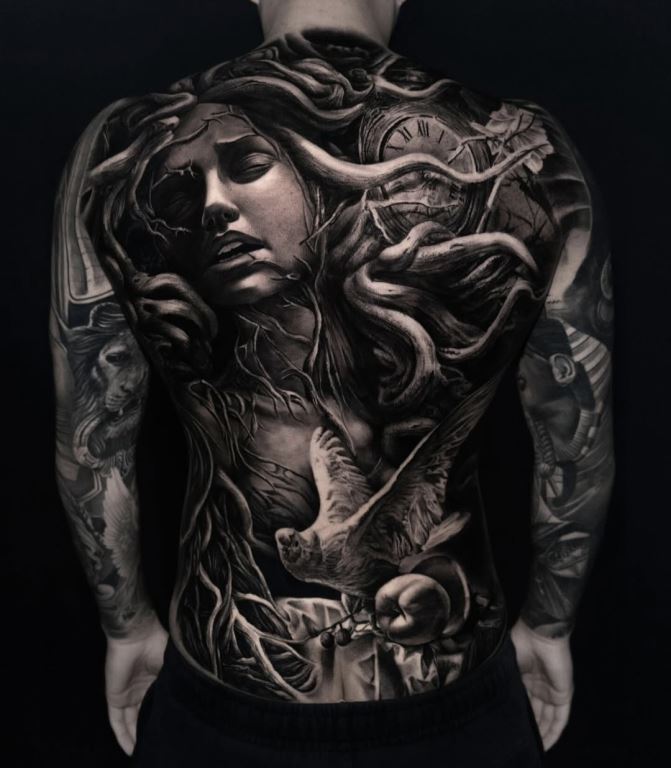
Q: Do you plan to do more tattoos like
this?
A: Absolutely, collaboration pieces are something I definitely want
to do more.
Working with other artists is one of the most rewarding parts of
tattooing. You exchange ideas, learn new approaches, and push each
other creatively, all while having a lot of fun in the process.
Every collaboration feels like a small creative experiment, and
that’s what keeps things exciting. I’m always open to working with
artists whose style I respect and admire, whether it’s people I
already know or new artists I’d love to create something unique with
in the future. As long as there’s mutual trust and good energy, I’m
in.
Q: Being both a tattoo artist and the owner of Six for Six
Tattoo in Crete presents unique challenges. What are some of the
most demanding aspects of managing both roles, and what do you find
most rewarding about it?
A: Balancing the roles of tattoo artist and studio owner has been
challenging, but incredibly rewarding. I opened my first Six for Six
Tattoo studio three years ago, and a year later I expanded with a
second location. The early days were demanding, building the studios
from the ground up, shaping the identity of the brand, handling
logistics, and at the same time staying fully focused on my work as
an artist. What helped a lot was the environment itself. Creating
these spaces on such a beautiful island like Crete had a calming
effect during even the most stressful moments, and that sense of
balance is something I wanted the studios to reflect. Today, my
responsibilities go beyond tattooing. I’m involved in managing the
team, maintaining quality and consistency across both studios, and
making sure every client feels comfortable and well taken care of.
The most rewarding part is seeing the studios grow into creative
spaces that people trust, not just for tattoos, but for the entire
experience.
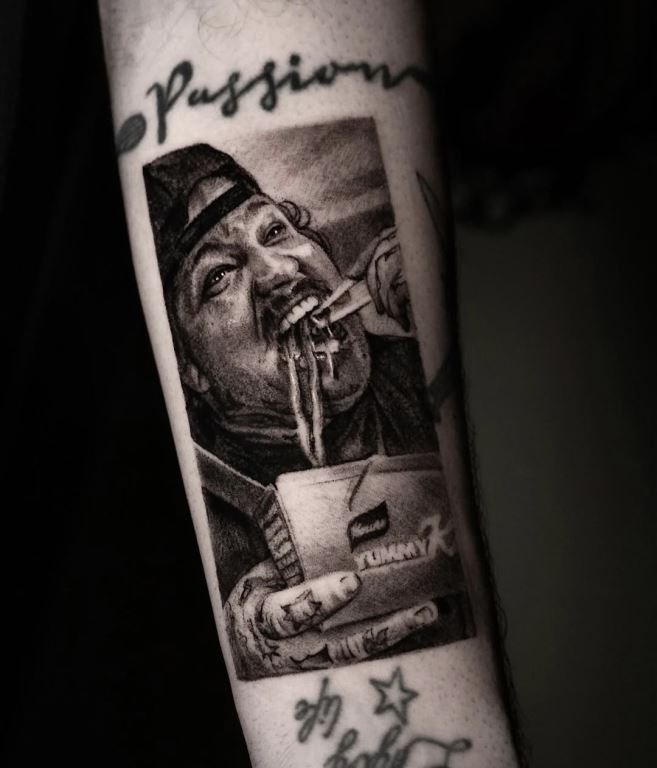
Q: How many artists are working there? Are
you open for guest artists?
A: At the moment, we have six artists working at Six for Six Tattoo.
We really enjoy collaborating with guest artists and we’re always
open to hosting them. Having guests in the studio keeps the creative
energy fresh, allows for artistic exchange.
Q: For those interested in booking a consultation or
appointment, could you please provide the location of your studio
and any relevant website or social media links?
A: If you’re looking to book a consultation or an appointment, my
main tattoo studios are based in Hersonissos, Crete, Greece.
You can check our work, updates, and available dates here:
www.instagram.com/sixforsix_tattoo_studio/
You can always hit me up directly on my personal Instagram for
bookings, questions, or collabs: www.instagram.com/adam_tatt I’m
also working with Bloody Cherry Tattoo in Athens and Thessaloniki. I
move around a lot and work in different cities throughout the year,
so you can catch me in different places depending on the time. Best
way to reach me? Instagram DMs. Always.
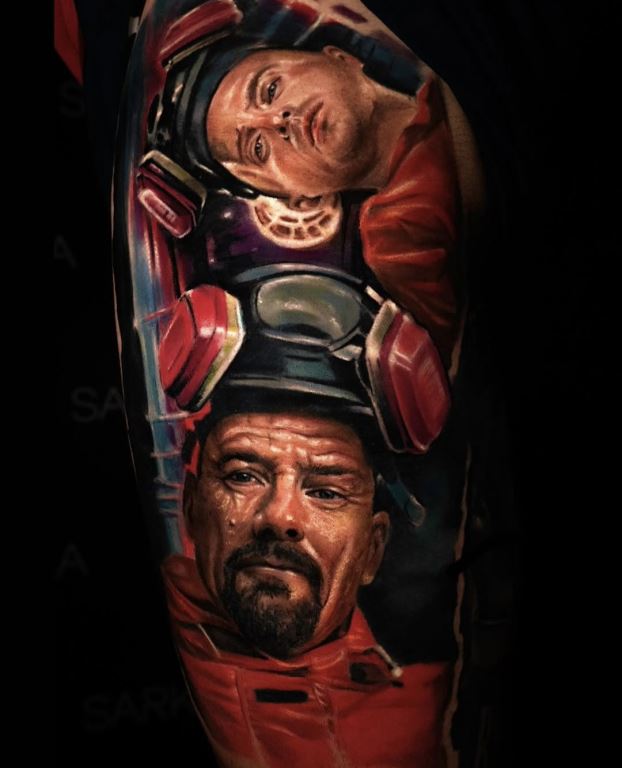
Q: What's your take on the local tattoo
scene? Are you seeing any exciting developments, like new artists,
styles, or events?
A: Honestly, the tattoo scene here is super strong and constantly
evolving. There are really talented artists all over Greece working
in a wide range of styles from traditional and blackwork to fine
line, realism, neo-traditional and more. The level of skill keeps
rising, and you can feel the energy every time you connect with
other artists or clients. We’re also lucky to have some big events
that bring the community together and show what’s up: The Athens
Tattoo Expo one of the biggest gatherings in the country that every
year brings loads of Greek ink talent and visitors together for live
tattooing, music and street culture. The Balkan Thessaloniki Tattoo
Convention, the major tattoo gathering up north, attracting hundreds
of artists and fans from Greece and across the Balkans for a whole
weekend of ink, shows, contests and more. Alongside those, there’s
also the Athens Tattoo Convention, another big celebration of tattoo
art and street culture that gives both local and international
artists a platform to share their work. These expos and conventions
aren’t just about tattoos, they’re places where styles mix, new
ideas spread and the community grows stronger every year.
Q: How often do you attend tattoo conventions? In your
experience, how valuable are tattoo conventions for artistic growth
and building client relationships?
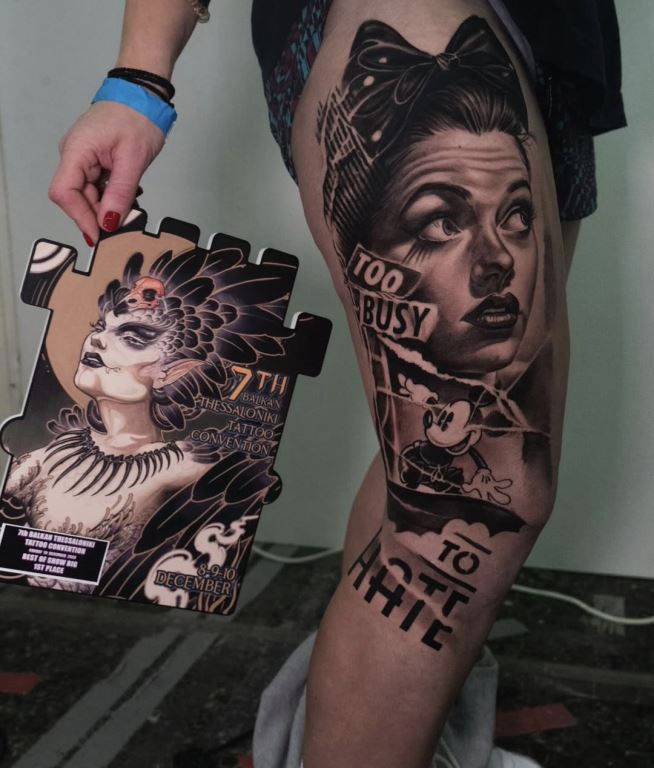
A: I try to attend tattoo conventions as often as I can. They really
excite me the energy, the people, the chaos, everything. Being
around so many artists from different backgrounds and styles always
pushes me to evolve. Over the years, I’ve also been lucky enough to
receive awards at tattoo conventions, which is always an honor and a
strong motivation to keep leveling up. Conventions are valuable not
only for artistic growth but also for connecting with other artists,
exchanging ideas, and building real relationships within the tattoo
community. At the same time, they’re a great way to meet new clients
face-to-face, let people experience your work live, and build trust
beyond social media. For me, tattoo conventions are where you stay
sharp, stay hungry, and stay connected to the culture.
Q: Have you ever done any guest spots at
other studios, either here or abroad?
A: Yeah, I’ve done guest spots all across Europe, working in
different studios and meeting artists and clients from all kinds of
backgrounds. Moving around like that keeps me sharp and inspired.
Every city has its own energy and tattoo culture.
Right now, my next big goal is the United States. The American
tattoo scene has a huge influence on the culture worldwide, and
guesting there is something I’m seriously aiming for, both for
growth and for the experience.
Q: What are your thoughts on the American tattoo scene, and
are there any specific aspects that interest you professionally?
A: The American tattoo scene is on another level when it comes to
history, scale, and influence. A lot of the foundations of modern
tattooing come from the U.S., especially traditional and blackwork,
and that legacy is still very present today. What really interests
me professionally is the mentality, the discipline, the work ethic,
and how artists treat tattooing as a lifelong craft, not just a
trend. I’m also drawn to how different scenes exist side by side:
old-school shops, high-end private studios, underground movements,
and massive conventions, all feeding the culture in their own way.
For me, the American scene is inspiring because it respects the
roots while constantly pushing forward, and that balance is
something I always aim for in my own work.
Q: The US has a diverse tattoo landscape.
If you were to explore opportunities there, are there any regions or
cities that stand out to you?
A: I believe there are great tattoo artists and strong scenes all
across the U.S. You can find high-level work everywhere. For me,
though, when I think about places I’d personally like to be, it’s
more about the scenery and the overall lifestyle. States like
Colorado and Arizona really stand out the landscapes, the
atmosphere, and the pace of life there, feel very inspiring to me
and align with how I’d like to live and create.
Q: Do you have any favorite American tattoo artists you
would like to work with in the future?
A: One American tattoo artist I really admire is Deanna James. I’m
drawn to her artistic approach, attention to detail, and the way she
blends strong composition with emotion. It would be great to
collaborate or work alongside artists like her in the future.
Q: What impact do you aspire to have on
the tattoo community?
A: I aspire to have a positive and lasting impact on the tattoo
community by pushing myself artistically while staying true to the
roots of the craft. I want to inspire both clients and artists to
value originality, consistency, and respect for tattooing as an art
form. If my work can encourage others to take their time, develop
their own style, and approach tattooing with passion and integrity,
then I feel I’ve contributed something meaningful.
Q: If you could go back and give your younger self advice
about pursuing tattooing, what would it be?
A: I would tell my younger self to be patient and trust the process.
Focus on building strong fundamentals, not quick recognition, and
don’t rush comparisons with others. Tattooing is a long journey,
consistency, discipline, and respect for the craft matter more than
trends. If you stay true to your vision and keep learning,
everything comes in time.


