
Interview with Asya Muraviova
Hello Asya Muraviova! Thank you so much
for taking the time to do this interview. Please start by telling us
something about yourself and your background. What sparked your
initial interest in art? My name is Asya Muravyova. Since
childhood I have been a very creative person, I loved making things
with my hands, crafting, drawing, and designing. But professionally
I was afraid to pursue art, so I decided to obtain a “safe”
profession and chose finance. I graduated, earned my degree and
knowledge, and worked in sales for a short time. It gave me valuable
experience, but eventually I still returned to the idea of becoming
a professional tattoo artist. I have always loved tattoos as a
unique form of art. What inspires me the most is the combination of
handmade work, drawing, and marketing - everything I’m passionate
about.
Q: Can you tell us about the moment you decided to pursue
tattooing? Was there a specific artist, piece of art, or experience
that ignited your passion?
A: In 2022, the war started in my country. It became the turning
point that pushed me to let go of everything familiar and take the
risk to become the person I always dreamed of being. I left my
previous profession behind and decided to dedicate myself to
creativity professionally.
Q: What was your experience like breaking
into the tattoo industry? How did you secure your first
apprenticeship or studio position, and what was the most valuable
lesson you learned in those early days?
A: Then, in 2022, I came to a tattoo session as a client and became
friends with my artist. She gave me the foundation I needed to truly
feel this field from the inside. I rented my own workspace and
slowly started integrating into the industry, learning, practicing,
and growing. About a year and a half later, I was invited to work at
the Hellroom studio, a place known for producing incredible tattoo
artists such as Artem Tsitsilin, Valera Brozev and other high-level
masters. It was an honor for me.
Q: Your work is incredibly distinctive, blending elements of
cartoon, anime, graffiti, and a vibrant New School aesthetic. How
would you describe your signature style in your own words, and how
did you develop this unique artistic voice?
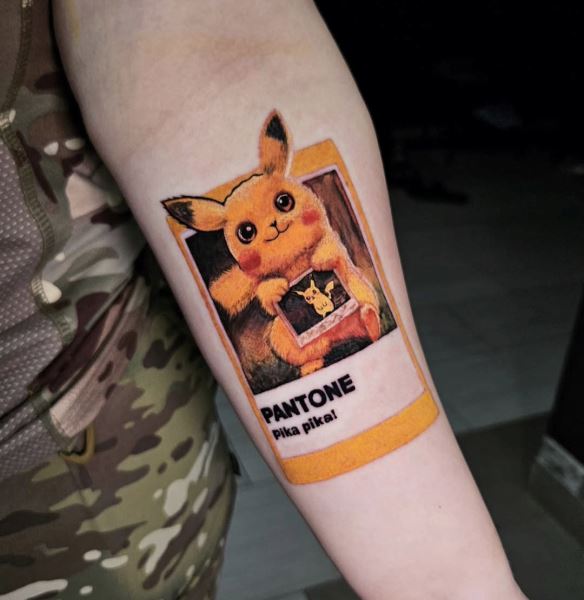
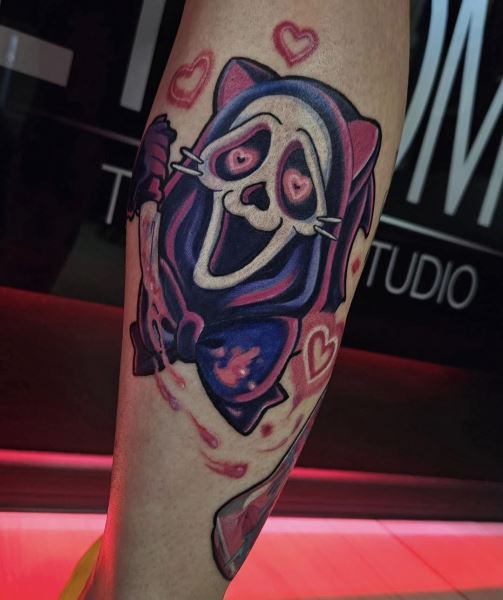
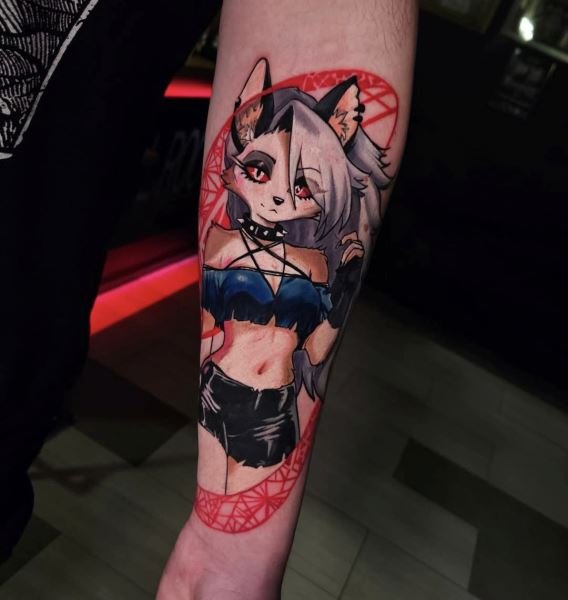
A: At the core of my art lies a deep love for pop culture. I have
always read a lot, and I’ve been fascinated by games, movies, and
especially animation. My favorite artists in the world of visual art
are Andy Warhol and Tim Burton, their approach to creativity has
influenced me greatly. In the beginning, I experimented a lot with
visuals while searching for my own style. For a long time I couldn’t
find the right formula, I combined elements that normally didn’t go
together. I added color to graphic work, I added bright details to
dark compositions. Eventually, I had the idea to take the elements I
loved most from different techniques and merge them. From graphics I
took texture and freehand. From neo-traditional, soft flowing lines
and outlines. From micro-realism - technique and detailing. From new
school - the foundation: bold themes and bright acid colors. That’s
how something truly mine, something unique, was born. I would
describe it as micro-realistic new school.

Q: Your use of color is stunning and
central to your art. Can you talk about your color philosophy? Do
you approach a vibrant piece differently than a black and grey one?
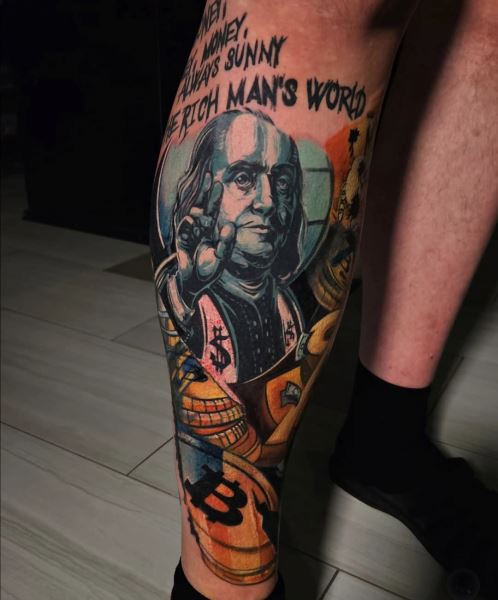
A: Color, unlike monochrome, is unique in its multidimensional
nature, when it interacts with light, new shades are born. Our skin,
unlike paper, has its own natural tone, and it’s different for every
person. I constantly play with contrasts and hues directly on the
skin, combining them in real time, because the very same pigment
from the tube will look completely different on different people.
That’s where the excitement lies, not in photorealism, but in
uniqueness.
Q: When a client first approaches you, what essential
information do you need from them to feel confident in taking on the
project?
A: The client’s motivation to get a tattoo is the most fascinating
part, the idea that comes from that person. From my side, I focus on
the client’s skin tone, anatomical features, texture and the
placement of the tattoo.
Q: Do you encourage clients to bring in visual references
and what is the most helpful type of reference material for you?
A: Most clients come with an idea, a motive, and minimal examples of
the result they want. It may be a ready sketch or a tattoo they’ve
seen on someone else and liked. This information is essential for me
to build the project. From there, we search for references online,
combining the client’s idea with my visual style. Most often I look
for references on Pinterest, and then I create images using
artificial intelligence.
Q: How do you set expectations regarding
revisions? For example, how many rounds of changes are included in
your pricing, and how do you handle clients who request major,
last-minute changes?
A: I don’t create full sketches for the client in advance, only
drafts. Around 50% of my work is freehand. I love drawing on the
spot, “from my head.” During the session we make adjustments at the
moment, the stencil is transferred onto the skin. That way it’s
easier for me to understand what and how it needs to be adapted.
Q: If a client insists on a design element that you, as the
expert, feel will negatively impact the tattoo's longevity or
aesthetic quality (e.g., being too small, too detailed), how do you
tactfully guide them toward a better solution?
A: You can find the right approach to any person. I usually explain
everything to the client in detail and even give a little lecture
about our anatomical features and the structure of the skin how it
works and why. I talk about the differences between creating artwork
on skin versus on paper, and all the nuances involved. Usually,
after that, there are no more questions.
Q: Many of your pieces have a wonderful
sense of depth and dimensionality, making them almost jump off the
skin. What are the key techniques (like shading, contrasting
outlines, or color saturation) you use to create this 3D effect?
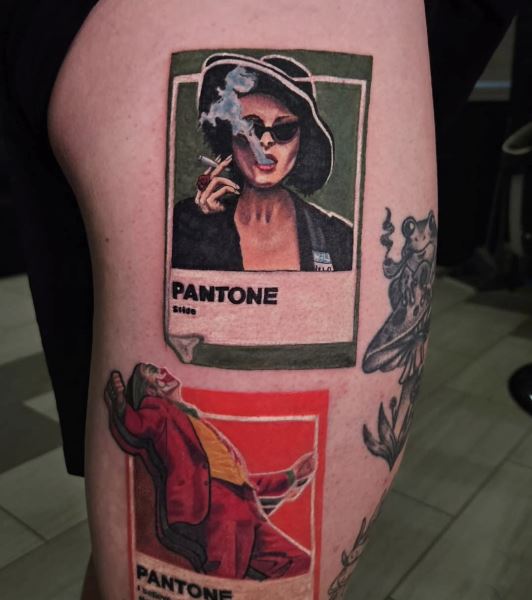
A: Essentially, I combine micro-realism technique with a new-school
visual aesthetic. Detailing, and the play of colors and contrasts,
are my main tools.
Q: Your designs are fantastic reinterpretations of pop
culture figures. If a client approached you today with an
established, recognizable character, say, Mickey Mouse, Batman, or
Sailor Moon, what is the most unexpected or interesting 'spin' you
would give that icon to transform it into your style?
A: I love combining different elements from various characters into
a single image. For example, I can take Sailor Moon’s iconic
accessory, put her skirt and hair bow on Mickey Mouse, and then add
a reference to Batman’s color palette. The references have to work
to their maximum potential within the sketch.
Q: While most of your work is vibrant, you
also have pieces with a darker, sometimes geometric or illustrative
feel. How do you decide when a design demands a full-color treatment
versus a more restrained black and grey approach?
A: It all depends on the client’s preference and on the idea itself.
There are cases when a person shouldn’t get a color tattoo, for
example, due to their natural skin tone. And there are situations
when the character’s style is expressed much better in a
black-and-grey interpretation.
Q: Can you tell us about the impulse behind creating a
"wanna do" design? Are these ideas that simply don't fit into
existing commissions, or are they concepts born from a specific
surge of creative energy?
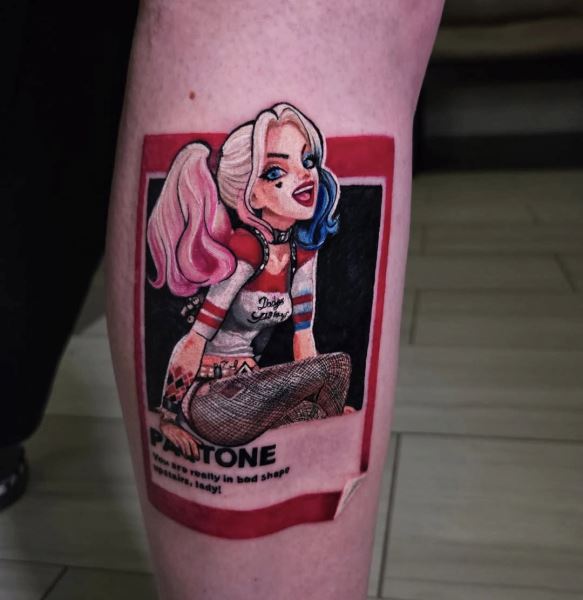
A: I have collections of finished designs, my “pantones.” And I also
have drafts that are not completed, serving more as ideas and
foundations for future projects.
Q: Since your style is very detailed and
colorful, what specific design considerations do you keep in mind to
ensure the tattoo will age well and the colors will remain vibrant
over time?
A: The execution of a tattoo depends primarily on the condition of
the skin, its elasticity, tone, and the healing process.
Unfortunately, not every skin type can hold brightness and neon
colors. That’s why everything is highly individual, and each time I
improvise.
Q: If we look at your recent "wanna do" posts, what subject
matter, color scheme, or technical concept are you currently fixated
on or excited to explore through these pre-made designs?
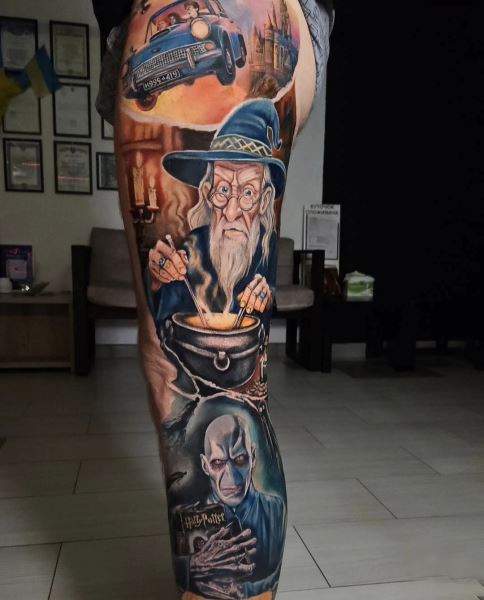
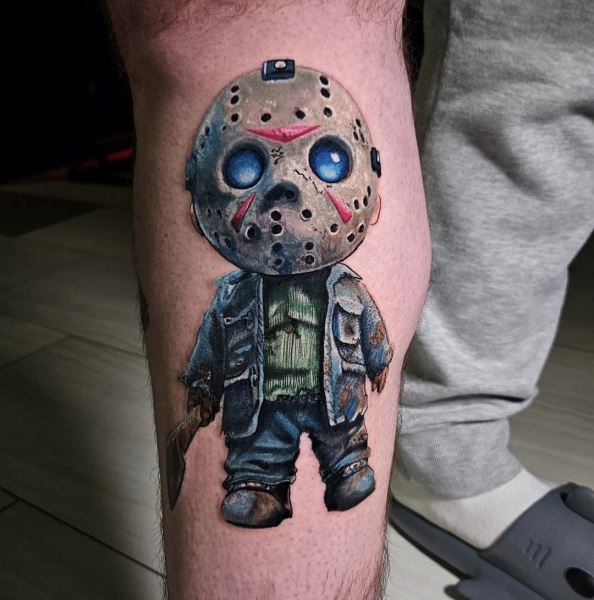
A: Lately I’ve become very passionate about creating large projects
based on pop-culture universes. Recently I did a full leg piece
inspired by the Harry Potter universe. I want to do more of these
complete, cohesive designs, for example, based on The Lord of the
Rings, Tim Burton’s worlds, God of War, and many others. My
“pantones” are a whole system. I borrowed the idea of a pantone a
color code. Every pop-culture character has their own recognizable
code. For example, for The Simpsons it’s yellow. But instead of a
numeric color code, I use a signature phrase of the character.
Q: Do you pursue any other creative
hobbies, like painting, digital art, or street art and how do these
activities outside of tattooing feed your inspiration and refine the
techniques you use in your tattoo art?
A: I truly love painting, I have a large collection of artworks. I
enjoy creating things with my hands: figurines, lamps, and all kinds
of handmade pieces. Digital art isn’t really for me. I need to
physically feel the paint with my hands, touch the tools, and feel
the “dance” of the brushes haha. Painting allows me to experience
color deeply: their mixing, their interaction, their play. Every
drop of paint seems to come alive. It’s mesmerizing.
Q: The tattoo world is increasingly recognized as a
legitimate art form. How has this general acceptance of tattooing as
fine art influenced your personal standards and your ambition for
your work?
A: I finally believed that I can be a creator in the form I always
dreamed of - an artist, a marketer, a designer and a craftsman all
at the same time.
Q: Do you have any favorite tattoo artists you would like to
work with if given chance?
A: Oh yes, Cecilia Paramo, Kelvin Goss, Pablo Frias, Pasha Ink.
Their style is truly unique.
Q: What is the single biggest
technological shift you believe has changed the global tattoo scene
for the better?
A: When we finally moved away from the era of corded machines
ha-ha))). And at last, artists stepped away from the stereotypes of
what is considered the “right” way to do things.
Q: Beyond any single movement, what entirely new aesthetic
movements or style fusions do you currently see emerging in the
global tattoo scene? Do you anticipate that the line between classic
tattoo styles and outside influences like digital art, graphic
design, and even AI tools will continue to blur, dramatically
changing how tattoos are designed and perceived in the next few
years?
A: There’s a problem with using artificial intelligence in tattoo
design: I’ve encountered situations where it generates
unrealistically flawless tattoos on skin. Clients come in expecting
the same. Then you can’t truly prove to them that what they saw is a
visual illusion, and that in reality a tattoo looks different when
applied. On the other hand, AI is very helpful in creating concepts,
sketches and mock-ups. It sometimes simplifies the creative process.
AI is a good assistant, but it must be used wisely. It will not
fully replace the human artist’s work, but it can significantly ease
some tasks, for example, blogging, idea generation, or getting out
of a creative block, ha-ha))
Q: For many people, a tattoo is more than
just ink, it's a transformation. What do you hope your clients take
away from the experience of getting a piece of your unique art?
A: I often use my work to help people get rid of insecurities, to
beautify, and sometimes to cover imperfections, hide scars, or fix
someone else’s tattoo. For me, it’s an honor to help a person feel
more confident and to give them a great experience.
Q: Where do you see yourself and your art five years from
now?
A: Our industry is a craft, and I would love to become an instructor
in my field someday. Not in five years, but maybe in twenty, perhaps
by then there will be tattoo-art faculties in universities. There
are art departments already, so why not?
Q: If you could give one piece of essential advice to a
young artist who is just starting their journey in tattooing, what
would it be?
A: I would say: “Just try. Move consciously. There is no such thing
as ‘right’ or ‘wrong.’ Don’t force your hand - feel how your hand
guides you. Once you hear your own motor skills, happiness will
follow.”
Date: 26/11/2025
Interview: Ivana Kancheska


