
Interview with Daniele Valenti
Hello Daniele Valenti! Thank you so much
for taking the time to do this interview. Please start by telling us
something about yourself and your background. My name is
Daniele Valenti. I was born in a small town in southern Italy in
1992, and I currently live in Spain.
Q: What inspired you to try tattooing? Are you a self-taught
artist?
A: I started studying fine arts in Italy when I was 14, specializing
in pictorial arts. I studied painting and art history until I was
20. I’ve been passionate about drawing since I was a child—it was
always my favorite thing to do. When I finished my studies, I knew
exactly what I wanted: to become a tattoo artist. At first, it was
very challenging because my town didn’t offer many opportunities to
learn about tattooing. So, I started little by little as a
self-taught artist, focusing on improving my drawing skills and
beginning to tattoo small designs. It took me a few years to learn
the basics of tattooing. I also took hygiene and sanitation courses
so I could start looking for work in professional tattoo studios. My
first professional jobs were in Barcelona, and every studio I worked
at became a learning experience simply by working alongside other
artists. This journey has brought me to where I am now.
Additionally, my family has been a big inspiration-my mother is a
fine arts teacher and painter, and I learned so much from her. She
passed on this incredible passion to me.
Q: Who were some of your best supporters and your first
clients? How much did their trust in you mean to you?
A: My first clients were my friends, and I’m grateful to them every
day for giving me the opportunity to get started. Thanks to those
early jobs, I gained my first clients, some of whom are now my
friends. Without the trust of our clients and supporters, none of
this would be possible.
Q: What type of tattoos did you do as a beginner? How has
your style developed over time?
A: I started with very small designs, fine lines, and delicate
shading. Drawing helped me a lot to develop the style I have today,
and daily practice was absolutely essential.
Q: You have a really interesting style. How do we call it?
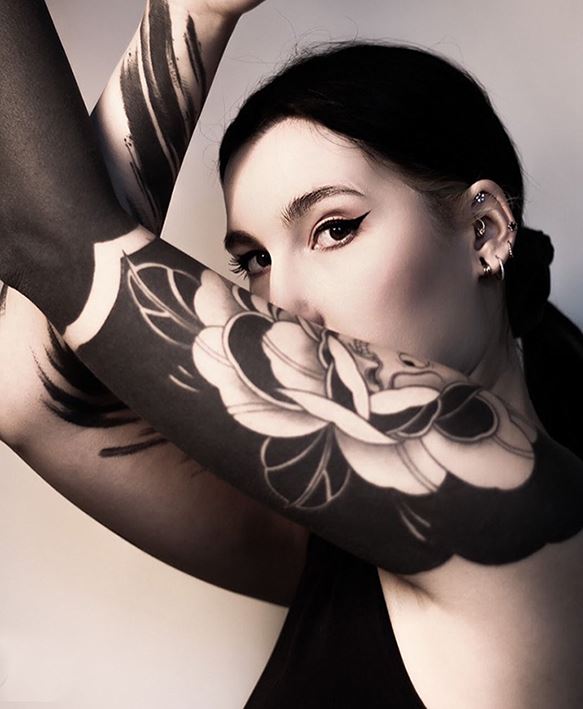
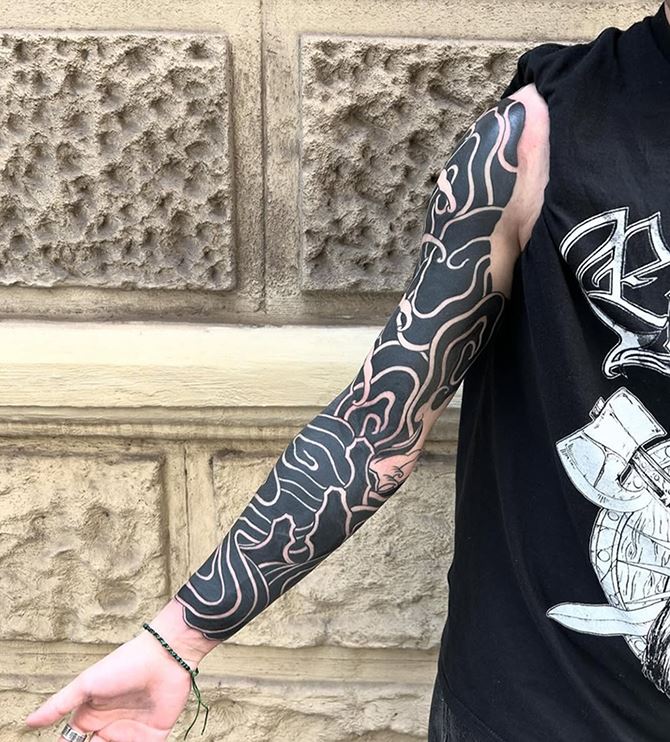
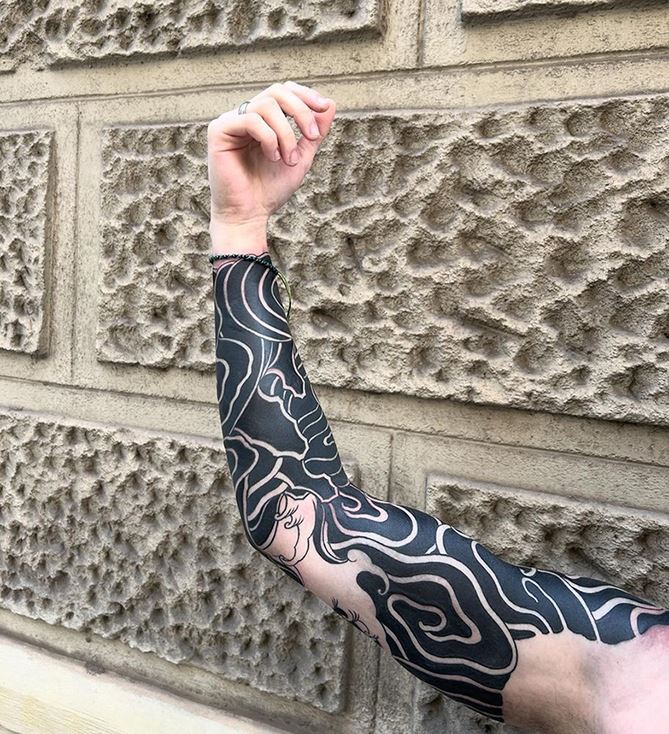
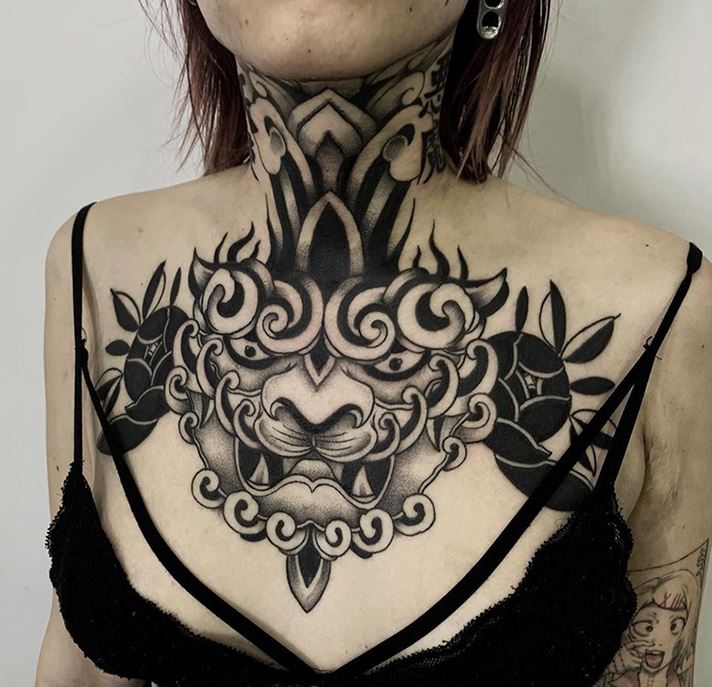
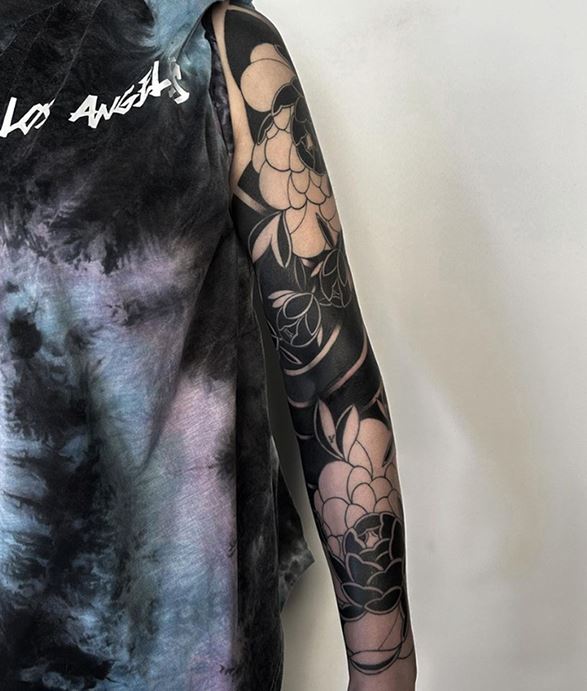
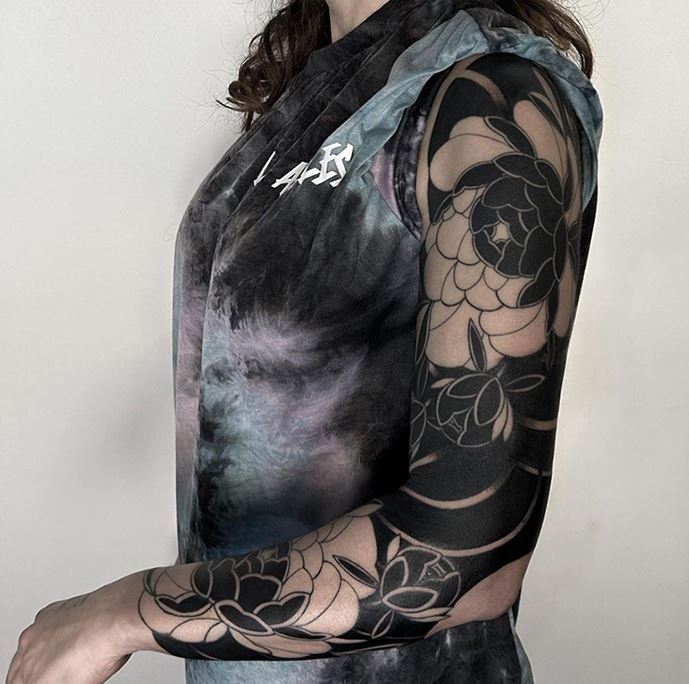
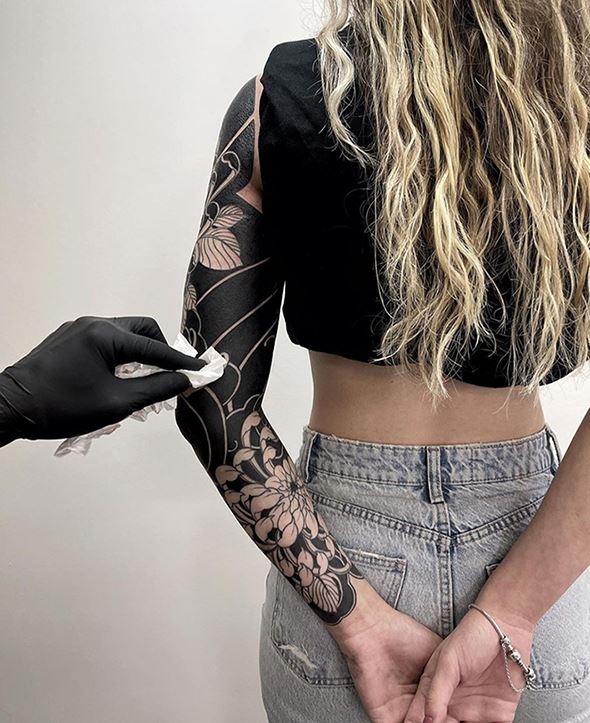
A: My current style is mainly blackwork inspired by Japanese
culture. I would call it "Japanese art in blackwork."
Q: Would you try a different style in the future?
A: In the future, if I explore a new style, it will probably still
be in black ink but more organic and less illustrative.
Q: Tell me about the creative process.
A: It’s very important to balance the black ink well to ensure the
final result harmonizes with the client’s body. For this reason, I
prefer to create large-scale tattoos freehand, studying anatomy and
the negative space of the designs to ensure the size and placement
fit perfectly. Most of the time, I ask clients to send me photos of
the area they want tattooed so I can study their anatomy. Before the
session, I create a preliminary study, and on the day of the tattoo,
I draw directly on the skin freehand while explaining each step to
the client. I also use reference images to help them visualize the
final result. What I love most about this technique is that every
tattoo is unique and unrepeatable, guaranteeing the client a 100%
personalized project.
Q: Do you work on an iPad, or do you love old-school pen and
paper?
A: I use an iPad only when I need to create very detailed
illustrations, like flowers with many lines. Everything else is 100%
freehand. I also paint a lot in my free time-it helps me relax.
Q: What's your opinion about bold Japanese-inspired tattoos?
Do you have any recent favorites?
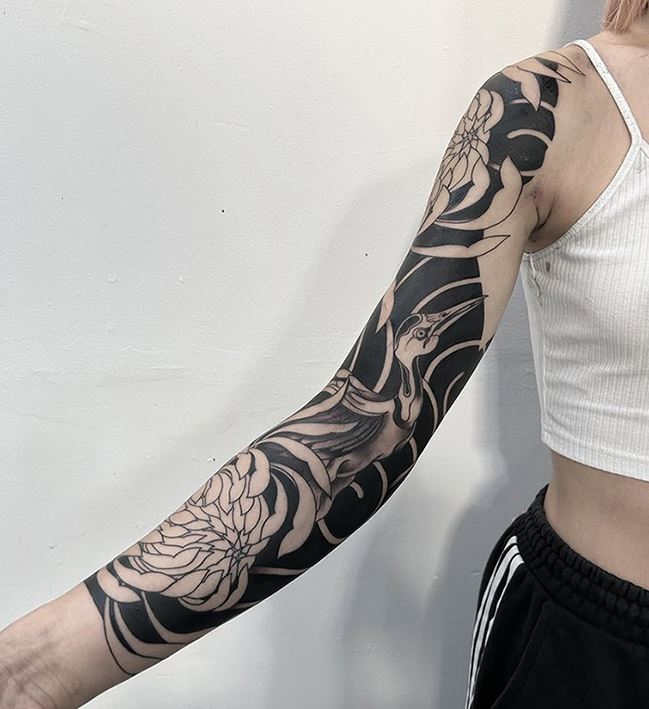
A: This style may seem “simple,” but it’s not. Creating a Japanese
tattoo and adding a personal touch is a big responsibility because,
for many enthusiasts, Japanese art is almost like a religion. It’s
also not easy to work with black ink and ensure it remains solid
over time. It took me a lot of effort to reach this level, and
what’s amazing is that I never stop learning. I don’t have a single
favorite tattoo, but I’ve done some large cover-ups recently that I
loved, especially because the clients were so happy with the final
results.
Q: Are you going to try to play with some color inks?
A: Maybe in the future, I’ll experiment with shades of red and gray.
Q: Are you willing to negotiate with clients who have ideas
you don't like?
A: If a client’s idea doesn’t appeal to me or I don’t feel
comfortable executing it, I simply won’t do it.
Q: What would be the "dream" tattoo design?
A: The dream tattoo is when there’s no cover-up involved, the skin
is completely free, and I have the client’s full trust. Those are
the projects I enjoy the most.
Q: Do you have any interesting hobbies?
A: I have hobbies that aren’t related to tattooing, which is great
for disconnecting from work. Such as being in nature with my dogs or
going out on my motorbike. Although I must admit that I love drawing
and painting lot and also do this in my spare time.
Q: If it wasn’t tattoo art, what would you be doing?
A: If I weren’t a tattoo artist, I’d probably be a restorer of
antiques or a painter.
Q: What do you like the most about being a tattoo artist?
A: Listening to music all day, having complete creative freedom, and
the fact that I get to travel so much!
Q: Where are you located now? Are you available for
bookings?
I currently work in several studios, mainly in Barcelona, Milan, and
London. My schedule is always open for new projects, and I always
make time for special clients and unique tattoos.
Q: What's your opinion about the local tattoo scene?
A: The tattoo world has grown enormously in recent years! It’s hard
to find someone without tattoos or a city where it’s difficult to
work in this industry. Social media has played a big role in this
change. In the cities where I work there are many artists who work
at a high level, it inspires me to keep improving myself. The tattoo
world has become really good, high level, lot of competition.
Inspires me to work harder.
Q: Globally, are we heading in the right direction?
A: Yes, I think we’re moving in the right direction. In the past,
tattoos were associated with a negative lifestyle, but now people
see them for what they really are-art! There are more opportunities
now than ever before, with online courses, schools, and conventions
where you can meet hundreds of incredible artists in a single day.
Q: Do you participate in tattoo conventions?
A: Yes, my next convention will be in Milan, where I’ll participate
in my first tattoo contest. It's going to be a great experience, and
I’ll meet many amazing artists.
Q: What about guest spots? Have you worked in foreign
studios?
A: Yes, I regularly do guest spots in foreign studios. My next trip
will be to London.
Q: What would be the next career highlight?
A: Opening my own studio, I’m excited to make that happen.
Q: Would you consider working in the USA?
A: Yes! Most of the artists I admire work in the United States.
Q: What do you like about the American tattoo scene?
A: I love their level of skill and culture. In my opinion, American
artists are some of the best in the world!
Q: Do you have any favorite American tattoo artists that you
would like to work with?
A: Rather than having favorite artists, I have favorite studios.
These studios often host guest artists, creating environments where
you can learn, grow, and connect. Black Serum in San Francisco,
apart from that I really like New York.
Q: What's the most important thing to keep in mind to
succeed in this profession?
A: Study art a lot, draw constantly, and don’t stop trying to find a
unique and personal style.
Q: If you were starting today, what would you do
differently?
A: The first years I didn’t have anyone to teach me and I worked a
lot by myself. Looking back I would have wanted to work closer to
advanced artists earlier on in my career. My advice for those
starting today is: draw a lot, observe experienced artists and most
importantly, get tattooed yourself!


