
Interview with Dave Lucky Fox Tattoo
Hi Dave, thank you sincerely for agreeing
to this interview. We truly appreciate you taking the time. Your
distinctive tattoo style is incredibly compelling, and I'm certain
it serves as a powerful source of inspiration for aspiring artists
seeking to cultivate their own unique vision. Thanks for
taking the time to chat! I really appreciate it and am excited to
share my thoughts.
Q: To begin, Dave, could you share a bit about your
background and how you first discovered your artistic talent? Was
there a moment or period in your childhood that sparked your passion
for drawing?
A: I was born and raised in Budapest, where murals and street art
are a big part of the city’s look. My very first memory of any kind
of art was when I was around four years old. On the way home, we’d
always drive past this long, legal graffiti wall. I remember being
totally amazed by the big, colorful, creative letters and
characters. I literally picked up the alphabet from these graffiti
pieces. Every time we got home, the first thing I’d do was grab a
piece of paper and try to copy what I had seen. If I couldn’t figure
out a letter, I had to wait until the next time we drove by so I
could check it again. Comic books and cartoons also had a huge
impact on me. Honestly, I’ve been drawing for as long as I can
remember. The early influence of graffiti naturally led me into
skateboarding and the street art scene, which became a big source of
inspiration for me. Also, my uncle owns a gallery and has been part
of an art jury in Hungary for dedecades. He’s pretty well-known in
the art scene, and that kind of got me more into classic art.
Q: How crucial are practice and self-discovery in the
process of shaping one's unique creative expression?
A: Technical progress requires constant practice, but even more
important is awareness. To develop a unique style, it’s essential to
experiment and step out of your comfort zone. After all, you’ll
never get a different result from the same action. I often find it
hard to step out of my comfort zone, so I need to remind myself of
that regularly.
Q: Were there any particular artists or
styles that significantly influenced the development of your own
technique?
A: For me, creativity is one of the most important things. You can
be creative not only in art but also in how you live your life. I’m
always trying to dive into unique, creative projects. If something
feels too dry and not creative enough, I get bored of it quickly.
That’s why I’m inspired by artists who create something unique, new,
and pioneering. It doesn’t even matter if it’s not perfect, because
who or what is perfect? But if it’s unique and comes from an honest
place, it will resonate with people.
Q: What sparked your interest in tattoo art, and when did
you decide to pursue it professionally?
A: I knew I had to use my talent, but for a long time, I wasn’t sure
which direction to go in. I ended up graduating as a graphic
designer and worked as a freelancer for a little over a year. Even
though it was creative work and I enjoyed making interesting logos,
it didn’t fully fulfill me. With a company’s logo, you can’t really
put in a lot of unique emotions or thoughts. On top of that, I
wanted recognition, I wanted to create something that would earn
respect in my circle, but I couldn’t achieve that with just a few
logos and flyers. At the same time, I moved to Germany and started a
completely different job, which didn’t fulfill me even more. I felt
like I was wasting my talent. Meanwhile, I got more into tattoo
magazines and realized that tattooing was way more than what I
thought back then. I was amazed at how much could be done on skin.
Since starting a tattoo career while working full-time just wasn’t
realistic, I made a bold move and quit my job to go full-time as a
beginner tattoo artist. I put everything into it because I truly
believe if you want real results, you can only go full throttle.
That was in 2013, and I haven’t worked a minute in anything else
since.
Q: The initial stages of any career are often demanding.
What sustained your motivation to persevere and continue learning?
A: Yeah, I still remember those sleepless nights caused by a tattoo
that didn’t turn out as well as I’d hoped. But I also remember the
euphoria of the ones that turned out great, and maybe that, along
with the positive feedback from the people around me, is what kept
me balanced and motivated to keep going. Plus, since I had put
everything into this, giving up just wasn’t an option.
Q: Learning the fundamentals can be tough.
What aspects did you find most difficult, and were there any
individuals who provided valuable support?
A: It’s not easy, especially being a perfectionist. I think I’m one
of the last generations who started tattooing with traditional
machines. I’m really glad I got to experience that, but I remember
how frustrating it was to set those machines up so they’d work the
way you wanted. Without a good mentor, it wasn’t really possible.
About a year later, modular machines came out, which I was super
happy about. I had two mentors in Budapest who helped me get the
basics down, and I’m really thankful for that. Back then, it wasn’t
common for someone to help you start tattooing. But by then, I was
already living in Germany, so I had to travel a lot and couldn’t be
there full-time. That meant I had to figure a lot of things out on
my own.
Q: Tattoo realism requires exceptional precision. What
aspects of this style's technical demands do you find most
compelling?
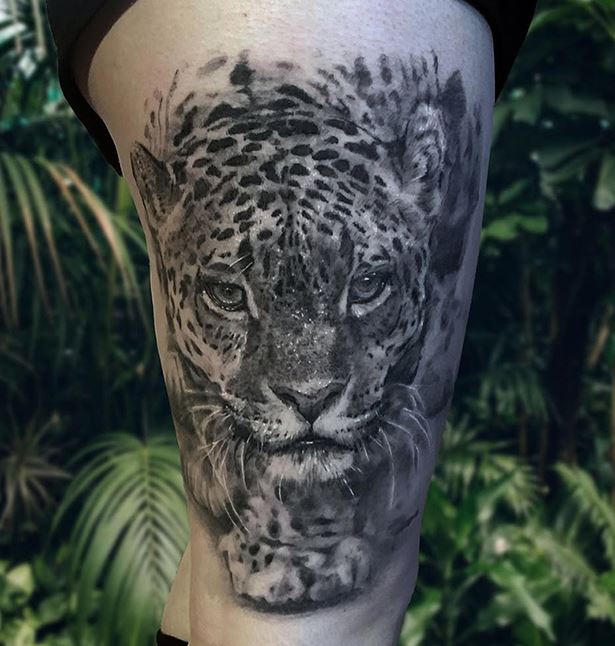
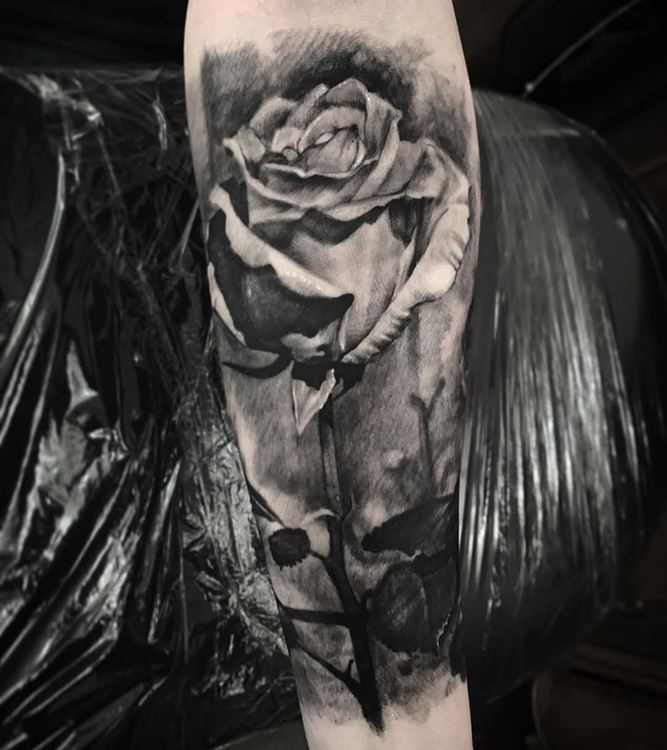
A: I really love the interaction between light and shadow. Even in
everyday life, I constantly find myself looking for it and observing
the nature of light. One of the foundations of realistic art is
understanding light and shadow, and even when creating in 2D, we
have to think in 3D to understand why a shadow is exactly where it
is on the reference image. For me, the most exciting and biggest
challenge is to capture the mood of the image with less, simplified,
and deeper contrast, or, if it’s a portrait, to express the
uniqueness of the gaze and facial features.
Q: When working on a realistic portrait,
what are the most intricate details or areas that require extra
attention and skill?
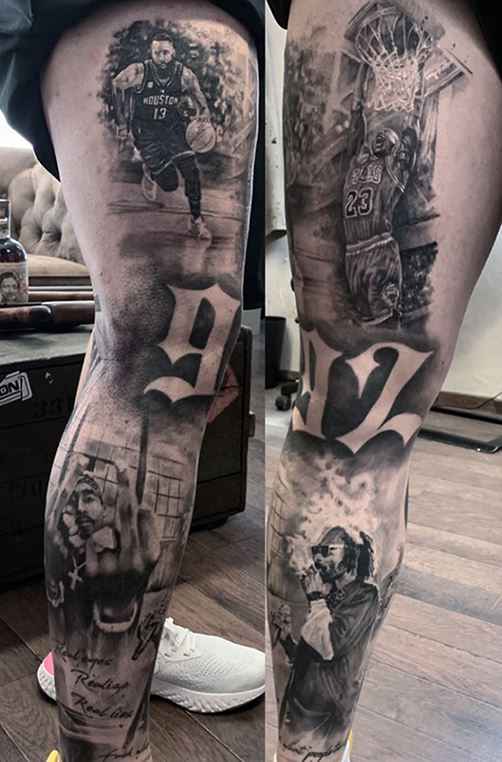
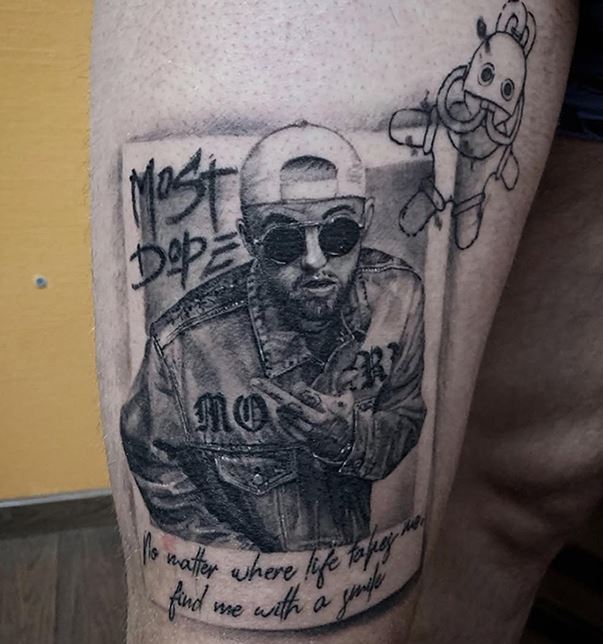
A: When I work on a portrait, I try to focus on the most unique
parts of the face, since that’s what gives it character and makes it
recognizable. It could be a distinct nose, a dimple, or something
else. Once I nail that down, I make sure to pay extra attention to
it. If it’s a portrait of a client’s family member I’ve never met in
person, I only have the photo to figure out what stands out on their
face. But if it’s a famous person, you can look up videos of them,
which can make it easier. So, aside from the technical skills, I
think it’s really important to capture the character of the face.
I’ve always loved drawing and painting portraits, so I already had
some practice before starting to tattoo them. And to this day, it’s
still what I enjoy doing the most.
Q: While some perceive realism as potentially restrictive,
you clearly bring unique elements to your designs. How do you
balance the pursuit of photorealistic accuracy with incorporating
personal touches and ensuring each client receives a distinctive
piece?
A: For me, realism doesn’t mean just copying a photo, it’s about
capturing its essence and adding my own artistic interpretation.
Photorealistic accuracy is important, but it’s not everything. One
way I bring unique touches to my work is by using shading and
contrast to highlight the key details, so the piece works better on
skin than just a simple copy.
Q: What tattoo pushed you the most, either
creatively or technically, and what did you learn from the
experience?
A: I’d like to do more color tattoos in the future. I’ve always been
into black and white drawing and tattoos, but over the past few
years, oil painting has become a bigger part of my life, and I’ve
really discovered the world of color. I’d love to bring that into my
tattoos, so right now, that’s what I consider to be the biggest
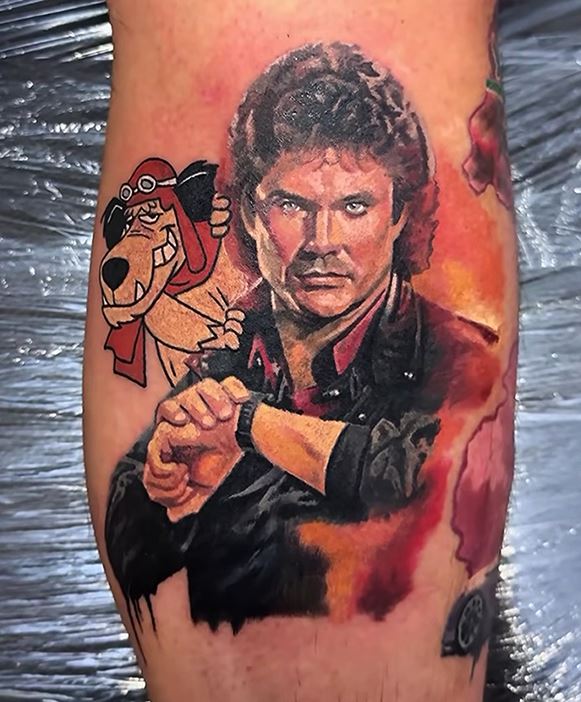
challenge. Recently, I did a David Hasselhoff tattoo, and that’s one
of my current favorites. Like many artists, I also struggle with
creative blocks, which can be really frustrating, especially when
you know you need to get things done. When that happens, I try to
step away from the frustration. I’ll go for a walk with my dog to
get my head clear, or I’ll lie down with headphones on and listen to
music that either helps me relax or sparks creativity. Sometimes,
the pressure of the last minute is what brings out that last-minute
creativity. The key is having a clear mind for creating, so I try to
shut out any stress during that time. I take this very seriously and
focus on staying stress-free while tattooing.
Q: In addition to your personalized
designs, do you keep a library of preliminary sketches or design
ideas that clients might find helpful in visualizing their tattoo
concepts?
A: I really enjoy making digital photo collages. They usually start
with some wild ideas, and hopefully, they make people think a
little. Eventually, I either paint them or, if I think they’d work
as tattoos and find someone who’s down for it, I’ll turn them into a
tattoo. I also like to make sketches that aren’t tied to any
specific requests, just creative experiments or ideas that I come up
with. Sometimes clients pick those out, or they end up being the
starting point for a completely unique design.
Q: How do you strike a balance between incorporating
client’s input and staying true to your artistic style when creating
a custom design?
A: I see it more like a little psychological game. I try to guide
them with clear reasons why their idea might not work or why it
might not look as good in the long run. As a tattoo artist, I think
it’s important to have some foresight and be honest with them about
the design. A lie might bring short-term success, but honesty builds
long-term trust. You can usually tell from the start who’s willing
to listen and who’s open to letting go of their tightly held ideas.
It’s always a compromise, of course, no one should be forced to wear
something they don’t want. But as a tattoo artists, we should be
given the chance to show that we might have a better eye for it. I’m
pretty upfront with my clients, guiding them toward the path I think
is best, and so far, I’ve always received positive feedback. They’re
thankful I steered them away from a design that might not have
worked well. That motivates me to continue being honest about the
designs they bring. In the end, it’s a compromise from both sides,
some more, some less.
Q: Collaborative tattooing is becoming
increasingly prevalent. Are there any other artists whose work you
admire and with whom you'd be interested in exploring a
collaborative project?
A: I really enjoy being around creative, motivated, and talented
people. Their energy motivates me too, so I’m always excited to
collaborate with anyone who has those qualities.
Q: Earning client trust requires both exceptional tattoo
skills and unwavering ethical behavior. A good reputation solidifies
this trust, guaranteeing clients a quality tattoo. What, in your
opinion, is the most effective way to maintain this crucial
reputation?
A: From the start of my career, I’ve always wanted to have a good
reputation. For me, honesty is key. In the long run, that’s what
builds trust in any relationship. Another thing that’s super
important to me is being reliable. I take appointments seriously,
and if someone’s been waiting for months for a spot, they can count
on me to show up. Also, from the beginning, I’ve tried to create a
client base of people I really click with, and that’s led to having
a great group of clients who have become friends over the years.
That’s something I really value. I’m pretty straightforward and can
usually find something in common with most people. I’ve tried so
many different things in life that I can always find a topic to bond
over with others.
Q: Juggling your artistic work as a tattoo artist with the
business aspects of running Lucky Fox Tattoo studio must be
demanding. How do you prioritize your time and energy between these
two roles, and what aspects of each do you find most fulfilling?
A: I opened my studio in 2014, just a year after I started
tattooing. It felt a bit early to have my own shop, but in the end,
it gave me a comfortable and stress-free way to grow without
compromises. For me, it’s always been about the art, that’s what
truly fulfills me. The business side isn’t the most exciting part,
but it’s part of the deal. Luckily, I have reliable people around me
who help with all the official stuff when needed.
Q: Please write down your studio location and website/social
media links. Also let us know if you are available for bookings.
A: My shop is located in Leonberg, Germany, and you can check out my
work on Instagram at dave.bese.tattoos. I’m always up for cool
projects, so feel free to reach out if you’ve got something exciting
in mind!
Q: What's your take on the local tattoo scene? Are you
seeing any exciting developments, like new artists, styles, or
events?
A: The scene is always growing, but I usually look at artists
globally. Social media makes it super easy to connect with artists
from all over.
Q: How often do you attend tattoo conventions? In your
experience, how valuable are tattoo conventions for artistic growth
and building client relationships?
A: From a client relationship standpoint, I don’t focus too much on
that, thanks to social media, almost everything happens online. But
for artistic growth, every art event is naturally rewarding. It
motivates you and opens up new perspectives. Usually, in the early
stages of your career, you’re super motivated and always going to
conventions, but over time, that kind of slows down. For me, it’s
the opposite, I didn’t go much in the first few years, but now I’m
going more and more. Like I said, I see the tattoo scene more
globally, so I’m planning to hit as many countries as possible.
Q: Any guest spots planned for the near future?
A: Yeah, actually, I’m planning to do a lot more than I have so far.
I want to gather as many different experiences as I can.
Q: How has your passion for tattooing
evolved since you first started? Are you just as enthusiastic, or
even more so now?
A: In the beginning, I was super excited, which is natural. Then
there was a time when it kind of turned into a daily routine, like a
factory job. Once I realized that, I said ‘stop, this isn’t working’
and started taking on less work and giving myself more days off.
That really boosted my enthusiasm and had a great impact on my
development. Now, I’m basically doing something art-related 24/7 if
I’m not tattooing, I’m usually painting. So, the motivation is even
higher than when I started. But rest is key. If you have to force
yourself, it shows in the art. I’ve learned the importance of
finding a healthy balance.
Q: The American tattoo scene offers a wide range of styles
and influences. Do you see any potential benefits or opportunities
for artistic growth in exploring that environment?
A: I’ve been keeping an eye on the American tattoo scene for a while
and I’ve built some good connections with tattoo artists and shop
owners from all over the U.S. I think the scene there is growing and
getting more creative. People in the U.S. are super open to art,
especially when it comes to unique and bold designs. So, for any
artist wanting to grow and really express themselves, the U.S. is
kind of like a tattoo Mecca.
Q: Do you have any favorite American tattoo artists and
tattoo studios you would like to work with in the future?
A: Sure, I’ve definitely got some favorite artists and shops, but
honestly, I’m down to work anywhere as long as creativity and good
vibes are a big part of it. It’s all about being around people who
motivate each other and push each other to grow. That kind of
environment is always a win.
Q: Knowing the diversity of the US tattoo landscape, are
there any areas that particularly resonate with your artistic style
or that you feel would be a good fit for your work?
A: Because of my street art background, New York will always have a
special place in my heart. I spent some time there last year, and I
instantly felt at home. Everywhere I looked, I found inspiration.
That’s the kind of vibe I need, a place that fuels creativity. I’m
also a huge fan of the architecture there. But honestly, I’ve
traveled all over the country, from the East Coast to the West, and
I’ve found inspiration everywhere. I’m a big Western fan, so the
Midwest really got me going. And San Diego and LA? That’s
straight-up art everywhere you look.
Q: What impact do you aspire to have on the tattoo
community?
A: Tattooing isn’t just a job for me, it’s literally my everyday
life. I spend every day creating art and always looking for new
creative solutions. I try not to follow trends (in some way, you’re
always influenced or inspired by someone), I do my own thing and try
to bring something unique into my art. I’d love for the scene to
just be about people doing their own thing, without feeling the need
to stick to the rules or follow trends. I believe that if you put
your whole self into your work and keep pushing your creativity,
it’s gonna have an impact.
Q: If you could go back and give your younger self advice
about pursuing tattooing, what would it be?
A: I’d probably tell myself, ‘Start working on your back, because
it’s gonna hurt like hell in 10 years!’ Haha. Jokes aside, there’s
always something to regret, I could definitely name a lot of things,
and if I could do it all over again, I’m sure I’d change a few
things. But in the end, the journey made us who we are today, so I
wouldn’t mess with the past. Maybe just invest in crypto
earlier….haha.


