
Interview with David Salcedo
Hello David Salcedo! Thank you so
much for taking the time to do this interview. Please start by
telling us something about yourself and your background. My
name is David, and I was born in Ecuador. When I was seven years
old, my mother took me to Spain, where I’ve lived almost my entire
life. I had a challenging childhood marked by such a drastic change
of country at a very young age, which helped me become very
independent. Throughout that time, drawing and all forms of artistic
expression were always present as a passion.
Q: When did you first recognize you possessed this unique
talent, and how did that moment of self-discovery steer you
specifically down the path of tattooing?
A: I’ve been drawing and painting for as long as I can remember.
From graffiti to oil paintings, I’ve always been closely connected
to art. Even though I studied Computer Engineering, deep down I knew
my path was meant to be creative. There came a moment when I had to
decide whether to finish my degree or fully commit to tattooing and
aim high. Seeing incredible tattoos online gave me the confidence
that I could reach that level too.
Q: Your realism pieces are incredible. I'm curious, what was
the moment or experience that made you gravitate towards tattoo
realism, and what is it about that specific style that you love
creating the most?
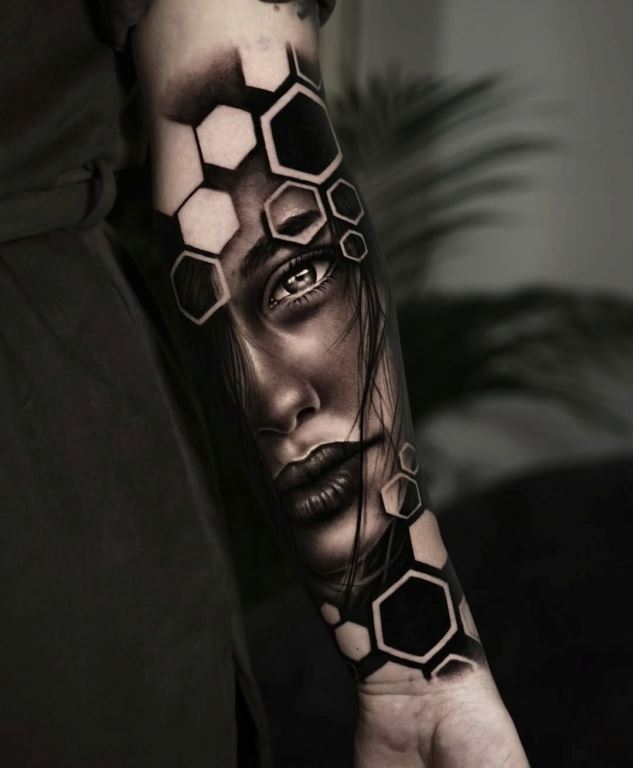
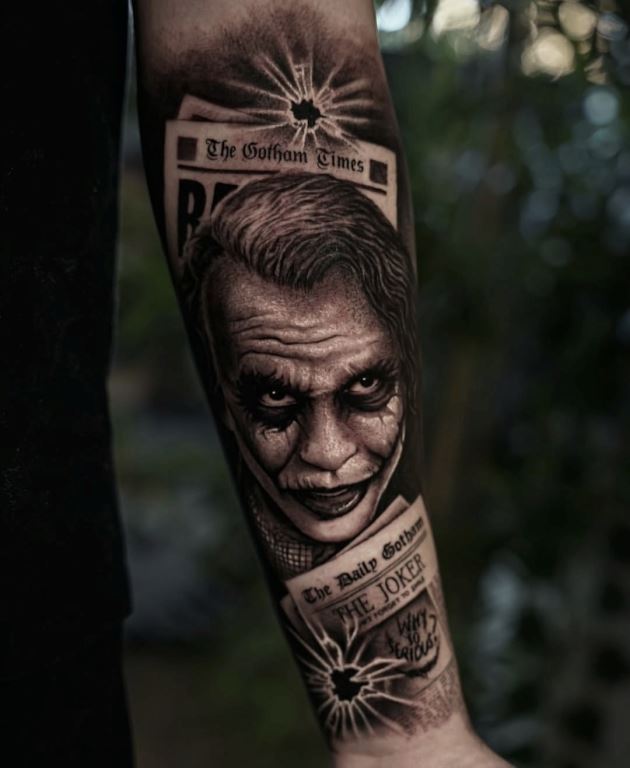
A: Because I’ve drawn my whole life, I’ve experimented with many
styles, but I always leaned toward realism. For me, it’s the most
challenging approach, and I’ve always enjoyed pushing myself to see
how far I can go. Although I started tattooing with lettering,
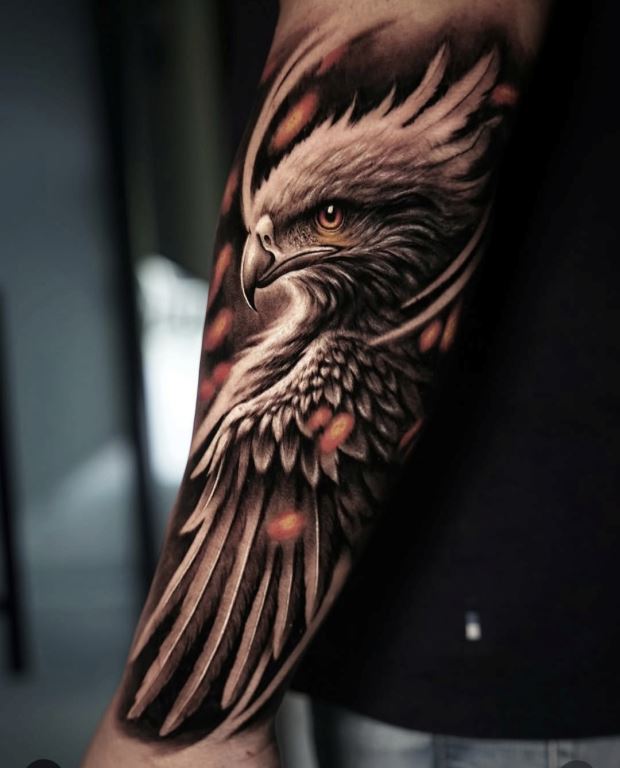
realism was always my direction. I love creating compositions that
flow naturally with the body, and thanks to my background in
lettering, I often merge both styles, combining realism with
lettering brush strokes to create contrast and dynamism in my work.
Q: What, in your opinion, is the greatest technical
challenge in mastering the black and gray technique, and how do you
approach using only grayscale to achieve such depth and contrast in
your work?
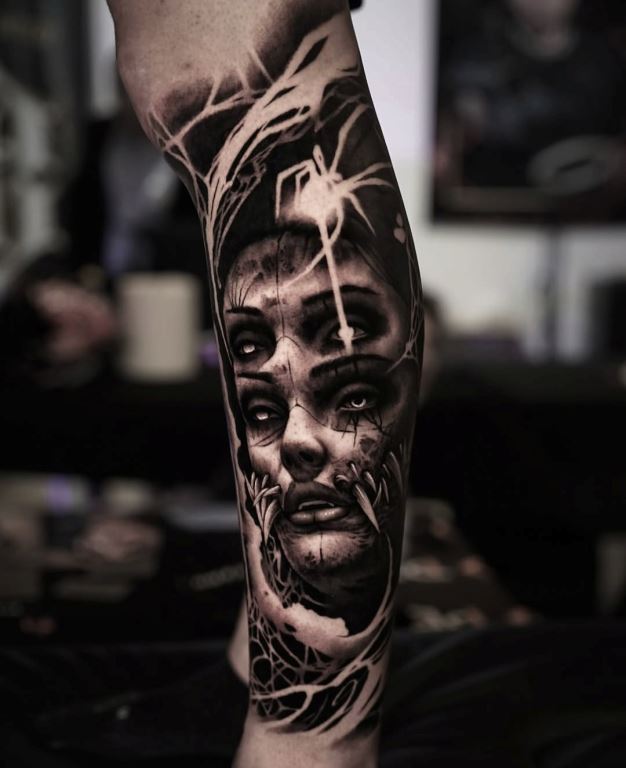
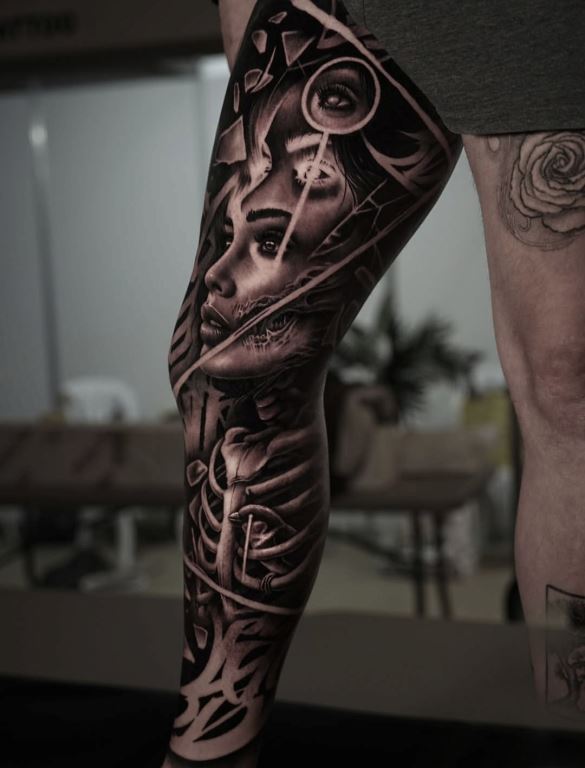
A: In my opinion, the most technically demanding aspect is achieving
completely smooth, homogeneous shading that is soft yet properly
saturated to ensure optimal healing. To achieve depth and contrast,
I always work with the same grayscale preparation, and reference
selection is absolutely essential. Choosing strong references and
adapting the shadows, leaving areas of light, skin breaks, and solid
blacks, creates contrast and depth. Those black blocks give the
tattoo strength and structure.
Q: Where do you draw your primary inspiration for subject
matter, and what do you feel this technique allows you to express
that might be more difficult to achieve with color?
A: I like to look at very different references without copying any
of them. Just by observing, I begin to build the design in my head.
Once the idea is clear, I search for the necessary references and
adapt them with lines and solid black areas to fit the body. When
tattooing, I also like to make adjustments directly on the skin with
a marker. This allows the design to adapt even better to the body’s
natural flow.
Q: Could you walk me through your initial consultation
process? How do you effectively bridge the gap between a client's
concept and the tattoo's final blueprint, ensuring the design is
both aesthetically pleasing and technically sound for application?
A: When clients first contact me, I send them all the information
about how I work. I capture their idea and recommend what works best
for the area while always respecting their concept, making any
necessary changes to ensure the design looks aesthetically correct
on the body. Clients are guided throughout the entire process, from
the first message to the day of the appointment. Once a booking is
made, I like to have an in-person consultation to discuss the idea,
the design, and get to know each other. That’s when we fine-tune all
the details so everything aligns perfectly before designing.
Q: How do you handle it when a client's request strongly
conflicts with your professional recommendation? Are you willing to
compromise or do you have specific boundaries regarding aesthetic
principles that you stick to?
A: From the very beginning, we’re clear with clients about how we
work. That includes only taking projects within my style and
allowing a certain level of artistic freedom. If a client’s idea
doesn’t fit the design or the placement, recommendations are made
during booking and reinforced during the consultation. This way, I
ensure both the client and I are comfortable, and the final result
becomes a strong project.
Q: What was the most technically demanding portrait tattoo
you've taken on, and how did you approach problem-solving to
successfully execute the final piece?
A: The most challenging portraits are family portraits based on old
reference photos. In those cases, we must improve image quality
without losing the true likeness of the person. Portraits of older
people are also very demanding because they require much more
texture to represent wrinkles accurately. For the best results, I
work extensively on the reference, using skin breaks and contrast to
achieve the realistic look.
Q: Given the intense focus on hyperrealism in the tattoo
world, and with clients holding such high expectations for quality,
how much pressure do you feel to deliver only the absolute best
result with every realistic piece? How do you manage that mental
weight while working?
A: The pressure is always high, and it continues to grow as the
industry evolves. If you don’t develop and innovate, you fall
behind. Mental strength is key, as well as confidence in knowing you
have the ability to achieve the result. When you trust your skills,
you know you’ll deliver.
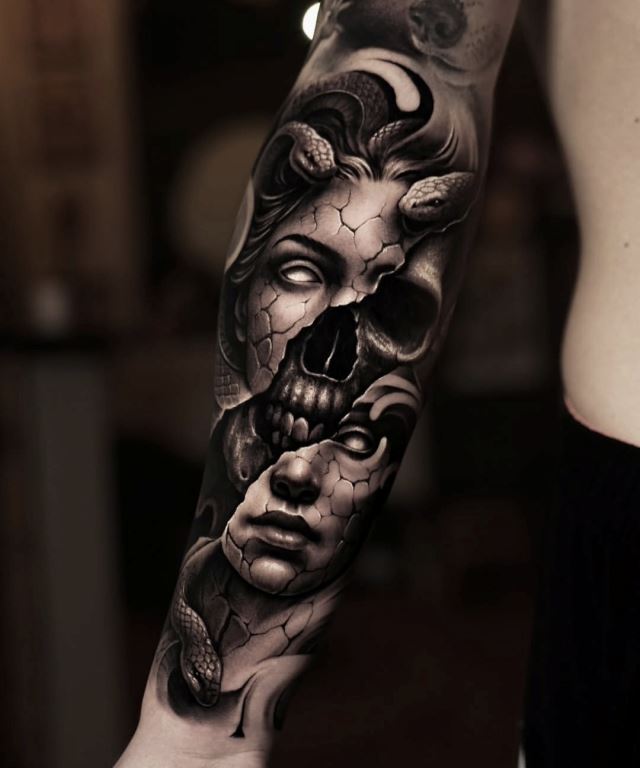
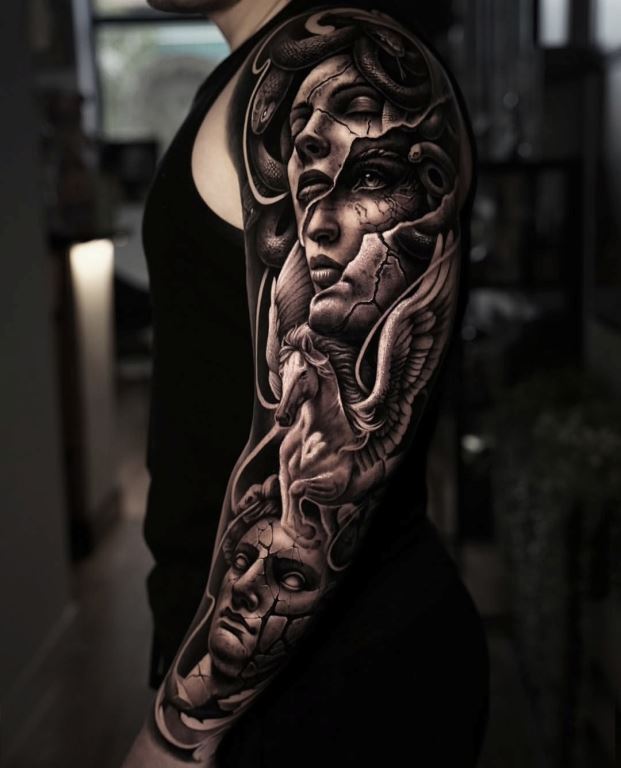
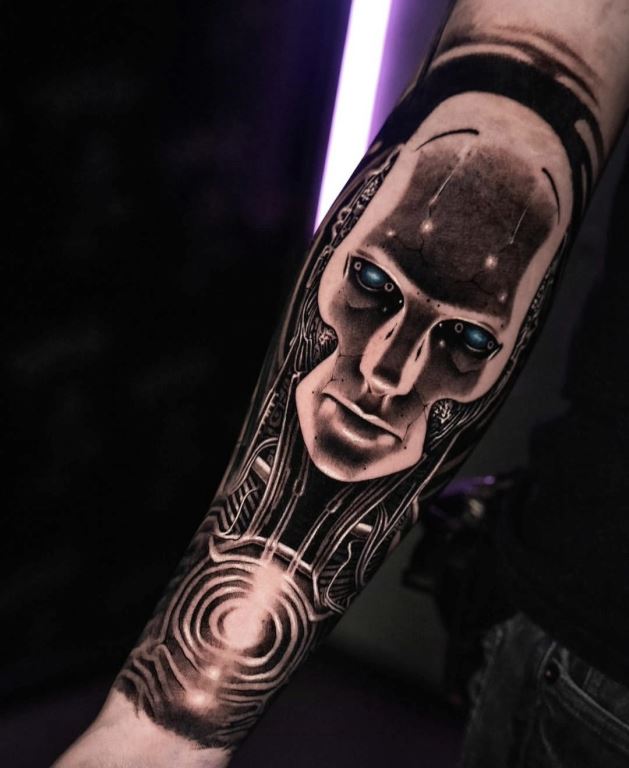
Q: Your work often beautifully blends fantasy motifs with
high-level realism. When you're designing a piece that combines the
mythical with the lifelike, what's your creative process?
A: Every client and every idea is unique. I like to start with a
clear but open concept. I ask clients to send all references or
ideas they have, which helps me understand what they want to
express. From there, using my own references, their concept, and my
recommendations, I create the design. Any adjustments are made
together on tattoo day by printing the images and placing them on
the skin, allowing us to fine-tune everything in person.
Q: Was the decision to specialize solely in this palette a
strategic choice for your niche, and do you ever anticipate or plan
to incorporate color inks into your work in the future?
A: From the very beginning, I knew black and gray was my path. I
feel extremely comfortable working exclusively with grayscale
because it allows full control over shadows, depth, and composition
in a way that perfectly fits my style. I strongly believe that in
such a competitive industry, specialization and mastery of a
specific style are essential. I don’t rule out experimenting with
color in very specific projects in the future, but my main focus
will always remain black and gray.
Q: In a seemingly saturated industry, how do you prioritize
and maintain your reputation for quality and trust? What are the key
professional practices you rely on to consistently stand out as a
reliable artist?
A: In continuation, quality goes beyond technique it’s also about
how I treat every person who trusts me. Being open, empathetic, and
transparent is essential. Listening to clients, understanding what
they want to express, and guiding them through the process creates
strong trust. Professionally, I follow a very strict routine:
high-quality reference selection, detailed design preparation,
constant communication, impeccable hygiene and technique and never
accepting projects that won’t work aesthetically. When you deliver
solid work and treat people with respect, trust builds naturally.
A: In your career, has there been a particular client or a
tattoo story that stands out, perhaps one that was especially
meaningful, transformative, or memorable for you?
A: I’ve had many special projects, but the most impactful are those
with deep emotional meaning. One that stands out was a portrait of a
client’s deceased dog. When he saw the finished tattoo, he broke
down in tears, thanking me and saying he had been with him through
the hardest moments of his life and now she would be with him
forever, on his skin and in his heart.
Q: In the world of high-detail realism, the difference
between a fresh tattoo and a well-healed one is everything. How
important is it to you to maintain that level of transparency with
potential clients by showcasing your healed work, and how do you use
those images to set fair and realistic expectations about the aging
process?
A: It’s absolutely essential, especially in realism. A fresh tattoo
can be misleading due to contrast and shine, but a good tattoo must
stand the test of time.
Showing healed work creates transparency and helps educate clients
about healing, aftercare, and realistic expectations. Skin is alive
it’s not a flat canvas so working with skin breaks, solid blacks,
and proper contrast ensures longevity.
Q: Given the demands of consistently delivering
high-quality, custom work, are there occasions when you experience
creative blocks or encounter challenges in meeting client
expectations?
A: Absolutely, creative blocks are part of the process, especially
when working constantly on custom pieces. When it happens,
disconnecting and resting helps a lot. Doing things unrelated to
tattooing clears the mind. Trusting my preparation and method also
helps. Thanks to clear communication and careful project selection,
issues with expectations are very rare.
Q: What's your take on the local tattoo scene? Are you
seeing any exciting developments, like new artists, styles, or
events?
A: Tattooing is growing rapidly worldwide. I see many young artists
bringing fresh ideas, mixing techniques, and creating unique styles.
More events and conventions are emerging, allowing artists to evolve
and share knowledge. It’s a constantly evolving scene, and that
motivates me to keep improving.
Q: Are you noticing an increasing interest or market within
Europe for tattoo art that ventures beyond conventional styles and
explores more exciting and unconventional aesthetics?
A: Yes, more and more people are looking for tattoos that are not
just “beautiful,” but unique. There’s a clear trend toward
conceptual designs, bolder compositions, and stronger influences
from surrealism and abstraction. The artistic level keeps rising.
Q: Please write down your studio location and website/social
media links. Also, let us know if you are available for bookings.
A: I currently work between Spain, Switzerland, and Germany.
My main Instagram is @davidsalcedotattoo, where I share my projects,
availability, and booking dates. I’m currently accepting new
bookings with a six-month waiting list via the link in my bio or
direct message.
Q: How often do you attend tattoo conventions? In your
experience, how valuable are tattoo conventions for artistic growth
and building client relationships?
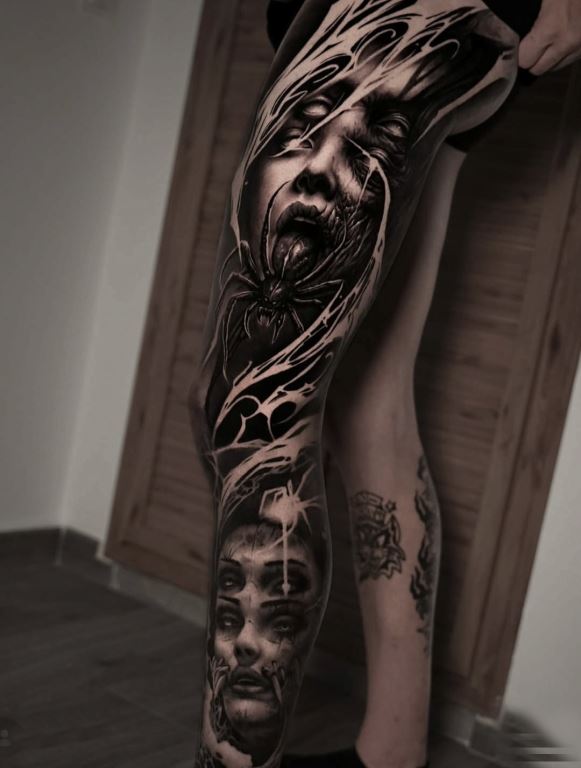
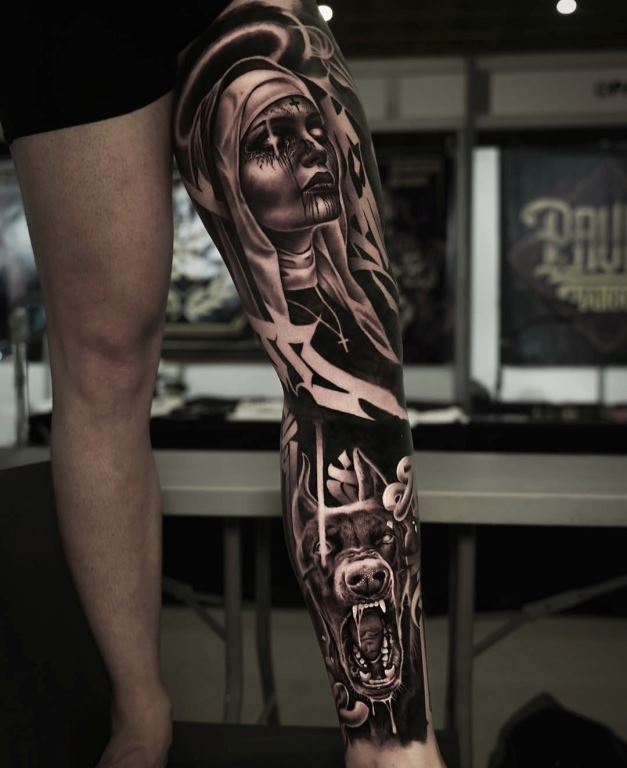
A: This year I started actively participating in conventions, as I
see them as essential for artistic growth. I won 1st place in Black
& Grey at the Zaragoza Tattoo Convention and 2nd place at the
Seville Tattoo Convention, both as part of the same full-leg
project. Conventions allow you to measure yourself against top-level
artists, discover new techniques, connect with clients, and gain
professional visibility.
Q: What about guest spots? Have you ever worked as a guest
artist in another studio either locally or in a foreign country? If
so, what was the experience?
A: Yes, I’ve worked as a guest artist in several countries,
collaborating with well-known studios in Spain, Switzerland,
Germany, and Sweden. I’ve also received invitations from many other
studios worldwide. Each experience has been different, but all of
them have contributed enormously to my personal and professional
growth. Traveling while tattooing is one of the best parts of this
profession.
Q: Being sponsored by a reputable tattoo brand often signals
a certain level of industry recognition. How has gaining that kind
of professional support or sponsorship impacted the trajectory of
your career, and has it opened up avenues for advanced learning or
larger projects that you might not have had before?
A: Support from recognized brands means a lot to me it shows trust
in your work and progression. Collaborating with brands like Pepax
and Easykits has allowed me access to top-quality materials, which
directly affects the final result. It also opens doors to larger
projects, international collaborations, and greater visibility,
while pushing you to keep improving.
Q: What key trends, advancements, or stylistic influences do
you see originating from or being significantly amplified by the
U.S. scene, and how is that specifically driving the overall
progress of tattooing worldwide?
A: The United States remains a global reference for artistic
innovation. Many of the world’s best tattoo artists work there,
bringing together different personal styles and creating trends that
spread worldwide.
That level of excellence pushes the global tattoo industry forward.
Q: Considering the scale and opportunities in the U.S.
tattoo market, is establishing your career there, perhaps even
opening a studio, a long-term goal for you?
A: Yes, it’s one of my long-term goals.
The U.S. market offers incredible opportunities for growth,
visibility, and high-level projects. I would love to establish
myself there, work alongside artists I admire, and create a space
where I can fully develop my style.
Q: From a business perspective, setting aside local
preference, where in the USA do you believe the market dynamics,
such as artist community, demand, and potential for studio
ownership, create the strongest environment for a top-tier tattoo
artist to maximize their long-term success?
A: Cities like New York, Los Angeles, and Miami have massive
artistic communities and strong demand for custom work.
New York, in particular, stands out to me it’s multicultural, highly
competitive, and artistically demanding. That environment pushes you
to be your best, which really motivates me.
Q: What impact do you aspire to have on the tattoo
community?
A: I want to inspire other artists to trust their own style and take
risks. I want to show that with discipline, passion, and
consistency, it’s possible to go far, even starting from zero. I
also hope to contribute by pushing more dynamic compositions and
helping that fusion continue evolving within tattooing.
Q: For the new artists entering the highly competitive
tattoo industry, what's one key piece of advice for developing their
unique artistic voice and navigating the business side of the
industry?
A: Never stop drawing and practicing, but most importantly, find a
style that truly feels like your own. Copying trends won’t take you
far, patience is essential. This path is long, but every project
teaches you something. From a business standpoint, organization,
professionalism, and human connection are key. If you do great work
and treat people well, opportunities will come naturally.
Interview: Ivana Kancheska
Publishing Date: 25 December 2025


