
Interview with Dayeong Kim
Hello Dayeong Kim! Thank you so much
for taking the time to do this interview. We really appreciate it.
Let’s start with your artistic origins. Are you self-taught? When
did you first recognize your passion and talent for art?
From a very young age, I naturally gravitated toward art. There
wasn’t a specific turning point or moment of realization, it simply
felt obvious to me that I would grow up to do something related to
drawing. For me, art wasn’t a choice. It felt like an inherent part
of who I am and how I live.
Q: Were there any particular art movements or periods that
captivated you in the past? Which artists have had a deep influence
on you?
A: Rather than being drawn to a specific artistic movement, I’m more
moved by the lives of individual artists, their personal journeys
often feel like artworks in themselves. I deeply admire artists with
dramatic life stories or qualities I can respect. For example, Van
Gogh, Banksy, and even Caravaggio, though very different, each evoke
a strong sense of romance for me in their own ways.
Q: When and how did tattooing become part of your artistic
journey?
A: I discovered tattooing during a break from my work as a visual
designer. I was burned out and seeking something more meaningful.
That’s when I encountered tattooing, and it spoke to me in a way
nothing else had. It felt like the breath of fresh air I desperately
needed.
Q: How did you find your artistic direction and develop your
foundations? Was there a period of uncertainty in discovering your
style?
A: To be honest, I’m still in the process of finding my direction. I
also believe that foundational skills need to be continuously
refined. I still struggle at times to define my exact style, but one
thing is certain, I’ve always been drawn to things that are
aesthetically beautiful. I try to evolve my work based on that
sensibility.
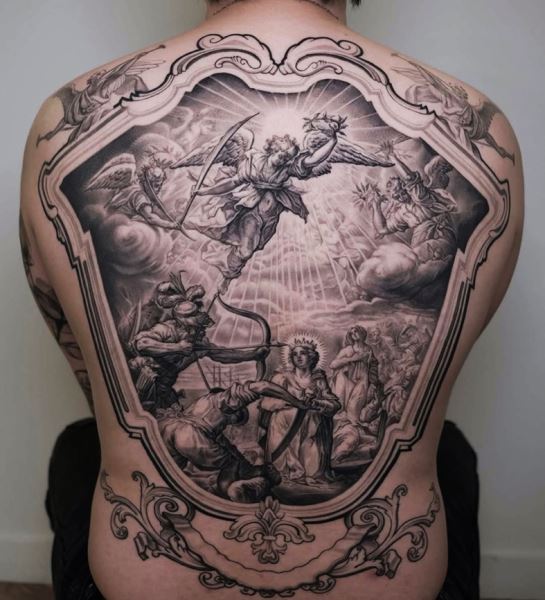
Q: Why did you choose black and grey realism as your main
style? What do you enjoy most about it?
A: I spent many years practicing traditional drawing, so black and
grey realism came very naturally to me. When I transitioned into
tattooing, it felt like a more comfortable and enjoyable extension
of my artistic skills. There’s immense joy in capturing fine
details, and I love the deep, atmospheric mood that black and grey
tattoos create.
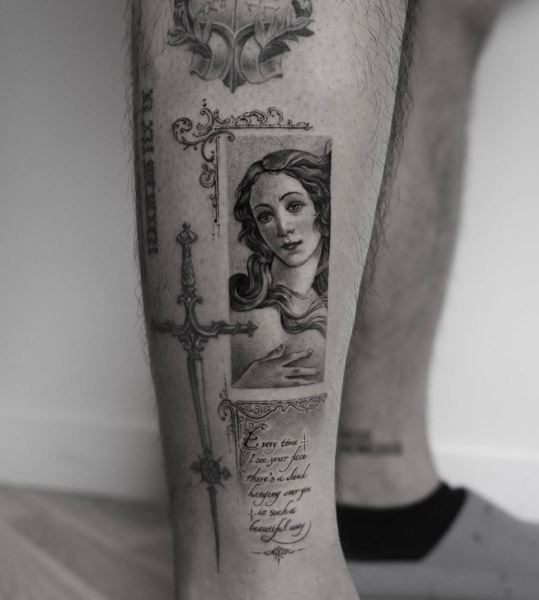
Q: Realism is often considered the most technically
demanding style. What challenges do you face, and what makes it
worth the effort?
A: Realism is truly a love-hate relationship for me. Long sessions
are physically and mentally exhausting, but when I overcome those
moments and carefully build up tones, detail by detail, the
satisfaction I feel at the end is incomparable. That reward keeps
pulling me back to realism, no matter how hard it gets.
Q: Some say realism can be creatively limiting. How do you
incorporate your personal touch into each piece to ensure it’s
unique?
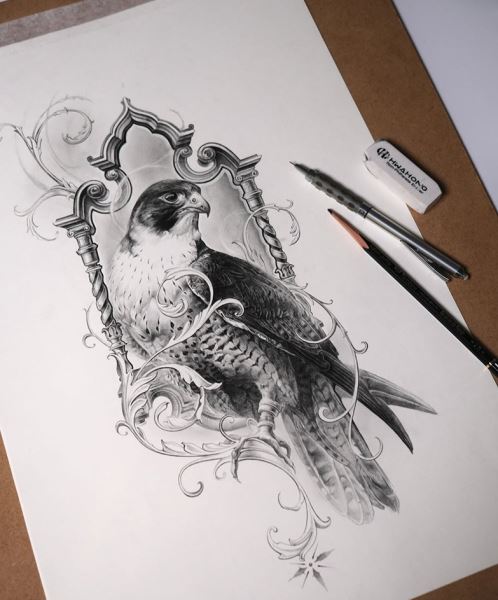
A: That’s a valid concern. But for me, I always try to start from my
own sense of beauty. Even when working with client references, I
strive to elevate the design to its most beautiful form. I pay
particular attention to the synergy between the client’s energy and
the tattoo’s vibe, ensuring that each piece is one-of-a-kind.
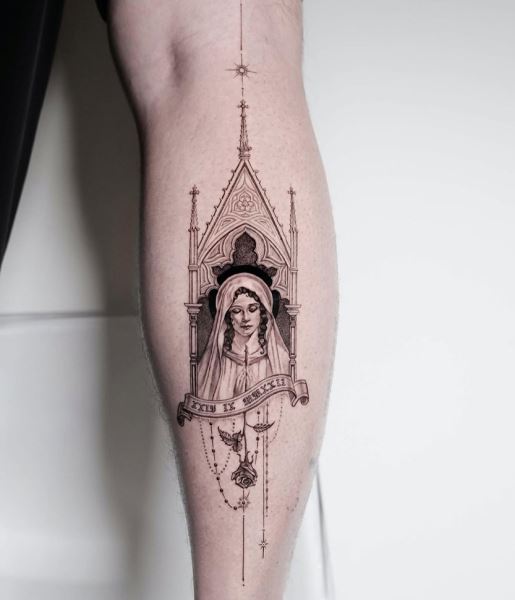
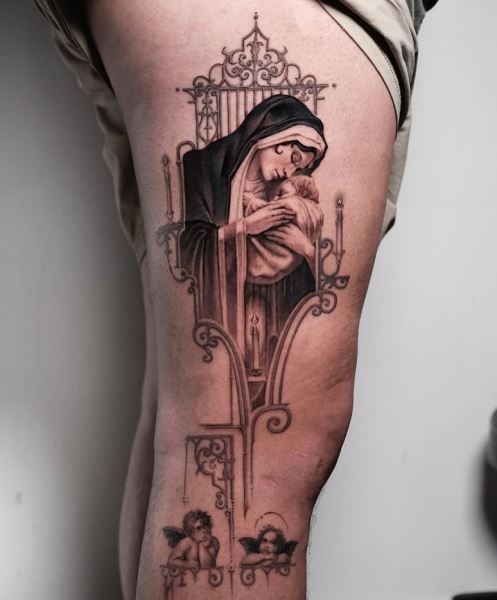
Q: Your religious and mythological tattoos are breathtaking
in their precision and emotion. Beyond the visual, what ideas drive
these pieces? Are you open to reinterpreting classical masterpieces
in your own style?
A: If you see religious paintings in person, the sacredness they
exude is overwhelming. To me, tattoos are also a symbol of strength.
There’s a connection between beauty and strength, both are
expressions of self-completion. True strength comes from harmony and
authenticity, and that kind of strength manifests as beauty, both
inwardly and outwardly. That’s the philosophical foundation from
which I interpret and reimagine classical themes in my tattoos.
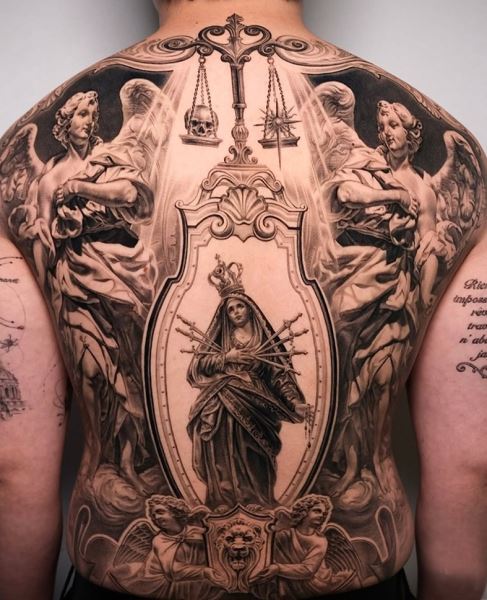
Q: The Angels back tattoo featuring the
Virgin Mary is stunning. Was this a personal design, or a
collaboration with the client?
A: It was a collaboration, as most of my large-scale pieces are.
Clients often bring the theme, and I delve deeper by asking more
profound questions. I then create a design based on the emotional
and conceptual layers we uncover together.
Q: If a client gave you complete creative freedom, what
would your dream tattoo project look like?
A: My dream tattoo would be a full upper-body patchwork piece. I’d
love to create something where all elements are in perfect balance,
harmoniously composed yet richly layered, telling a deeper story
through its overall flow.
Q: Many newer artists replicate trending designs to gain
visibility. How do you stay true to your signature style and stand
out?
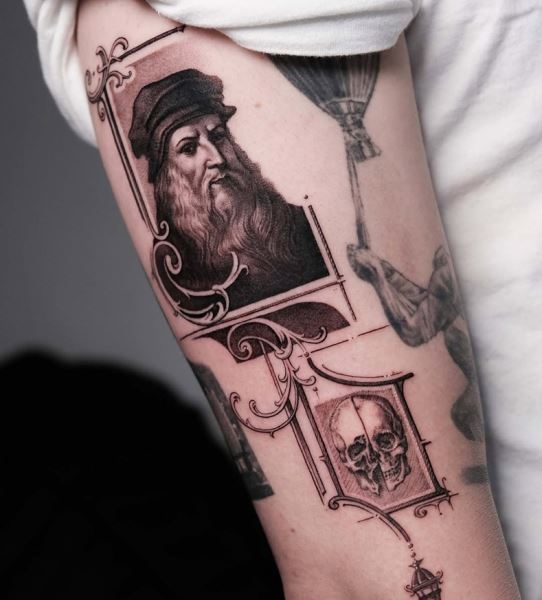
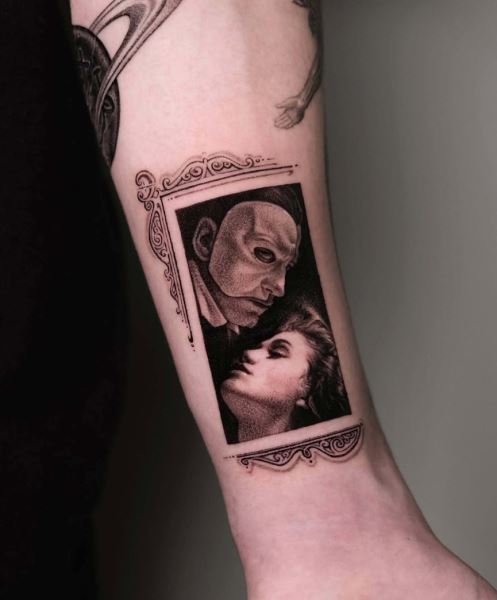
A: I want my tattoos to be seen as individual works of art. I often
use framing techniques to create a sense of composition, almost like
a painting. In the future, I hope to explore more multidimensional
and diverse approaches, expanding my range while maintaining a clear
artistic identity.
Q: What’s your opinion of the current global tattoo scene?
Are we moving in the right direction?
A: That's a tough question. I think everything moves according to
the law of supply and demand. The fact that there are more tattoo
artists now is natural, and the potential decrease in demand is also
a part of that cycle. Rather than judging it as right or wrong, I
believe it’s just how the market works.
Q: Where are you currently based, and how can clients reach
you for bookings?
A: I work at a private studio called Highro, located in Gangnam,
Seoul. Bookings are always welcome! If you're interested in my work,
feel free to reach out through my social media.
Q: What is your impression of the tattoo community in your
country?
A: In Seoul, competition is fierce and the overall skill level keeps
rising each year. The tattoo community is definitely growing, but
during times like this, I think it's even more important to focus
inward and stay grounded in my own path.
Q: Do you attend tattoo conventions? Have you received any
awards? What have these experiences meant to you?
A: Yes, I participated in a local tattoo convention where I won 1st
place in the Black & Grey Small category and 3rd place in the Large
category. That was actually my first convention, and it made me
realize how much more I need to learn. Later, I attended an
international convention as well, and it truly reignited my passion
for tattooing.
Q: Have you worked as a guest artist abroad? What was your
experience like?
Yes, I’ve done guest spots in Australia, Canada, and Taiwan.
Observing other artists up close was incredibly educational, I
learned about new machines, inks, and techniques. But more than
that, meeting people from different cultures broadened my
perspective. That expansion of worldview definitely influenced my
work in meaningful ways.
Q: What are your thoughts on the American tattoo scene?
A: To me, the U.S. is the ultimate stage for tattoo artists. It’s
where many legendary artists are based, and it’s absolutely a place
I want to challenge myself in. The diversity and depth of the tattoo
culture there is incredible.
Q: If you had the opportunity to work in the U.S., is there
a specific city that inspires you?
A: I think New York would be a great fit for me. It’s a city full of
minimal yet beautiful and trendy styles, a place that could provide
endless inspiration.
Q: Are there any American tattoo artists you would love to
collaborate with?
A: There are honestly too many to name… but if I had to pick one,
I’d say Anderson Luna. He comes from a completely different cultural
background, and that’s what fascinates me. His style reflects his
culture beautifully, and I think working with him would teach me so
much.
Q: What kind of legacy or impact would you like to leave in
the tattoo community?
A: Just being remembered is more than enough, and I’m grateful for
that. But if I can push a little further, I’d like to show others
how far you can go through effort alone. I think that can serve as
real encouragement for other artists out there.
Q: What has been the most meaningful highlight of your
career so far?
A: The full back piece I created still stands out to me. It was a
deep internal struggle from start to finish, constantly questioning
how to express certain things, where to emphasize and where to let
go. But when it was finally completed, it brought me a huge sense of
fulfillment.
Q: How has your passion for tattooing evolved since you
started?
A: I think my passion has grown even stronger over time. As I gain
more experience, I realize just how much more humility and study
this art form requires. I’ve come to respect the process more
deeply, and that fuels my desire to keep improving.
Q: If you could give one piece of advice to your younger
self, what would it be?
A: "Don’t get stuck in just one thing. Keep your balance." Stay
passionate, but don’t be so focused on the road ahead that you
forget to look around. Take time to look back, breathe, and
appreciate the journey. Balance is what sustains.


