
Interview with Dino Kim
Hello Dino Kim! Thank you so much
for taking the time to do this interview. To start, we'd love to
hear about the genesis of your artistic journey. What pivotal
moments or experiences sparked your passion for creating, and when
did you realize that art was your calling? My journey into
art began in a rather unconventional way. Until the age of 26, I was
a professional soccer player, training and competing from childhood
into my mid-twenties. After university, I played professionally for
three years, but seven ankle surgeries forced me to retire. That
turning point set me on a new path. One of my favorite players at
the time, Daniel Agger from Liverpool, was not only a soccer player
but also a tattooist. Inspired by him, and already passionate about
tattoos, I decided to devote myself fully to this craft after
retirement.
Q: Could you share a bit about your artistic development?
What has your training journey looked like, whether through formal
education, independent study, or a combination of both?
A: In Korea, tattooing is still technically illegal, and when I
first began nearly a decade ago, opportunities for formal training
were scarce. Most studios were private and hard to access, so I
turned to YouTube, blogs, and online resources. I bought inexpensive
equipment and taught myself through trial and error. As a client, I
also visited local studios and carefully observed the artists’
techniques. Step by step, I built my foundation through self-study,
relentless practice, and keen observation.
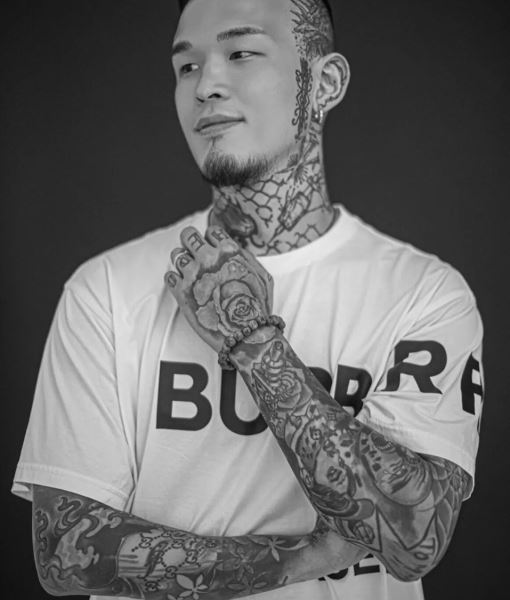
Q: What was the process of defining your creative direction
and building a strong sense of self-belief in your artistic
capabilities?
A: Growth and confidence, for me, come only through effort. It’s a
mindset I carried over from my years as an athlete. My process is
simple: think more, draw more, study more. That consistency has
opened doors to new challenges-experimenting with styles, entering
conventions, and expanding internationally. Each step, no matter how
small, built confidence and pushed me toward the next goal.
Q: While contemporary tattoo styles continue to evolve, the
classic old Japanese aesthetic remains iconic. What aspects of this
enduring style resonate most deeply with you as an artist?
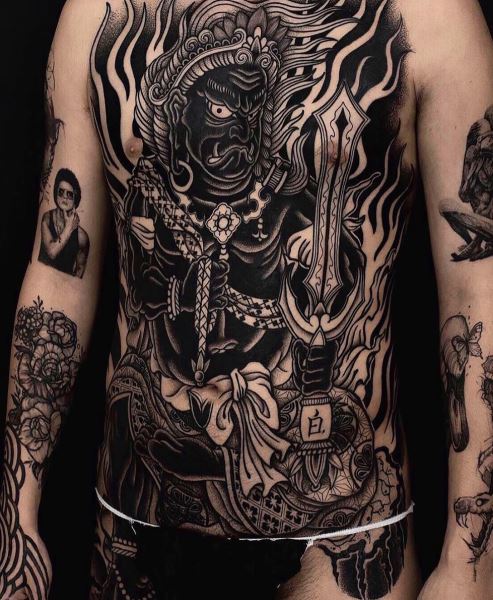
A: What first attracted me to traditional Japanese tattooing was its
sense of strength. But as I studied, I realized it was also rich
with symbolism and history, which fascinated me. Today, many artists
reinterpret traditional motifs with modern lens, and their works
inspire me greatly. I also draw from ukiyo-e, Korean ink painting,
and Chinese brush art, blending these traditions into my own style.
For me, it’s a continuous process of merging heritage with personal
expression.
Q: What specific motifs or design elements do you find most
compelling and artistically rewarding to create?
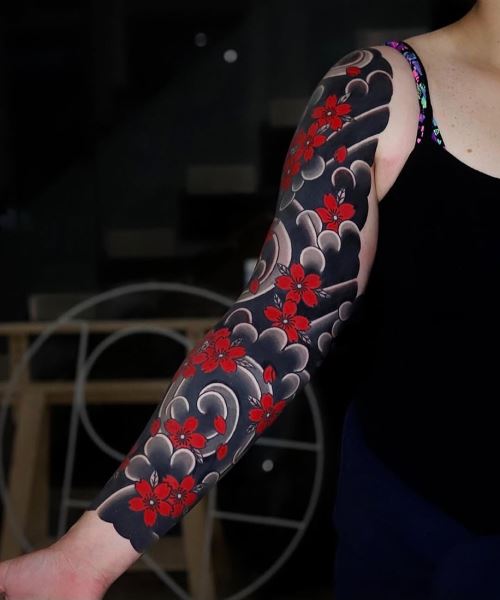
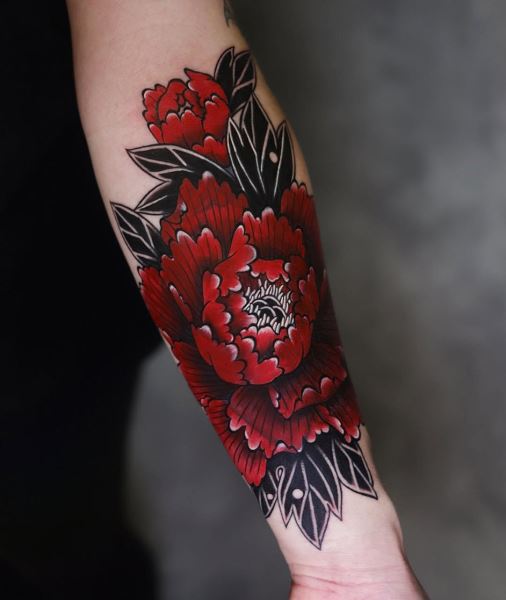
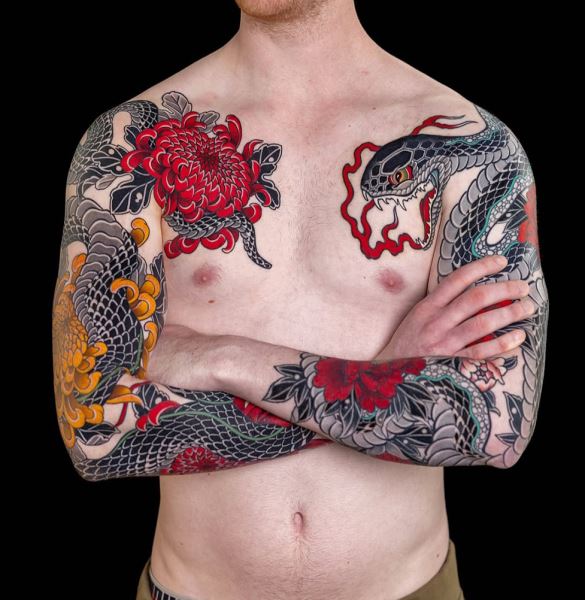
A: I’m especially drawn to dragons, snakes, and floral motifs. These
themes are timeless, and I create them often with my clients.
Dragons, in particular, captivate me-they’re widely used, yet each
artist interprets them differently. Their meaning also varies across
Asian cultures, making them both challenging and inspiring. I want
to continue exploring dragons in depth, developing interpretations
that carry my own distinctive voice.
Q: Creating a unique tattoo with personal meaning is a
special process. Can you walk me through how you bring your clients’
ideas to life?
A: I place great emphasis on communication. We begin by exchanging
ideas, listening carefully to their vision while sharing my
perspective until we align. Most clients come to me because they
want to see their ideas drawn in my style, so collaboration feels
natural. Every design becomes a one-of-a-kind piece tailored to the
client, and I often bring new suggestions as well. That dialogue
keeps each project fresh and exciting.
Q: I’m always amazed by the detail in large tattoos like
back pieces and sleeves. What’s the typical timeline for a project
of that scale, from start to finish?
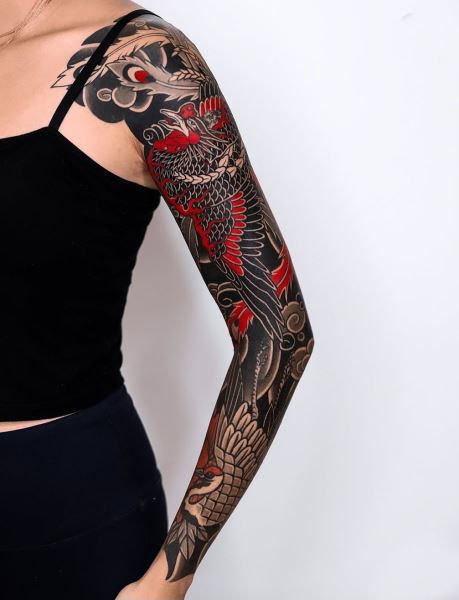
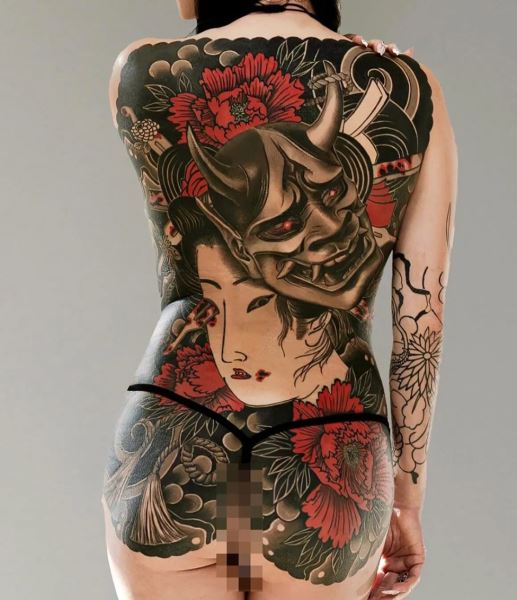
A: Large-scale projects like full backs or sleeves require immense
time and patience. Japanese-inspired tattoos demand strong density
and layering, so the pace is naturally deliberate. A full back
typically requires at least ten sessions and can take six months to
over a year to complete. Life circumstances often change, so it’s
nearly impossible to predict an exact timeline.
Q: Do you have any favorite tattoo you did?
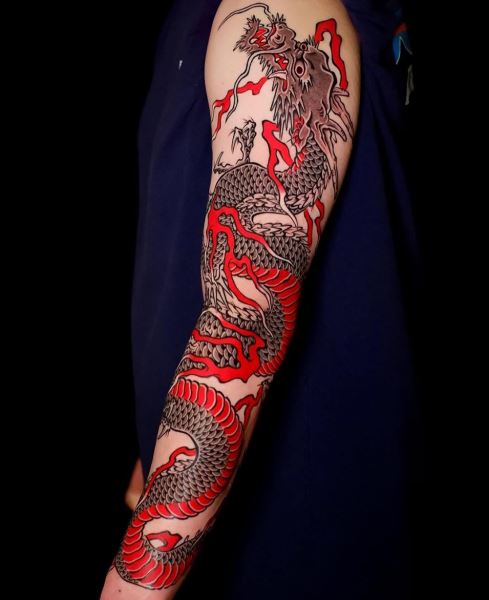
A: One of my favorite pieces is a dragon sleeve featured at the top
of my Instagram profile. It has a memorable backstory. I completed
it in San Francisco over three consecutive days - 18 hours the first
day, 14 the second, and 16 the third, totaling 48 hours. The client
was a police officer who would leave the studio at sunrise, head
straight to court, and return after work for more sessions. His
resilience matched my determination, and the result gained
significant attention online. We’ve continued working together
since, expanding his tattoo from his back down to his hips.
Q: How important are drawing skills for a professional
tattoo artist?
A: Drawing skills are absolutely essential. While the emphasis may
vary by style, at its core tattooing is the art of drawing on the
human body. Strong fundamentals allow artists to transform
inspiration into original works. That said, mental training is just
as crucial, the ability to interpret ideas and reshape them into
unique designs requires research, imagination, and vision.
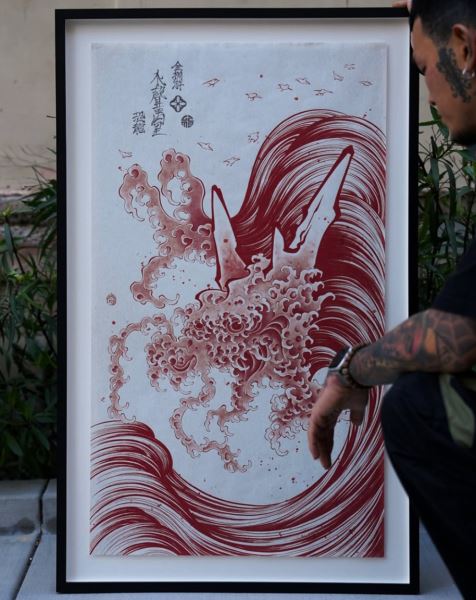
Q: I saw your Red Wave Dragon artwork and it’s incredible.
Do you have other pieces in a similar style available for sale?
A: Yes, I regularly create and release artwork for sale, and I also
gift pieces to clients I collaborate with. A wider selection of
works and merchandise is available on my website.
Q: In a field where trust and reputation are paramount, what
do you consider the key pillars of professionalism that contribute
to consistent client satisfaction and a strong reputation?
A: First, I want to sincerely thank all the clients who appreciate
my work and trust me with their projects. For me, professionalism
rests on two pillars: quality and trust. A beautifully finished
tattoo is deeply satisfying for the client, but beyond the final
result, the discipline, care, and professionalism shown throughout
the process build real trust. Over time, this trust grows into
lasting relationships and a strong reputation.
I also like to show gratitude in small ways- through thoughtful
gifts or handwritten notes. These gestures strengthen personal
connections and remind me of the responsibility I carry with every
piece.
Q: Collaborative tattooing is becoming increasingly
prevalent. Are there any other artists whose work you admire and
with whom you’d be interested in exploring a collaborative project?
A: I’m always open to collaboration. New approaches excite me, and I
embrace change. At my studio, nonfromseoul, each artist has a
strong, distinct style, and I’d love to collaborate with them. I’m
already working with two artists on large-scale projects and hope to
create more collaborative works in the future.
Q: How do you perceive the current state of the local tattoo
scene?
A: Globally, the tattoo industry has slowed, but I believe trends
are cyclical and will return. One shift I find especially
interesting is the rise of video content. A few years ago, photos
dominated social media, but now video leads the way, on Instagram,
YouTube, and even in everyday spaces. That’s why I’ve been investing
more time in video, working closely with a videographer friend to
share my work in this evolving medium.
Q: Given the historical context of “old school tattooing,”
how do you perceive the evolution of both the style and the tattoo
industry as a whole?
A: The industry has advanced rapidly so much so that supply often
exceeds demand. With technology and shifting cultural perceptions,
many new, individual styles have emerged, and client expectations
are higher than ever. Success today is harder to achieve than a
decade ago. I believe this shift has turned artists into brands. An
artist’s words, images, style, and even personal presence shape how
clients perceive their value. Today, a tattooist isn’t just an
individual, they’re also a brand.
Q: For our readers, could you please provide your studio
location, website, and social media links?
A: I’m based in Los Angeles, where my studio Nonfromseoul is located
downtown. Most of our artists are Korean, and together we create a
wide range of work. My next available bookings begin in March, and
I’ll soon be opening reservations for the second half of the year. I
truly appreciate the continued support and interest.
Q: How has your passion for tattooing manifested and evolved
throughout your career?
A: I like to set clear goals for myself, even envisioning where I’ll
be in my 40s and 50s. Having that vision keeps me on track, even in
difficult times. In my first year, I had nothing but passion,
enduring tough times with little income. As I grew, I learned more
about the culture, met inspiring people, entered conventions, and
broadened my perspective. Each step clarified my goals and fueled my
drive. Today, I’m still running toward those dreams with the same
determination.
Q: Favorite career highlight?
A: One highlight was participating in the 2024 and 2025 Gods of Ink
conventions. Back in 2019, only three years into tattooing and stuck
in a slump, I visited the London Tattoo Convention, the world’s most
prestigious with peers to learn. Seeing those world-class artists
gave me new ambition: one day, I would stand among them and compete
in the bodysuit contest. Five years later, I returned not as a
spectator but as an invited artist, now working hard toward that
very goal.
Q: What’s next?
A: My next personal goal is to win first place in the bodysuit
contest at Gods of Ink. Beyond that, I plan to hold a solo
exhibition in two years to showcase the artworks I’ve created
throughout my journey.
Q: If you could go back and give your younger self advice
about pursuing tattooing, what would it be?
A: One of my favorite quotes is: “If you do nothing, nothing will
happen.” Without effort and the courage to challenge yourself,
greater success is impossible. To my younger self or anyone starting
out, I’d say: don’t be afraid. Just go for it.


