
Interview with Dmytro Kiryakov
To mark the eighteen anniversary of Skin
Artists Tattoo Magazine, we are honoring a selection of top-tier
artists whose technical discipline and intellectual approach have
set new benchmarks for the industry. Dmytro Kiryakov joins this
milestone celebration as a master of black-and-grey realism,
bringing a unique perspective shaped by a background that spans
multiple professional fields.
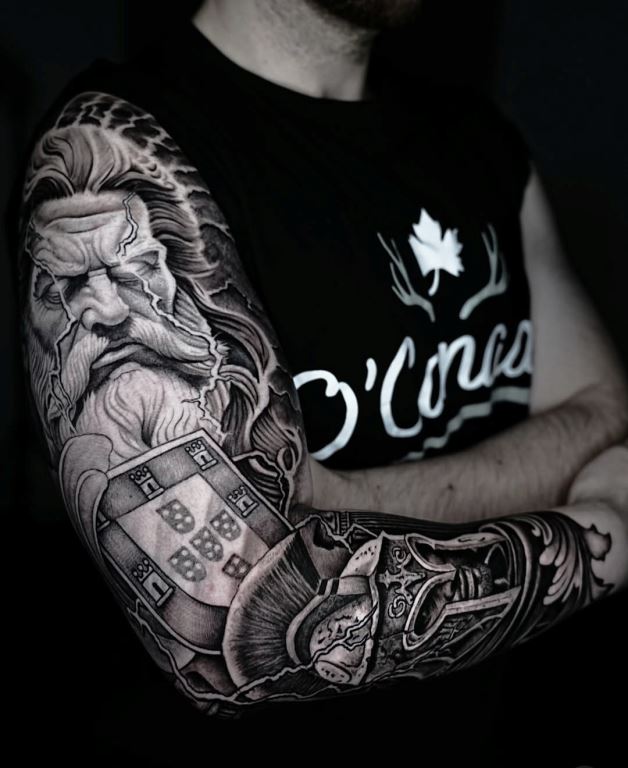
Dmytro’s work is a masterclass in structural integrity and tonal
balance. Drawing from a rigorous academic foundation, he treats
every tattoo as a study in anatomy, light, and form. His portfolio
is defined by neoclassical and Renaissance-style imagery, executed
with a precision that avoids mere mechanical replication. Instead,
he reconstructs narrative and intent on the skin, resulting in
large-scale compositions that possess a cold, dramatic solemnity and
a profound sense of permanence.
The following interview is dedicated to exploring the future of
tattooing. We discuss how a self-directed and intentional education
provides the bedrock for a lifelong career, the importance of
maintaining an uncompromising standard of self-criticism, and
Dmytro’s vision for the evolution of the craft as the industry moves
toward its next decade of innovation.
Q: When did you discover your talent for arts and when
tattooing came into the picture?
A: I’ve been drawn to art since childhood. I spent most of my free
time drawing, portraits of friends and family, characters from
cartoons, comics, and video games, as well as imaginary scenes and
characters that existed only in my head. Drawing was always a
natural way for me to express myself and understand the world.
Tattooing had been on my radar for a long time as well. Since my
teenage years, it genuinely fascinated me, but I didn’t pursue it
immediately. I started tattooing independently in 2018, initially as
a hobby alongside my main work. At that point, tattooing became my
third profession. Before that, I had completed two university
degrees and worked in two very different fields, first as a dental
surgeon, and later in the legal field. Very quickly, I became deeply
immersed in tattooing. I was drawn to the process, the results, and
the emotional reactions people had to the work. Within a year, it
stopped being just a side project and became my main profession.
Tattooing gave me more than a career, it gave me independence, the
ability to focus on what genuinely brings me joy in life, and the
freedom to grow, evolve, and develop on my own terms.
Q: How did you learn the basics of tattooing?
A: My education was largely self-directed and intentional. I built
my foundation through studying drawing and painting independently,
learning from books, educational materials, and in-depth
instructional content as well as through private, one-on-one
sessions with experienced artists focused specifically on
fundamentals such as anatomy, light, form, and composition. Later
on, I also attended seminars and workshops led by tattoo artists
whose work and approach genuinely resonated with me. This path
required a high level of discipline and self-criticism, but it
allowed me to develop a strong understanding of classical
fundamentals while shaping a visual language that feels personal
rather than derivative.
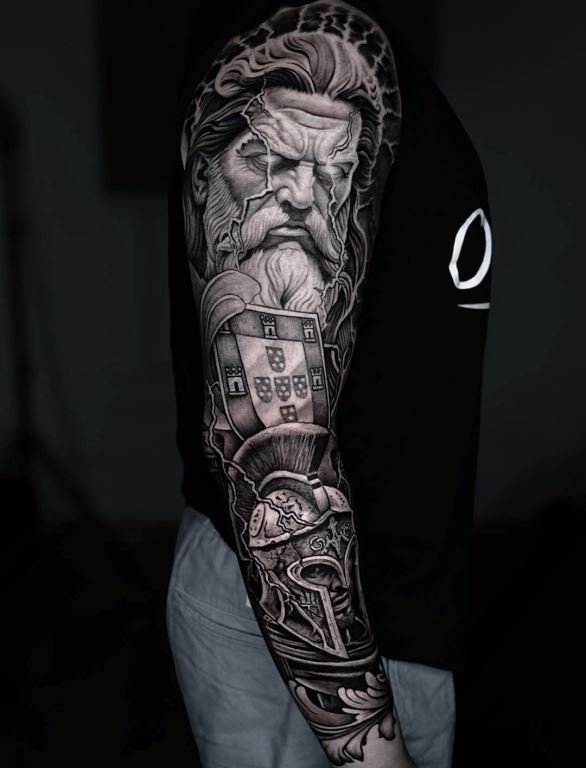
Q: Realism is one of the most unforgiving
styles in tattooing. Looking back at your first year, what was the
hardest technical skill to grasp, was it the needle depth, the soft
shading, or the composition?
A: In the beginning, I would say all of those aspects were
challenging at once. Realism doesn’t really allow you to separate
technique from understanding, everything is interconnected.
Mechanical skills such as needle depth, feeling the skin, and
controlling hand movement were difficult at first, but over time
they become more instinctive and eventually turn into muscle memory
through repetition. What remains truly challenging and, in my
opinion, the most important part is the understanding of form: how
light behaves, how contrast shapes volume, and how to build a
strong, readable composition. These are not skills you ever fully
“finish” learning. They’re areas where there is always room to grow,
refine, and improve throughout an entire career. That ongoing
pursuit is what keeps the work evolving and meaningful for me.
Q: What was it about black and gray that resonated with you
more than color realism or other traditional styles?
A: I wouldn’t say that I love color any less than black and gray.
Color realism has its own power and beauty. However, black and gray
allows me to convey a very specific emotional tone that resonates
with me more deeply. There’s a certain cold solemnity, drama, and
darkness that black and gray can express in a way color often can’t.
It strips the image down to light, shadow, and contrast, letting
mood and atmosphere take the lead. That restrained intensity, the
ability to create depth and emotion without relying on color is what
continues to draw me toward black and gray work.
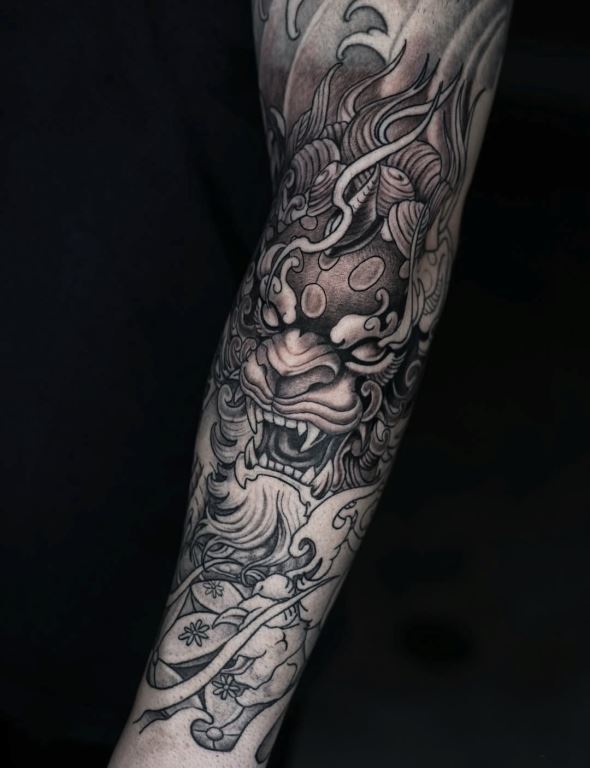
Q: When doing realistic portraits, how do
you balance following the reference perfectly versus adding your own
stylistic 'hand' to the piece?
A: When working with realistic portraits, I approach the reference
as a foundation rather than something to copy mechanically. My
background is rooted in a drawing methodology influenced by the
Soviet academic school, where a strong emphasis is placed on
constructive drawing and understanding form. I see a portrait not as
a collection of isolated facial features, but as a structure built
from simpler geometric forms governed by the laws of light and
shadow. This approach allows me to create strong contrast and
properly constructed volume, not just in individual elements, but in
the overall form they create together. By focusing on structure,
light, and cohesion, I can preserve likeness while also giving the
portrait a sense of unity and clarity, which is where my own
artistic “hand” naturally emerges.
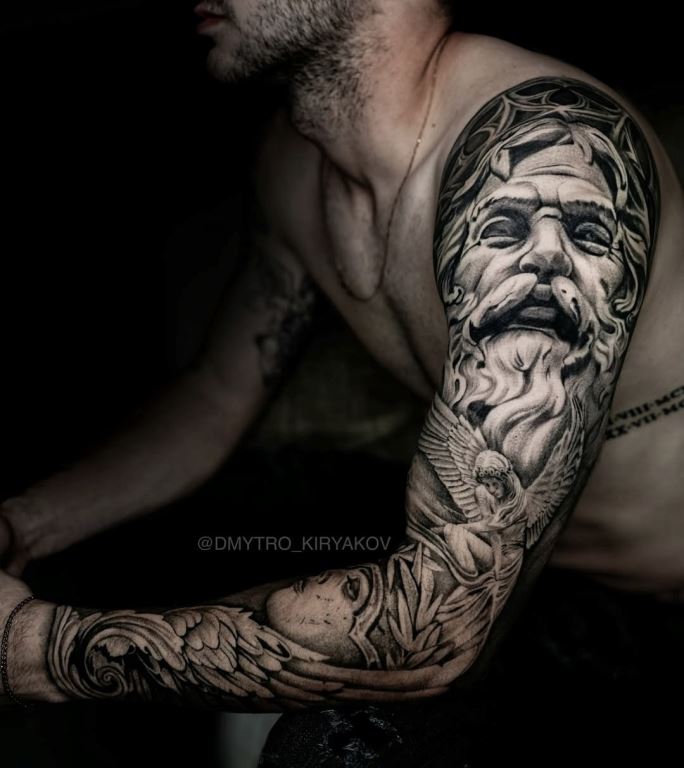
Q: Your work features a lot of neoclassical and
Renaissance-style imagery. Do you draw more inspiration from
historical painters and sculptors than from other contemporary
tattoo artists?
A: Yes, very much so. I’m deeply drawn to Renaissance and
neoclassical art, not just visually, but intellectually. I love
reading books, listening to lectures, and studying the lives of
great masters, their creative paths, the historical context they
worked in, and the stories behind their paintings. Visiting museums
is an important part of that process for me; I spend a lot of time
observing artworks and mentally reconstructing the narrative, the
intent, and the conditions under which they were created. Artists
such as Caravaggio, Rembrandt, Peter Paul Rubens, and Johannes
Vermeer are my favorites painters. contemporary art doesn’t inspire
me in the same way.
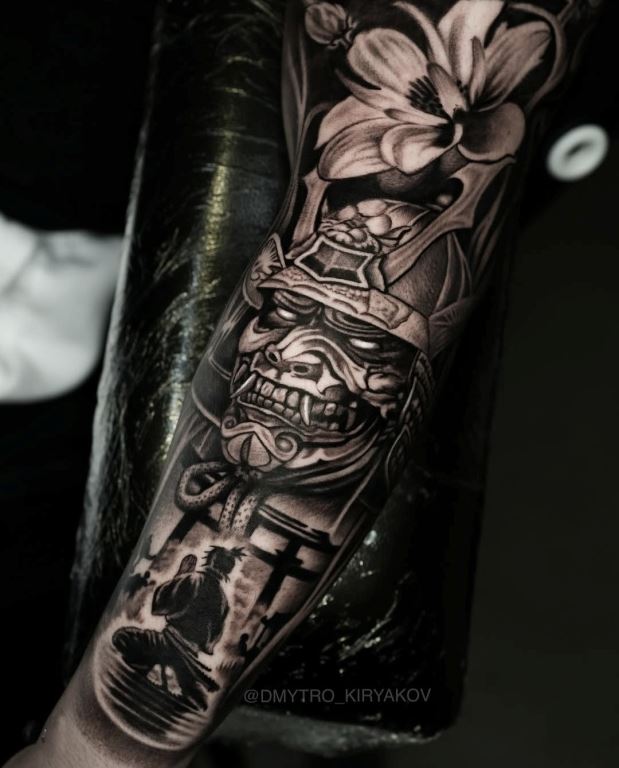
Q: You specialize in full sleeves. How do
you approach the initial design phase, do you plan the entire arm as
one single story, or do you build it piece by piece while keeping
the anatomical flow in mind?
A: For the strongest result, I believe a full sleeve should be
planned as a complete project from the very beginning and this is
something I consistently emphasize to all of my clients. Designing
the entire arm as a single composition allows you to properly
connect elements across different anatomical segments and create a
coherent visual flow. This approach goes beyond simply filling a
limb with individual tattoos. It makes it possible to build a
structured, balanced, and visually rhythmic composition that moves
naturally with the anatomy of the arm. When everything is designed
as one unified story, the sleeve reads as a complete work rather
than a collection of separate pieces.
Q: Your work has a distinct 'glow' to it. How do you use
negative space (bare skin) and saturated blacks to create that
cinematic, high-contrast lighting in a way that doesn't just look
like a photograph, but feels like a piece of art?
A: Absolutely, one of the most critical aspects of realism is the
correct use of negative space. Leaving areas of bare skin isn’t
about doing less; it’s about creating depth, contrast, and clarity.
Negative space allows the work to breathe, makes the forms feel more
dimensional, and helps the composition read clearly over time. It
also significantly extends the life of the tattoo. In large-scale
realistic projects especially, the key is the thoughtful
distribution of saturated blacks and light, untouched areas of skin.
I’m very intentional about where the darkest points live and where
the light is allowed to remain. Trying to fill every area with ink,
something many artists do early in their careers - flattens the
image and kills the sense of light. By respecting contrast and
restraint, the piece moves beyond photographic reproduction and
starts to feel cinematic and artistic rather than purely literal.
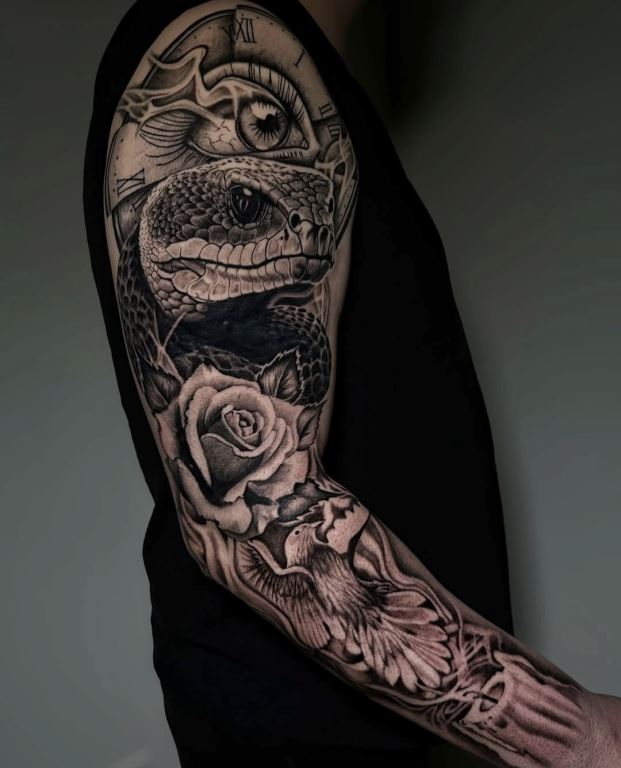
Q: In an era where AI can generate perfect
realism, what is the specific "hand of the artist" in your work that
you believe a machine can never replicate?
A: In my view, AI is a powerful assistant and a very useful
time-saving tool, especially when it comes to generating base
references or individual elements that can later be used in the
design process. It can quickly produce a wide range of visual
material that helps kick-start ideas and exploration. However,
properly connecting those elements, adapting them to a specific
concept, body part, skin tone, and overall composition requires
knowledge and experience that no machine can replace. You can
generate hundreds of references, but it takes a trained eye and
artistic understanding to recognize which one truly works and even
more skill to refine it into a cohesive, well-balanced design.
Q: Based at Chronic Ink in Toronto, you are in one of the
most diverse tattoo hubs in the world. How has the multicultural
energy of Canada influenced the "Vision" behind your designs?
A: Chronic Ink is a truly international studio where you’re
constantly working alongside artists from all over the world. For
me, one of the most interesting experiences has been collaborating
with Korean tattoo artists who work in realism. Their approach to
the craft, especially the level of focus and attention to detail,
has influenced how I think about building realistic forms and
refining details in my own work. Studio address: Toronto, 380
Bathurst st www.instagram.com/chronicink
https://chronicinktattoo.com
Q: Skin Artists has been documenting the
craft since 2007. Looking at the black and gray realism of that era
versus your work in 2026, what do you think is the most important
technical shift we’ve made?
A: I think the biggest shift has been the move toward a truly
professional, fine-art approach to tattooing. Today, you can see
artists whose designs and finished tattoos meet very high standards
of academic drawing and painting. This work is no longer just about
enthusiasm or transferring a visually appealing idea onto skin it’s
created by artists with a deep foundation in visual literacy,
supported by strong technical skills and a solid understanding of
form, light, and composition.
Q: If you had to remove the machine from the equation, what
is the most important intellectual or psychological skill a
'Visionary' must possess to survive the next decade of this
industry?
A: I think, first and foremost, it comes down to the quality of the
work itself and originality, the ability to create something
distinct from others and remain recognizable. At the same time, the
ability to navigate and work with social media has become
unavoidable, it’s now an essential part of surviving and evolving in
the industry.
Q: We are currently seeing a 'quantity
over quality' explosion in trends. As a Visionary, how do you
balance the desire to be 'current' with the ethical responsibility
of giving a client a piece that still looks incredible 20 years from
now?
A: For me, it’s very simple, my conscience doesn’t allow me to work
any other way. I’m not comfortable creating projects that I know
won’t age well or will require removal or heavy correction over
time. I’m very open about this with my clients. If I believe a
concept won’t hold up in the long run, I say it directly. That
honesty is part of my responsibility as an artist.
Q: The industry is currently 'crowded at the bottom' but
'open at the top.' Why do you think so many artists hit a plateau
where they can't break through to the 'elite' level, and what is the
one missing piece of the puzzle for the next generation?
A: The reason is quite simple: a lack of academic art knowledge.
Gaining that foundation requires a serious investment of time,
effort, and financial resources, and not everyone is willing to make
that commitment. Many artists reach a certain level, build a steady
client base, and decide that it’s enough for them. There’s no real
drive to keep growing professionally. To break past that plateau,
there has to be ambition, a genuine desire to be better than you
were yesterday.
Q: Social media has created a 'filtered'
reality of tattooing, perfect photos of fresh tattoos that may not
heal well. What needs to change in how we, as professionals, present
our work to the public to manage client expectations?
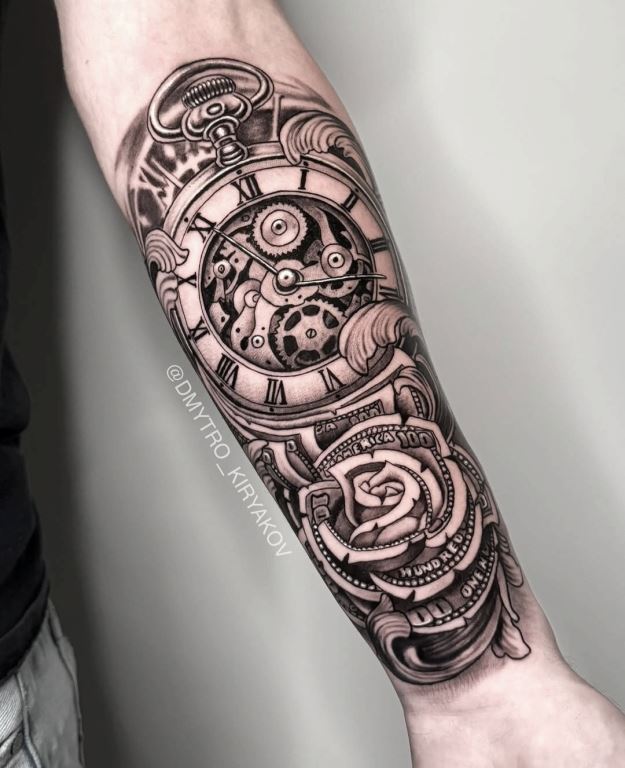
A: Today’s technology allows us to significantly enhance the visual
impact of tattoos, and what people see on social media doesn’t
always reflect how a piece will look in real life over time.
Personally, I address this by inviting clients back months, years,
and sometimes even longer after the tattoo is done to document fully
healed work. I photograph and film these pieces in natural,
preferably sunlight and often include client feedback after time has
passed. That transparency helps set realistic expectations and
builds long-term trust.
Q: We’ve moved from secret apprenticeships
to 'Tattoo Schools' and YouTube tutorials. Do you think we are
gaining technical speed but losing the 'soul' and 'ethics' of the
craft? How do we fix the education gap in 2026?
A: I see this mainly as a result of the industry becoming
oversaturated with craftsmen rather than dedicated artists. Because
tattooing isn’t strictly licensed and doesn’t require major startup
capital, many people enter the field chasing quick money or an
attractive image they see on social media, rather than a real
commitment to the craft. Artists who are driven by genuine passion
will always approach the work differently. That’s why I don’t
believe this is primarily an issue of education methods or training
formats. It comes down to intention, values, and how seriously
someone treats the responsibility of the profession.
Q: Where do you see your style evolving in the next five
years? Are you looking to go even more hyper-realistic, or are you
interested in incorporating more abstract or surrealist elements
into your work?
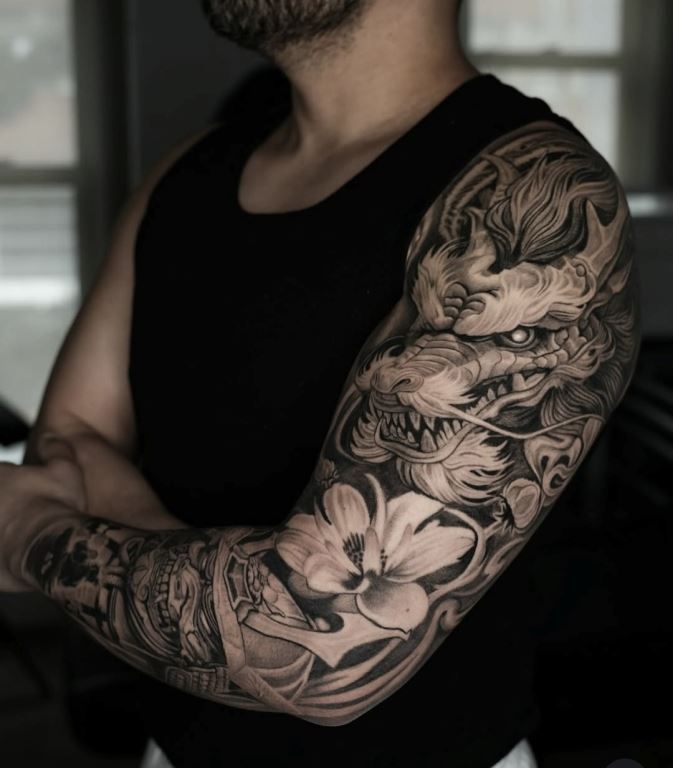
A: I wouldn’t say my goal is to create hyper-realistic tattoos that
replicate every wrinkle or individual hair from a photograph. What
interests me more is building large-scale, dynamic compositions,
full sleeves, backs, and leg pieces inspired by classical antiquity,
Renaissance art and Japanese motifs. That’s the kind of work I
genuinely enjoy creating. I’m also interested in doing more color
pieces moving forward, and that’s a direction I plan to continue
developing over the next few years.
Q: If you could go back to your first day at the studio and
give your younger self one piece of technical advice that would have
saved you years of trial and error, what would it be?
A: Don’t be lazy draw more, and study academic drawing and painting
seriously. Those fundamentals never lose relevance and remain the
foundation for long-term success and consistent growt.


