
Interview with Dmytro Musiienko
Hello Dmytro Musiienko, it's a pleasure to
have you join us. To begin, we'd love to hear about your artistic
journey. What sparked your passion for art, and how has your
background shaped your creative process? We're particularly
interested in understanding the interplay between formal training
and the development of your unique skills. My passion for
art started in childhood. I was always fascinated by light, color,
and composition. I don’t have formal education, but years of
practice and self-study shaped my personal style. For me, true
mastery isn’t about a diploma, it’s about obsession with your craft.
Q: Can you recall a moment or period when you first realized
your deep connection to art? Was there a specific spark that ignited
your passion?
A: For seven years, I worked in logistics, a field completely
unrelated to my passion. Every day, I was mad at myself for wasting
my life on something I didn’t love. That was the turning point that
pushed me toward art.
Q: At what point did tattooing become a significant part of
your artistic practice, and how did that transition occur?
A: Tattooing became a serious part of my life about fifteen years
ago. At first, I was just looking for a way to make money since I
could draw a bit. But I quickly realized it wasn’t about the money.
It was through tattooing that I first felt truly alive and
authentic.
Q: Could you share the memory of your first tattooing
experience? What design did you create, and what emotions
accompanied that first act of tattooing someone's skin?
A: My first tattoo was on a friend. It felt like entering a new
world, I loved the process, even though I was nervous. I tried to
tattoo a realistic eagle on his shoulder blade. For my skill level
at the time, it turned out decent. That experience inspired me, I
knew this was my thing.
Q: Building both a distinct artistic style
and a solid client base requires significant time and effort. Can
you share insights into the timeline and key factors involved in
your journey?
A: In the beginning, I had few clients, and the quality of my
tattoos wasn’t great. I worked almost for free just to gain
experience and improve my skills. Things started to change when I
began valuing my time and myself. I went deeper into fundamentals,
my level grew, and so did my client base. A key moment was when I
was invited to work at a studio that was just opening in Europe.
That gave me a sense of responsibility and inspired me to take the
craft much more seriously.
Q: Your work displays a compelling fusion of realism and
surrealism. Could you elaborate on the creative process and
inspirations that drive this unique aesthetic?
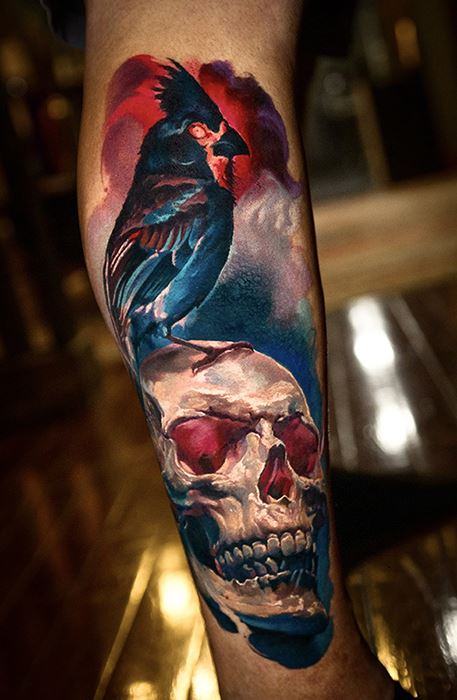
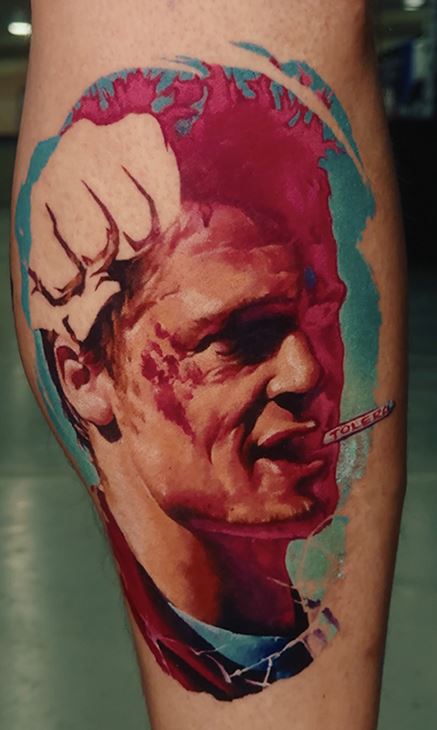
A: My inspiration comes from my hobby, filmmaking and
cinematography. I study color and lighting and bring that knowledge
into tattooing. I add negative contrast to dull shaded areas and use
complementary colors to guide the viewer’s eye, making the piece
more dynamic and dimensional.
Q: Given your proficiency in both black and gray and color
tattooing, which style do you personally find most creatively
compelling, and which presents the greatest technical challenges?
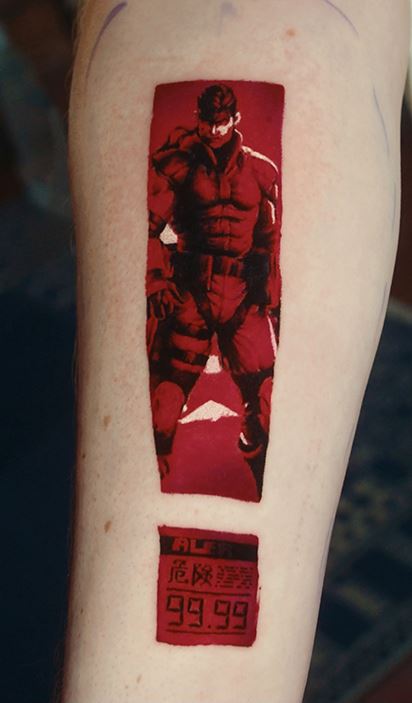
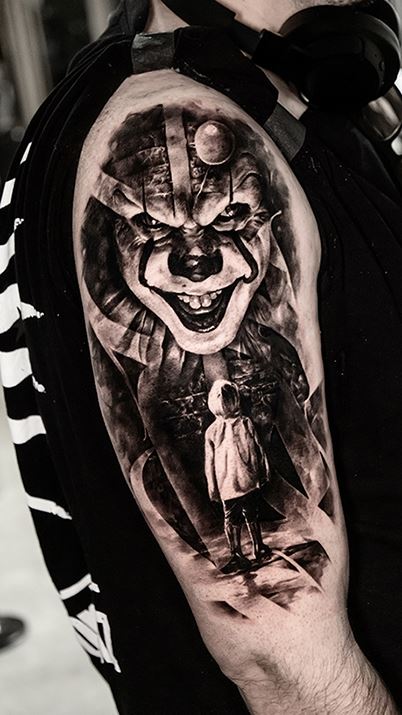
A: My favorite style is color realism, but I’m also strong in black
and grey. In color, it’s crucial to pick the right shades,
saturation, and contrast to avoid ruining the image. In black and
grey, the challenge is to convey a sense of color without using any.
As my mom used to say: try to draw a red apple in monochrome so that
the viewer still knows it’s red. You have to play with tone,
texture, and depth. But the most important thing in any style is
knowing how to work with the skin. It doesn’t matter how cool the
tattoo looks right after the session if it leaves scars later.
Q: What aspects of tattoo realism
particularly captivate you, and are there other artistic styles
you're interested in exploring or incorporating into your work?
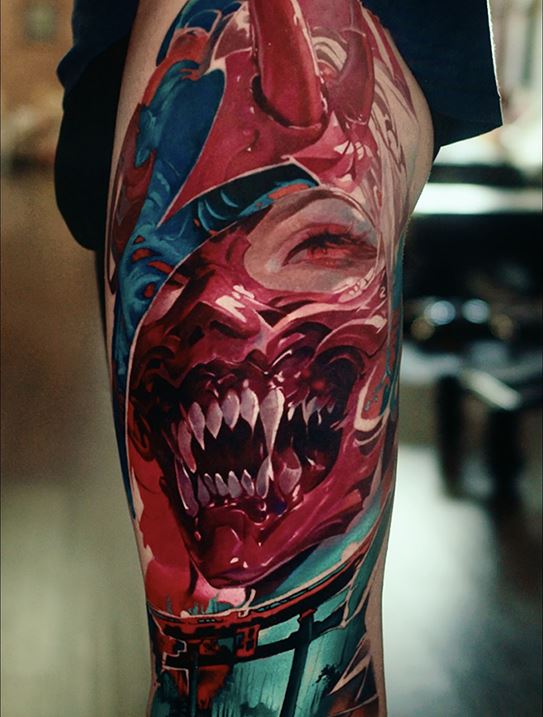
A: Realism is about freezing a moment, it’s powerful. But I’m also
drawn to both neo-traditional and traditional styles. I definitely
want to explore those more.
Q: Have you had a tattoo project that was a real challenge,
but that you were ultimately thrilled with the result of?
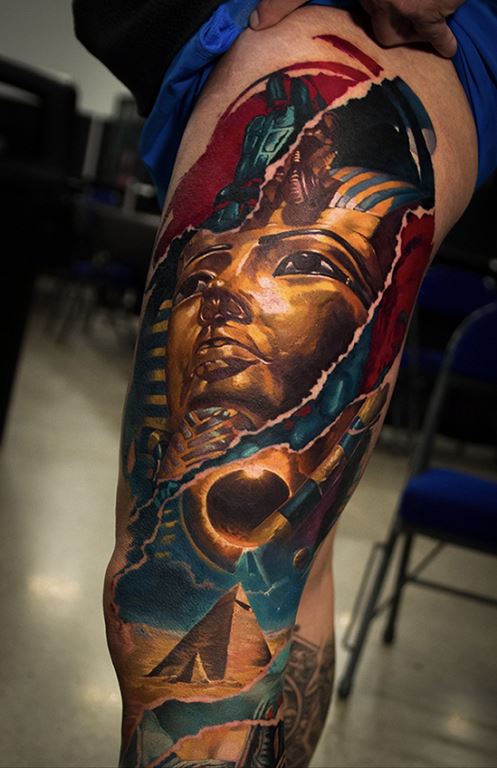
A: I can't name one specific tattoo, but I often get challenging
projects, especially when clients don’t know what they want. At
first, it might seem like chaos, but thanks to my communication
skills, I always find the right direction. The key is understanding
what brought the person to the tattoo and what they want to express
through it.
Q: Could you describe your approach to collaborating with
clients to ensure their vision is realized while maintaining the
integrity of your artistic style in a custom design?
A: It’s always a collaborative process. I listen carefully and
suggest what to keep and what to cut. When there’s trust, we land on
the perfect design together. The main thing is to avoid overloading
the tattoo with meaningless elements and to keep it balanced and
clear in concept.
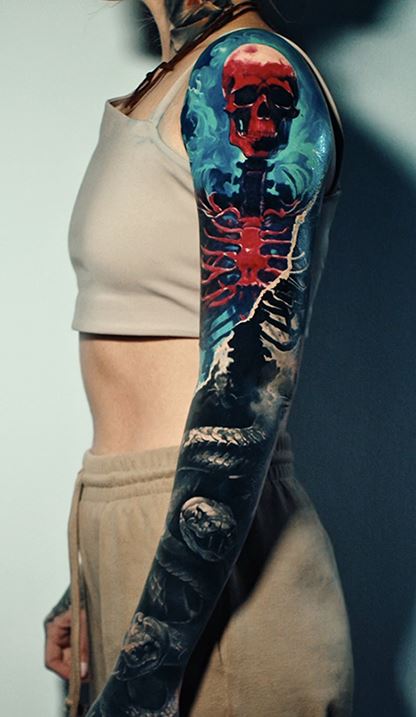
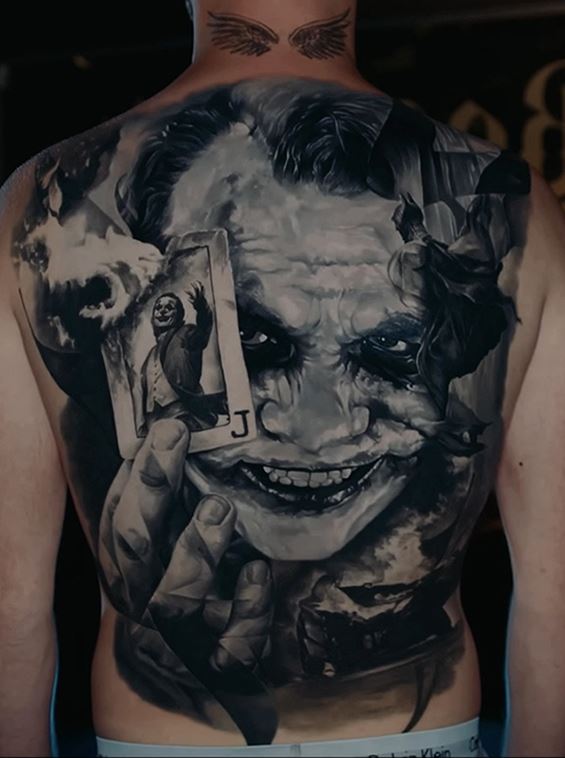
Q: Large-scale tattoos such as sleeves and
back pieces are a highlight of your work. What is your process for
planning and executing these complex, multi-session projects, and
what are some of the key logistical challenges you encounter?
A: It all starts with a conversation, we discuss the idea, I build a
small story, gather references, but never copy. I study the body,
anatomy, and step by step create sketches until we get to the final
version. I also make sure the atmosphere during the session is
comfortable, that’s just as important as the design itself.
Q: Any favorite piece you did recently?
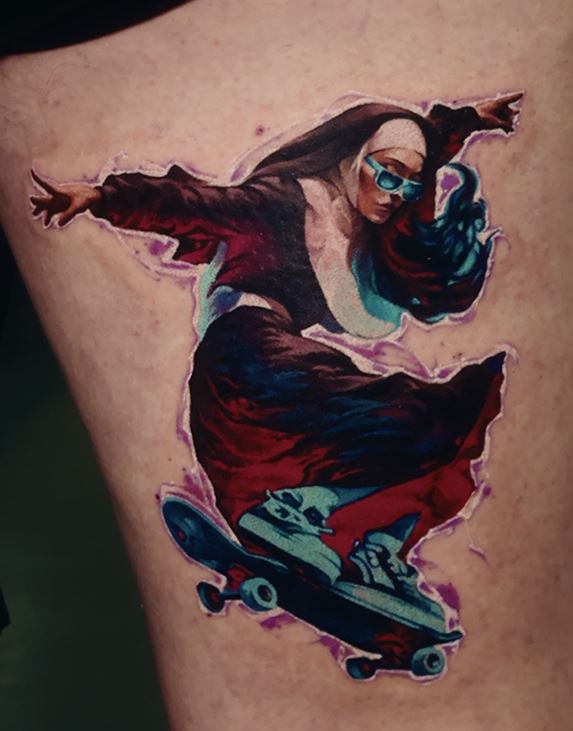
A: Yes, I’m proud of a recent piece I did at a tattoo convention in
Baltimore, it’s a nun on a skateboard. That’s where I began
incorporating my style: a blend of realism and sketch. I transform
dull elements into negatives. I’m happy with the result and want to
keep evolving in that direction. As they say, “Learn the rules like
a pro, so you can break them like an artist.”
Q: Tattooing seems to create a unique
space for human connection, where you not only provide art but also
share in deeply personal stories. How do you perceive the impact of
this intimate exchange?
A: People often open up and share personal stories with me, that’s a
huge honor. I’ve built real friendships with many clients. I travel
a lot, and it’s awesome to have such warm connections in different
cities and countries. Sometimes they invite me to visit, sometimes I
invite them. For example, I live in New York, and when I travel to
Europe, I visit a friend in Bavaria, he has a stunning house
overlooking the Austrian mountains. Next year, we’re even planning
to meet up with our families at a ski resort. That kind of trust and
support really fuels my drive.
Q: Could you describe your ideal day at the studio, from
start to finish?
A: A perfect day in the studio is coffee, a good track in the
background, and working with friends. No rush just flow and full
immersion. In the evening, we hang out, talk about the day, laugh
about funny or stressful moments, that vibe gives me energy.
Q: You are a sponsored artist by great
tattoo brands. Congratulations. How much this support means to you
and helps you in your career?
A: It’s a huge support and recognition. I know the companies and
products I work with really well, which motivates me to keep my
standards high and keep growing.
Q: The art world can present various ethical dilemmas. What
principles guide your own artistic practice, and what do you
consider to be the most important ethical considerations for artists
today?
A: Respect for everything. For colleagues, the craft, clients, and
yourself. It’s important to be honest, offer a personal approach,
and know when to say no. That’s what ethics in art means to me.
Q: With so many resources available today, from online
tutorials and workshops to conventions and guest spots, it seems
like there are more avenues than ever for aspiring tattoo artists.
Do you feel this increased accessibility has made it easier to break
into the field?
A: It’s easier to start now, but harder to stand out. In the end,
though, it all comes down to passion and persistence.
Q: Are there any tattoo artists, with whom
you'd be interested in collaborating on a project? And do you find
these collaborations to be valuable learning experiences, allowing
for the fusion of styles and techniques?
A: Yes, I work with two artists in New York Krish and Jenna. They’re
super talented and popular, with a totally different style than
mine. I’d love to merge their approach with my realism. I’m sure
we’ll have some cool collabs in the future.
Q: What's your take on the local tattoo scene? Are you
seeing any exciting developments, like new artists, styles, or
events?
A: The local scene is growing fast. There are more and more fresh
artists, new styles, exciting crossovers with other genres. It’s
super inspiring and pushes the industry forward.
Q: Please write down your studio location
and website/social media links. Also let us know if you are
available for bookings.
A: I work in New York, Washington D.C., and Detroit Michigan.
Instagram: @dimi.mart
Email: nyc.dmart@gmail.com
NY Studio: Inkology Tattoo Art Gallery
Instagram: @inkologyartgallery
DC Studio: Trilogy Tattoo Atelier
Instagram: @trilogyatelier
MI Studio: Immortal Ink
Instagram: @immortalink.mi
Bookings are open contact me via Instagram or email.
Q: Looking back, how has your passion for tattooing
developed? Has your enthusiasm grown, changed, or remained
consistent throughout your career?
A: My passion for tattooing is like a rollercoaster with powerful
highs and brutal burnout. But with each phase, my interest only
deepened and became more intentional.
Q: Your commitment to your craft is clear,
Dmytro. What are your long-term plans for your artistic development
and career within the tattooing industry?
A: I plan to open a creative studio and bring together a strong team
of talented pros and real friends. I want to build a space that
blends quality, energy, and inspiration.
Q: The allure of tattooing often centers on the creative
freedom and client connections, yet the reality includes a packed
schedule and the daily pressure to produce top-tier work. What key
considerations should aspiring tattoo artists keep in mind as they
embark on this professional journey?
A: It’s not just about talent. Character, discipline, and respect
for colleagues, the craft, clients, and yourself are key. Don’t be
afraid to make mistakes there’s no growth without them. Mistakes are
an essential part of the creative journey.


