
Interview with Emerson Silva
Hello Emerson Wanderson Martins Silva!
Thank you so much for taking the time to do this interview. Please
start by telling us something about yourself and your background.
Are you a self taught artist? My name is Emerson Wanderson
Martins Silva, and I consider myself a self-taught tattoo artist. I
was born in São Paulo, Brazil, and my artistic journey began very
early, with a natural interest in the world of tattooing and the
arts in general. Although I do not have formal academic training in
art, I learned everything on my own, driven by curiosity and a
constant desire to evolve. My family and friends were the first to
encourage me, and I also received support from some artists who
believed in me, shared knowledge, and opened doors so that I could
develop my style and technique. Over time, this passion turned into
a profession. I studied techniques, sought references, experimented
with materials, and challenged myself daily. Tattooing became the
perfect way to express my artistic identity while transforming
people’s lives through art. Today, I continue to grow both as an
artist and as an individual.
Q: What initially sparked your interest in tattooing, and
how did you decide to pursue it as a profession?
A: What initially sparked my interest in tattooing was the
possibility of transforming the art I had always carried with me
into something alive, unique, and permanent on people’s skin. What
led me to pursue this as a profession was the feeling of seeing
someone fully trusting my work to mark an important moment in their
life. This responsibility and emotional impact motivated me to study
continuously, seek references, train constantly, and understand that
tattooing goes beyond technique: it is communication, identity, and
transformation. Over time, this passion ceased to be just an
interest and became a purpose.
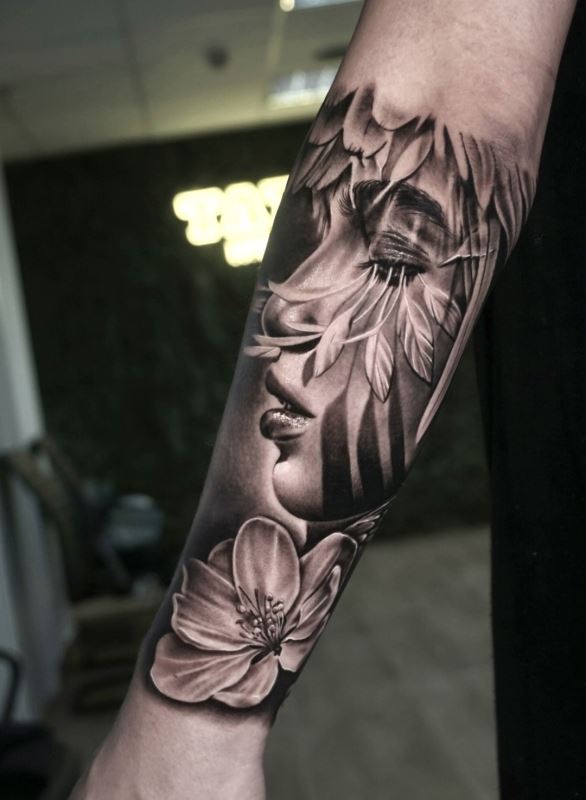
Q: Tattoo realism requires exceptional technical skill.
Could you describe your apprenticeship or early training? Were there
any specific mentors or artists whose work significantly influenced
you in those formative years?
A: At the beginning of my tattoo journey, everything was very simple
yet extremely challenging. I started creating basic designs such as
fine line, lettering, sketches of faces, eyes, and small studies of
light and shadow. Even before tattooing, I practiced realism on
paper, trying to capture depth and texture in every stroke. I
learned quickly how skin reacts, how the machine responds, and how
the ink behaves, but all of this required a lot of repetition,
trial, and error. I did not have a traditional apprenticeship, which
made my start more difficult, but it also forced me to research,
observe, and study anatomy, light, and references independently.
Over time, I realized that the modern tattoo world has changed
significantly: today there is more access to information, workshops,
technical content, and mentorships. For this reason, I sought
training by participating in workshops and mentorships with
high-performance tattoo artists in Brazil, which was essential to
refine my technique and understand professional standards that
cannot be learned alone. My experience may not have been
conventional, but it was full of dedication. Every stage, from my
first sketches to advanced mentorships, helped shape the artist I am
today. Tattooing taught me discipline, patience, and the importance
of continuous evolution, which I consider valuable for anyone
choosing this profession.
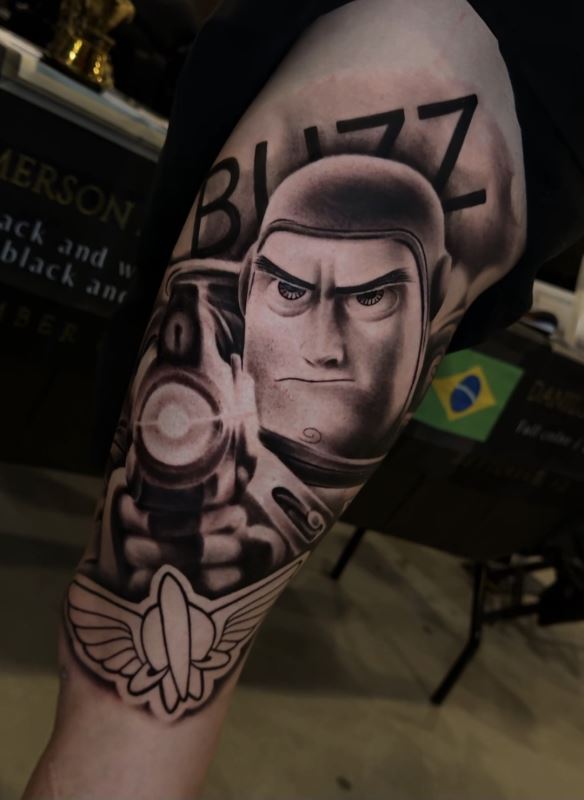
Q: Realism, especially in black and gray, is about capturing
light, shadow, and texture. What is the most challenging element of
realism for you, is it portraiture, animal fur/texture, or creating
depth on the skin?
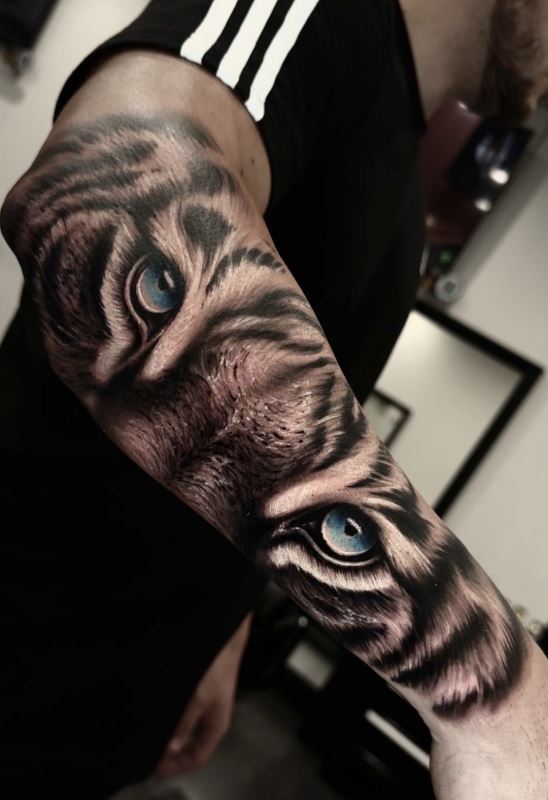
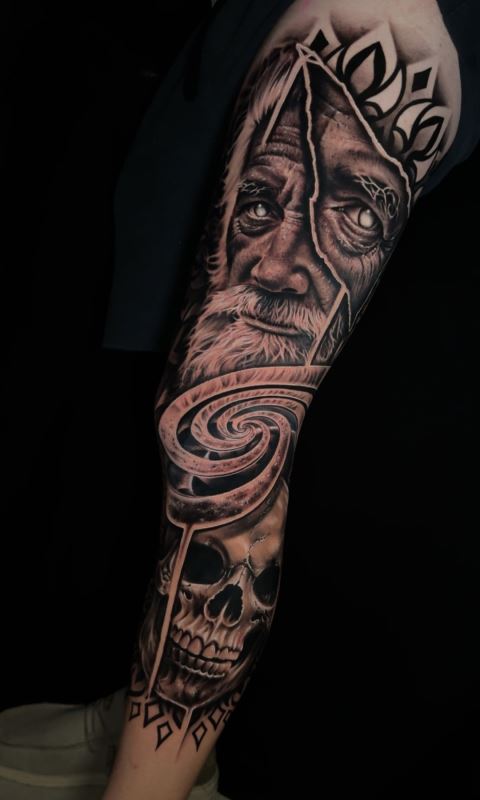
A: In black and gray realism, each element, light, shadow, and
texture requires a different mastery. For me, the greatest challenge
lies in the human face. Portraits demand extreme precision because
even the slightest variation in light, expression, or proportions
can completely change the person’s identity. It is the type of work
that requires patience, care, and a lot of artistic sensitivity. On
the other hand, animal textures and smooth shading are exactly where
I excel. Fur allows me to work with movement, flow, and depth in a
very natural way. Smooth shading is one of the areas where I have
developed the most control, creating clean, soft transitions with
good durability on the skin. Depth is also a challenging element,
but it is through depth that I bring life to my compositions. In the
end, each area has its complexity: Portraits, my greatest challenge.
Fur and smooth shading, where I deliver my best results and express
my style most effectively.
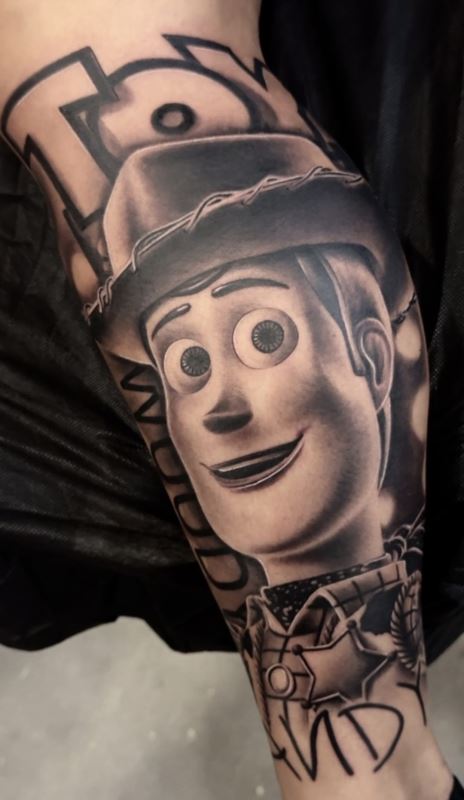
Q: Walk us through your design process. When a client comes
in with an idea, how do you take it from a concept to a final,
print-ready stencil? Do you prefer digital design tools, hand
drawing, or a combination for your sleeves and large pieces?
A: When a client comes in with an idea, I begin by listening
carefully to understand what they want and the story behind the
tattoo. Most of the art I create is completely customized: I pay
close attention to what the client wants to convey and transform
100% of these ideas into an exclusive design, made especially for
them. The entire process is carried out digitally on an advanced
iPad, where I create all necessary drawings within the project,
adjusting proportions, details, and shading. For the stencil, I use
advanced equipment: a printer that prints the ready stencil,
ensuring the lines match the design exactly and that the final
result is faithful to the concept, while also being comfortable for
the client during application.
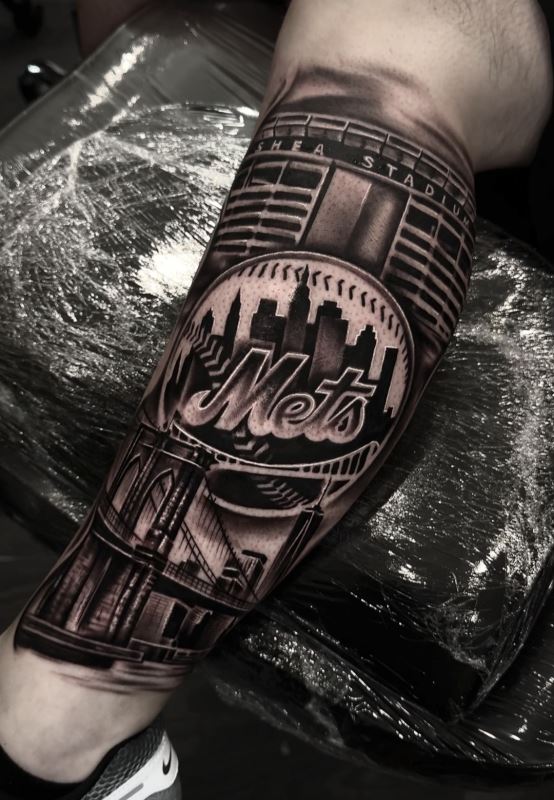
Q: For a realism artist, the tools are essential. Are there
specific machines, needle configurations, or pigment brands that you
rely on to achieve the rich blacks and smooth gray washes we see in
your portfolio?
A: In realism, tools are essential. To achieve deep blacks and
smooth grays, I use high-performance rotary machines combined with
specific needle cartridges for shading and detailing. I prefer
pigments from well-recognized brands known for their stability,
intensity, and smoothness, ensuring the tattoo ages well. Each
combination of machine, needle, and ink is carefully chosen for each
project, always using the best materials available on the market
from reputable brands.
Q: The pieces in your portfolio are highly detailed and
often cover large areas like full sleeves or back pieces. How do you
approach the initial client consultation to manage their
expectations, ensure a cohesive design, and guide them through the
multi-session commitment?
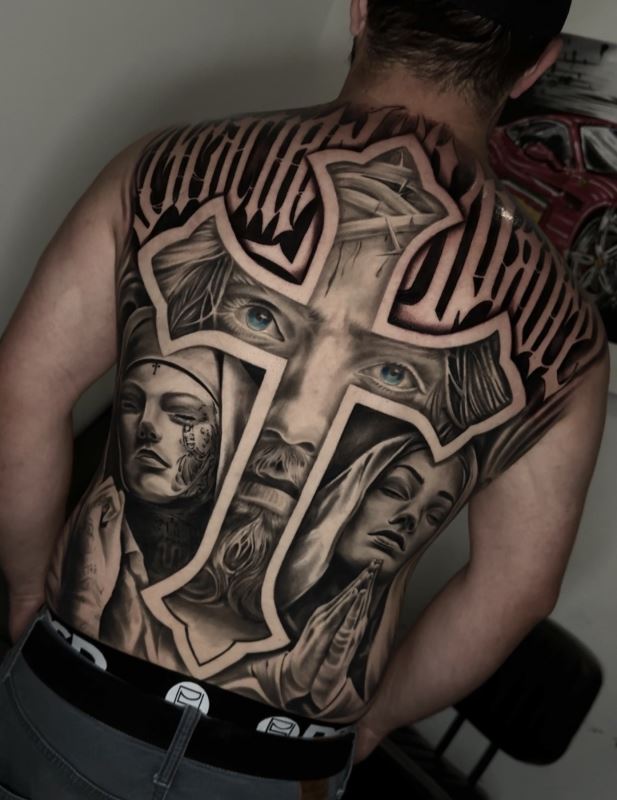
A: For large pieces, such as full sleeves or back tattoos, the
initial consultation is crucial. I listen carefully to understand
the client’s expectations, references, and goals. I present
preliminary sketches, explain the flow of the tattoo on the body,
and discuss the number of sessions required. The objective is to
ensure cohesion, harmony, and that the client understands the
multi-session commitment, so that the final result is faithful to
the concept and comfortable to execute.
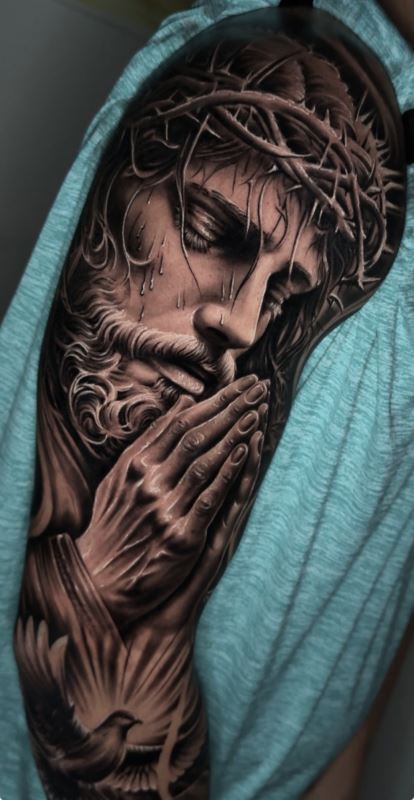
Q: After so many years, is there one client or one specific
project that stands out as the most unique, challenging, or
emotionally rewarding piece you’ve ever tattooed, and why?
A: I have had hundreds of clients, but the most challenging for me
was participating in my first international convention. I was
competing with the best tattoo artists in the world, which made me
very nervous and emotional. However, I achieved first place with the
two tattoos I presented at the event.
Q: What does a typical workday look like for you in the
studio? How do you balance the physical demands of long tattooing
sessions with the creative energy required to deliver such
consistently high-quality realism?
A: My day at the studio starts early, reviewing appointments and
preparing materials. Tattoo sessions can last several hours,
requiring attention, good energy, and constant creativity. To
balance this, I do stretches, take strategic breaks, and maintain
proper nutrition. My focus is always to deliver quality and
consistency in every session, regardless of the size of the piece.
Q: Would you experiment with a different tattoo style?
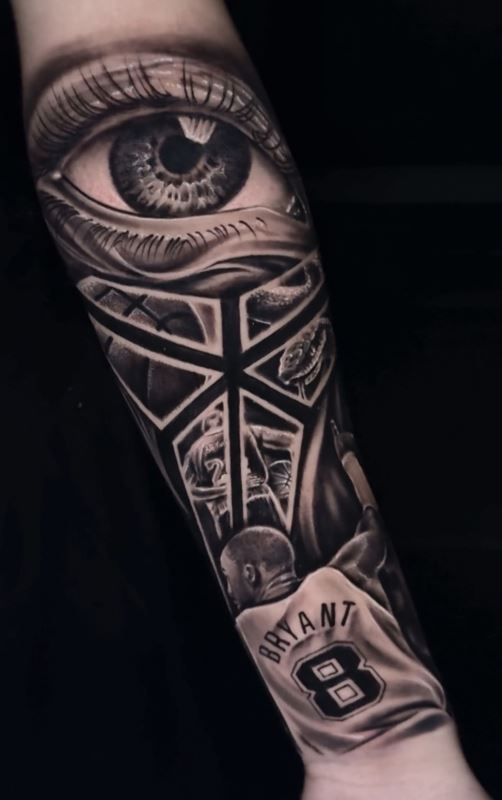
A: I have had the opportunity to work with other tattoo styles, such
as Maori, fineline, and full color, but I deeply identify with black
and gray realism. I feel a strong connection to this style and being
dedicated to continually learning and refining my techniques, I
prefer to focus on it at the moment. My goal is to master realism
more and more, ensuring excellence and consistency in every work I
create.
Q: Where are you located? Please write down your studio
location and website/social media links. Are you available for
bookings?
A: My studio is located in São Paulo, Brazil, in one of the city’s
main neighborhoods. At the moment, I am living in Orlando, Florida,
and my schedule is not open for new bookings. To view my work and
get in touch: Instagram: @e.tattoonick
Email: Emerson.wanderson25@gmail.com or
Emerson.wanderson2507@icloud.com
Q: What's your take on the local tattoo scene? Do you see
progress?
A: The tattoo scene in Brazil evolved greatly in the recent years. I
see more professionalism, specialization in styles such as realism,
and a growing appreciation for detailed technique and artistry.
There is more competition, but this elevates the quality of work in
the market.
Q: Looking at the global tattoo community, what excites you
the most about the current state of realism tattooing, and where do
you see the style evolving technically over the next five years?
A: What excites me most about the global scene is the constant
technical innovation and the artistic precision that artists are
achieving. In the next five years, I see evolution in more realistic
textures, smoother shading, integration of hybrid styles, and
greater control over skin tone and tattoo longevity.
Q: The United States has a very distinct and influential
tattoo culture. What are your observations on the American tattoo
scene, particularly regarding realism artists, and how does it
compare to the scenes you’ve worked in internationally?
A: The United States has an extremely influential tattoo culture. I
have observed great specialization in realism, refined techniques,
and high appreciation for the final aesthetic. Compared to other
countries, the technical demands and innovation are very high,
though I believe Brazil has also produced internationally recognized
work.
Q: How important is for one artist to be sponsored by tattoo
brands?
A: Being sponsored by brands is important as it provides access to
quality materials, visibility, and professional growth
opportunities. However, I believe talent, dedication, and technical
consistency should always remain the priority.
Q: How often do you attend tattoo conventions?
A: I have attended several conventions in Brazil, mainly to enhance
my techniques, observe the work of other artists up close, and learn
about the materials and brands my colleagues use. My goal has always
been to focus on developing solid, high-quality work worthy of
recognition at conventions. More recently, in Orlando, I
participated in the Orlando Tattoo Show, where I had an incredible
experience and won three awards: 1st place in Video Game, 1st and
2nd places in Black and Gray Realism. These experiences allow me to
learn, exchange knowledge with other artists, and constantly refine
my technique, while reinforcing my commitment to quality and
artistic growth.
Q: Considering your international recognition, do you have
any immediate or long-term plans for guest spots, conventions, or
potentially establishing a presence for your work in the United
States?
A: I have long-term plans to do guest spots in studios in the United
States, participate in conventions, and expand my international
presence. My goal is to share my style and techniques, as well as
learn from the local artists.
Q: In terms of trends, innovation, and technical mastery, do
you see the American scene leading the way, or are there specific
countries or regions internationally that you feel are currently
driving the most compelling work in realism tattooing?
A: The American scene is a reference in technical innovation, but I
also observe incredible work in Europe and Brazil, especially in
detailed realism and large pieces. What impresses me most is the
controlled experimentation and the study of light and depth.
Q: If a client could only remember one thing about the
experience of getting tattooed by you, what would you want that
takeaway to be?
A: I would like the client to remember the complete experience, from
the service, comfort, and technical guidance to the final result of
the tattoo. But if they could remember only one thing, I would want
it to be the excellent service. I always listen carefully to what
the client wants, ensure they feel comfortable throughout the
process, and provide attentive care. This way, every time they look
at the tattoo, they will recall not only the art but the positive
experience they had with me.
Q: For aspiring tattoo artists who are looking to pursue a
career solely in realism, what is the single most important piece of
advice you can offer them?
A: The most important advice for anyone pursuing a career in realism
is to practice constantly, study real references, and to not be
afraid of making mistakes. Realism requires patience, observation,
and daily discipline. Investing in technique, attention to detail,
and continuous improvement is what makes an artist stand out.
Additionally, treat tattooing with respect, as each design will be
on someone’s skin forever. Be certain of what you truly want to
create and study thoroughly to ensure quality and safety in every
work.
Interview: Ivana Kancheska
Date 01 December 2025


