
Interview with Gabriel Santucci
In the world of contemporary tattooing, few
artists manage to blend technical precision and emotional narrative
as fluidly as Gabriel Santucci. Based in the vibrant artistic hub of
São Paulo, Gabriel has built a solid reputation in both
high-contrast black and grey and vibrant color realism. With over 50
awards and experience judging at some of the industry's most
prestigious conventions, his work goes far beyond the skin, it is a
true masterclass in composition and light. As he prepares to bring
his talent to the United States, we spoke with Gabriel about his
journey, from his early days in Brazil to his vision for the future
of American tattoo culture.
Q: Gabriel, looking back at the beginning of your career in
São Paulo, what was the first spark that drew you to tattooing over
other forms of art?
A: My first contact with tattooing was at age 10, when I accompanied
my mother to a local studio for her first tattoo. I was fascinated
by the energy of the environment and decided right then that I
wanted to be a tattoo artist. I’ve always loved drawing and
painting, but it was in tattooing that I truly found my life’s
purpose.
Q: Every artist has a "turning point" that moment they
realize they can turn a passion into a profession. When was that for
you?
A: In 2014, I was working in my field of study, audiovisual
production, as a video editor for an advertising agency. That was
when I decided to buy my first tattoo kit. I did my first tattoo on
my mother, and at that exact moment, I knew I would never stop. I
have dedicated every day since then to studying and improving in
this field, which, as I saw it, depended entirely on my own effort.
Still in 2014, at age 23, I landed my first spot in a reputable
studio in the region and never worked in another field again.
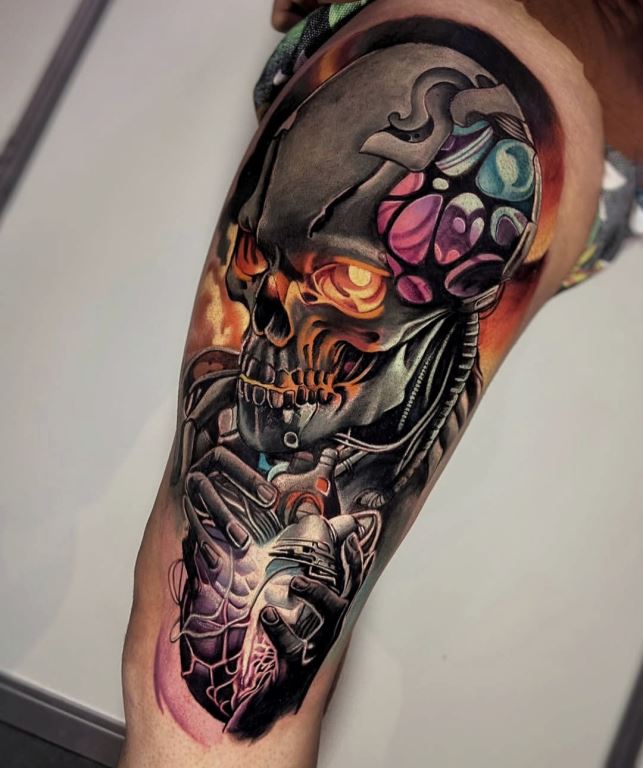
Q: Who were the mentors or local references in the Brazilian
scene who helped shape your work ethic early on?
A: The first studio I worked in was in a large commercial center, so
I handled a high volume of small "walk-in" jobs during that first
year. In 2015, I moved to MANDALA TATTOO, a studio with artists from
more traditional backgrounds, such as Tribal, American Traditional,
and Oriental. This shaped how I view tattooing as an art form. I
began studying drawing and tattoo languages more deeply. A year
later, in 2016, I won my first award in the "Drawing Series"
category, a highly competitive category in Brazilian conventions. I
truly consider my time at that studio as the foundation that allowed
me to see tattooing artistically as I do today.
Q: In those early years, what was the biggest technical
challenge you faced learning to work on skin?
A: Dealing with the pressure of being creative at all times. In the
beginning, it was difficult to process the fact that the client
always expects the most creative idea possible from you. With little
experience or portfolio, it was a major challenge. Today, I
understand that creativity is a skill we can cultivate and refine
over time.
Q: How did your upbringing in Brazil influence the types of
stories you wanted to tell through your art?
A: Brazil is multicultural in many ways, so art is explored from an
early age whether in schools, government-run cultural centers, or on
the streets. Throughout my trajectory, I have always been connected
to art. I’ve played guitar since I was ten and I’ve always loved to
draw. My background in audiovisual production and advertising also
plays a part. I believe my unique perspective comes from living
through all these different creative disciplines.
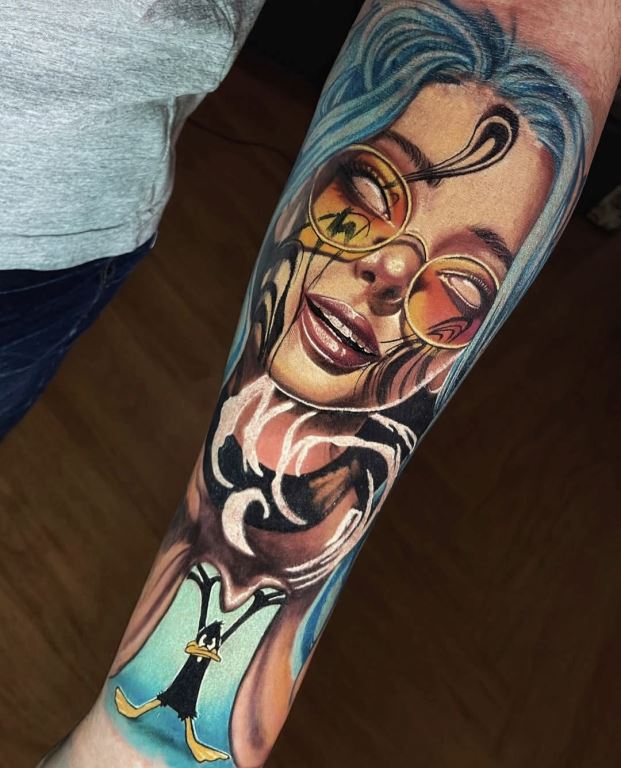
Q: You’ve won over 52 awards. Do you remember the feeling of
winning your first major trophy? How did that change your
trajectory?
A: Stepping onto the stage to receive an award is an incredible
rush! It’s gratifying to see recognition for a job that is entirely
your own. While competitions have specific criteria, you feel you’re
on the right path when you receive an award, regardless of the
difficulty level. But of course, in renowned competitions, the
emotion is much greater. When I won an award in 2024 at Tattoo Week
one of the largest and most prestigious events in the world, I went
home voiceless from celebrating so much. It was surreal. Through
conventions, I have achieved much more than just trophies; I met
good friends, connected with clients who found my work by watching
me tattoo live, and secured my sponsorship with CHOLOS. Awards bring
significant recognition from both clients, who see the artist as an
authority, and brands looking to add elite artists to their teams.
Q: How has your experience as a 13-time judge changed the
way you look at your own work?
A: The first time I judged, I was very nervous; I didn’t know what
to expect from the evaluation process. I was anxious to be on the
"other side." It was a surreal experience. I finally understood
points that were somewhat abstract in my head regarding the "fit"
and "coherence" of a tattoo. At every new convention, I learn by
observing the work and exchanging experiences with other judges.
Now, when I compete, I always remember the works I analyzed and
think: "I better pay extra attention to this hair; that piece lost
last time because of a detail like this."
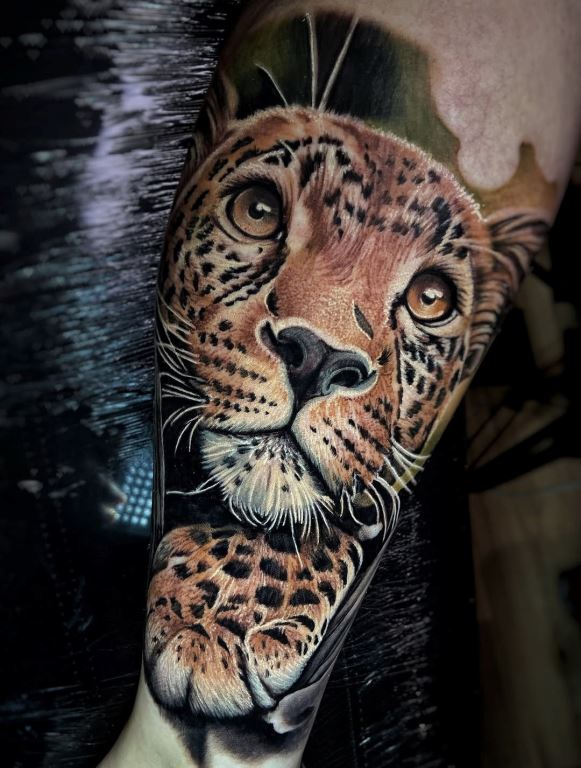
Q: Your portfolio shows an impressive mastery of both
high-contrast black and grey and vibrant color realism. How do you
balance these two different languages?
A: The tattoo market in Brazil is about 80% black and grey. I spent
a long time perfecting my B&W realism until I reached a plateau
where I wasn't evolving as fast as before. That’s when I started
looking more into color realism. This gave me a 360-degree view of
application and contrast. I love studying different styles to gain a
better perspective, I even enjoy tattooing Oriental styles because I
admire how they handle anatomical flow. Art is movement; I don’t
like to stay stagnant.
Q: When you start a new piece, how much of the composition
is planned and how much arises intuitively, reacting to the client's
anatomy?
A: For most appointments, I discuss the art with the client only at
the time of the tattoo. I create a preliminary idea but keep it
completely open to changes. I believe the tattoo must be a mutual
agreement between both parties. While a client’s anatomy may vary,
there are certain "fit" rules I like to respect, so anatomical
adjustments to the composition are usually minor.
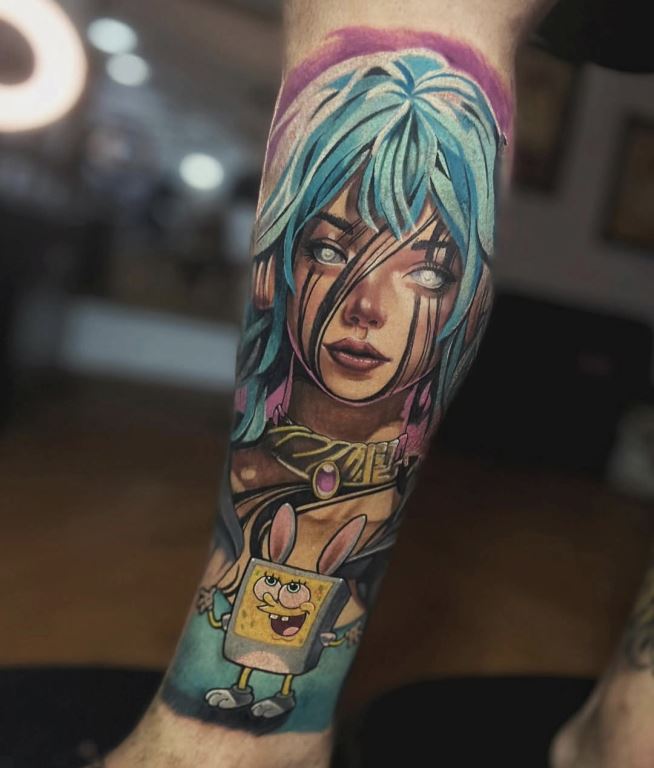
Q: Light and shadow are clearly central elements in your
work. What is your philosophy on using "negative space" to create
depth?
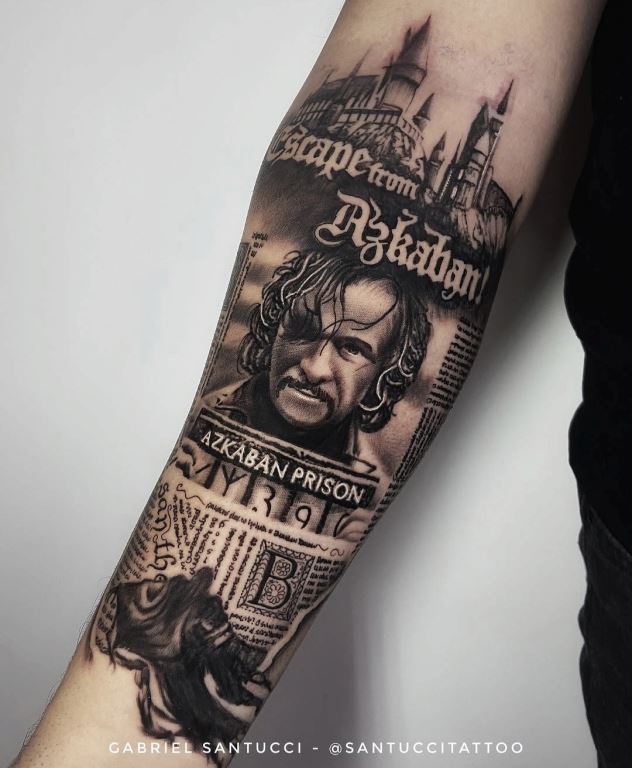
A: I’ve learned that a well-lit piece lasts a lifetime. I like
working with strong contrasts in both color and black and grey.
Balanced lighting makes the work easy to observe and prevents it
from looking cluttered. But my main focus is a "real" tattoo one
that goes beyond the photo and possesses durability. One of the most
relevant awards I have is for a "Healed Tattoo" at a São Paulo
convention; this proves I am on the right path regarding technical
longevity.
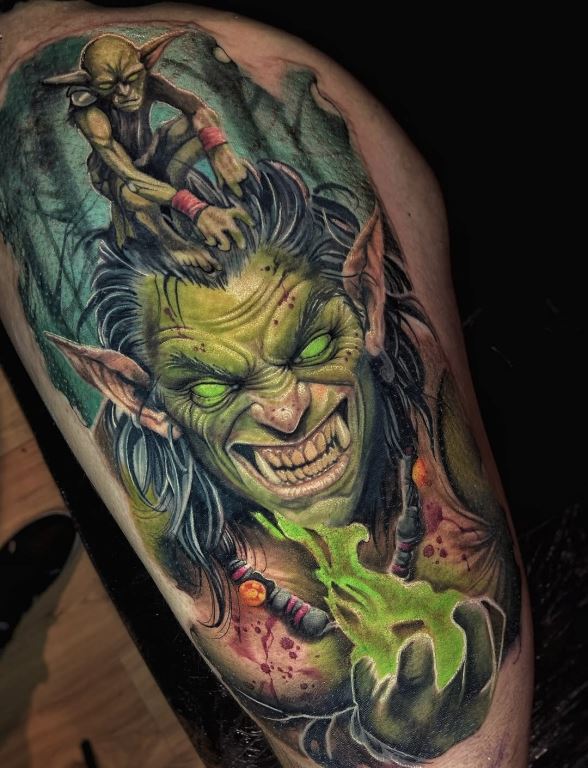
Q: Many of your pieces have a cinematic feel. Do you draw
inspiration from cinema, photography, or classical painting?
A: Having a degree in Audiovisual production, I am very connected to
cinema. I studied photography, contrast, and colorimetry
extensively, so it’s inevitable that this influence carries over to
my tattooing. I began studying classical paintings more closely in
2021 when I started color realism, which added a new school of
thought to my knowledge. Beyond that, I consume a lot of media
games, series, and books. It all adds to the "library" inside my
head.
Q: How would you describe the "Gabriel Santucci signature"
to someone who has never seen your work?
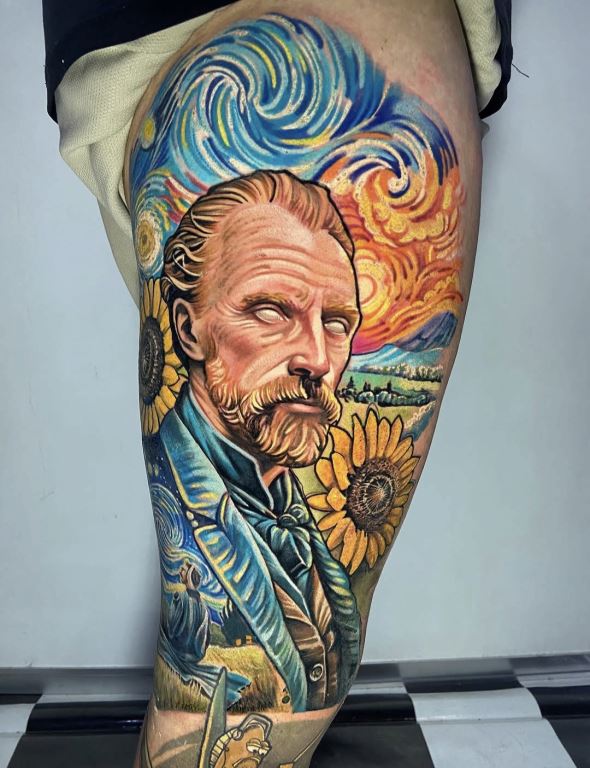
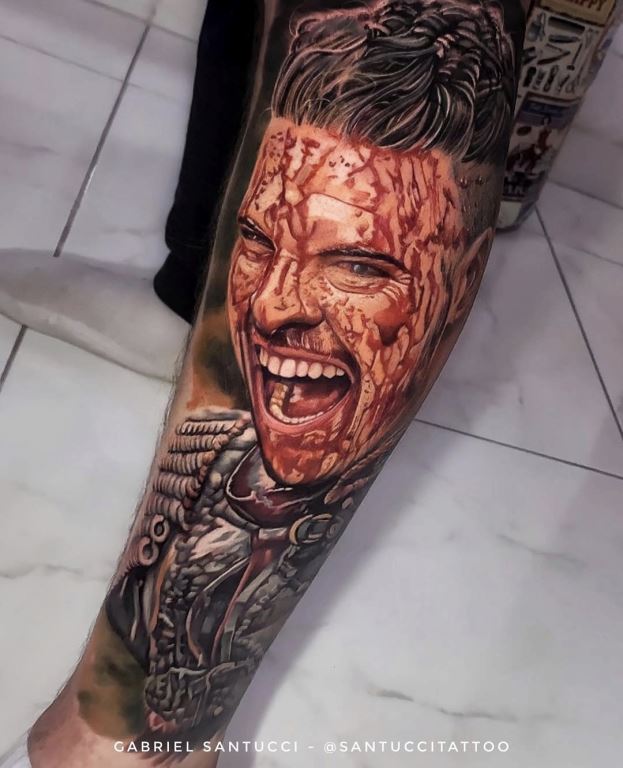
A: Something between the Real and the Surreal. I love doing
realistic tattoos, but I love even more creating fictional
characters or bringing light to unexplored themes using realistic
techniques. You’ll find tattoos on my Instagram that are unlike
anything you’ve seen whether it’s a Van Gogh with white eyes or a
chrome-textured Ghostface.
Q: In terms of technical evolution, what specific skill have
you mastered in the last two years that took your work to another
level?
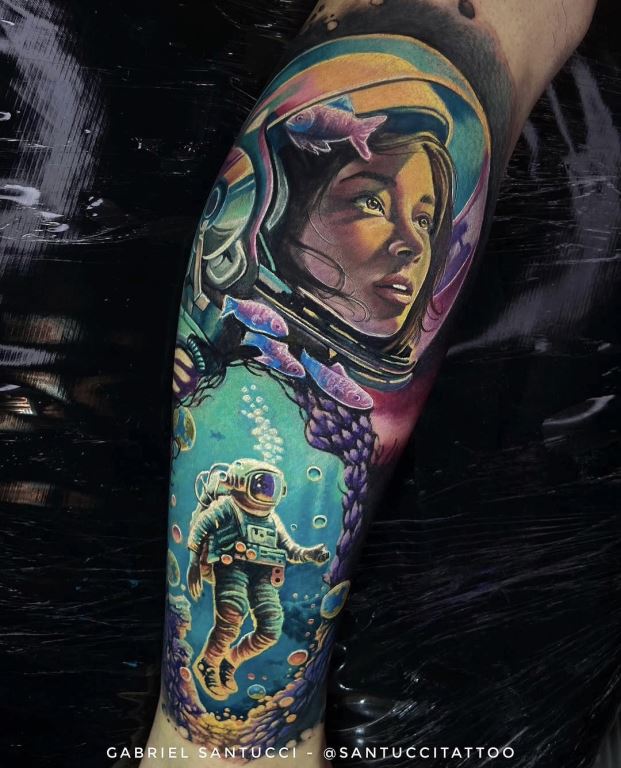
A: I believe it was applying all the knowledge gained from realistic
techniques into different types of pieces. Tattooing a portrait is
great, but I started to get bothered by "square" work on the skin. I
began focusing on larger pieces that respect the body's anatomy and
are built to last. I believe that is the essence of my work today:
creativity and durability.
Q: How do you ensure that highly detailed realism stands the
test of time and remains legible as the skin ages?
A: The secret lies in the management of mid-tones and the exact
depth of the ink application. I use a wide tonal scale, ensuring
that even after years of cellular regeneration, the contrast between
the maximum highlights (negative space) and the densest shadows
maintains a clear and impactful read.
Q: Brazil is often cited as one of the most innovative
tattoo scenes in the world. What makes the Brazilian style so
distinct on the global stage?
A: Brazilians are generally very creative and resilient. The country
is multicultural, with strong influences from various nations
throughout our history, giving us a vast cultural repertoire.
Tattooing in Brazil is in its prime; artists are always seeking
knowledge and clients are always seeking the best art. I believe
that’s why it has evolved so much in the last decade.
Q: Having traveled and followed international work, what do
you think is the biggest misconception people have about the South
American tattoo community?
A: The biggest misconception is underestimating our technical
sophistication. Often, the world looks at South America expecting
only the "exotic," but today, Brazil has study centers and artists
operating at a level of hyper-realism and professional organization
that rivals the best studios in Europe and the United States.
Q: How has social media changed the way you connect with the
global community compared to when you started?
A: When I started in 2014, Instagram was a social network of square
photos where people mostly posted personal content. Tattooing was
very "walk-in" based clients would go to the studio to talk, and we
spent the day drawing and waiting for them. Since the pandemic, the
whole scene has moved online. Large studios became private,
operating only by appointment, as the client now messages first.
This has made global contact much more direct and easier to secure
guest spots worldwide.
Q: Do you feel that the "globalization" of tattoo styles is
improving the art, or are we losing some local identity?
A: I believe both are true. Today, social media delivers content
from all over the world. It’s not uncommon for me to do a tattoo
based on Norse mythology on someone born in São Paulo who has never
been to a Nordic country. Tattooing is about telling the stories we
identify with. Local identity should be preserved, but tattooing can
simply be one part of that project. We are evolving as a community;
I see it like "scientific articles." One artist posts a result, and
another artist elsewhere uses that study and adds their own
experience to it. That is how the art evolves.
Q: Why the United States? What specifically about American
tattoo culture attracts you at this point in your career?
A: The USA is the backbone of modern Western tattooing. Entering
this market is not just a commercial step, but an immersion into the
source of the references that shaped my beginnings. I seek the
exchange: bringing Brazilian aesthetics and grit to a
high-visibility stage where the relationship between art, brand, and
client reaches its most professional level.
Q: The O-1B visa is reserved for individuals with
extraordinary ability. How do you believe your artistic voice
contributes to the diversity of the tattoo scene in the USA?
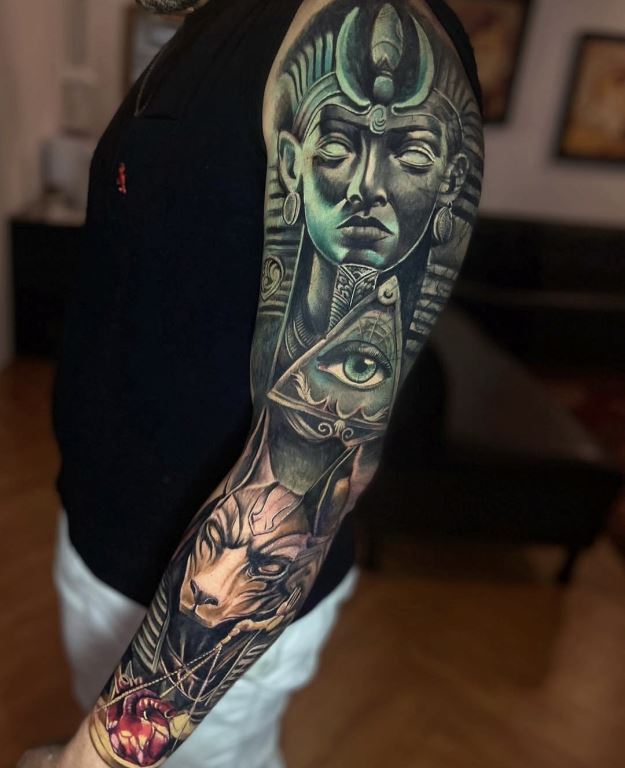
A: My roots in Brazil made me a very resilient artist. My
contribution lies in the fusion of academic technique and tropical
versatility. As an artist who masters both realism and complex
ornamental compositions, I bring a multifaceted vision that helps
push the boundaries of custom tattooing in the US.
Q: Are there American artists or studios you admire from
afar and would like to collaborate with?
A: Many! The US scene is the largest in the world and draws artists
from everywhere. Names like Nikko Hurtado, Ami James, DJ Tambe, and
Valentina Riabova inspired me when I started. I would love to
collaborate with any of these references one day.
Q: What do you see as the biggest difference between the
expectations of a client in São Paulo and a client in cities like
Los Angeles or New York?
A: Both markets are very demanding regarding quality. My role as an
artist is to always deliver a result beyond the client’s
expectations. Being "high-performance" is something we tattooists
must get used to. I expect to find new challenges, especially in
different visual languages and surprising ideas.
Q: How do you intend to push the limits of your realism as
you enter the American market?
A: Study, study, and study. That’s what I’ve done since my very
first tattoo. I’m not someone who likes to stay stagnant. I want to
constantly explore new languages and art forms to improve my
execution. I am genuinely excited for this new challenge!
Q: Where do you see your brand, "Santucci Tattoo," five
years after establishing yourself in the United States?
A: In five years, I see Santucci Tattoo as a reference for
international artistic consultancy. My goal is to consolidate an
authorial style recognized for the fusion of creativity and
durability. More than a brand, I want my work to be seen as a legacy
of how Brazilian art can raise the standard of global realism.
Q: If you could go back in time and give one piece of advice
to yourself on the day you picked up your first machine, what would
it be?
A: I’ve enjoyed the journey so far; I’ve studied hard and I’m truly
passionate about this. I believe everything has its right time, but
I also think I delayed starting something I had wanted since I was a
child. Fear was what kept me from starting sooner. If I could give
myself one piece of advice, it would be: "Trust the process."
Q: What does "success" mean to you today, compared to what
it meant at the start of your career?
A: When I started, success in my head was purely financial. The more
tattoos and clients I had, the more I felt I was on the right path.
Today, I see my profession as a life purpose. Success is seeing a
client’s self-esteem renewed after a cover-up. It’s knowing that
everything I’ve achieved for myself and my family was through my
art. Success is providing for my family while touching people with
something that comes from within me.


