
Interview with Iuri Waitzberg
Hello Iuri Waitzberg, it's a pleasure to
have you. What sparked your initial connection with the arts? Can
you recall any early moments that revealed your artistic
inclination? I've always been drawn to art, even as a kid.
I remember spending hours sketching whatever caught my eye, animals,
faces, random patterns. My connection with art really solidified
when I got into classical paintings and started understanding the
depth behind them. It was never just about making something look
good, it was about telling a story, evoking emotions, and capturing
moments.
Q: Are there any artists who had a profound impact on your
work?
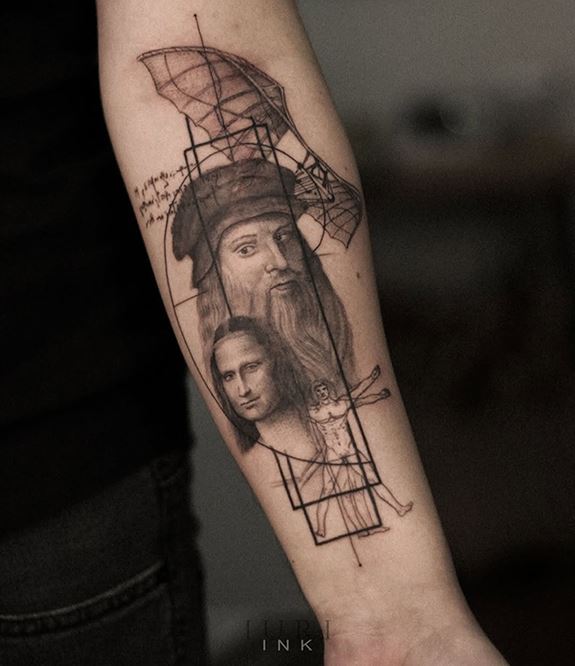
A: Absolutely. Bouguereau, Michelangelo, and Picasso are major
inspirations. Bouguereau’s mastery of realism, Michelangelo’s
understanding of anatomy, and Picasso’s ability to break traditional
forms have all influenced how I approach my own work. I love
blending structure with expression, and those artists shaped my
perspective on that.
Q: When did you pick up a tattoo machine for the first time?
What was that experience like?
A: I first picked up a tattoo machine in 2018, and it was a mix of
excitement and pure adrenaline. Tattooing skin for the first time is
a completely different feeling from working on paper or canvas. My
hands were steady, but my mind was racing. It was an incredible
moment, realizing that this was something I wanted to dedicate my
life to.
Q: What obstacles did you navigate while learning the
fundamentals and cultivating your artistic voice?
A: Tattooing comes with a huge learning curve. Mastering needle
techniques, understanding skin behavior, and managing client
expectations were big challenges. Beyond that, developing my own
style while respecting traditional techniques took time and
persistence. I had to balance technical precision with artistic
intuition.
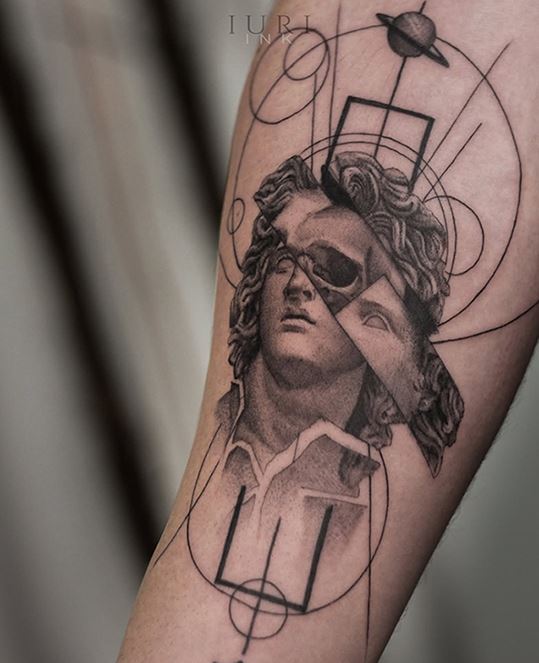
Q: Why did you choose to specialize in
realism, and what do you find most compelling about it?
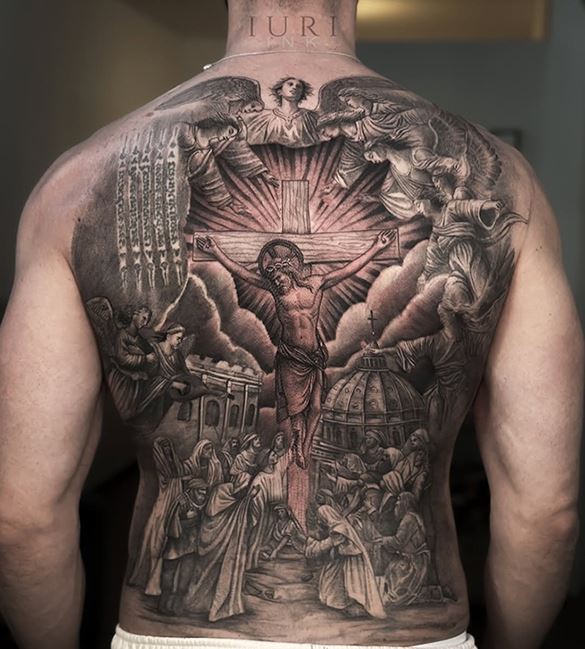
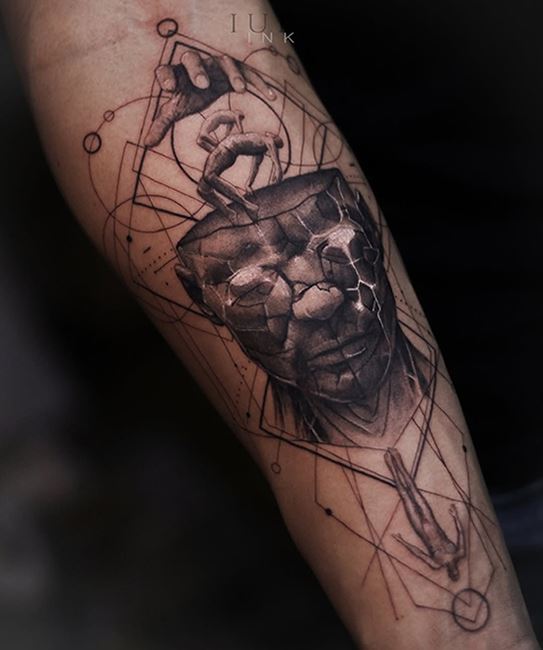
A: Realism is captivating because it pushes you to see beyond the
surface. Every detail, shadow, and texture tells a story. I love the
challenge of making ink look alive on skin, especially when
incorporating elements of geometry or classical art into my pieces.
It’s about more than replication, it’s about creating depth and
meaning.
Q: Could you elaborate on your creative considerations for
monochrome work? Do you envision incorporating color in the future?
A: Black and gray work has a timeless, elegant quality that I’m
drawn to. The way light and shadow interact in monochrome is
fascinating to me. I focus a lot on contrast, textures, and smooth
gradients to bring out depth. As for color, never say never. If the
right project comes along, I’d definitely be open to exploring it.
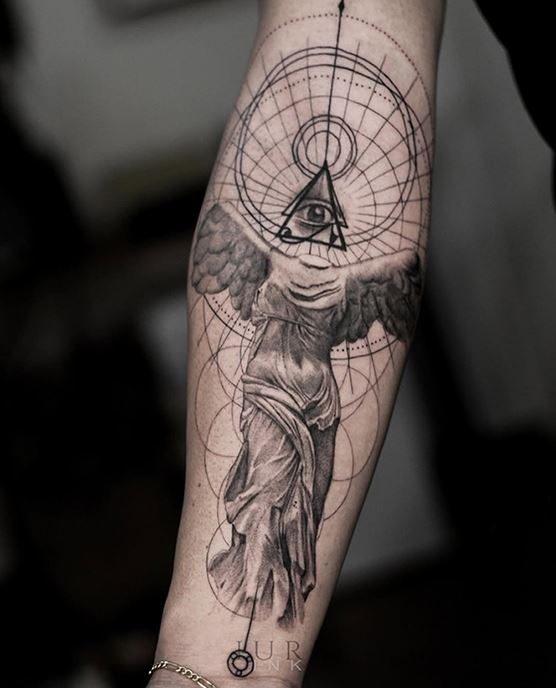
Q: What aspects of ancient Roman-Greek culture appeal to you
the most? Any specific gods or figures that inspire you?
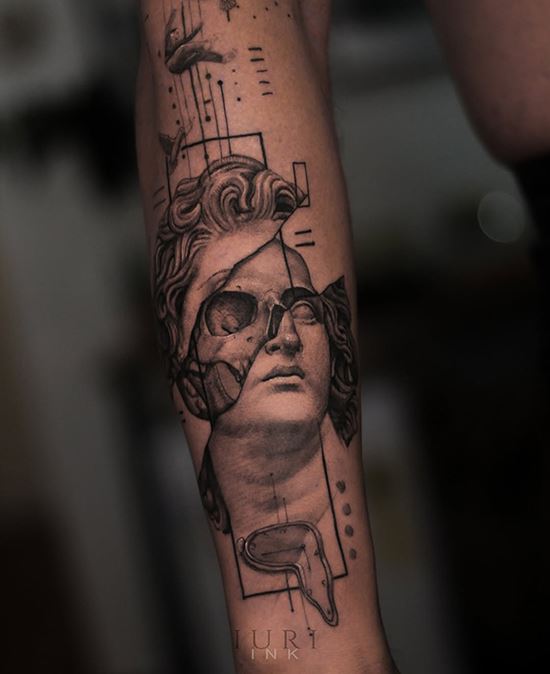
A: There’s something incredibly powerful about ancient Roman-Greek
art. The sculptures, mythology, and philosophy all resonate with me.
Figures like Apollo and Athena represent ideals of wisdom, artistry,
and strength, which I find inspiring. The way they depicted the
human form with such precision and emotion is something I try to
channel in my work.
Q: What are the most intricate details
when working on a realistic portrait?
A: The eyes, without a doubt. They carry the most expression in a
portrait, but it’s also crucial to understand how to guide the
viewer’s eye. Knowing where to place details and where to hold back,
creates atmosphere and depth in the artwork. It goes beyond just
reproducing an image, it’s about shaping the way the piece is
perceived.
Q: How do you navigate the balance between client vision and
your artistic expression?
A: It’s all about communication. I listen to their ideas, understand
what they’re looking for, and then find a way to blend it with my
artistic approach. The best projects happen when there’s trust, when
the client gives me creative freedom within their vision.
Q: How do you build and maintain client trust?
A: Consistency, honesty, and always delivering my best work. Trust
is earned over time, and I make sure every client knows they’re in
good hands. One of the best parts of this job is seeing returning
clients who trust me with their skin, it’s an honor.
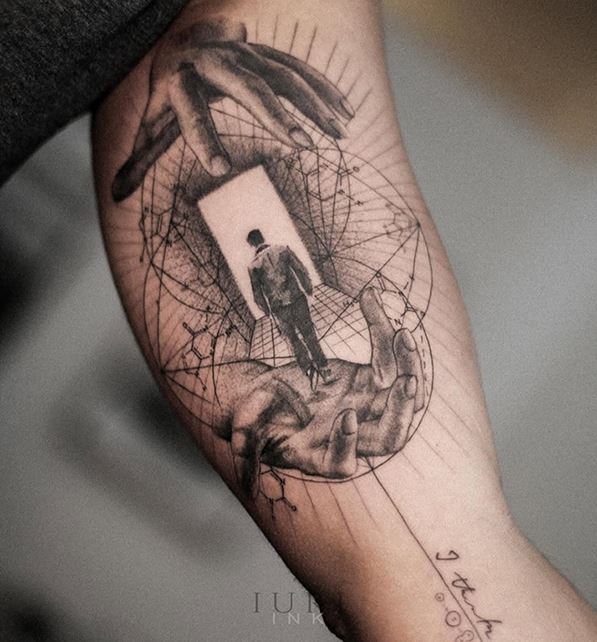
Q: How do your painting and drawing skills
enhance your tattoo work?
A: Strong drawing skills are essential for tattooing. Understanding
form, light, and composition allows me to create tattoos that flow
naturally with the body. Painting helps me experiment with shading
and depth, which translates directly into my tattoo work.
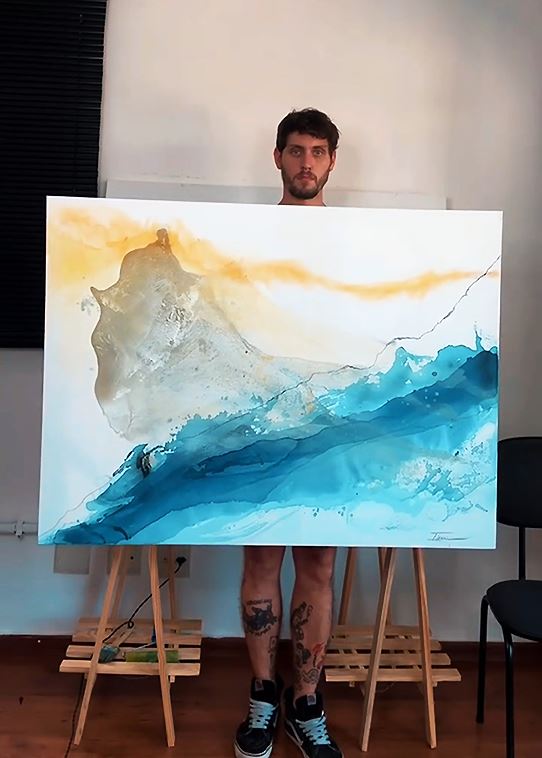
Q: What vision or concept drove the creation of 'Travessia'?
How long did it take to complete?
A: "Travessia" was a deeply personal piece about transformation and
movement. It took weeks to complete, balancing fine details with
emotional weight.
Q: Do you accept commissions for custom
paintings or designs?
A: Yes! I love creating custom artwork, whether for tattoos or
standalone pieces.
Q: Are there other creative avenues you’d like to explore?
A: Definitely. I’d love to explore clothing design, but also
photography and writing. Outside of art, I have a deep appreciation
for nature and music, which often influence my work.
Q: Studio location & booking availability:
A: Iuri Ink Studio – São Paulo, Brazil
Instagram: @iuri.ink Website: www.iuri.ink
Bookings: contact at: +55 11 953390925
Q: What impact does your mentorship
program strive to create, and what are its main goals in achieving
that?
A: My mentorship is designed for tattoo artists who want to refine
their skills, develop their own artistic identity, and gain a deeper
understanding of the craft. It’s a hands-on, immersive experience
where I guide each artist through both the technical and creative
aspects of tattooing. We cover everything from composition,
application, and equipment to skin preparation, photography, and
post-tattoo care. Beyond the techniques, I help artists understand
how to make conscious artistic choices and refine their personal
style. One of the key aspects of the mentorship is the balance
between theory and practice. After an initial in-depth discussion
where I answer all their questions, the artist has the opportunity
to tattoo under my supervision, receiving real-time feedback and
insights. This practical experience allows them to fine-tune their
approach and troubleshoot any challenges with direct guidance. Plus,
I offer ongoing support through WhatsApp, so the learning process
continues even after the mentorship ends. It’s not just about
technical improvement it’s about evolving as an artist and gaining
the confidence to create unique, meaningful work.
Q: How do you perceive the local tattoo
scene?
A: São Paulo’s tattoo scene is constantly evolving. There are many
talented professionals here, but with the tattoo market booming,
there's also an influx of new artists.
Q: Is it easier for aspiring tattoo artists to break into
the industry now?
A: Yes and no. There are more learning resources, but the
competition is tougher. It takes even more passion and dedication to
stand out.
Q: How often do you attend tattoo conventions? Have you won
any awards?
A: I actively follow the global tattoo scene but I never wanted to
participate in convention.
Q: Do you have any international guest
spots or residencies planned?
A: I’m working on future collaborations and travel plans so stay
tuned!
Q: Thoughts on the American tattoo scene & collaborations?
A: The diversity in the U.S. tattoo scene is inspiring. There are so
many incredible artists I’d love to collaborate with in the future.
Q: What legacy do you hope to leave in the tattoo community?
A: I want to inspire other artists to push their creative boundaries
while maintaining respect for the craft. Tattooing is more than just
ink on skin, it’s about the connections we build throughout the
process. Bringing that human element into tattooing is something I
deeply value. If I can help elevate the perception of tattooing as
fine art while emphasizing its emotional and relational aspects,
that’s a win.
Q: Favorite career highlights?
A: Every time a client tells me how much their tattoo means to them,
that’s the best highlight.
Q: What pivotal lessons have you learned? Any advice to your
younger self?
A: Patience is everything. Keep learning, keep evolving, and trust
the process. If I could go back, I’d tell myself to embrace the
journey, mistakes and all.


