
Interview with Jacek Kawa
Hello Jacek Kawa! Thank you so much
for taking the time to do this interview. Can you take us back to
the very beginning? Do you remember the specific moment or piece of
art that made you realize tattooing was the path you wanted to
follow? Tattooing wasn’t a sudden decision for me - it was
more like a natural evolution. While studying conservation and
restoration of fine art at the Academy of Fine Arts, precision and
respect for detail became my daily reality. I was surrounded by old
masters, layers of history, and technical discipline. The turning
point came when I realized I wanted my work to live on someone, not
just exist on a canvas or in a museum. Tattooing felt like the
perfect balance between craftsmanship and emotional connection. It
allowed me to translate everything I learned academically into a
living form of art.
Q: You work realism style now, but when you started, what
was your initial creative direction? How long did it take before you
felt your personal 'voice' start to emerge from the machine?
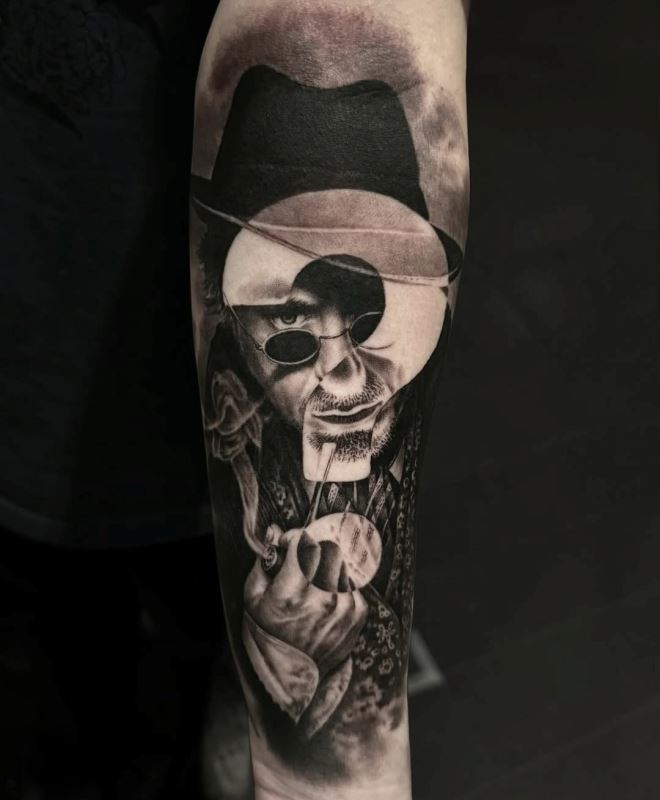
A: In the beginning, my focus was purely technical. Stylistically, I
experimented a lot - from black and gray realism, illustrative
elements to more graphic style with different textures. My personal
voice started to emerge after a few years. That’s when realism
merged naturally with surreal and abstract elements, and the darker
atmosphere appeared. I have always paid great attention to detail,
you can still see highly detailed compositions in my portfolio.
Q: Did you have any influential people who taught you the
fundamentals of drawing or tattooing or you are a self taught
artist?
A: I was lucky to have strong foundations from formal art education,
especially in drawing and observation. Tattooing itself began under
the guidance of a close friend who helped me take my first steps.I
also learned a lot through seminars and knowledge exchange with
artists like Yarson and Tomek Dvorniak. On a daily basis, working at
Jah Love Tattoo has been incredibly influential - constant dialogue
with experienced artists, pushes you to grow faster.
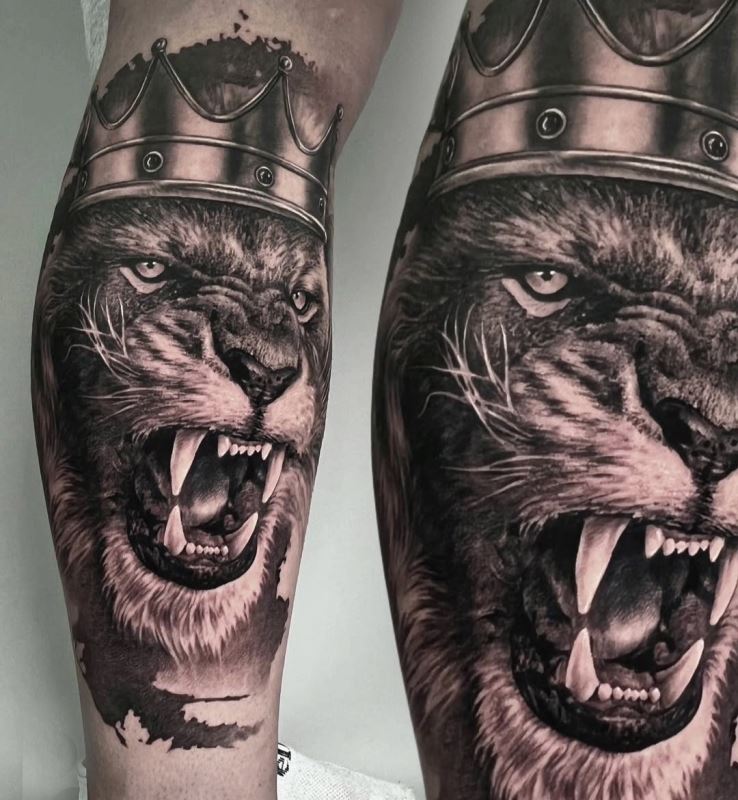
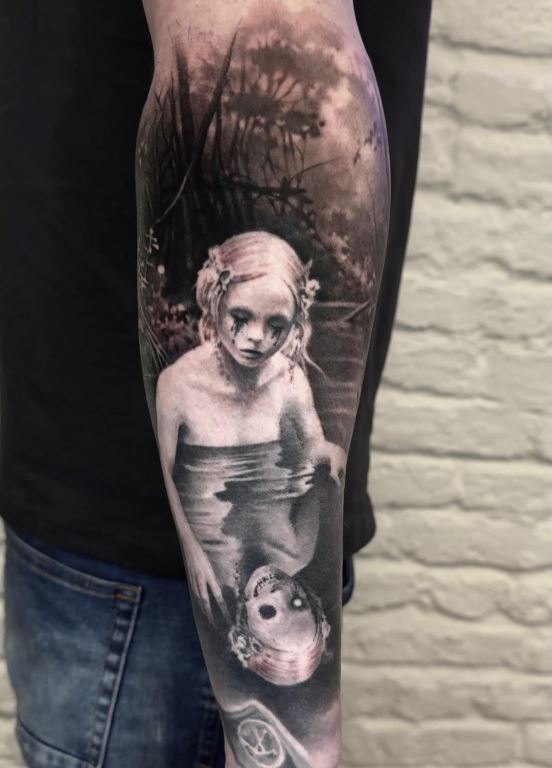
Q: A lot of your work has a dark, moody, or even 'dark-art'
surrealist vibe. When a client comes to you with a standard idea,
how do you inject your personal style into the design to make it
more atmospheric?
A: I always try to show my clients different possibilities. Even a
simple concept can carry depth if you approach it from the right
angle. I use contrast, texture, shadow and light to build up the
atmosphere and to add weight, sometimes it’s subtle abstraction,
sometimes a surreal twist. I dont try to overpower the client’s
idea, but to elevate it into something more interesting.
Q: The way you blend different elements in one tattoo is
very seamless. What is your process for designing a layout that
flows naturally with the body's anatomy?
A: As a tattoo artist you can’t treat the body like a flat surface.
Anatomy dictates everything. I work on an iPad and I use deformation
tools quite often. Sometimes that means sacrificing symmetry or
adjusting proportions, but the result feels organic. A tattoo should
look good not only in photos, but also in motion.
Q: Who decides about the final design?
A: I’m open to discussion and negotiation, because the tattoo
ultimately belongs to the client. At the same time, I need to be
honest about what works and what doesn’t.
The trust is crucial. When the client understands my approach and I
understand their expectations, we meet in the middle. I always try
to find the balance between artistic integrity and something the
client truly connects with.
Q: Your work has a distinctive 'cinematic' look with very
high contrast. How do you balance deep black saturation with
delicate gray washes to ensure the tattoo stays legible as it heals
over the years?
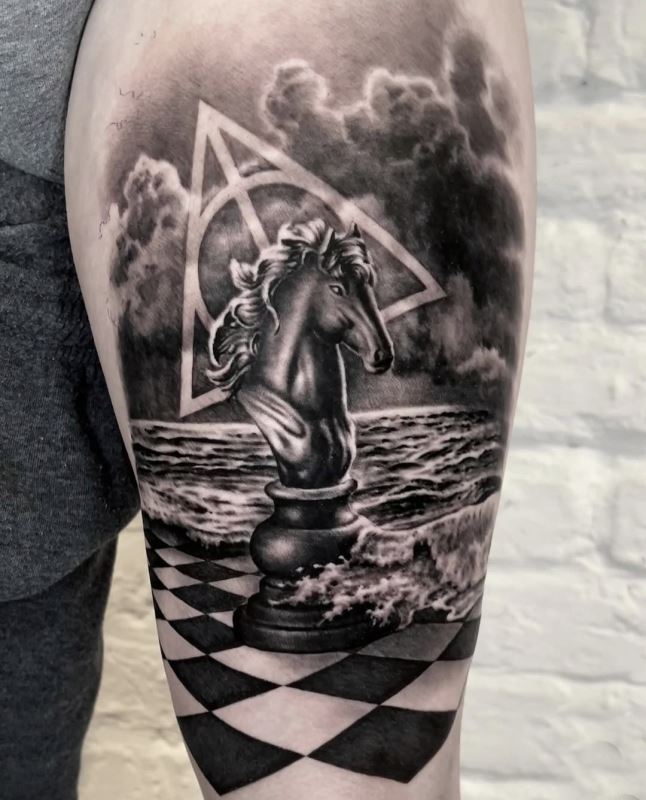
A: Longevity is always on my mind. Contrast is most important but
you need to use it wisely. I look for the perfect balance between
light and shadow, pure black, middle and light tones. I use solid
blacks strategically - as anchors, while creating smooth shades and
transitions with greywash tones. The key is to put every tones very
firmly and saturate skin well. This ensures the tattoo’s longevity.
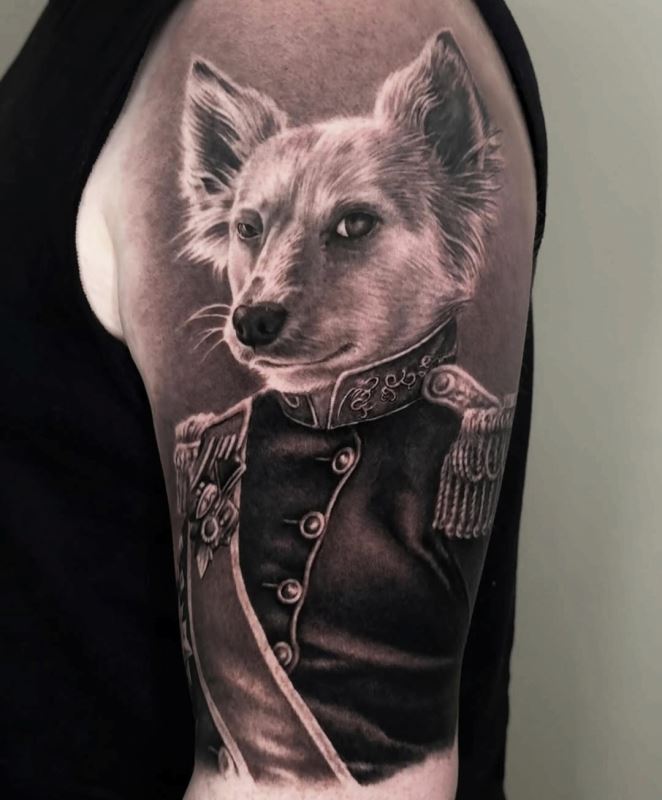
Q: For a strong realism tattoo, the quality of the reference
material is vital. How strict are you about the photographs or
images you work from, and what specific qualities do you look for in
a reference picture?
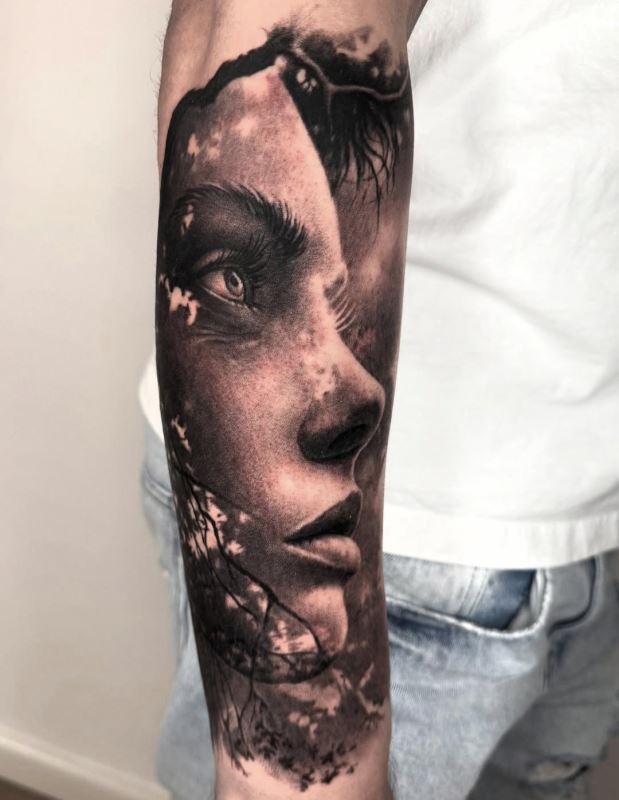
A: It depends on topic I work on. I’m very strict when it comes to
portraits. A good portrait can’t come from a poor reference. In
general more sharp and clear pictures - easier and more effective
work. If the reference isn’t good enough, I either ask for better
material or build my own references from multiple sources. In other
hand, sometimes I posterize my design to simplify shapes and
shadows, which allows me to focus my eye on what's most important.
Q: Is there one particular tattoo you’ve done that stands
out as your most challenging piece to date? What was the concept,
and what specific technical or logistical hurdle did you have to
overcome to bring it to life?
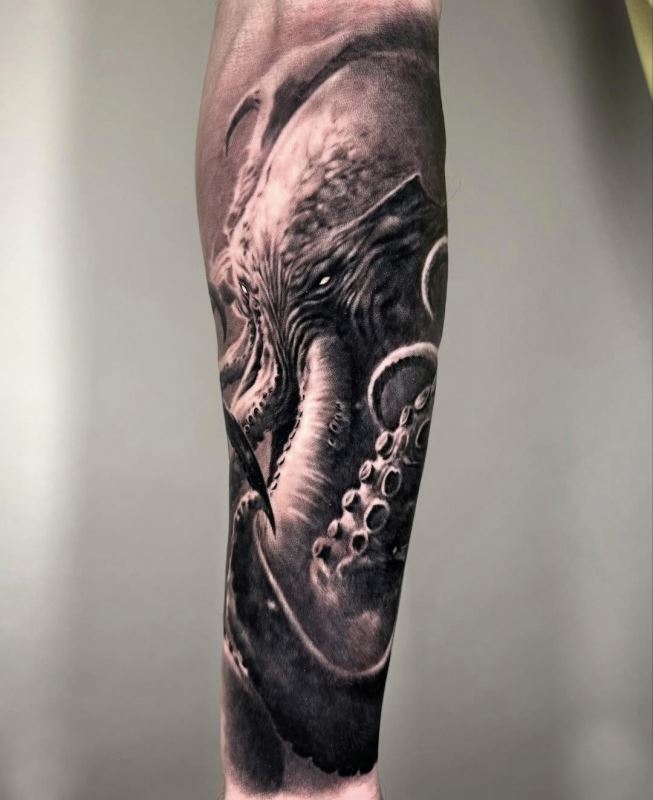
A: Not specific one but realistic large-scale compositions that
includes large body parts such as full leg sleeves or a full torso,
are always the most challenging for me, due to compositional issues
and the client's anatomy and skin response.
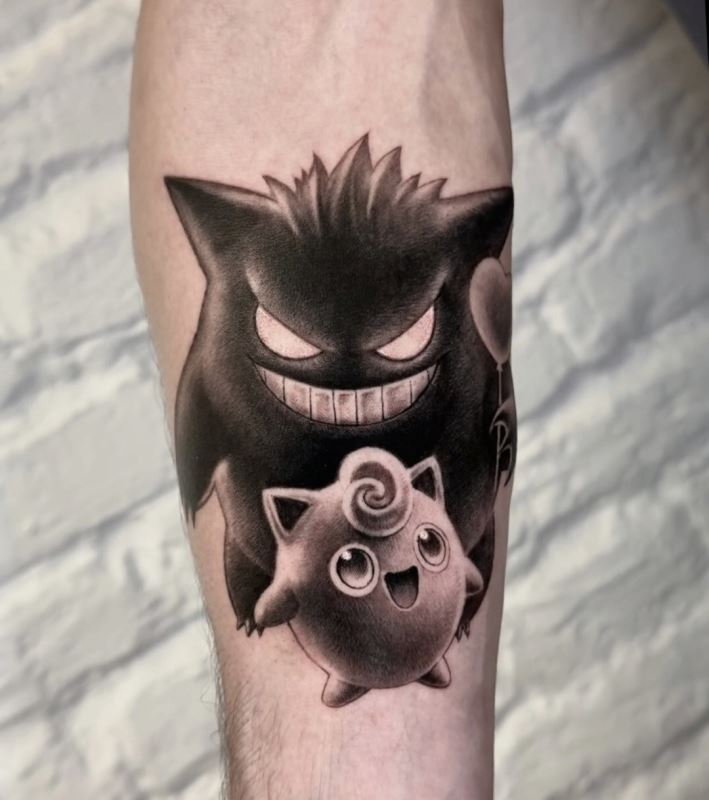
Q: Would you try experimenting with color inks?
A: I’m open to it, but very selectively. If I use color, it would be
subtle and supportive, more as an accent. Black and gray is still my
main focus.
Q: Looking at the evolution of tattooing over the last
decade, where do you see the future of black and gray realism
heading, and what innovation or trend are you most excited to see
develop in the coming years?
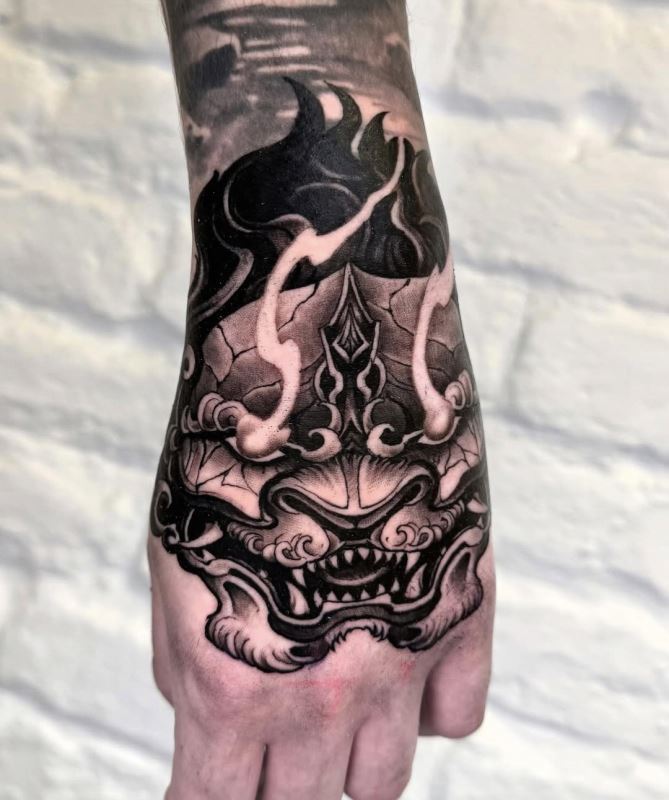
A: Black and gray realism has become much more refined over the last
decade. The technical level is extremely high now, so I think the
next step is about pushing realism further in terms of personal
interpretation. A conglomerate based on realism with abstraction,
graphic and illustrative elements, even cartoon ones, is for me
something most exciting to see.
Q: What's your take on the local tattoo scene? Do you see
progress?
A: Yes, definitely. The local scene has grown a lot, both
technically and artistically. There’s more awareness now about
long-term quality and professional standards. Currently, many tattoo
seminars are taking place and young or even older artists want to
continue developing and exchanging knowledge and experiences. That
kind of mindset pushes the entire scene forward.
- Please write down your studio location and website. Let us
know if you are available for bookings. I currently work at
Jah Love Tattoo in Warsaw/Poland. I’m available for bookings, most
inquiries come through Instagram at @coffeejack.tattoo where I also
share my latest work and updates.
Q: What about the global tattoo scene? Do you think we as a
collective are heading in the right direction?
A: The global tattoo scene is more visible and connected than ever,
largely because of social media. On one hand, that’s a powerful
thing, it allows artists from all over the world to inspire each
other, share knowledge, and grow much faster than in the past. On
the other hand, I think we’re reaching a point where visibility
sometimes starts to matter more than depth. When the algorithm
becomes more important than the tattoo process, something essential
is at risk of being lost. AI adds another layer to this
conversation. It can be a helpful tool for reference building or
exploring composition. The danger is not AI itself but losing
respect for individuality, risk of homogenization or even creating
fake content on social media in the future. So, are we heading in
the right direction? I think we can be - but only if artists stay
conscious of these tools and as long as individuality and
craftsmanship remain at the core.
Q: The United States is home to some of the world's most
renowned realism studios. Is working in the USA a long-term goal for
you, and if so, what specifically draws you to the American tattoo
industry or art scene?
A: Yes, working in the USA is something I see as a long-term goal.
The American tattoo industry has a strong foundation, high technical
standards, and a deep respect for both craftsmanship and
individuality. What draws me most is the diversity, different
approaches, strong artistic voices, and clients who often understand
and value custom, large-scale work.
Q: If you were to work in the USA, is there a particular
city or artistic hub that appeals to you most?
A: New York City is especially appealing to me. It’s a cultural
melting pot and a historic center of art, music, and subcultures
that have shaped visual language worldwide. At the same time, I have
close friends in Connecticut, so that area is also a place I’d
happily visit and work in during guest spots.
Q: Are you looking at the possibility of a permanent guest
residency or perhaps opening a studio of your own in the future?
A: At this stage, I’m not interested in opening my own studio -
guest spots and longer residencies feel like the right direction.
That give me flexibility, allow growth and new experiences.
Q: How active are you within the international convention
and seminar circuit? Beyond the networking, do you view these
gatherings as a vital engine for technical growth, or do you find
that your most significant breakthroughs happen in the focused
environment of your own studio?
A: I value conventions and seminars, especially for new inspirations
and exchanging ideas. Seminars have always given me a lot - they’re
intense, inspiring, and often push me forward creatively. Seeing how
other artists work in person is always valuable. While my studio is
where refinement and focus happen, conventions and seminars act as
catalysts and opening new perspectives.
Q: Have you considered, or do you have any plans for, a
collaborative tattooing project with another artist? If so, what
kind of style synergy would you look for?
A: Yes, collaboration is something I’m open to. Ideally, it would be
with an artist who has a different but compatible approach, someone
working with abstraction, graphic elements, or something more
experimental.
Q: Best memory with a client?
A: One of my favorite memories is surprisingly simple. We worked
long into the evening and finally decided to take a break, ordering
two huge pizzas. We ate so much that we were completely overstuffed
and honestly too tired to continue tattooing. It was a very human
moment, full of laughter.
Q: After all these years, what does the act of tattooing
mean to you personally? Is it still purely a professional skill, or
does it represent something deeper, a connection, a legacy, or a
form of personal expression?
A: Tattooing is no longer just a profession for me. It’s a constant
process of learning, problem-solving. A way of self-development. As
an introvert, tattooing has helped me open up to people, build
connections, and overcome personal limitations. It’s both an
artistic and personal journey.
Q: What impact do you aspire to have on the tattoo
community?
A: I’d like to be seen as someone who values solid fundamentals,
patience, and honesty in work. If my tattoos or approach can
encourage others to focus on quality and individuality, that would
be meaningful to me.
Q: If you could go back and give your younger self advice
about pursuing tattooing, what would it be?
A: "Focus more on social media you slug!" Now it’s much harder to
develop than 10 years ago:)
Interview: Ivana Kancheska
Publishing Date: January 11 2026


