
Interview with John Eric Basilio
Hello John Eric Basilio, it's a pleasure
to have you with us today. To begin, could you share a bit about
your artistic journey and background? I'm particularly interested in
learning about the initial spark that ignited your passion for art
and how your talents began to emerge. Were there any early
experiences, perhaps in childhood, that hinted at your artistic
inclinations? Art has always been a part of my life, even
before I realized it could be a career. Growing up, I was the kind
of kid who was always drawing, on paper, on walls, in notebooks,
anywhere I could express myself visually. That creative curiosity
was my first outlet, and looking back, it was definitely a sign of
my artistic inclinations.
Q: At what point did tattooing enter your artistic journey?
Did it feel like a natural calling or a more spontaneous development
in your career? What led you down that path?
A: Tattooing entered my artistic journey through my older brother.
He was the one who introduced me to the craft and taught me the
basics. At first, it wasn’t something I considered as a career, it
was more of a passion project, something I genuinely enjoyed doing
on the side. But over time, that passion grew stronger. It didn’t
feel like a sudden or spontaneous shift, it was more like a natural
progression. The more I tattooed, the more I realized this was what
I wanted to do for the rest of my life. Eventually, I was chosen and
guided by a mentor who helped me take it to the next level. That
moment was a turning point. From then on, I committed fully and
started building a career in tattooing. It was the combination of
passion and the right people believing in me that really solidified
my path.
Q: Reflecting on your early days, what
were some of the initial styles or types of tattoos you focused on?
Could you also share a sense of the timeline for when you began to
feel confident in your craft and establish a consistent clientele?
What were some key milestones in that journey?
A: In my early days, I focused mainly on Japanese Oriental and
neo-traditional styles. Those gave me a solid foundation in
composition and storytelling. A few years in, I transitioned into
realism, which helped me sharpen my technique. Eventually, I started
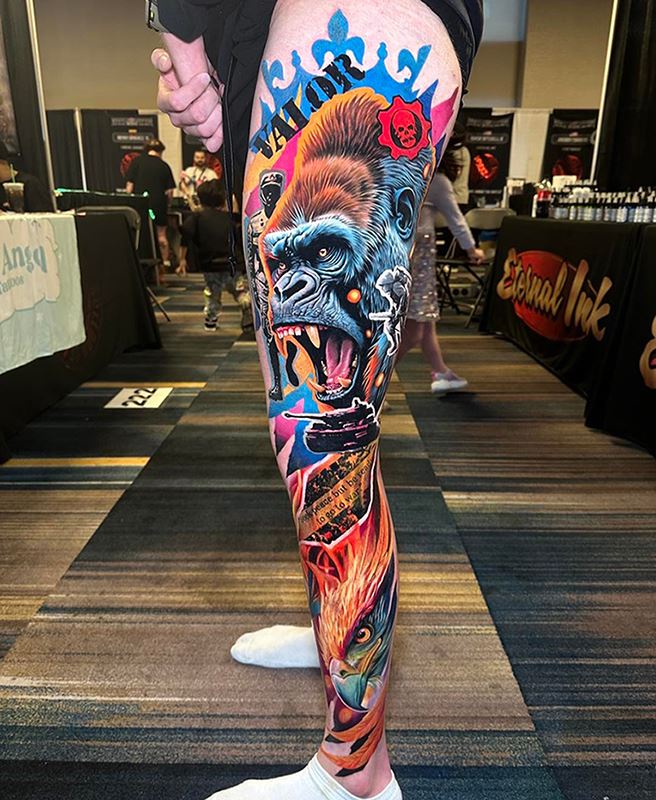
developing my own signature style - Street Pop Art, a fusion of pop
art, street art, and realism, heavily inspired by Basquiat, Warhol,
and Banksy. It took time to build confidence. I’d say aaround five
to six years into tattooing, I began to feel solid in my craft and
started gaining regular clients who sought me out specifically for
my style. Some of the biggest milestones in my journey include being
mentored early on, winning awards at international conventions, and
now working in the U.S. One moment I’m especially proud of was being
invited to guest spot at Garden Ink NYC, a studio owned by the
renowned Pablo Frias and Andres Maksihi. It was a huge honor to be
welcomed into such a respected space.
Q: Your portfolio showcases a remarkable mastery of realism
in tattooing. What specifically drew you to this style as your
primary creative direction, and what aspects of realism do you find
most artistically fulfilling or captivating?
A: What drew me to realism was the challenge-it demands precision,
patience, and a deep understanding of light, shadow, and texture.
When I first started exploring it, I was amazed by how a tattoo
could look like an actual photograph on skin. That pushed me to
study the craft more seriously and keep improving. The most
fulfilling part of realism is the emotional reaction it brings.
Whether it’s a portrait, an animal, or a meaningful object, the
level of detail can make the tattoo deeply personal for the client.
Seeing their faces light up when they recognize the likeness or feel
the impact, that’s everything to me. Realism also gave me the
technical foundation to later evolve my own style, Street Pop Art,
where I mix realism with bold colors and abstract influences.

Q: I'm intrigued by the unique cartoonish
flair I've observed in some of your portrait tattoos. It's a
fascinating blend of realism and comic art. Could you tell me more
about the origins of these designs? Are they your original concepts,
or do they stem from client collaborations?
A: That cartoonish flair you noticed is actually part of what I call
my ‘Street Pop Art’ style - a blend of realism, pop art, and street
art influences. It started as a personal experiment, inspired by
artists like Basquiat, Warhol, and Banksy, and over time it evolved
into something I now call my own. I love the contrast between
lifelike portraits and bold, graphic elements, bright colors,
graffiti textures, comic book aesthetic, it creates a kind of
controlled chaos that feels fresh and expressive. Some of the
designs are my original concepts, while others are the result of
close collaboration with clients who are open to giving me creative
freedom. I always aim to keep the emotional depth of realism, but
with a playful, edgy twist. That balance is what makes the style
feel alive.
Q: The vibrancy and nuanced color palettes in your work are
truly captivating. Could you elaborate on the critical role that
expert knowledge of ink properties, skin undertones, and healing
processes plays in achieving such stunning and enduring color
results in your tattoos?
A: Color is one of the most powerful tools in my work, especially
since my style relies on bold contrasts and vibrant palettes.
Achieving that level of impact and making sure it lasts, requires
more than just a good eye for color. You need to understand how inks
behave not only on the surface but also how they settle into the
skin over time. Skin undertones play a huge role. What looks bright
on paper won’t always heal the same on different skin tones, so I
always consider that when selecting colors. I’ve learned to adjust
my palette accordingly and use layering techniques to maintain
richness and depth. Knowledge of how colors heal is just as
important. I use only trusted, high-quality products like Xtreme
Tattoo Ink, OG Produce, and Emalla Needles to ensure consistency and
longevity. These tools give me the confidence that what my client
sees on day one will still look great years later. At the end of the
day, it’s not just about making something vibrant, it’s about making
it stay beautiful.

Q: Your portfolio is filled with truly
distinctive and masterful tattoos. Could you walk us through your
creative process when approaching a new piece? How do you typically
develop your designs – do you explore numerous sketches beforehand,
or does the concept evolve more organically?
A: My creative process always starts with a conversation. I take
time to understand the client’s story, vision, or emotion behind the
tattoo. From there, I begin imagining how to translate that idea
visually, whether it's something realistic, symbolic, or more
experimental like my Street Pop Art pieces. Sometimes, the design
evolves organically, especially if the client gives me full creative
freedom. Other times, I go through multiple sketches to refine the
layout, flow, and overall composition, especially for large-scale
pieces. I’m very particular about placement and how the tattoo
interacts with the body’s natural movement. Once the idea is locked
in, I finalize the digital design, making sure to balance focal
points, color dynamics, and texture. Every piece is customized not
just to reflect the concept, but also to fit the client’s skin tone,
body type, and personality. For me, tattooing isn’t just about ink,
it’s about storytelling through design and skin.
Q: Any favorite tattoo you did recently that presented a
challenging hurdles but in the end turned out really great? Could
you describe a recent tattoo project that presented significant
creative or technical challenges during its execution, but
ultimately resulted in a piece you're particularly proud of?
A: One of the most memorable and challenging pieces I worked on
recently was a collaboration at the 2025 New York Empire State
Tattoo Expo. It was an intense yet rewarding experience, not only
because of the scale and complexity of the piece, but also because
working alongside another artist means aligning different styles and
workflows in real-time. The design merged elements of realism with
illustrative and pop art influences, which required precision, fluid
teamwork, and creative synergy under time pressure. We had to adapt
quickly to the setting, manage the technical demands, and still stay
true to the artistic vision. In the end, the piece didn’t just
resonate with the crowd, it stood out among some of the best works
at the show. Seeing it receive recognition at that level, especially
in such a prestigious event, was incredibly fulfilling and
reaffirmed why I continue to push myself artistically.

Q: Beyond stylistic preferences and color
choices, what fundamental elements do you believe distinguish an
exceptional tattoo from a merely adequate one? What are the
hallmarks of quality in tattoo art, in your opiopinion?
A: To me, an exceptional tattoo goes beyond just style or color,
it’s about craftsmanship and respect for the skin as a living
canvas. Precision in linework, smooth shading, and thoughtful
composition are fundamental. Every element should flow naturally
with the body’s contours and movements, enhancing rather than
fighting against it. Consistency is key-clean, crisp lines and even
color saturation show professionalism and skill. Another hallmark is
longevity: a great tattoo ages well, maintaining its clarity and
vibrancy over time. That’s why understanding skin types, healing,
and aftercare is crucial. But beyond the technical, what really sets
a tattoo apart is the emotional connection it creates-whether it
tells a story, honors a memory, or expresses personality. When a
tattoo feels meaningful and intentional, it becomes more than ink-it
becomes art with a soul.
Q: Your skill and artistry seem adaptable to various styles,
and I could particularly envision your unique perspective bringing
an exciting dimension to a fusion of neotraditional and graffiti
elements. Have you ever considered exploring these or other styles
in your future work, and what are your general thoughts on
experimenting with different artistic expressions within tattooing?
A: Absolutely! I’ve always been drawn to blending styles and pushing
boundaries, that’s actually how my Street Pop Art style was born, by
merging realism with street art and pop culture influences.
Exploring a fusion of neotraditional and graffiti elements sounds
exciting and definitely fits within my creative vision. I believe
experimentation is essential for growth as an artist. It keeps my
work fresh and allows me to connect with a wider range of clients
and stories. Every style has its own language and challenges, and by
learning from each, I can bring new techniques and perspectives to
my tattooing. Ultimately, tattooing is an evolving art form, and I’m
eager to continue exploring and innovating while staying true to
what inspires me.

Q: When it comes to the narratives behind
tattoos, do you find that younger or older clients tend to share
more elaborate or personally significant stories? Similarly, in your
experience, which age group typically proposes bolder or more
unconventional tattoo concepts?
A: In my experience, older clients tend to trust the artist more.
They usually have a clear reason for getting tattooed and allow more
creative freedom, often sharing deeply personal or meaningful
stories behind the piece. Younger clients, on the other hand, are
typically more hands-on when it comes to the design process. They’re
very specific about the elements they want, probably because they’re
exposed to so many references online and want something that aligns
with their identity or aesthetic. When it comes to bolder or
unconventional concepts, it’s usually the younger crowd who are more
experimental. They’re not afraid to push boundaries and mix styles,
which keeps things interesting. But I genuinely enjoy working with
all age groups, each brings a unique kind of energy to the creative
process.
Q: Funniest experience ever?
A: One of the funniest and most unexpected experiences I’ve had was
with a client who got into a full-blown argument with his fiancée
over the eye color on the tattoo we were working on. It started as a
minor disagreement, but it escalated so fast that the fiancée ended
up throwing food-chicken, to be exact at him right inside the studio
and stormed out. At that moment, it was incredibly awkward for
everyone, but looking back now, I can’t help but laugh every time I
remember it. This job really throws you into all sorts of
unpredictable and hilarious situations. It’s a constant reminder
that being a tattoo artist means not only being good at art but also
being ready to navigate all kinds of personalities and stories.

Q: As a tattoo artist, you possess the
remarkable ability to create lasting works of art on individuals,
imprinting a part of yourself into their life stories. How does it
feel to know that your creations become permanent memories for your
clients?
A: This job is truly exceptional and deeply honorable. To be trusted
with someone’s skin and more importantly, with their stories,
emotions, and memories is something I never take for granted. Every
client who sits on my chair gives me more than just a canvas, they
give me their trust, and that’s incredibly powerful. That trust
fuels me to keep growing, evolving, and refining not just my craft,
but also myself as an artist and a human being. Knowing that my work
becomes a permanent part of someone’s life is both humbling and
motivating. It pushes me to create with purpose, to listen more
intently, and to always strive for excellence. Tattooing isn’t just
about aesthetics, it’s about connection, meaning, and leaving a
legacy through art. That’s what makes this path so meaningful to me.
Q: Your design aesthetic is truly inspiring! Have you ever
considered extending your artistic vision into other creative
mediums, such as illustration for a book with intricate characters
and narratives, or perhaps developing a distinctive t-shirt line
featuring your artwork?
A: Thank you! I actually used to have a small clothing line where I
designed motivational shirts, it was a fun way to express my art and
message beyond skin. These days, I'm starting to explore more
painting, incorporating the same bold and vibrant aesthetic I use in
tattooing. My goal is to create original artworks that can also be
translated into tattoos, essentially one-of-one pieces. That way,
clients not only get a unique tattoo but also take home a personal
painting that embodies the design. It’s a meaningful crossover
between canvas and skin, and I'm excited to push that further.

Q: Given your extensive travels for work,
could you share about a particular location or guest spot that
provided an exceptionally rewarding or memorable experience as a
tattoo artist?
A: One of the most memorable and rewarding experiences I've had was
during the Rouen Tattoo Festival in France back in 2024. That trip
truly opened my eyes to the richness of European culture and the
deep appreciation they have for the arts. Being surrounded by such a
diverse group of artists from different parts of the world was
incredibly inspiring. The people in Rouen were warm, respectful, and
genuinely interested in the art I do, they valued every detail and
concept behind the tattoos. That level of appreciation fuels my
passion and reminds me how universal art is. France left a lasting
impact on me both professionally and personally.
Q: What are your observations regarding the local and the
global tattoo community? Are you witnessing any significant
developments, such as the rise of new artists, evolving styles, or
innovative events?
A: The tattoo community, both locally and globally, is evolving at
an incredible pace. I’ve witnessed a powerful rise in new-generation
artists who are fearless in pushing boundaries, blending traditional
techniques with fresh, experimental styles. It’s exciting to see how
global influences are reshaping the scene, especially with the help
of social media platforms that allow artists to connect and learn
from each other regardless of geography. Events like international
conventions are becoming even more dynamic, not just showcasing
talent but also encouraging collaboration and education. I’ve seen a
strong push toward innovation, whether it’s in machine technology,
aftercare products, or ink quality. Artists are also becoming more
vocal about their artistic identities and personal stories, which
makes the community feel more inclusive and meaningful. It’s truly
an exciting time to be part of this growing and ever-evolving
culture.

Q: As a sponsored tattoo artist, could you
elaborate on the significance of this kind of support for your
artistic journey? In what specific ways does it contribute to your
growth and development as an artist?
A: Being a sponsored tattoo artist is both an honor and a
responsibility. It’s a huge validation of the work I’ve put in over
the years, and it pushes me to continuously elevate my craft. Having
the support of industry-trusted brands like Xtreme Tattoo Ink, OG
Produce, and Emalla Needles not only gives me access to high-quality
materials that I can rely on, but it also allows me to focus on
refining my techniques and pushing creative boundaries without
hesitation. This kind of support enables me to participate in more
conventions, do international guest spots, and collaborate with
other artists, all of which are crucial to my growth. It’s not just
about the tools, it’s about the connection, the trust, and the
opportunity to represent these brands on global platforms while
staying inspired and motivated to give back to the community through
my work.
Q: What qualities do you value most in an artist, beyond
their artistic skill?
A: Beyond artistic skill, I deeply value qualities like staying
grounded, being humble, and having the constant desire to keep
learning. In this industry, talent can open doors, but character is
what sustains growth and builds meaningful connections. I admire
artists who remain true to themselves, respect others, and are
always open to evolving, whether through technique, inspiration, or
experience. It’s that balance of skill and humility that truly makes
an artist exceptional.

Q: How has your passion for tattooing
manifested and evolved throughout your career? Have you experienced
a consistent level of enthusiasm, or has it deepened and transformed
over time?
A: My passion for tattooing has definitely evolved and deepened over
time. In the beginning, it was driven by the excitement of creating
art on skin and the challenge of learning something new every day.
But as the years went by, it became something more profound-a
purpose, a form of connection, and a way of storytelling. The more I
grew as an artist, the more I understood the emotional weight that
tattoos can carry for clients. That understanding has fueled my
commitment and made me even more passionate. Every piece I work on
reminds me of how far I’ve come, and how much more there is to
explore and improve. Tattooing has become not just a profession, but
a lifelong journey of growth.
Q: Favorite career highlight?
A: One of the most meaningful highlights of my career was when my
O-1 visa was approved. That moment wasn’t just about moving to the
U.S. it was a powerful validation of all the years of hard work,
sacrifices, and dedication I poured into my craft back in the
Philippines. The O-1 visa is granted only to individuals who possess
extraordinary ability in their field, and the process is intense. It
requires extensive documentation of accomplishments, industry
recognition, awards, features, and proof of influence in the tattoo
world. Being granted that visa meant that my work and journey as a
tattoo artist were acknowledged on an international level. It opened
new doors for me and solidified my belief that with persistence,
passion, and authenticity, recognition will come, even when you
start small.

Q: Looking back on your journey into
tattooing, what key piece of advice would you offer to your younger
self just starting out in the craft? Are there any particular
insights or lessons you wish you had known earlier?
A: If I could give my younger self one piece of advice, it would be
this: trust the process, and don’t rush the growth. In the early
stages, it's easy to get frustrated when things don’t happen
quickly, when your skills aren’t where you want them to be yet, or
when recognition feels so far away. But every sketch, every tattoo,
every failure and small win, it all adds up. I would also remind
myself to value rest, set boundaries, and stay grounded. It's
important to keep learning, but it's just as important to protect
your passion from burnout. Lastly, I’d say: be proud of your roots.
Your story, your background, and your struggles will shape you into
a unique artist with a voice that no one else can replicate. That’s
your edge.
Interview: Ivana Kancheska
Date:19 May 2025


