
Interview with Joozy
In honor of the eighteen anniversary of Skin
Artists Tattoo Magazine, we are highlighting a select group of
top-tier artists who maintain the foundational strength of the craft
in an ever-changing world. Joozy has been chosen for this milestone
celebration as a visionary force in Traditional tattooing, proving
that bold lines and timeless motifs remain the ultimate gold
standard for durability and impact. Based in Seoul, Joozy brings a fresh, global energy to a style
deeply rooted in Western history. His work is a masterclass in clean
execution and iconic imagery, honoring the lineage of masters like
Sailor Jerry while introducing a contemporary precision. By focusing
on the "timeless" nature of tattooing, he creates pieces designed to
endure for decades, standing as a defiant contrast to more fleeting,
trend-based aesthetics.
The following interview, conducted for our 18th anniversary, is
dedicated to exploring the future of tattooing. We discuss how
Traditional tattooing remains a visionary force in a digital age,
the role of new technologies like 3D body mapping in classical
styles, and Joozy’s perspective on how borders are fading as the
traditional movement becomes a truly shared global language.
Q: Traditional tattooing is often called "timeless." In
2026, how do you keep these classic motifs, panthers, daggers, and
snakes feeling visionary rather than just repetitive?
A: Traditional tattooing has a long history that continues to
influence the present day. The works and references of artists from
past eras still exist, and many artists today reinterpret them in
their own style while honoring those who came before. I consider
myself part of that lineage, and one of the most influential artists
to me is Sailor Jerry.
Q: We are seeing more artists use digital stenciling and 3D
body mapping. Do you feel these technologies help "Traditional"
tattooing achieve a new level of precision, or do they risk losing
the raw, hand-drawn character of the style?
A: I believe it ultimately helps the process. Even if some of the
rawness and hand-crafted feel are lost, I don’t consider those
elements essential as long as the final work is executed perfectly.
While artists used to draw designs on paper with paint, many artists
today now design digitally on iPads.
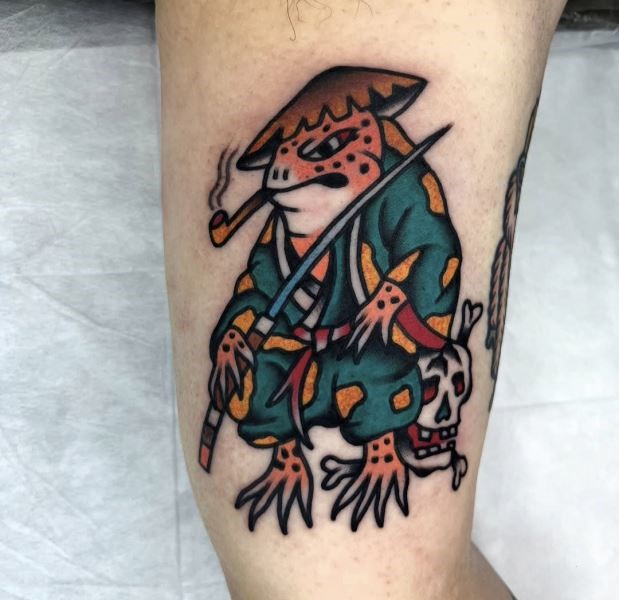
Q: As other styles (like micro-realism)
struggle with aging, Traditional remains the gold standard for
durability. Do you believe the "Future of Tattooing" will eventually
see a massive return to bold lines as collectors realize the value
of a tattoo that lasts 30 years?
A: “Classics are eternal.” In my opinion, I don’t think it will take
very long.
Q: Working in Seoul, you bring a unique energy to a style
often associated with Western history. How is the "Traditional"
movement in 2026 breaking down geographical borders?
A: The traditional movement in 2026 isn’t defined by location
anymore. Its roots are Western, but its future is global. Artists
bring their own local energy into a shared visual language, and
that’s how borders fade.
Q:
Are there any "modern" symbols (tech, digital life, etc.)
that you think will become the "new classics" of Traditional
tattooing over the next 18 years?
A: As I mentioned earlier, “classics are timeless.” While new trends
continue to emerge, we often see past styles return and become
popular again. Traditional tattooing may have gone through periods
of trend cycles, but I don’t think there was ever a time when it
truly fell out of relevance. In the end, I believe it won’t take
long for more people to fully recognize the appeal of traditional
tattooing.
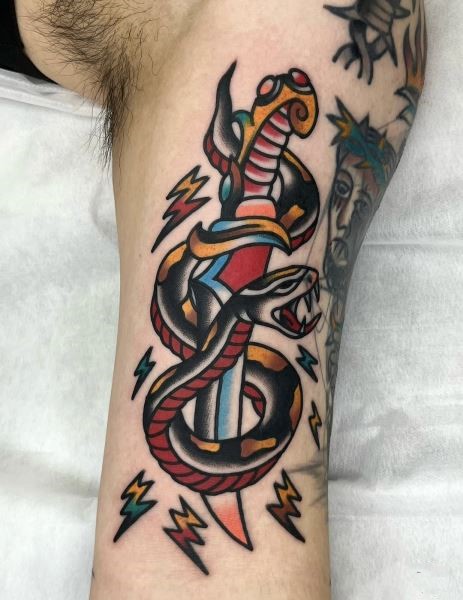
Q: While trends like "Cyber-Sigilism" come
and go, Traditional remains steady. In a saturated 2026 market, do
you find that your "classic" approach is actually your greatest
competitive advantage?
A: I don’t chase trends. Traditional tattooing doesn’t need to react
to the moment it endures. In a crowded market, that sense of
permanence and clarity becomes a strong advantage.
Q:
You’ve mentioned that the "soul" of tattooing is getting
harder to find. In a Traditional session, where the design is often
iconic and familiar, how do you inject your personal "soul" into the
piece?
A: I don’t try to force something new into traditional designs.
Instead, I focus on how I execute them. Line weight, spacing, flow,
and the way the tattoo sits on the body that’s where my personality
naturally shows. Even with iconic imagery, those small decisions are
what give a piece its soul. To me, the soul isn’t in the design
itself, but in the hand that makes it.
Q:
With so many artists doing "Traditional," what is the one
subtle detail in your work, perhaps your specific color palette or
line weight, that makes a Joozy piece unmistakable?
A: I don’t think there’s one single detail that defines my work.
It’s more about the accumulation of small decisions line weight,
spacing, color balance, and how the tattoo ages on the body. I focus
on clarity and durability rather than exaggeration. When people say
they can recognize my work, I think it comes from consistency rather
than any obvious signature move.
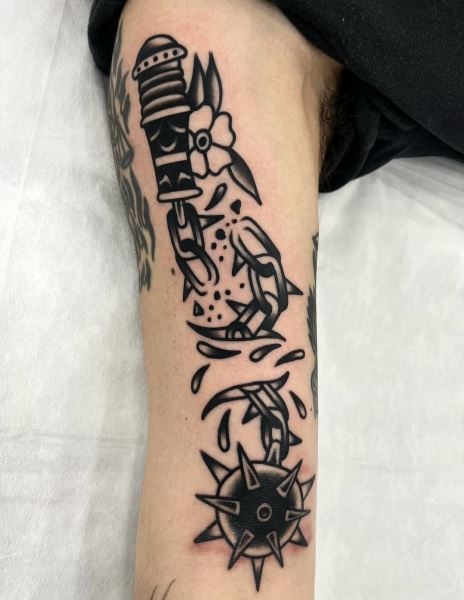
Q: How has the globalized market of 2026
affected the "South Korean" scene specifically? Are collectors
seeking Traditional work as a way to stand out in a culture that
often favors different aesthetics?
A: Globalization has expanded the visual language of the Korean
tattoo scene. Traditional tattooing, once seen as unfamiliar, is now
chosen as a clear form of contrast and individuality.
Q:
Many artists say the "Golden Age" of tattooing was decades
ago. Do you agree, or do you think the real Golden Age, where
technology meets tradition, is actually happening right now in 2026?
A: Looking at the past and present, I believe the past was the true
golden age. But with tattoo machines constantly evolving and the
quality of materials improving every day, I believe we are moving
toward an era that could surpass that golden period.
Q: Traditional tattooing is the best way to learn the
fundamentals. If you were designing a curriculum for 2026, would you
still force every student to master a Traditional "Bold Rose" before
they move on to any other style?
A: Personally, I wouldn’t recommend it. Since it is clearly
different from other genres, I think it’s more helpful to study and
learn the genre you want to pursue from the very beginning.
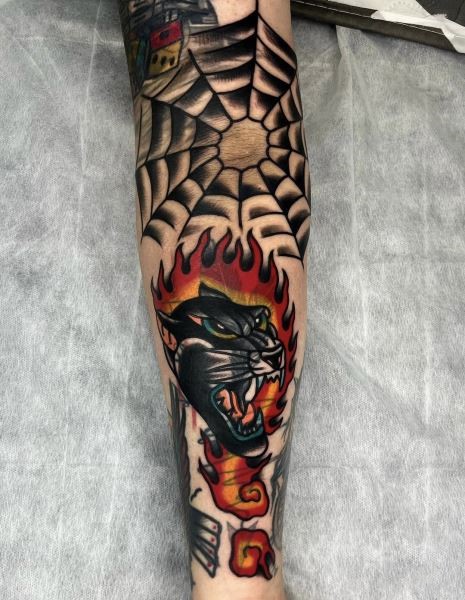
Q: Can a young artist truly understand the
"weight" and "friction" of a Traditional machine through a VR
simulation, or is the physical resistance of the skin an
irreplaceable teacher?
A: I think VR simulations can help with understanding concepts like
machine balance, motion, and basic control. But when it comes to
traditional tattooing, the resistance of real skin is something that
can’t truly be replicated. Skin teaches you pressure, patience, and
consequences. In that sense, I see skin itself as an irreplaceable
teacher.
Q: Younger artists have thousands of Traditional "flash"
designs at their fingertips online. Is this access helpful, or is it
making the new generation lazy when it comes to original
composition?
A: It definitely helps. However, I believe the attitude toward it is
what matters most. Relying too heavily on existing flash can weaken
an artist’s originality, so it should be used as reference, not
copied.
Q: In 2026, many artists use AI to help with "Flash"
layouts. How do you teach an apprentice to find their own creative
voice when an algorithm can give them 100 Traditional designs in
seconds?
A: Traditional tattooing has always been about learning through
repetition and discipline. I tell apprentices that tools change, but
the process of building a voice stays the same. Study flash, draw
constantly, and understand structure first. AI can assist later, but
it should never replace the work that forms your foundation.
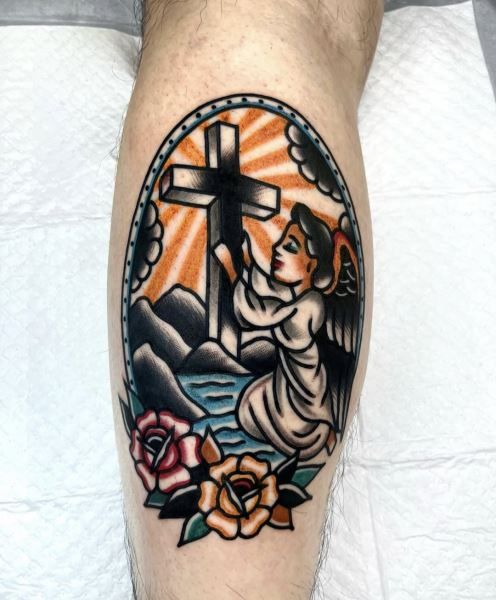
Q: Do you see a future where Traditional
tattooing is taught as a formal "Fine Art" in universities, or
should it remain a "street shop" education?
A: I believe tattooing should be learned in a tattoo shop. When it
comes to learning and growing, I think the surrounding environment
is one of the most important factors. Everything from design and
tattooing to photography begins and ends in the tattoo shop.
Learning by seeing, hearing, and feeling things in real working
situations is very different from learning in a university setting.
Q: Social media demands constant newness. How do you balance the
tradition of "Flash" (designs meant to be tattooed multiple times)
with a 2026 audience that demands "one-of-a-kind" custom pieces?
A: I explain to clients that “custom” doesn’t always mean starting
from zero. Traditional flash carries history and intention, and when
it’s adapted to someone’s body and story, it naturally becomes
unique.Social media may move fast, but tattoos move at a different
pace.
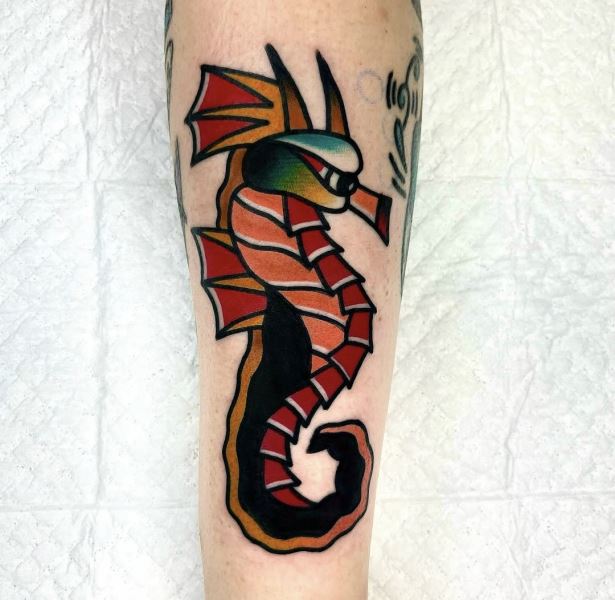
Q: Traditional tattoos look iconic on social media, but they look
even better 10 years later. How do you educate your "digital-first"
followers that the true beauty of your work is how it looks
off-camera?
A: Yes, that’s right. I believe traditional tattoos become even
stronger and more beautiful with time. I photograph tattoos from
clients who return after years of wearing my work, and I share those
images on my social media. I want people to see that even as time
passes, traditional tattoos remain rough, bold, and powerful.
Q:
In an era of AI and automated booking, how do you maintain a
"human" connection in your shop that feels like the old-school days
of tattooing?
A: Automation helps with logistics, but the atmosphere of an
oldschool tattoo shop is built through people. I take time to talk
with clients, understand their stories, and let the session unfold
naturally. That exchange the moments before, during, and after the
session is something no system can automate.
Q: Looking back at your early days in the Seoul scene, there was a
time when choosing a career in tattooing was a profound act of
rebellion. Now that you are an award-winning owner and a mentor,
what is the most surprising thing you’ve discovered about yourself
through the discipline of the 'bold line' over the last 18 years?
A: I’ve always carried these questions with me how to pull clean
lines, how to handle shading and packing in a way that feels both
rough and controlled. I constantly run simulations in my head,
thinking and rethinking the process. Through that repetition and
struggle, I often find that those questions resolve themselves over
time. That’s something I’ve always found surprising and fascinating.
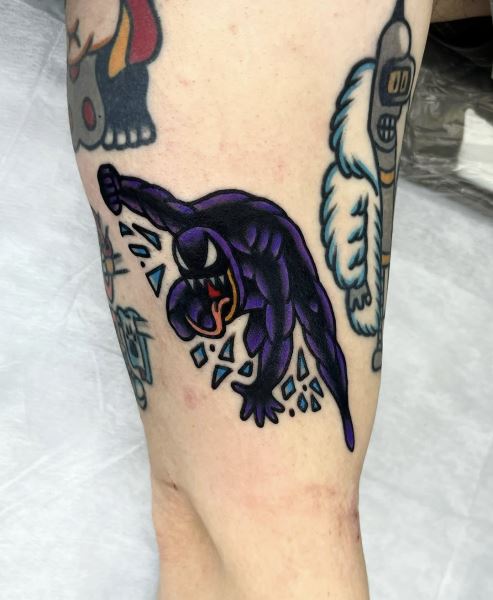
Q: When you are no longer the one holding
the machine, and your work is walking around the world on the skin
of thousands of strangers, what is the one personal value or piece
of your own story that you hope survives in those tattoos for
decades to come?
A: When I eventually put the machine down, I hope my work continues
to walk through the world on thousands of bodies. More than any
specific image or style, I want those tattoos to carry honesty. I
hope they show respect for the craft, for time, and for the person
wearing them. If my tattoos can age with dignity and still feel
strong decades later, that alone would tell my story.
Interview: Ivana Kancheska
Date: 12/02/2026
Read our first interview with Joozy.


