
Interview with Jozsef Tobel
Hello Jozsef Tobel, thank you for
sharing your time with us. To begin, could you tell us a bit about
your journey and background as an artist? Perhaps you could share
when you first recognized your artistic talent, whether drawing was
a significant part of your childhood, and if there were any
particular artists who significantly inspired you early on?
Hi first of all thanks for having me. As much as I remember I always
loved to draw and paint and create all sort of art pieces as a kid -
I wasn’t particularly good, to be honest but I always found my way
and it was something that simply made me feel good. I always knew
that I am more like a free spirit type of person, and will
eventually end up with a job that allows me to express myself. I
love playing my instruments just as much as I love drawing. I like
to look at my life as a big bucket where I can throw all my ideas
and art pieces that I create. As for inspiration, I was deeply
influenced by artists like Frank Frazetta and Aaron Blaise when I
was a kid - Nowadays I’m stunned by many artist one of my favorites
is Greg Simkins aka Craola.
Q: To understand the foundation of your artistic
development, could you describe the duration of your initial
learning phase and whether you pursued formal art education or had a
mentor who guided you?
A: Never had a mentor, never took any drawing classes, art for me is
something you can’t teach - it is something that comes from deep
within and has no form. Sure you can learn how to draw and paint as
a professional but it’s not worth a dime if you lack inspiration and
own thoughts - then it's just something soulless. I am a self
thought artist and I am proud of it.
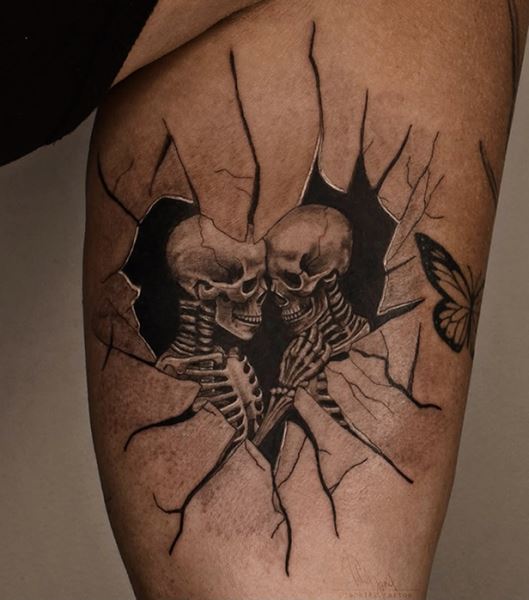
Q: When tattooing came into the picture and why?
A: One of my best friends bought a tattoo machine when we were in
high school and told me he will do tattoos. I always found it
interesting but never thought of it as a career - of course I had to
get my first tattoo from him and while I was getting tattooed I had
thoughts of being an artist as well. A few years later he encouraged
me to get into it - I ’ll be forever grateful to him.
Q: Could you share when you transitioned to working in a
professional tattoo studio and what that experience was like for
you?
A: I am kind of a perfectionist - therefore, I was tattooing at home
as long as I wasn’t absolutely happy with my lines and shading
techniques - it took me a little more than two years to be satisfied
and have the courage to apply for a job in a studio. When I got my
first job I wasn’t really nervous because I knew what I was doing
and I knew I’m good at it - but I had to work a lot on my speed - I
only did small tattoos but it wasn’t unusual to have 5-8 customers a
day so I had to learn how to speed up without compromising the
quality. Later on was crucial to learn how to create unique designs
in a short time.
Q: I've noticed the consistent excellence in stunning
microrealism and fine line work in your portfolio. To clarify your
artistic direction, would you say that this style is a primary focus
for your future work, or are you also open to exploring and
developing other tattoo styles?
A: When I started tattooing, I wanted to make sure I can do multiple
different styles so when it comes to working in a studio, I can
confidently say I can do many styles. However, micro realism and
fine line will always be styles in which I can express myself best.
I love doing other styles as well - many times I’m learning from it
too and it helps me understand more about the certain style.
Q: Given the incredible realism and detail in your tattoos,
how crucial is a thorough understanding of ink properties and
application techniques to achieving that level of precision and
contrast?
A: There are many type of inks, cartridges, needles, tattoo machines
and its settings that is crucial to know what to use and how to use
- Ink quality affects color vibrancy, longevity, and how well the
ink settles into the skin. A thorough understanding of these
properties ensures that the tattoo will have the right depth,
contrast and precision.
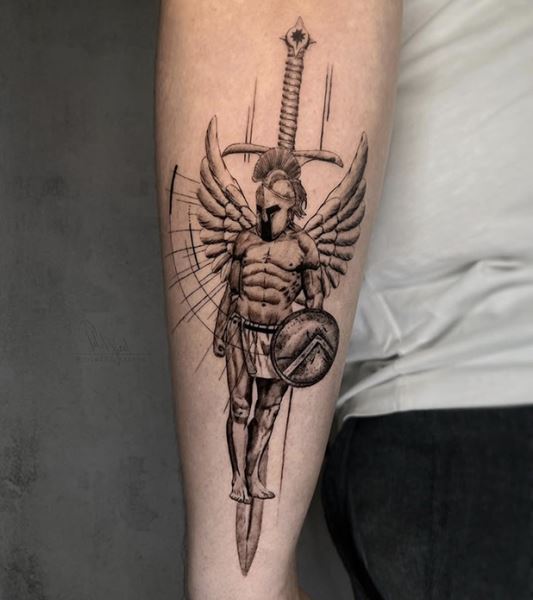
Q: Could you describe your process for developing custom
tattoo designs? Do you typically create preliminary sketches prior
to the client's appointment, or do you prefer to collaborate with
the client on the day of their session to finalize the design?
A: Usually when I have something large coming up the following days,
I ask the clients to come see me in the shop to talk through their
ideas before the actual appointment - then I'd create the unique
design at home. Many times I create multiple different versions of
the same design to make it easier to choose. If it's something
smaller, then I’d just do everything on the same day.
Q: Given the demands of consistently delivering
high-quality, custom work, are there occasions when you experience
creative blocks or encounter challenges in meeting client
expectations?
A: Oh, absolutely - but fortunately I am a very patient person and I
put the comfort of my clients first and foremost. I always tell them
if they don’t like something please let me know and I’ll try to
change it. It’s important because we are not selling t-shirts that
you can just take off if you changed your mind and don’t like it
anymore. No, tattoos are a serious deal and it must be the way you
want them. Thankfully most of my clients know already that I am just
a chill dude and they can ask me, tell me anything, and I’m really
glad for it.
Q: Have you ever had a tattoo project where you had to think
outside the box to solve a creative or technical challenge?
A: Even though I am focusing on Micro realism, I do other styles
once or twice a week. I am blessed to have amazing friends that work
in many different styles or have much more experience than I do, so
I just ask them and listen to them. Always works. When I did a meter
long snake wrapped around the client’s leg, the stencil was just not
doing what I wanted to do, so I had to freehand many things that was
a bit of a challenge.
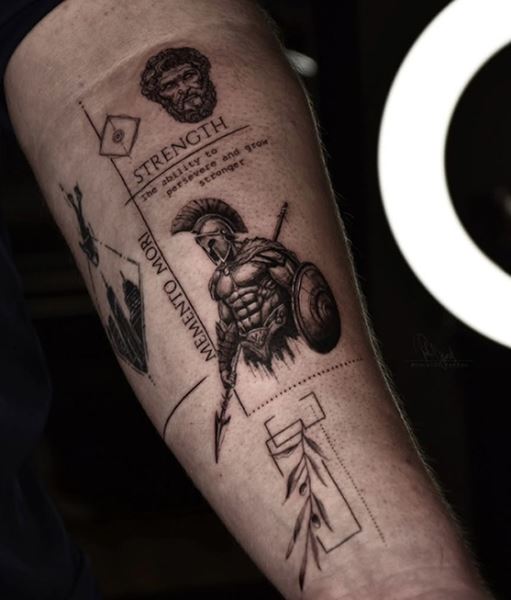
Q: The artistry of tattooing, combined with the personal
significance for the client, creates a really powerful experience.
It's almost like a shared gift, wouldn't you say?
A: I agree! This is a reason why it’s important to not to be an
asshole - I want my customers to feel great when they are looking at
their tattoos and think like ‘fuck yeah - this is a great piece of
art and wish all the artist was so cool like that tattoo artist was.
Q: Witnessing such personal moments during the tattooing
process must be incredibly meaningful. Could you share a
particularly impactful or memorable experience you've had with a
client?
A: Often the smallest tattoos have the deepest meaning, such as the
handwriting of deceased parents or grandparents as they wrote “I
love you forever” usually they all get sensitive at some point often
shed a tear and I feel amazing that I could gave them something so
meaningful and feel comfortable to show their emotions to me even
hug me. I recently had a client who is a police officer, told me
stories about his job and what he has to face every day and told me
the tattoo he gets gives him power and reminding him to not give up.
Q: With so many resources available today, from online
tutorials and workshops to conventions and guest spots, it seems
like there are more avenues than ever for aspiring tattoo artists.
Do you feel this increased accessibility has made it easier to break
into the field?
A: While I agree that nowadays is very easy to get into tattooing,
maybe way too easy, I disagree with breaking into the fields would
be easy. Just because someone buys the most expensive gear, this
profession still requires a lot of discipline, practice, and
creativity - anyone who lacks these character traits will not
succeed.
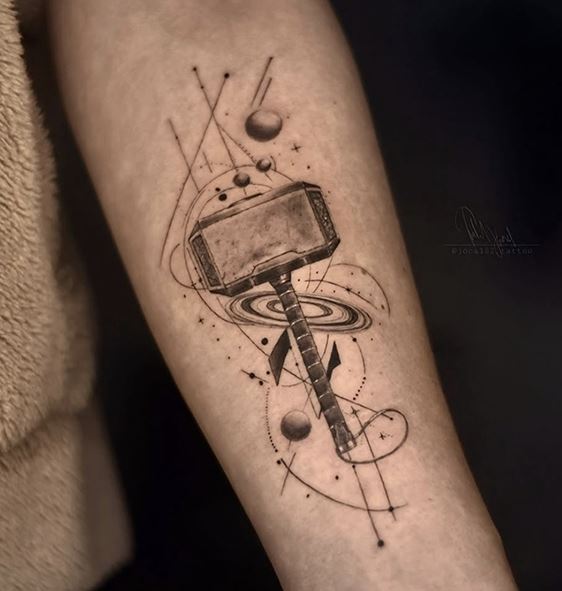
Q: I'm curious about the ethical side of art. What qualities
do you value most in an artist, beyond their artistic skill?
A: Trust. If they are trustworthy. They show up on time, not
photoshopping their works on social media, has manners and respect
for the customer. If a client needs assistance with the aftercare or
if they need a touch up session the artists duty is to help their
clients.
Q: What's your take on the local tattoo scene? Are you
seeing any exciting developments, like new artists, styles, or
events?
A: Yes I meet new artists every time - it's very interesting to see
how many different setups and solutions exists its almost like there
are as many styles as there are tattoo artists. Some styles are so
recognisable you can instantly tell who’s work you are seeing at the
moment - I think it's a huge goal.
Q: Can you make a comparison between the Karlsruhe, Germany
and the tattoo scene in lovely Budapest?
A: The tattoo culture in Germany and Budapest each have their own
unique characteristics and vibrant communities. In Germany the
tattoo scene is known for its diverse styles - traditional German
tattoo styles, such as blackwork and neo-traditional, are quite
popular. In Budapest, the tattoo scene is also thriving and is known
for its blend of traditional and modern styles. The city has a rich
artistic heritage, and this is reflected in the tattoo artistry
found there.
Q: Is there a demand within the European tattoo community
for more unconventional and exciting artistic styles?
A: To be honest, I’ve seen tattoo styles that don’t make sense to me
but the artist is still fully booked - You can't tell people what to
like and what not to like. As long as you have an idea and you stand
confidently by it, people gonna see it as it's something new,
something fresh and unique.
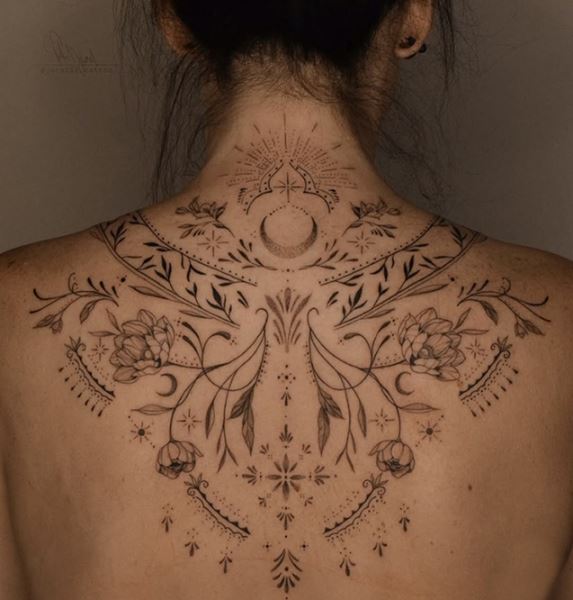
Q: How often do you attend tattoo conventions? In your
experience, how valuable are tattoo conventions for artistic growth
and building client relationships?
A: I used to attend two to three conventions a year before but never
had a courage to compete till the last one came in Brussels -
something funny and tragic happened that time - I sent my
client/tattoo on stage and they told her she would’ve win the first
place if she goes up during the previous category which was small
black and grey. Conventions are a great way to get some
international fame if I can call it that way, also to see how others
work, what they use, how they use it, you can build international
friendships as well - might get invited to their shops and do guest
spots if you into it.
Q: What about guest spots? Have you ever worked as a guest
artist in another studio either locally or in a foreign country? If
so, what was the experience?
A: Guest spots yes! I am constantly going on guest spots every month
still. Germany,Belgium,Switzerland, are my always go to places. I'm
also adding London to the list this year. I have nothing but love
for guest spots, I met many famous and amazingly talented artists
and I can count many of them as my close friends now. It helps you
grow internationally, broaden your horizons, and learn new skills -
and I’m not just talking about tattooing but learning new languages,
seeing new places, meeting interesting people from all over the
world. Its overall just an amazing experience and that is why I’m
still doing it.
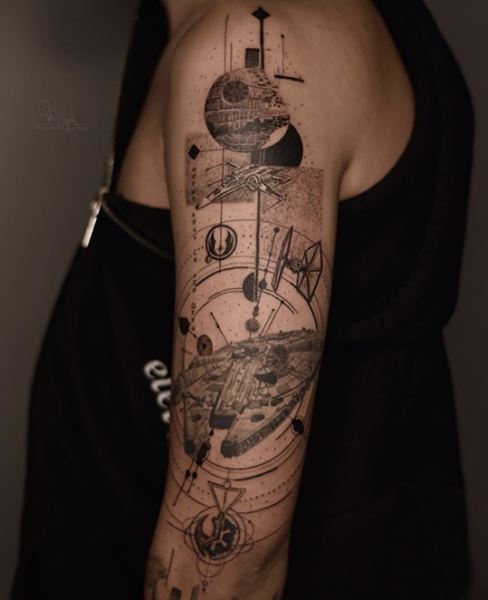
Q: Considering the current global tattoo landscape, what are
your overall thoughts on its evolution and trajectory? Are there any
aspects you find particularly positive or any areas where you see
potential for change or improvement within the collective tattoo
community?
A: The future of tattooing seems incredibly promising. As techniques
evolve and the community continues to open up, tattoos are becoming
even more diverse, meaningful, and accessible. It’s a space where
art meets identity, and that intersection is only getting richer.
Positive is that artists are pushing boundaries with hyperrealism,
watercolor, geometric, abstract, and illustrative styles. Techniques
are evolving faster than ever. Better inks, machines, and aftercare
products have made tattooing safer and more sustainable. Digital
tools also help artists create and refine designs with precision
before ever touching skin. Negative is that not all countries or
regions have strict hygiene standards. There’s room for better
global consistency in training, certification, and cleanliness to
protect both artists and clients. The industry could improve in
eco-conscious practices, such as reducing plastic waste from
single-use supplies and developing biodegradable or more sustainable
products.
Q: How has your passion for tattooing evolved since you
first started? Are you just as enthusiastic, or even more so now?
A: I think everyone of us has our ups and downs from time to time
but overall for me tattooing is something I don’t actually look as a
job. It is something I would do for free as well just because I
simply enjoy doing it. I truly think that I am extremely lucky to
have many new and many returning customers who trust me, move me
forward and giving me new challenges that helps me grow and helps me
do better and better.
Q: Favorite career highlight?
A: My first guest spot in a foreign country at a really prestigious
tattoo studio - I really felt like I made it and I could achieve
anything from there. I was very proud of myself because it all
started out in my parents basement and look at me now I am here
doing tattoos in a famous studio. Everything is possible if you
willing to work hard for it.
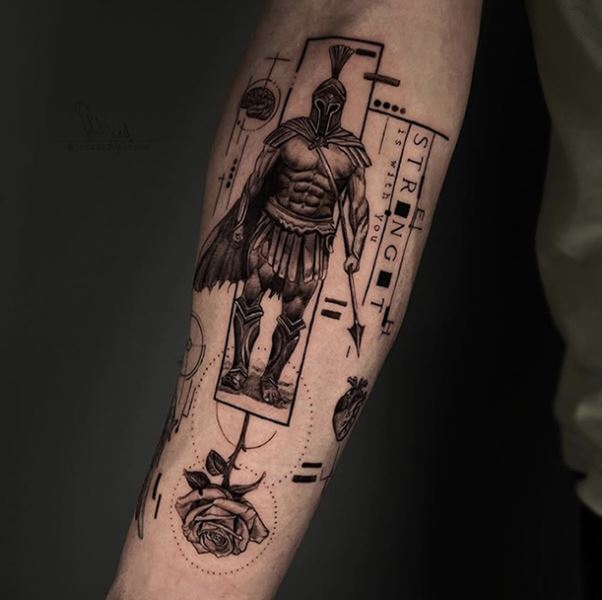
Q: The United States has a rich history of regional tattoo
traditions and contemporary trends. Are there any specific American
tattoo styles or cultural influences that particularly resonate with
your artistic sensibilities, and how might you see those influences
manifesting in your future work here?
A: Absolutely, the American tattoo culture is a fascinating blend of
deep-rooted tradition and bold innovation, and several of its styles
carry a lot of weight artistically. There’s a growing niche of
illustrative artists in the U.S. blending fine art techniques,
surrealism, and narrative design. It’s like storytelling through
skin, something that pushes boundaries and is ripe for personal
exploration. There’s a strong work ethic and pride in the American
tattoo scene, especially in shops with long-standing traditions.
That emphasis on mentorship, discipline, and respect for lineage is
something that feels grounding and worth carrying forward.
Q: Do you have any favorite American tattoo artists you
would like to work with in the future?
A: Hell yeah! Where do I start. I love and admire Stefano Alcantara,
Pony Lawson, Adam Dean, Jake Berry, and many of non american artist
who moved to the states like Oscar Akermo, Drag Ink aka YongSeop
Hwang, Oozy, Ogitattooer, Alex Sorsa and many many more its almost
like reading a never ending list haha.
Q: Considering your admiration for American tattoo culture,
how do you envision your own artistic style evolving or adapting as
you become immersed in the diverse influences and trends within the
United States?
A: That’s a thoughtful and insightful question, and a crucial one
for any artist stepping into such a culturally rich and dynamic
environment like the U.S. tattoo scene. Many American artists have a
meticulous, almost scientific approach to technique, machine tuning,
needle selection, pigment science. I’d refine my technical execution
through collaboration, critique, and constant practice alongside
artists with high standards. U.S. tattoo culture places huge value
on shop culture, mentorship, and legacy. I’d invest in
relationships, with mentors, peers, and clients not just to grow as
an artist, but to become part of something larger. My style would
evolve by blending foundational American techniques with personal
symbolism, global motifs, and regional influences, all while
refining my craft through community and collaboration.
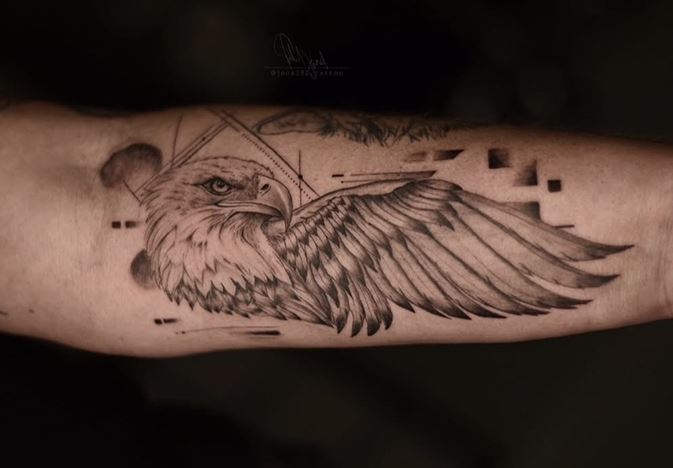
Q: What impact do you aspire to have on the tattoo
community?
A: I’d love to help train and support younger artists not just in
technique, but in mindset: patience, humility, respect for the
craft. Give back what I learn and foster an environment where growth
comes through collaboration, not competition. Also I would want
every client to walk away not just with a tattoo, but with a
powerful memory of connection, care, and being truly seen. And be
known not just as a skilled artist, but as someone who helped make
tattooing more accepted, loved, and meaningful.
Q: For those interested in booking a consultation or
appointment, could you please provide the location of your studio
and any relevant website or social media links?
A: I used to work in five different locations for years but I drive
everywhere and it was a bit overwhelming - now I’m focusing only on
two locations (it might change during the year) You can hit me up
anytime on my instagram: @joca182.tattoo Send message to my studio
in Karlsruhe: @mystory_karlsruhe My other studio in Budapest:
@infamous.art.collective and for my private tattoo studio also in
Budapest just use my instagram. I’m currently working on a website
as well
Q: Beyond your tattooing work, do you engage in any other
hobbies or creative pursuits that you find particularly fulfilling
or interesting?
A: I love playing any instruments - my favorite is guitar though I
have a little recording studio in a corner of my living room where I
can record my own music, if I wasn’t doing tattoos I would
definitely find a way I could make some bucks with music writing now
it's just for fun but maybe it will get a little more serious by
time. I also love everything that has to do with photography and
movie making used to do modelling and shooting amateur portfolios
for people and I am a real gym rat.
Q: If you could go back and give your younger self advice
about pursuing tattooing, what would it be?
A: Start it as soon as you can and be a little braver to do bigger
pieces as well. Also don’t just sit on money! Invest it in yourself
in any way that helps you move forward faster.


