
Interview with Katerina Volkova
Hello Katerina, thank
you so much for taking the time to speak with us today. It's truly a
pleasure to have you. To begin, could you share a little about your
journey and background with our audience? I’m 28 years old,
originally from Sevastopol, Crimea. I’ve always loved drawing, and
my creative journey began in my teenage years when I spent almost
all my free time with a sketchbook, drawing abstract and
graphic-style pieces. Later, I started attending an art studio, it
wasn’t professional training, but at that time I already had a
teacher who helped me improve my skills. After finishing school, I
initially enrolled in a tourism program at university, but within
the first three months I realized it wasn’t for me and switched to
an art-related field. I ended up earning a degree as a graphic
artist, illustrator, and graphic design specialist. Those six years
were incredibly valuable, as I learned a massive amount of
information that now greatly helps me in my work.
Q: Could you tell us about when you started tattooing? Was
it a path you always envisioned, or did you discover your passion
for it more unexpectedly?
A: I’ve been in the industry for just over two years. My interest in
tattooing began long before that, but at the time, I didn’t have the
resources to buy equipment or take any courses. About a year later,
I moved to the United States and realized that here I finally had
the opportunity to start developing in this field. It became a fresh
start for me and a chance to make my dream a reality.
Q: What was your experience like learning the fundamentals
of tattooing, and did you have any mentorship or guidance from an
experienced artist?
A: I taught myself completely on my own. I watched tutorial videos,
read articles, and followed inspiring artists on Instagram. Thanks
to my artistic background, the learning process came quite
naturally, I just had to switch from a familiar pencil to a tattoo
machine and learn how to handle a new tool. I bought a large pack of
fake skin and started practicing with the simplest designs. I set a
strict rule for myself: I wouldn’t start working on real people
until I was 100% satisfied with the results.
Q: When you were first starting out, what kinds of designs
did you typically create? Given that developing a unique artistic
style can take time, how long did it take you to truly find your
own?
A: Like many beginner artists, I started out in a tattoo studio
where I didn’t have much experience and simply worked with any
requests that came from clients. It was a very valuable stage, it
taught me how to connect with people, how to adapt ideas to
different needs, and how to understand someone else’s vision. In the
beginning, I didn’t focus on any specific style, I knew that finding
my artistic identity would be a long journey. To be honest, even
now, after two years of practice, I still feel like I’m in the
process of discovering it. My style is becoming more recognizable,
but I continue to experiment, observe, grow, and not limit myself to
strict boundaries.
Q: Your portfolio beautifully showcases floral and fine line
designs. Do you envision continuing primarily with this signature
style, or are you open to exploring other aesthetics in the future?
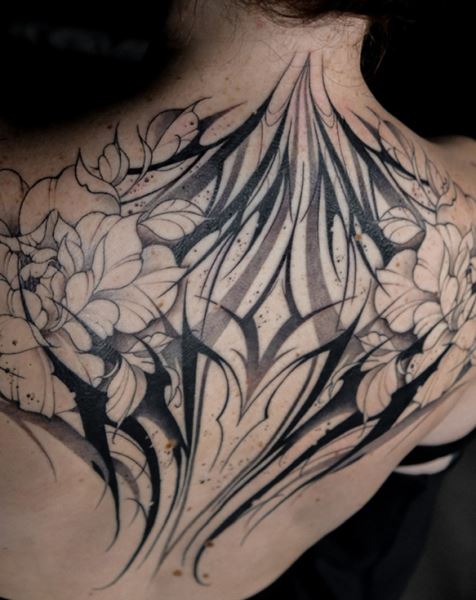
A: Yes, I really love floral tattoos. And I enjoy working with fine
lines because I’m not a fan of overly heavy or crowded pieces. I
like tattoos that have space and breathing room, and the fine-line
style works very well for that. But I don’t limit myself to just
that style. I also enjoy realism, dark ornamental, and abstract
styles. They have more depth and contrast, and I try to adapt these
styles to my own vision, to bring something unique into them, so
that they still carry my personal touch.
Q: Could you walk us through your design process? Do you
typically prepare custom drawings for each client beforehand, or do
you develop the design with your clients during the appointment?
A: I usually prepare the sketches in advance. During the initial
conversation, I clarify all the important details - what exactly the
client wants to see in their tattoo, what meaning it should carry,
the mood, the style. Based on that, I start working on the design.
It’s important for me to spend some time with the idea. I reflect on
how to best express the concept through graphics, choose the right
composition, and work with form. This process takes time - both
creatively and technically. During the session, we can make small
adjustments together with the client, like resizing the design or
adapting it to fit their anatomy. But overall, I prefer to come to
the session fully prepared, with everything thoughtfully planned and
visualized.
Q: Even seemingly simple line work demands immense patience
and precision, especially when it comes to elements like proper body
placement. How involved are you in advising your clients on these
crucial decisions? And when it comes to the overall design and
placement, how open are you to negotiating or adapting your initial
ideas based on their input?
A: Working in the fine line style is actually more challenging than
it might seem at first glance - in many ways, it requires more
focus, patience, and precision than more saturated styles. There’s
no room for rushing, because even the smallest deviation can disrupt
the harmony of the entire composition. I always discuss all the
specifics of fine line tattoos with my clients in advance: healing
nuances, the possibility of a touch-up, and especially the impact of
anatomy. Some areas of the body are more difficult for the skin to
take pigment, and I make sure to explain that so the client knows
what to expect. As for the design, I’m always open to revisions.
This tattoo is for the client, and they’ll be living with it every
day. So if they want to change the shape, add or remove elements, I
respect that and adjust the design accordingly. It’s important to me
that the final result brings joy not only to me as an artist, but
also to the person who entrusted me with their body.
Q: What's your process when a client comes to you without a
clear tattoo idea? Do you have a sketchbook or collection of
ready-made designs that you use for inspiration or to help them
visualize options?
A: Yes, I have sketches that I create in my free time, they reflect
my style and artistic approach, and I can offer them to a client if
they’re unsure of what they want. But honestly, that doesn’t happen
very often. Most of the time, clients come in with an idea - even if
it’s not fully formed yet. Usually, they want me to interpret their
concept through my style and visual perspective. People who reach
out to me have typically already seen my work and are looking for my
personal artistic take on their idea. That means a lot to me, and I
always try to approach each request with care and creativity.
Q: Is there a specific tattoo idea you're currently
envisioning, a "dream" piece that you'd love the opportunity to
bring to life on a client?
A: I wouldn’t say I have one specific “dream tattoo.” Since I’m
still in the process of exploring and refining my style, this
journey remains alive and ever-evolving. Even my own sketches can
change over time, I might revisit them, redraw, add new elements, or
develop them further. It’s all part of my growth as an artist. But
overall, each of my original designs is a kind of dream tattoo in
its own way. Especially when a client comes to me and says, “I want
you to do it your way, the way you see it.” When someone fully
trusts my vision and style, that’s incredibly inspiring. Projects
like that always become something truly special.
Q: Tattooing is undoubtedly a demanding profession, both
artistically and physically. How do you navigate those days when you
might feel a lack of inspiration, perhaps due to burnout or
overwhelming responsibilities? What are your strategies for
recharging and staying creative during those times?
A: It’s truly a continuous process, your mind is constantly working
on new ideas, sketches, and projects. And physically, tattoo
sessions can be very exhausting, especially when they last 7–8 hours
straight. Travel and getting away help me recharge a lot. Nature is
a powerful source of inspiration and inner balance for me. Whenever
possible, I even try to take my work outside the studio - I might
sketch in a park or outdoors, and it gives me a sense of freedom and
mental clarity. Physical recovery is also really important to me.
Being a tattoo artist involves a lot of static, repetitive
movements, which can become tiring over time. So I make an effort to
stay active, work out regularly, get massages, and include physical
activities in my routine. All of this helps me maintain my energy
and keep enjoying what I do.
Q: Your black and gray designs are known for their
incredible precision and contrast. Have you worked on any recent
tattoos that presented a significant challenge initially but
ultimately resulted in a piece you were particularly proud of?
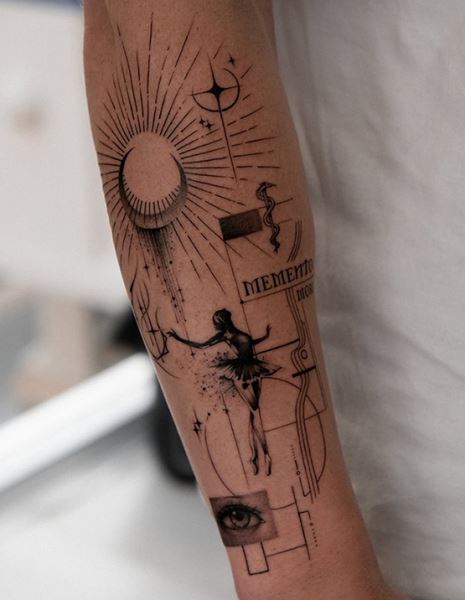
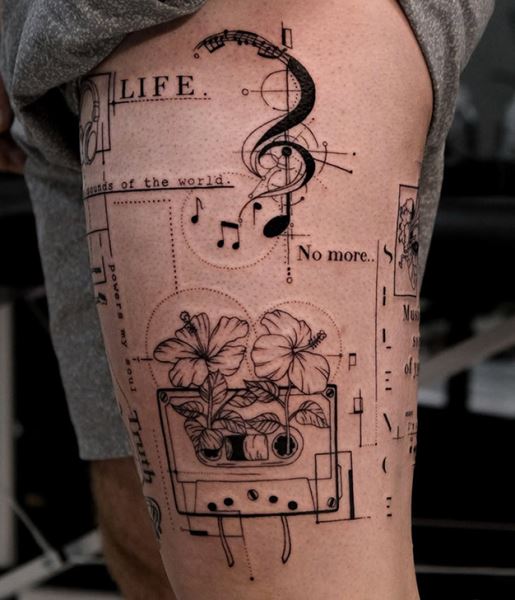
A: Honestly, all of my black and gray tattoos are very special to
me. I truly enjoy creating micro-realism pieces - this style allows
me to express my attention to detail, as well as my sense of form
and texture. I don’t find these works difficult, because I approach
them with thorough preparation. Every design is drawn by hand, and
by the time of the session, I know exactly where each stroke should
go. For me, it feels like a meditative process of building an image,
where every line matters. It’s in these kinds of projects that I
experience real creative joy and deep focus.
Q: Clients often come in with incredibly unique and
meaningful tattoo ideas, and I imagine you hear countless personal
stories in your studio. Have you ever had a client reveal a
particularly intimate life story behind their tattoo? If so, how did
that moment impact you personally as an artist?
A: To be honest, this is more about me than my clients. English
isn’t my first language, and I’m still in the process of learning
it. Because of that, it can be difficult for me to communicate
freely with clients during sessions. Many people see me as quiet and
focused and in a way, that’s true, because I really do concentrate
deeply on my work. But that doesn’t mean I don’t value my clients or
don’t want to connect with them. I just need a little more time and
confidence to express myself as easily in English as I can in my
native language. I hope that with time, I’ll be able to open up more
- both in conversation and emotionally. But even now, I’m incredibly
grateful to everyone who comes to me and trusts me with their body
and their story.
Q: Beyond strong technical skills, what qualities do you
believe are essential for a tattoo artist to truly excel in this
profession? How important is open-mindedness in your daily work?
A: Without a doubt, the quality of the work plays a huge role. But
I’ve been noticing more and more how different the work of artists
who deeply study art and continue developing their skills in drawing
and composition is from those who simply tattoo without an artistic
foundation. These are two completely different approaches, and you
can feel the difference - both in the depth of the projects and in
their expressiveness. Communication skills with clients are also
incredibly important. You have to do your best to truly understand
and convey the idea someone has in their mind, even when they can’t
always clearly express it themselves. And believe me, that’s not
easy. Not everyone can become a true bridge between a client’s inner
world and the visual form they want to express it through.
Q: Looking back at your early days as a tattoo artist
compared to now, what's the most significant transformation you've
undergone, and what has been the most rewarding outcome of that
change?
A: I can clearly see how much the dynamic with clients has changed.
People now come to me intentionally, because they’re drawn to my
style, my approach, and the quality of my work. That’s the most
rewarding kind of recognition for any artist. In the beginning, it
was very different: clients often chose based on availability or
convenience, not on the individuality of the artist. Back then, I
was simply doing the work without feeling a strong connection
between my style and the client’s choice. I think that realization
was the main driving force behind my growth, I knew from the start
that I couldn’t stay still. I’m still learning to this day: I review
my own work, look for ways to improve, and analyze composition,
lines, and rhythm. That constant self-reflection and drive to
improve have helped me grow quickly and develop my own unique voice.
Q: Given the demands of your profession, how do you maintain
your motivation and what ultimately drives you to continue creating
and excelling as an artist?
A: I get a huge amount of motivation from happy clients. When
someone sees the final result, something that fully meets their
expectations, or even exceeds them and they’re genuinely excited,
it’s incredibly inspiring. In those moments, you realize that your
work truly matters, and it makes you want to keep going, to do even
better, cleaner, and more precise work. On top of that, the very
thought that I’m creating something that may stay with a person for
the rest of their life is a powerful driving force. It’s not just an
image, it’s a part of their story. And of course, I hope that my
tattoos carry real meaning for my clients, and don’t become
something they’ll want to remove one day. That awareness of
responsibility and depth is what makes my work feel especially
meaningful.
Q: Where are you located? Please write down your studio
location and website/social media links. Also let us know if you are
available for bookings.
A: I work in Charlotte, North Carolina, where I have my own small
and cozy studio. I’ve done my best to make the space as comfortable
as possible - both for myself and for the people who come to see me.
My booking is usually open about a month or two in advance. I don’t
always plan my schedule too far ahead, because I prefer to work at a
flexible and natural pace. But I always try to stay connected
through social media, where I share up-to-date information about
available dates and openings. For quick response, it’s best to
message me on Instagram @rinav.tattoo
Q: What's your opinion about the local tattoo scene? Do you
see progress?
A: In my opinion, the tattoo scene in the U.S. is a bit behind the
European one, especially when it comes to stylistic trends. It feels
like new directions and trends take a little longer to reach here.
Maybe it’s because many clients in the U.S. already have established
preferences and tend to stick to the styles they’re familiar with
and truly connect with. That said, there’s definitely progress. It’s
especially noticeable at festivals and conventions, where you can
really see how artists are eager to grow, evolve, and experiment
with new things. This drive to move forward is probably the most
important factor shaping the direction of the industry and in that
sense, the American scene has a lot of potential.
Q: Considering the evolution of the global tattoo scene, do
you believe the industry is generally moving in a positive
direction?
A: The industry is definitely moving in the right direction. More
and more people are beginning to see tattooing as an art form, not
just a random image. That’s encouraging, because behind each piece,
there are ideas, emotions, and individuality.
Q: With the abundance of online resources and apprenticeship
opportunities available today, do you believe it's genuinely easier
to enter the tattooing profession now than it was in the past? If
you were beginning your journey today, what approach might you take
differently?
A: Honestly, I wouldn’t change anything about my journey. I truly
enjoy learning on my own. When you study under a specific artist,
you only get the information they consider important. But when you
go through the process independently, you cover a much wider range -
exploring different approaches, styles, tools, and most importantly,
developing your own vision. Of course, it takes more time and
effort, but in my opinion, it’s absolutely worth it. You learn to
think more broadly and to filter out the information that’s truly
valuable for you. And later on, once you’ve gained experience and
have a clear understanding of what you’re looking for, you can
attend seminars from artists whose style and mindset genuinely
resonate with you.
Q: As an award-winning artist, congratulations on that
well-deserved recognition! How much do these accolades mean to you,
and in what ways do they inspire you to continue evolving your
craft?
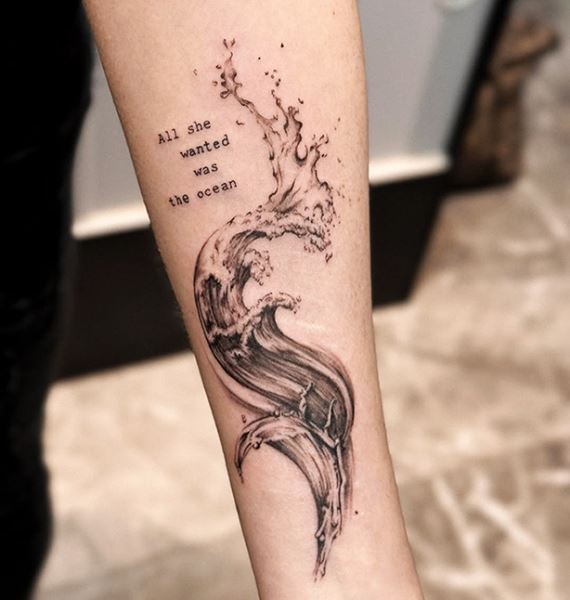
A: Thank you so much! Without a doubt, awards are a powerful
motivation to grow and keep evolving, especially for me, because my
very first tattoo convention happened when I had less than a year of
experience in the industry. I went there just to test myself,
without any big expectations. The piece I presented was more of an
experiment for me. But it was with that piece that I won 1st place
in the Small Black and Grey category and 5th place in Best of Day.
It was an incredible surprise and an emotional boost. After that, I
participated in other festivals as well, where I also received
awards. I truly enjoy taking part in conventions and festivals. It’s
not just a chance to showcase your work, but also to see how other
artists work, to connect, ask questions, and exchange experiences.
It’s an incredibly inspiring space where you can see how diverse the
tattoo profession can be and how far you can go. Events like these
are energizing and give you a fresh perspective on your own work.
Q: Where do you think is the best place to develop a career
as a tattoo artist?
A: I believe it’s possible to grow as an artist in any country.
Every region has its own perspective and approach. To start, I’d
like to visit different cities here in the U.S. and connect with
local artists. Later on, I’d love to work abroad, to learn something
new and experience a different pace. It’s incredibly exciting and
valuable when you can combine work with travel and absorb
inspiration from others. I’m absolutely open to guest spot
opportunities and collaborations.
Q: What impact do you aspire to have on the tattoo
community?
A: I want to leave my mark. I dream of becoming an artist who is
chosen not just for technical skill, but for a unique vision. I want
people to come to me specifically for my style, for the way I see
the world. When someone chooses you for who you are, that’s true
recognition.
Q: If you could go back and give your younger self advice
about pursuing tattooing, what would it be?
A: Don’t be afraid, take action. Don’t doubt yourself. Express
yourself the way you feel it, and believe there will be people who
understand and support you.


