
Interview with Kimmi Gayle
In the world of contemporary tattooing, there is a
distinct line between those who replicate images and those who
breathe life into them. To look at the portfolio of Kimmi Gayle is
to step across that line into a world where reality is heightened,
colors are more visceral, and the surreal feels entirely tangible.
Based in Derby, UK, Kimmi has quietly established herself as a
powerhouse of Color Realism and Surrealism. Whether it is the
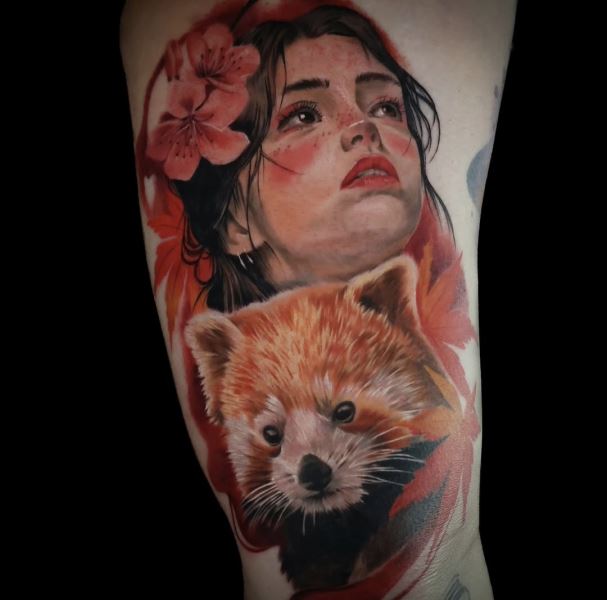
soulful, wet-eyed gaze of a red panda, the liquid-smooth gradients
of a neon dart frog, or the haunting, multi-layered depth of her
portraiture, her work possesses a "glow" that is rarely captured in
the medium of ink. It isn't just the technical precision that
catches the eye; it is the narrative flow—the way her large-scale
projects wrap around the human form as if they were always meant to
be there.
As she prepares to embark on a new chapter, bringing her mastery to
the storied tattoo culture of Germany, we sat down with Kimmi to
discuss the evolution of her craft. From her early days of
navigating the learning curve to becoming a sought-after name on the
international convention circuit, Kimmi Gayle represents the
vanguard of a new era in tattooing. In this exclusive interview, we
explore the mind behind the machine and find out what happens when a
British master of color sets her sights on a new horizon.
Q: Kimmi, every artist has that "point of no return" moment.
When did you first realize that skin was the medium you were meant
to master?
A: When I was accepted to my apprenticeship. Before that, I had
experimented with tattooing and was still figuring out my direction.
Choosing to pursue a formal apprenticeship was the first time I made
a clear, intentional decision to treat tattooing as a career. The
‘point of no return’ came a lot later. I had invested years into
developing my technique and building a style that genuinely felt
like mine. Once that foundation was there, I realised this would be
what I do for the rest of my life.
Q: You’ve built an incredible reputation
in Derby, UK. How has the local art scene there shaped the way you
approach your clients and your designs?
A: Whilst I’m based in Derby, my client base and exposure aren’t
limited to the city. Much of my work comes from clients travelling
specifically for my style, often finding me through social media.
That said, having a private studio in Derby has allowed me to build
in a quieter, more focused environment. It’s given me the space to
refine my approach, concentrate on consistency, and prioritise
quality over volume. It also enables me to create a calmer, more
personal experience for my clients, because many of them travel and
commit significant time.
Q: Looking back at your early days, what was the most
challenging technical hurdle you had to overcome to achieve the
level of detail we see in your work today?
A: Working with color was definitely the biggest technical hurdle
for me. The hardest part was learning how to achieve depth and
saturation without compromising the skin. I had to refine my
approach to pressure, speed, and application so that transitions
stayed soft and the surface remained clean. With color, there’s very
little room for overworking, so learning to slow down and build
gradually made a significant difference to the overall finish and
healed result.
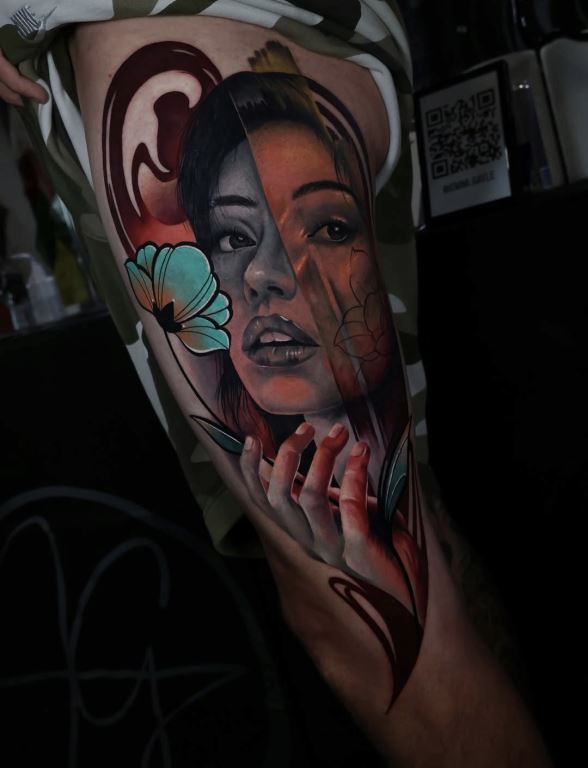
Q: Your portfolio shows a stunning blend
of Colour Realism and Surrealism. How do you decide which elements
of a design should be hyper-realistic and which should lean into the
fantastical?
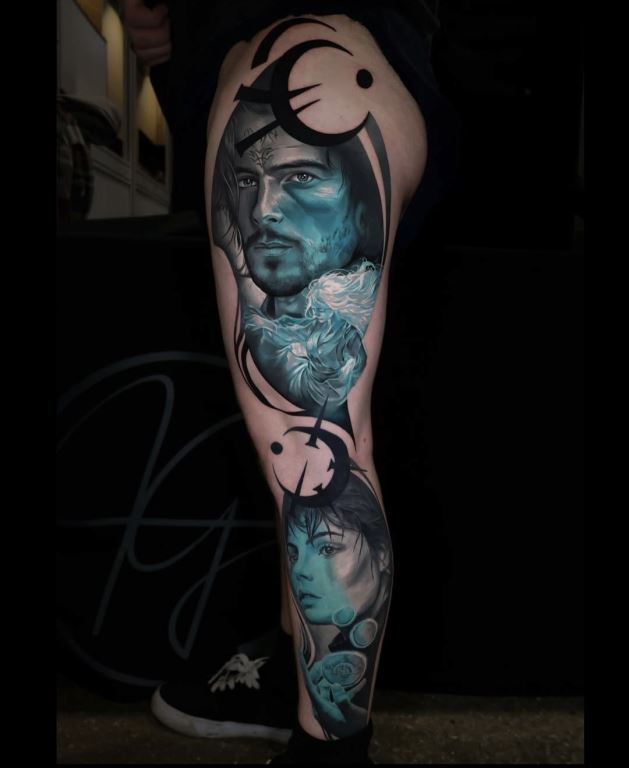
A: Most of my designs start with a realistic focal point. That gives
the piece structure and clarity from the beginning. From there, I
decide how far to push it. The surreal or illustrative elements are
used to support the composition, whether that’s adding movement,
contrast, or a stronger visual flow across the body. They are always
there to strengthen the design, not distract from it. For me,
realism creates the foundation. The more abstract elements allow me
to personalise the piece and make it feel unique, but there’s always
a clear balance so the overall image remains strong and readable.
Q: From vibrant red pandas and dart frogs to the classic
Wallace & Gromit, your work often features character-driven
subjects. What draws you to these specific themes?
A: Most of my work is custom and driven by client requests. Even
when the subject is recognisable or character-based, I look for ways
to add elements that make the piece feel personal and distinctive. I
enjoy the challenge of interpreting something familiar in a way that
reflects the client’s personality while still staying true to my
style. That balance keeps the work interesting for me and meaningful
for them.
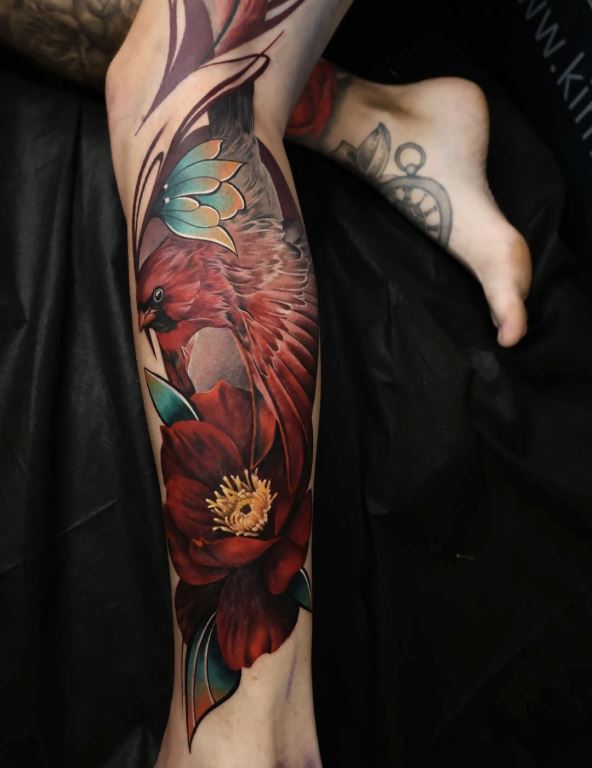
Q: Your use of saturated color is
incredibly bold yet harmonized. What is your philosophy when it
comes to color theory and ensuring these pieces stand the test of
time (the "healed" look)?
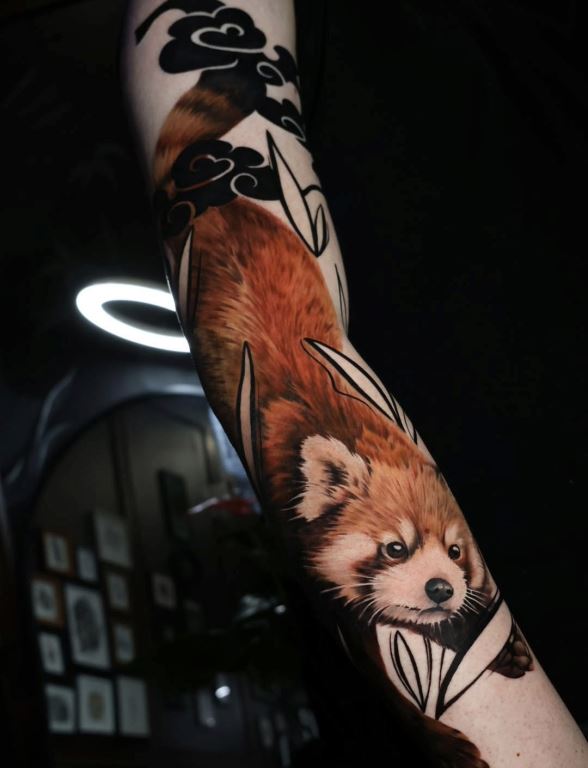
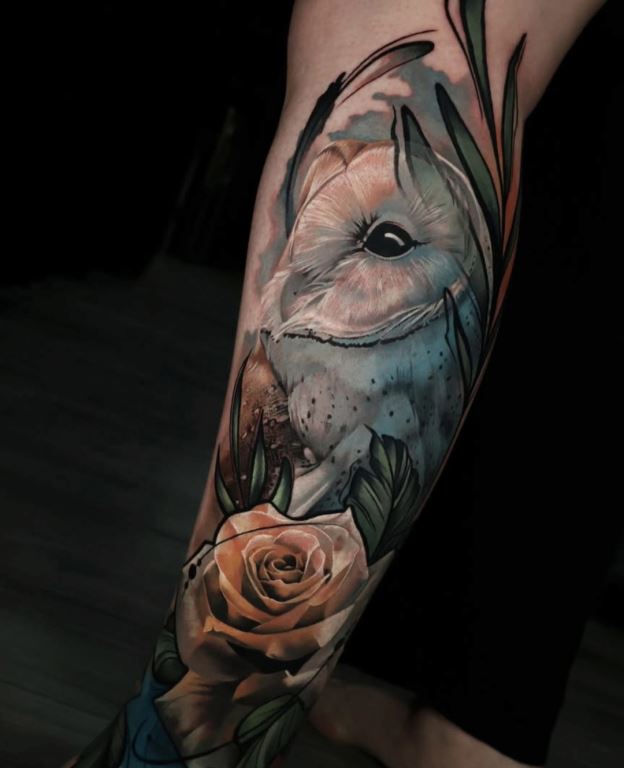
A: When it comes to color, I tend to take a “less is more” approach.
I often limit a piece to three or four key tones, which helps it
remain strong and focused rather than overwhelming. Unless I’m
creating a traditional color realism piece, I usually keep the
background more neutral or muted so it supports the subject rather
than competing with it. That contrast allows the focal point to
stand out clearly. I also think carefully about longevity. Strong
contrast and controlled saturation help maintain clarity as the
tattoo heals and settles, which ultimately makes a big difference to
how the piece holds up over time.
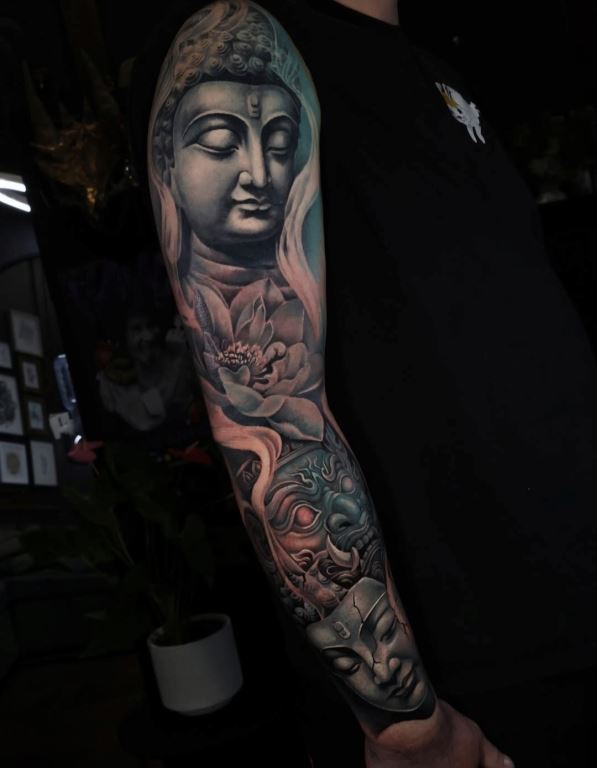
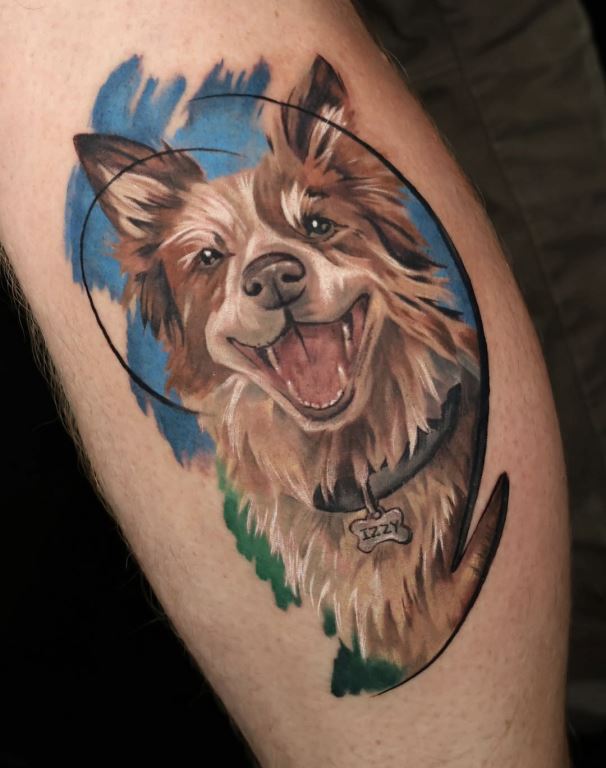
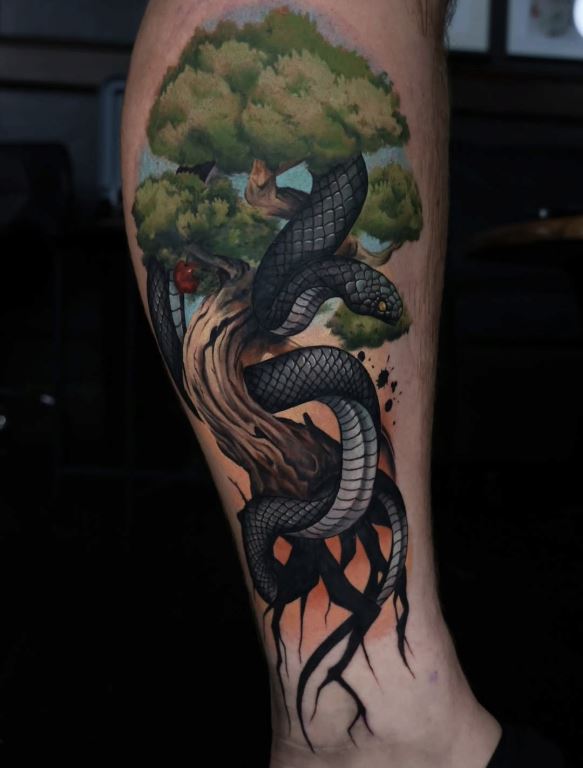
Q: From the soft fur of a dog to the slimy skin of a frog or
the hard grain of a wooden mask, your portfolio is a masterclass in
texture. How do you approach the "micro-details" that differentiate
these surfaces?
A: Depending on the texture I’m creating, I’ll either layer it over
an existing blend or build it gradually into the skin from the
start. I’m careful not to overwork texture on top of color that’s
already fully saturated, as that can compromise the healing. It’s
about knowing when to stop and allowing the texture to sit naturally
within the piece rather than forcing it. Tool choice also plays a
role. I often use smaller, more precise needle configurations when I
need controlled, clean micro-detail.
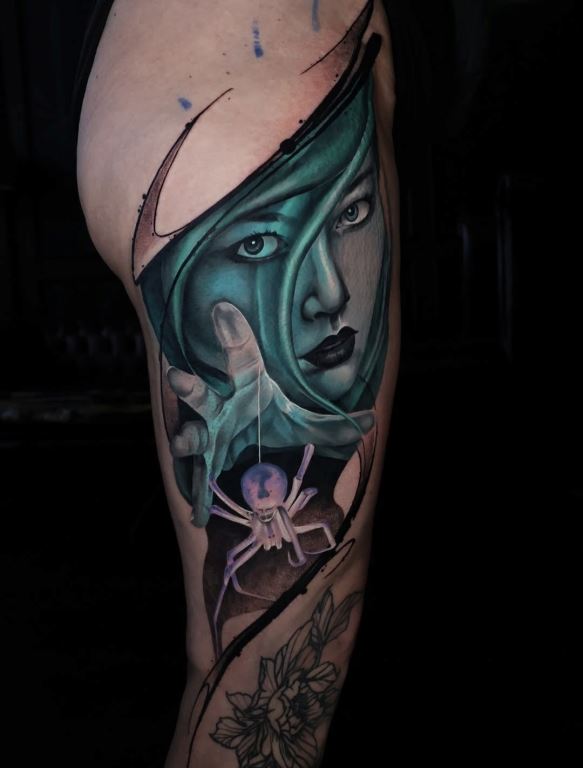
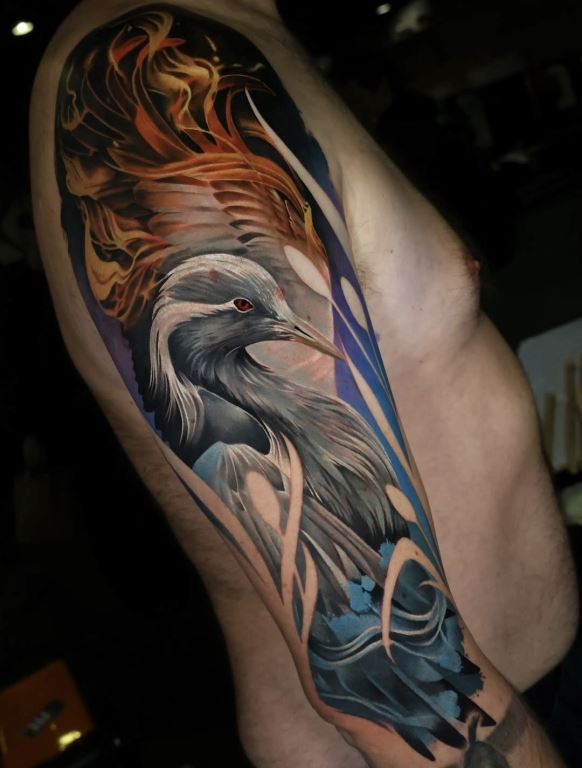
Q: We see elements of traditional
illustration (bold lines or graphic shapes) mixed with
hyper-realism. How do you strike the balance so the two styles don't
fight each other on the skin?
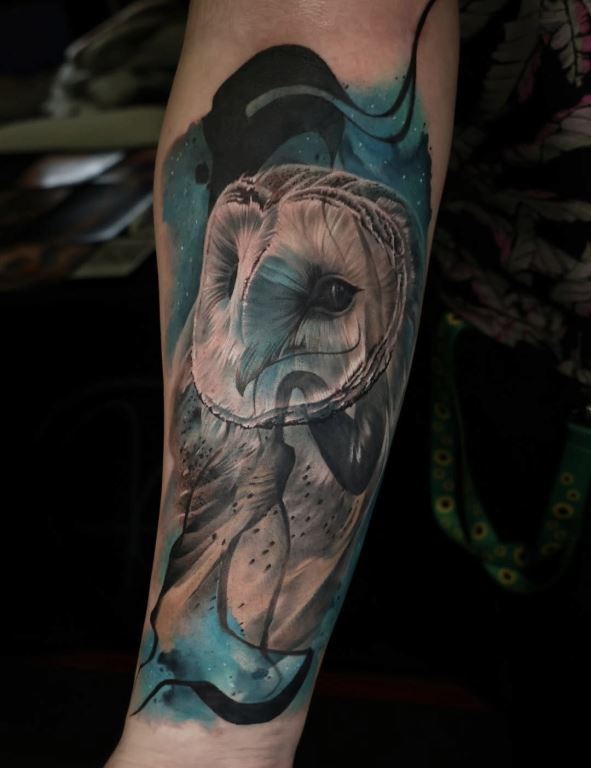
A: One element always leads, and the other supports. If the realism
is the focal point, the graphic or illustrative elements are used to
frame it, create movement, or guide the eye, not compete with it.
I’m very conscious of line weight, contrast, and spacing. Bold
shapes can overpower realism if they’re not placed carefully, so I
make sure there’s enough breathing room between the two. The styles
need to feel integrated rather than layered on top of each other.
For me, it’s less about mixing styles and more about controlling
composition. If the structure is strong, the different elements can
coexist without clashing.
Q: Your Alice in Wonderland piece is a fan favorite. When
working with iconic, pre-existing characters, how do you inject your
own "Kimmi Gayle" DNA into the design to make it original?
A: When I’m working with iconic characters, I try to keep their core
features recognisable and true to their identity. That foundation is
important. From there, I use the background and surrounding elements
to build the atmosphere and bring the environment together. That’s
usually where I introduce more of my own interpretation, through
composition, color balance, and how the elements interact. The Alice
piece was slightly different from my usual approach. I would
normally use the rule of three to structure and frame the
characters, but in that case I adjusted the composition to suit the
narrative and flow of the design.
Q: Can you walk us through your design
process? Do you use 3D references, photography, or digital painting
to compose these complex surrealist scenes before you ever pick up a
machine?
A: I start by mapping out where I want each element to sit,
considering position, perspective, and light source first. From
there, I move into research. I gather strong photographic references
and, where needed, use 3D models to better understand form and
lighting. Once I have everything I need, I begin composing the
elements digitally, positioning them precisely before refining and
editing the final design in Procreate.
Q: Many of your projects are large-scale. How do you
approach the anatomy of the body to ensure the tattoo moves and
breathes with the person?
A: I always ask for a clear, straight-on photo of the area where the
tattoo will be placed. Everyone’s body composition is different, and
that directly affects how a design will sit and flow. I do have base
templates I’ve created, but I don’t rely on them blindly. It’s
important to adapt the composition to the individual's body rather
than forcing a design onto it. Muscle definition, curves, and
movement all change how light and shape read on the skin. For
example, someone with more defined musculature offers less flat
surface area, so the design has to be adjusted to account for that
structure. The goal is always for the tattoo to move naturally with
the body rather than feel applied on top of it.
Q: You spend hours, sometimes days, in
close proximity to your clients. How do you cultivate a space where
they feel safe and comfortable enough to sit through the physical
and emotional intensity of a large-scale piece?
A: For me, it starts before the tattoo even begins. Consultations
are an important part of the process. They allow clients to get to
know me as a person before we spend long hours working closely
together. That initial connection builds trust and helps them feel
more comfortable when it comes to the actual sessions. Clear
communication also makes a big difference. I make sure clients
understand the process, the time commitment, and what to expect
physically. When people feel informed and prepared, they’re
naturally more at ease. The studio environment plays a role as well.
I work in a private setting, which creates a calmer and more
personal atmosphere. During longer sessions, I provide
noise-cancelling headphones, small comfort tools like fidget
spinners, and a tablet so they can watch something if they choose.
It gives them options and a sense of control, which really helps
when sitting for large-scale work. Ultimately, I try to keep the
environment more homely, and friendly. A place my clients can feel
comfortable. The experience becomes far more manageable, even during
the more intense stages of a project.
Q: Often, a client comes to you with a
feeling or a memory but doesn't know how to draw it. How do you
bridge the gap between their "inner vision" and your artistic
execution to ensure the final piece resonates with their soul?
A: It usually starts with conversation rather than design. If a
client feels unsure, especially first-time clients, I’ll often
recommend a consultation. That gives us space to talk through their
ideas properly and establish direction before anything is finalised.
I can also prepare a rough sketch to make sure we’re aligned during
the consultation so I can develop the final design in the way
they’re envisioning. I focus on understanding what the piece means
to them, but I also guide the structure. Not every idea translates
directly onto skin, so part of my role is refining and adapting it
so it works visually and technically. The process is collaborative,
but it’s also guided. Once we’ve clarified the concept, I take
responsibility for shaping it into a composition that feels personal
while still being strong and balanced.
Q: You’ve been featured at shows like the
Nordic Ink Festival and Lincoln Tattoo Con. How do these
international environments influence your growth as an artist?
A: Conventions and international shows are always humbling. You’re
surrounded by artists who are working at an incredibly high level,
and it’s a reminder that there’s always more to learn. No matter how
established you are, stepping into that environment puts things into
perspective. It pushes you to reassess your own standards and look
at your work more critically. It also strips things back to the
fundamentals. In a live setting, you rely on preparation,
discipline, and technical consistency. There’s no room for
complacency. That pressure is healthy, it sharpens focus and
reinforces the importance of precision. For me, those environments
don’t inflate confidence; they ground it. They remind me that growth
is continuous and that staying open and adaptable is essential in
this industry.
Q: I noticed your "Most Difficult Cover Up" post. Can you
walk us through the technical mindset required to turn a "mistake"
into a masterpiece?
A: I've spent a few years specialising in cover up work, starting
with smaller pieces and building up to more complex projects as my
confidence grew. With any cover-up, the first step is being
realistic about what’s already there. The existing tattoo’s value
and saturation set the limits. The new design needs to be equal
value to or darker than what’s underneath, anything lighter will
usually require more passes. In this case, my client understood that
it would take multiple sessions to achieve a clean result. From
there, it becomes about careful planning. I mapped out how to
reposition and darken certain areas so the new design worked with
the existing tones. Texture helps break up underlying shapes, strong
saturation and contrast ensure the new piece reads clearly over
time. Cover-ups aren’t quick fixes. They require patience, honesty
about limitations, and a design that’s built with those constraints
in mind.
Q: Germany has a deeply respected and
rigorous tattooing history. What is it about the German art scene or
the culture in cities like Berlin or Hamburg that feels like the
right "next step" for your evolution?
A: Germany has a strong reputation for technical precision and
discipline, which naturally appeals to me. Cities like Berlin and
Hamburg also have a massive art scene beyond tattooing. There’s a
real cultural depth there, galleries, architecture, design and that
kind of environment is inspiring in itself. Being surrounded by a
wider creative community pushes you to think differently and refine
your work. There’s also a clear demand for the style I focus on,
particularly detailed color realism and larger-scale projects. That
makes it feel like the right step not just geographically, but
creatively. It’s an environment where the work I want to develop
further is both appreciated and challenged.
Q: Germany is known for its meticulous attention to hygiene,
precision, and the "Tätowierkunst" (Tattoo Art) movement. As an
artist who prides herself on detail, how does the German commitment
to technical excellence align with your own work ethic?
A: That commitment to precision and hygiene aligns closely with how
I already work. I’m very particular about cleanliness and
organisation in my studio. I follow set procedures from preparation
through to aftercare, and I don’t take shortcuts when it comes to
safety or setup. For me, structure isn’t restrictive, it creates
consistency and allows me to focus fully on the technical execution.
Precision is something I value highly, especially working in
detailed color realism. Small inconsistencies can affect the overall
clarity and longevity of a piece, so maintaining high standards in
both hygiene and workflow directly supports the quality of the final
result. In that sense, the German emphasis on technical excellence
feels compatible with my own work ethic rather than something I
would need to adapt to.
Q: British and German tattoo cultures both
have deep roots, but they differ in "vibe." What specific element of
your UK training do you think will bring something fresh and
"exceptional" to the German studios?
A: The UK training system placed a strong emphasis on adaptability
and client interaction, and that’s something that’s shaped my
approach long-term. I was encouraged to understand multiple styles
before refining my focus, which gave me a broad technical
foundation. Even though I now specialise in detailed color realism,
that early exposure trained me to problem-solve and adjust designs
confidently rather than relying on one formula. There’s also a
strong emphasis in the UK on client communication and building
trust. Creating a comfortable, structured environment is something I
prioritise, especially during longer sessions. I think that balance
technical discipline combined with strong interpersonal awareness
would integrate naturally while still offering something slightly
different.
Q: Germany hosts some of the world’s most prestigious
conventions, from the Berlin Tattoo Convention to the Hamburg Tattoo
Days. Are there any German artists or studios you’ve long admired
and hope to collaborate with once you settle?
A: Germany has some incredibly talented realism artists, and I’ve
admired the overall standard of work coming out of cities like
Berlin and Hamburg for some time. I’d genuinely love to attend and
take part in conventions like the Berlin Tattoo Convention, Hamburg
Tattoo Days, and events such as Gods of Ink. Being present in those
environments is inspiring in itself, not just to showcase work, but
to observe, learn, and connect with other artists who take the craft
seriously. I wouldn’t single out just one name, I’m simply
interested in being part of a community that values strong
composition, precision, and longevity. If opportunities arise to
guest or collaborate, I’d approach them with curiosity and respect.
For me, collaboration is about learning as much as contributing.
Being able to share space with artists who care deeply about their
craft would be something I’d really appreciate.
Q: Beyond your own art, do you have plans
to offer seminars or guest spots to local German artists to share
your specific techniques in color realism?
A: When the time and demand feel right, I would be open to hosting
seminars to share my process and the way I approach my work. It
would be important to me that any teaching is structured and
genuinely useful, offering practical insight into both technical
execution and workflow rather than just surface-level tips. I also
believe learning goes both ways. Guest spots and shared sessions are
often just as valuable for observing how others work. If
opportunities arise naturally, I’d approach them as an exchange
rather than a one-sided teaching role. For me, growth within the
industry is about sharing knowledge while staying open to learning
from others.
Q: You’ve traveled to various conventions across Europe.
What is it about the "traveling artist" lifestyle that keeps your
creativity fresh?
A: The travelling artist lifestyle really suits me because it
combines two things I love, creating art and exploring new
environments. Every city has its own rhythm. Different clients,
different conversations, different creative energy. That change of
scenery keeps me inspired and prevents the work from ever feeling
repetitive. Stepping into new spaces also keeps me adaptable. It
challenges me in small ways, whether that’s working in a new studio
or being surrounded by artists I admire. I always come back feeling
refreshed and creatively recharged.
Q: Beyond the tattoo studio, Germany is a hub for art
history, from the Bauhaus movement to Berlin’s street art. Is there
a particular museum or architectural landmark you are dying to visit
for creative inspiration?
A: What draws me to movements like Bauhaus is the idea of
intentional abstraction. It’s not abstract for the sake of being
different, it’s structured, considered, and purposeful. That balance
really resonates with how I approach design. Even when I incorporate
surreal or abstract elements into my work, they’re always there to
support the composition, not overpower it. I’d love to visit the
Bauhaus sites and spend time exploring Berlin’s street art scene as
well. There’s something powerful about seeing abstraction used with
clarity and confidence on a large scale.
Q: There are some legendary names in
German color realism and surrealism, artists like Mario Hartmann in
Berlin or Mirel Tattoo in Mannheim. Are there any specific German
artists whose work you’ve followed, and do you have plans to
collaborate or share "guest spots" with them?
A: Germany has some incredibly talented artists in color realism and
surrealism, and I’ve followed several of them for a while. Artists
like Mario Hartmann and Mirel have built such strong, recognisable
bodies of work, and that level of consistency and precision is
always inspiring to see. I’d genuinely love the chance to connect
and share space with artists like them, whether through conventions
or guest spots. For me, those experiences are about mutual respect
and creative exchange, learning from each other and pushing the work
further. Being part of a community where the standard is high and
everyone is committed to their craft is something I really value,
and I’d be excited to contribute to that.
Q: You are creating art that will literally walk this earth
for as long as your clients do. Beyond the ink and the technique,
what is the one feeling or realization you cherish most at the end
of a long day in the studio?
A: It’s the look on their face when they see the finished piece for
the first time. After hours of focus and preparation, that moment is
always quiet but powerful. You can see when it connects, when it
feels like them. That reaction makes the long sessions and the
pressure worth it. Beyond technique, that’s what stays with me.
Knowing that something I’ve created now feels personal and permanent
for them is the most rewarding part of the process.
Q: What is your message to your future German clients who
are waiting for you to open your books in their city?
A: I’m really looking forward to connecting with future clients in
Germany and across Europe. If you’re drawn to my work, it usually
means we share a similar vision and appreciation for detail. I
approach every project with care, structure, and long-term quality
in mind, and I genuinely value the trust that comes with that. For
updates on guest spots and when I open my books in different cities,
I have a Europe broadcast channel on my Instagram where I share
information first. It’s the easiest way to stay informed about
upcoming dates. I’m excited to bring my work to new spaces and build
lasting connections through it.


