
Interview with Krish Trece
To commemorate the eighteen anniversary of Skin
Artists Tattoo Magazine, we are honoring a select group of top-tier
artists whose work defines the elegance and technical diversity of
the modern era. Krish Trece has been chosen for this milestone
celebration as a leading figure in the Neo-Traditional movement,
recognized for her ability to blend classical aesthetics with a
contemporary, romantic sensibility.
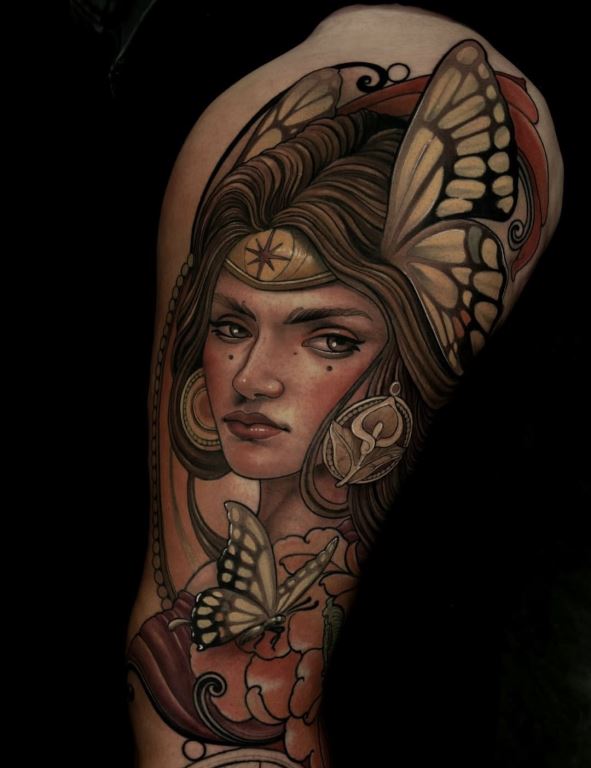
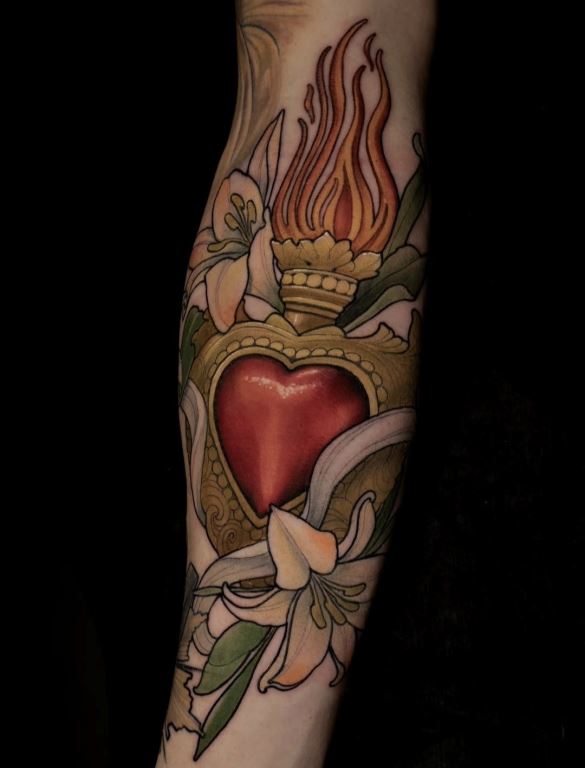
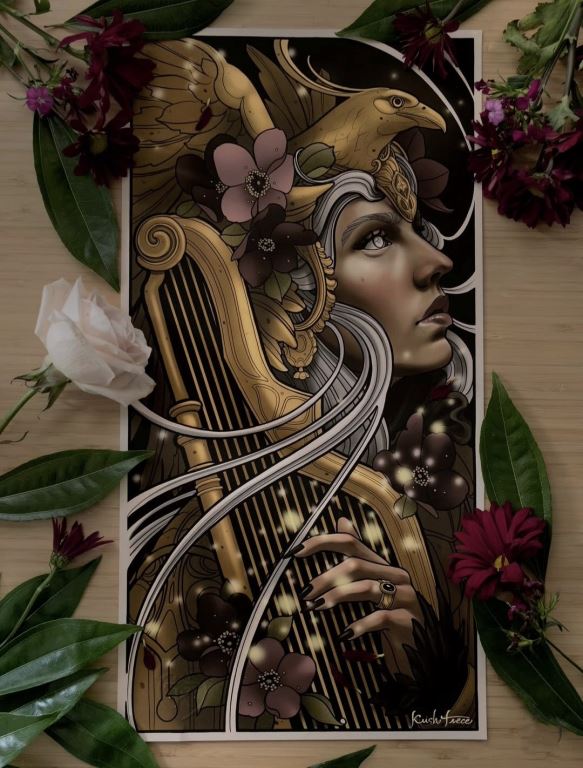
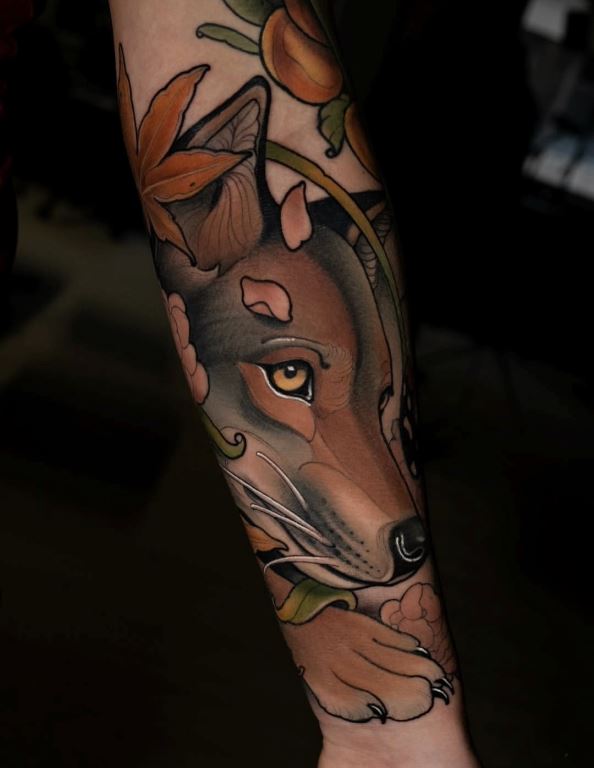
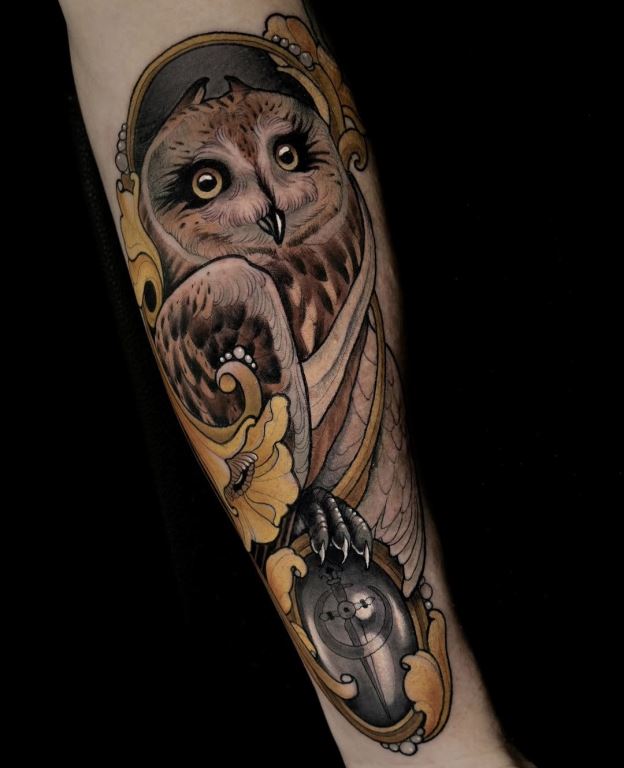
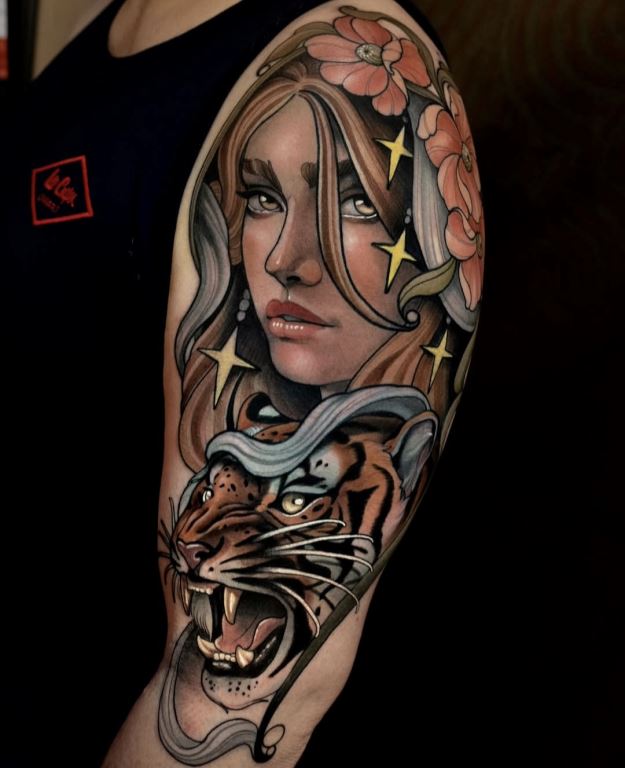
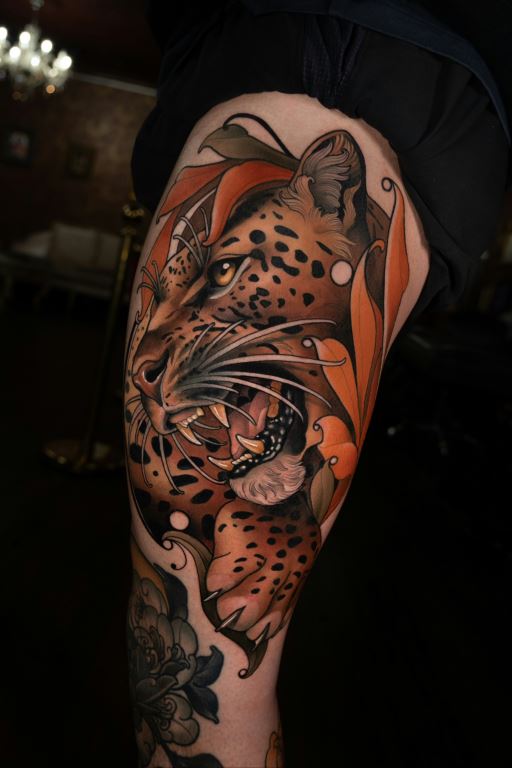
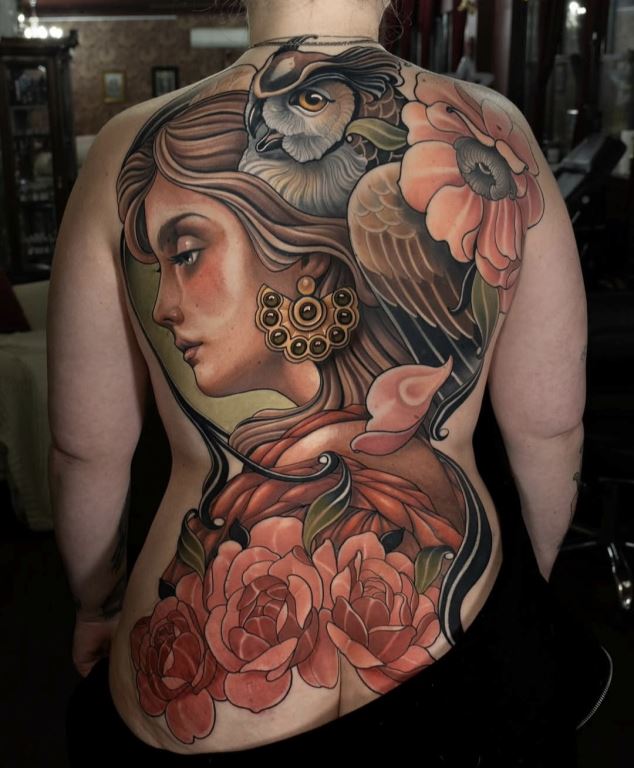
Krish’s portfolio is a masterclass in balance, characterized by
delicate linework, a sophisticated color palette, and an ethereal
quality that sets her work apart. Her "Neo-Romantic" vision brings a
sense of quiet discipline and grace to the skin, proving that impact
doesn't always require aggression. By filtering influences from the
Renaissance through a modern lens, she has created a unique visual
language that resonates with a deep sense of beauty and narrative
depth.
The following interview, conducted as part of our eighteen year
anniversary series, focuses on exploring the future of tattooing. We
discuss the importance of intentionality in a fast-paced industry,
the evolution of soft perfection within technical styles, and
Krish's perspective on how the craft continues to transform as we
look toward the years ahead.
Q: Your work creates a very specific, quiet world on the
skin. If this space you’ve built was a real place, who is allowed
inside? Is this style a sanctuary you’ve made to escape the noise of
the modern world, or is it your way of showing that quiet discipline
is more powerful than just being loud?
A: Yes, honestly, you described it perfectly. It’s a space open to
everyone: all skin, all bodies, all genders. But more than anything,
it’s for people who feel something when they look at art. People who
appreciate visual sensitivity, romanticism, and also strength within
that softness. I think it is both a sanctuary and a statement. In a
world that is often very loud and fast, I’m drawn to something more
intentional. Attention to detail, emotional depth, those things last
longer. That’s the kind of energy I want to create and share. And
naturally, it attracts people who carry a similar openness and
energy.
Q: Is Neo-Traditional the best 'canvas'
for a story because it balances bold impact with tiny details? Does
it give you more room to build a narrative than any other style?
A: Not necessarily. I think every style has the ability to tell a
story in its own way. Neo Traditional just happens to align with my
skills, what I’ve studied, and the aesthetic language that feels
most natural to me. I also appreciate how beautifully this style
ages over time. But like any style, it has its limitations. The
important thing, I believe, is not the style itself, it’s how it's
designed, executed and whether it truly reflects your voice as an
artist.
Q: Your lines are delicate, and your shading is ethereal.
Does the constant pressure to maintain this 'soft perfection' ever
feel like a cage? Do you ever just want to do something messy and
'ugly' to break the spell?
A: Yes, I understand what you mean, but I’d say that I’ve learned
how to balance this feeling. For me, oil painting is where I allow
myself to be expressive, even imperfect. It takes away a bit of that
internal pressure and gives me freedom to explore. Tattooing is
different because it lives on the body permanently. There’s a
responsibility there. But I always recommend artists to find an
outlet outside of tattooing where they can break their own rules and
get a little messy. It's amazing for your mental health, and it
keeps your creativity alive!
Q: Your portraits of women have a very
specific, dignified power. In an industry still dominated by a 'Male
Gaze,' how much of your work is a conscious effort to reclaim how
women are represented in the permanent record of the skin?
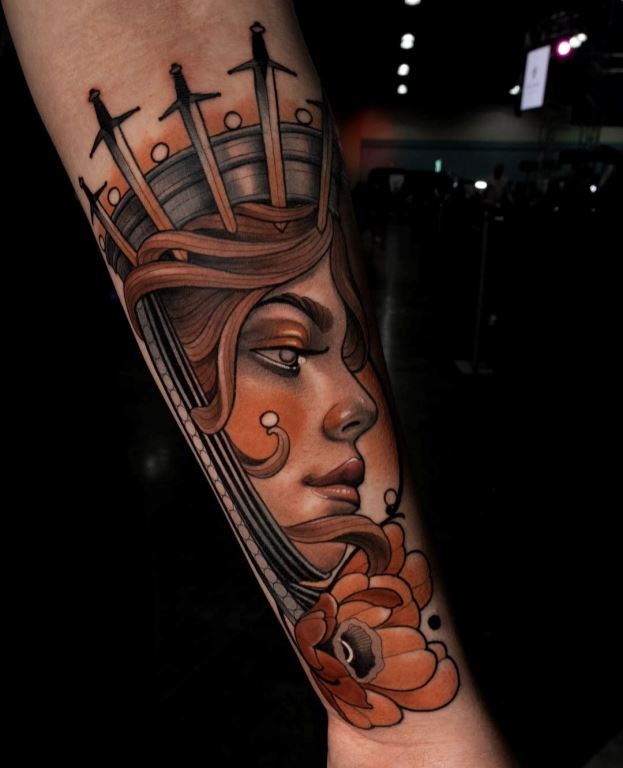
A: Thank you so much for noticing! It comes from something very
natural to me. I was raised surrounded by very strong and
independent women, and that shaped how I see and represent the
feminine. When I create these portraits, I’m thinking about honoring
something. I focus on elevating women, portraying them with dignity,
presence, respect, and a kind goddess-like aura. At the same time,
I’m always aware of the balance between softness and strength, it’s
a visual language of respect.
Q: Does 'Artistic Fatigue' ever set in
when you’ve mastered a specific signature? How vital is it for an
artist to intentionally disrupt their own style and explore the
unknown, not just to stay inspired, but to remain relevant to an
evolving global audience?
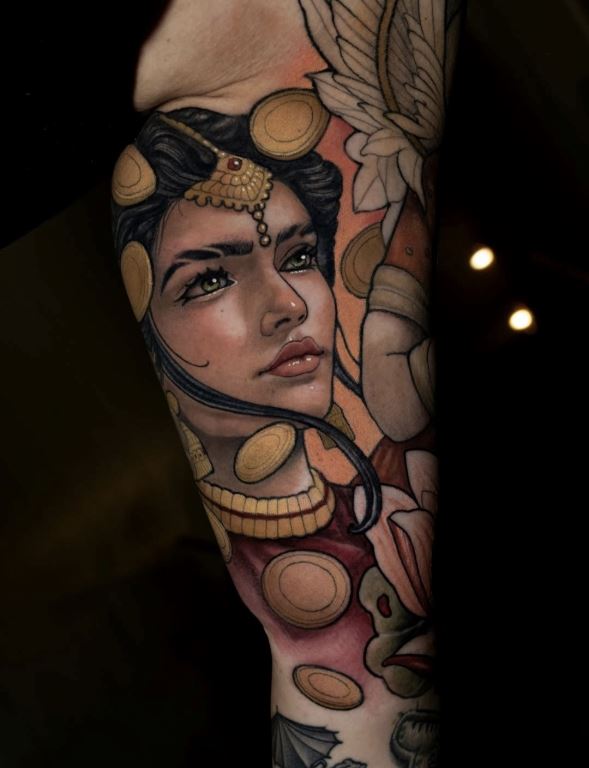
A: Yes, artistic fatigue is a real thing. This being said, I feel we
never master anything, there is always room to learn and improve
your style, and that’s what keeps me motivated. There is always so
much more to learn, it is truly infinite. I love experimenting with
other techniques and influences, and over time, they naturally
integrate into my work. That evolution is important, and doesn’t
mean you are losing your identity. Your artistic personality and
your essence, that will always remain. The growth comes from
expanding it, not replacing it.
Q: Looking toward the next decade, how do
you see the "language" of tattoo styles shifting? Are we headed for
an era of hyper-complexity driven by technology, or do you predict a
"correction" back to the original, raw styles as a rebellion against
digital perfection?
A: I think we’re already seeing both happening at the same time.
There’s a polarity between technology-driven precision and
handcrafted artistry. Some people will be drawn to the digital
aesthetic. Others will deeply value the human touch, the
irregularities, the process, the craft. I feel it’s similar to
choosing between something mass-produced and something made by hand.
Both will exist, but they speak to different values.
Q: If you had to tattoo one last portrait to represent your
entire career, and it had to be a self-portrait, what 'Neo-Romantic'
elements would you use to define your own soul?
A: It would definitely include elements I love deeply, like my oil
painting palette, my brushes, and paints. A lemon as a personal
symbolic connection to my wife, who is always by my side. Floral
motifs would be present, especially chrysanthemums, which is my
favorite flower. And overall, a strong connection to nature,
something poetic, intimate, and with a timeless classical art
aesthetic.
Q: As a judge at major shows, you see the
'future' of tattooing every day. What is the one thing you see in
2026 that makes you genuinely worried for the soul of the craft?
A: I wouldn’t say I feel worried, I try to accept that the industry
is always evolving, and we adapt with it. But something I don’t love
is when the pressure to present a “perfect” convention piece pushes
things too far. I’ve seen situations lately where clients are
tattooed by multiple artists at once, for extreme hours and multiple
days. I feel very uneasy with this and some conventions are now
regulating it thankfully. It is too much for the body, for the
client’s well-being, and even for the art itself.
Q: We are living in an era of unprecedented visual
saturation. Is the modern client actually more 'educated' about the
craft, or are they just highly 'conditioned' by what’s trending on
their feed?
A: It can go both ways, but I feel very lucky because my clients
tend to come in with a clear sense of what they’re drawn to. They’re
connected to the specific Neo Romantic timeless aesthetic of
deep/muted tones, thoughtful compositions that are more classical
and tailored to them individually. That tells me there is still a
level of awareness, not just mainstream trend-following.
Q: As tattooing shifts from a subculture
staple to a high-end luxury commodity, do you believe this
'exclusivity' is a necessary evolution for the craft, or are we
losing the soul of the medium by making it inaccessible to the
masses?
A: I think it’s about balance. Tattooing, like any form of art,
deserves to be properly valued. For many years, it hasn’t always
been seen or respected at that level, even though it requires years
of study, technical skill, experience, and dedication. That value
should be recognized, especially when the work is coming from a true
professional who has invested deeply into their craft and dedicate
everything they have on each project. To be clear, I also believe
extremes are never ideal. There should be awareness of what is fair
and what is inaccessible or even taken advantage of. What matters
most is for the clients to take the time to study the overall tattoo
market, the artist’s work, understanding its value, and choosing
something that genuinely resonates with them. This should eventually
re-balance the industry with time, only time will tell!

Q: What will differentiate top-tier
artists in the next decade?
A: Among many shifts, we’re definitely seeing a movement toward more
intentional, large-scale projects rather than just smaller, isolated
pieces. More and more clients are approaching tattooing with a
long-term vision (even for their first tattoo) seeing their body as
an open canvas to build something cohesive and meaningful at a
larger scale. Because of that, artists who can think beyond
individual designs I believe will stand out. It requires a deeper
understanding of how tattoos live on the body, how they move, how
they flow, and how this art connects across larger areas. I’m
speaking specifically about large-scale work, like full body
compositions or bodysuits.
Q: How do you see Neo-Traditional
style evolving in a space where anything can be quickly copied or
imitated?
A: That has always existed. Tattooing has evolved through
inspiration and reinterpretation, we know that’s part of its
history. But there is always something that cannot be copied: that
individual intention, experience, and soul behind each piece that is
unique only to us. That’s where true individuality lives and it’s
definitely visible in the results!
Q: As we look toward the next decade of conventions and
workshops, do you fear we are entering an era where 'teaching' has
been replaced by 'branding'?
A: It really depends on the integrity of the artist/teacher. There
are so many incredible seminars that offer real knowledge and
quality teaching. Like, how lucky is the new generation to have such
opportunities? That being said, there are also way too many options,
and it’s important to do your research on the artist and seminars,
and to be informed on what you are choosing. That awareness is key!
Q: If you could dictate the evolution of
the global tattoo scene over the next ten years, what shift in
artistic values would you champion? And what do you think will fade
away?
A: I think and I hope that we’re moving toward a more conscious and
intentional evolution. Clients are beginning to see tattoos as a
true form of art, valuing the craft behind them. There’s a growing
appreciation for the time, knowledge, and dedication that goes into
each piece, along with a stronger sense of long-term vision and
larger projects. A mindset of respect, intention, and openness. What
I believe will slowly fade are decisions driven purely by trends,
without deeper meaning or planning. Work that isn’t rooted in
something personal or thoughtfully considered tends not to last,
either visually or emotionally.
Q: As AI floods the world with 'perfect' aesthetics, does
the 'Human Glitch' become the only authentic signature left?
A: Yes, in many ways. The beauty of the “human glitch” as you
mention, is what gives art its soul. Repetition of certain
“imperfections” can even become part of an artist’s signature. The
value of human creativity. The subtle, almost invisible decisions,
the instinct, the sensitivity behind each line. Those small
variations that come from being human are what give a piece depth
and authenticity, something that can’t be “perfectly” replicated
otherwise.
Q: If drawing itself becomes optional, can
tattooing still be considered true self-expression? Or are we moving
toward a more sterilized service?
A: I think we’ll see different branches emerge. But even if tools
evolve, I believe foundational knowledge will always matter. Things
like anatomy, composition, perspective, color theory, taste. Those
are what allow you to truly create and make decisions regardless of
it being drawn or not. Artists who have that foundation will always
have an advantage.
Q: What are the rare flickers of authentic brilliance that
still excite you today? What would you protect as a permanent
standard?
A: Personal identity in both design and execution. Innovation in
themes. Strong technical foundation. And above all, love and respect
for the craft. Those are the things I would always protect and
cherish!
Q: How can the new generation build legacy
and become reputable artists?
A: By focusing on those same values: building a strong artistic
foundation, staying curious, developing a personal voice, and truly
respecting the process. Reputation comes from consistency, patience
and integrity over time.
Q: What is one belief about tattooing you hold that others
might disagree with?
A: That a strong foundation in art should come first, or at the very
least, a genuine curiosity for this VERY important aspect. Technique
is important, of course, but what about artistic understanding?
History, composition, culture, visual sensitivity. For me, tattooing
is about applying technique, but also, it’s about translating
something with meaning and depth onto the skin.
Q: What can we expect from you in the future?
A: Definitely more painting. I’ve been deeply enjoying oil painting
these past years, it’s something that really inspires and pushes me,
and I feel like I’m constantly learning through it. It’s helping me
refine not only my technique, but also my eye, my patience, and the
way I understand light, composition, and emotion in an image. I’d
also love to continue moving into larger-scale tattoo projects, full
body compositions, if clients are open to it. There’s something very
special about building a vision over time on the body as a whole.
And overall, just continuing to learn, explore, and evolve. Staying
curious, and staying connected to what I genuinely love about
creating.


