
Interview with Lukas Smyku
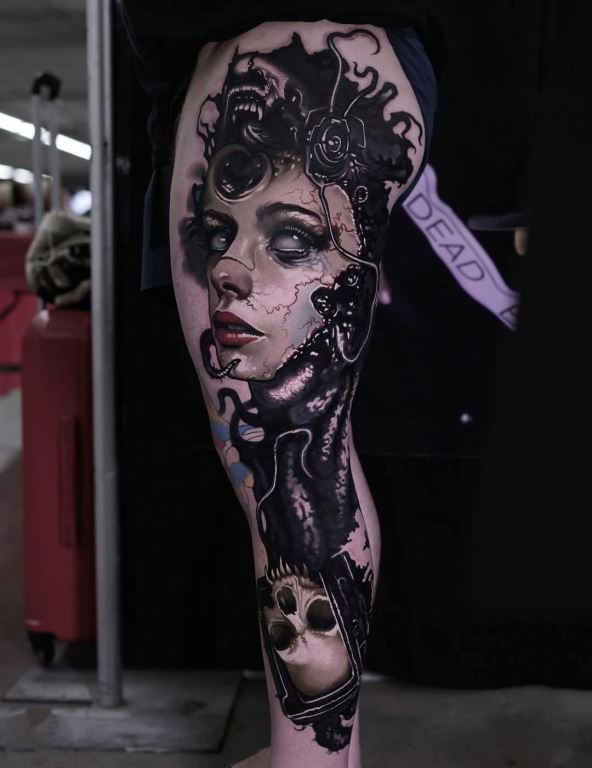
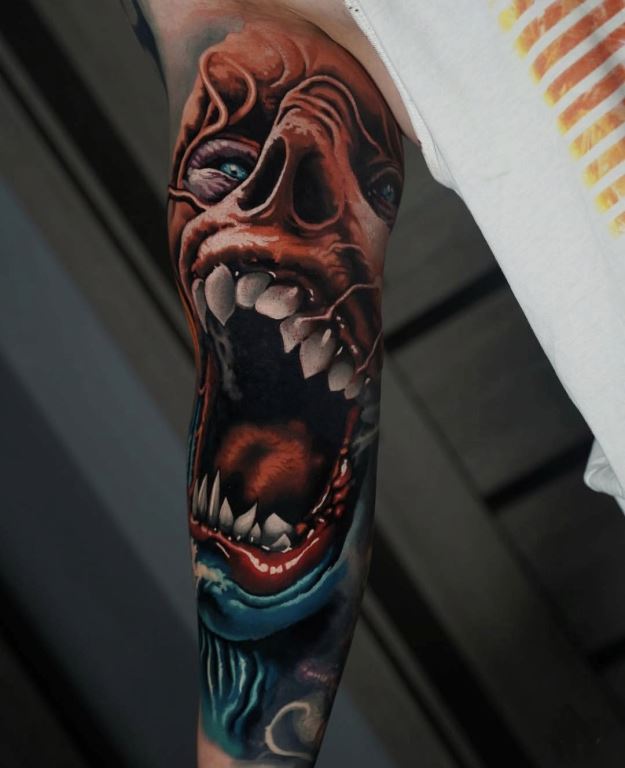
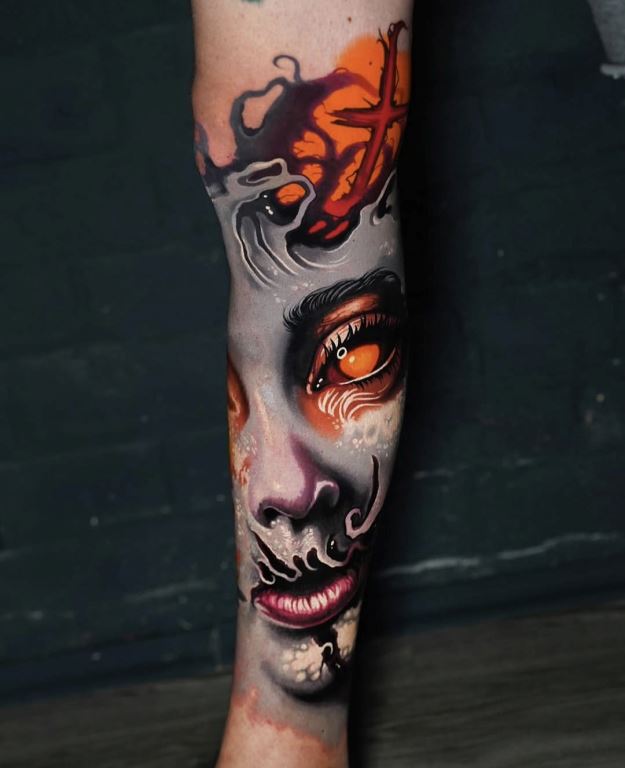
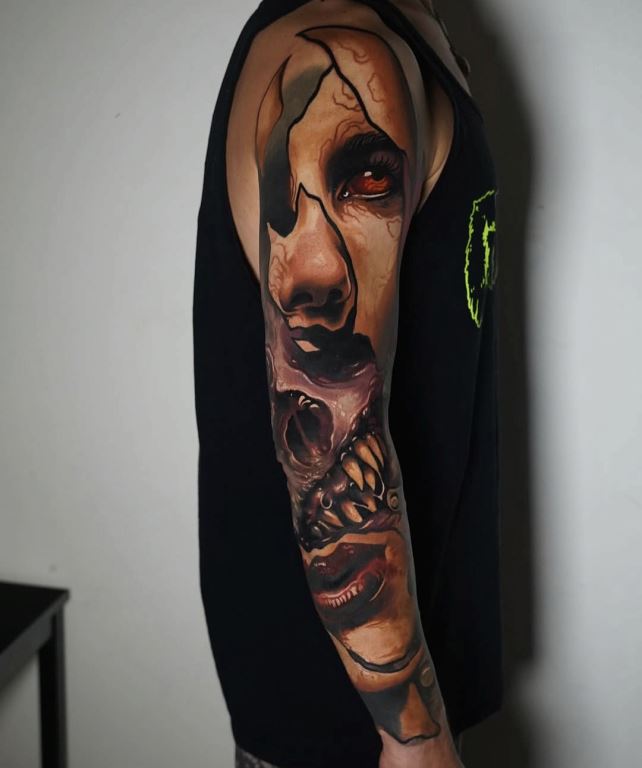
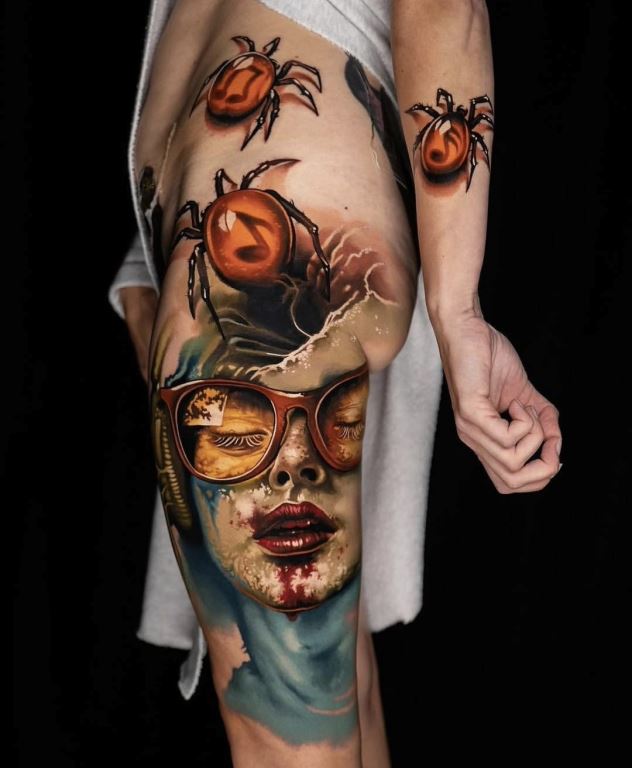
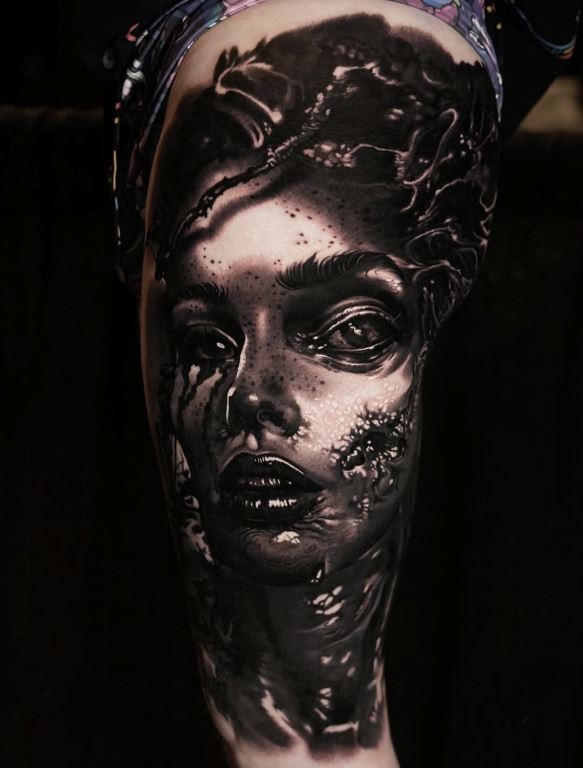
Entering the visual world of Lukas Smyku feels
less like looking at art and more like witnessing a biological
transformation. His work sits in the high-contrast shadows where
human anatomy and surrealist nightmares collide, tearing through the
skin to reveal a mechanical, often grotesque, inner truth. A master
of "Dark Realism," Smyku doesn't just decorate the body; he
deconstructs it. We have chosen to feature Lukas Smyku as our guest
artist to celebrate the eighteen Anniversary of Skin Artists Tattoo
Magazine. In this special anniversary interview, we peel back the
layers of his process and look toward the horizon to discuss the
future of tattooing. We explore how he balances the precision of a
surgeon with the imagination of a visionary, and why the world is so
hungry for the beautiful discomfort he creates.
Q: Your fantasy horror style peels back the surface of the
skin to reveal vibrant, fantastical worlds of color and form
beneath. Is this a reflection of how you see hidden layers and
surprising beauty in everyday reality, or is it your way of
transforming what might unsettle people into something they can
connect with on a deeper level?
A: I think it’s a balance of both. Through my work, I show how I
personally see beauty and ugliness, because for me they’ve always
existed side by side. But my tattoos are never just visual. They
tell a story. Every time I create a piece, I shape the story in a
way that connects deeply with the client, so they can truly identify
with it. That connection is what gives the tattoo longevity. It’s
not just something that looks good for the moment, it’s something
that stays relevant and meaningful over time.
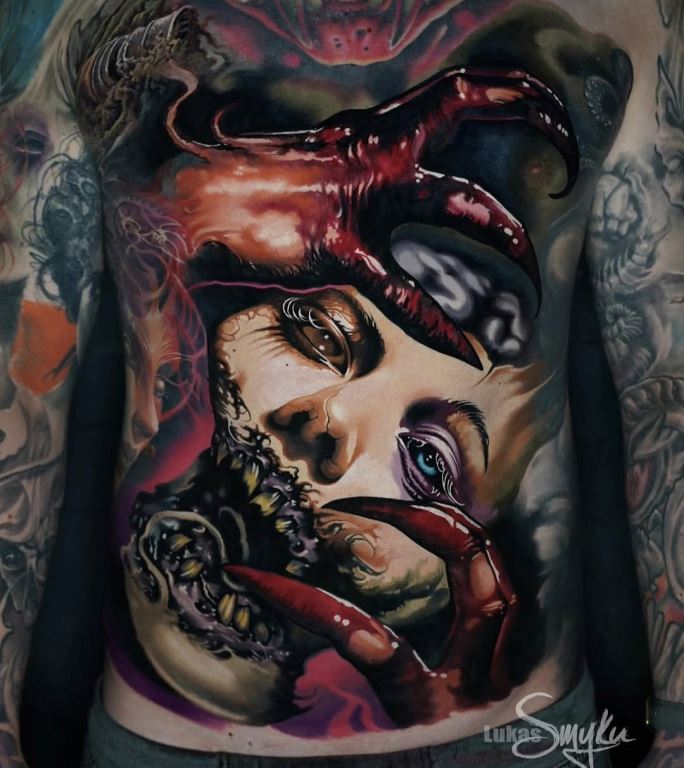
Q: You treat skin as a multi-layered,
breathing canvas that can be opened up yet still heal with striking
presence. Do you view the human body as a dynamic machine you’re
enhancing through your art, or as a living vessel whose
natural shifts and stories you’re capturing and amplifying?
A: I’ve always seen the body as a living organism, never just a
surface to work on. Who is on the other side of the tattoo matters a
lot to me. I’m fully aware that this is something a person will
carry for the rest of their life, and how they feel with it over
time is crucial. That’s why I approach every piece with a strong
sense of responsibility. It’s not just about creating something
visually powerful, it’s about making sure it truly belongs to that
person and grows with them.
Q: After years of immersing yourself in creating these
intense, colorful fantasy worlds on skin, has the process shifted
how you experience your own creativity or daily perceptions?
A: For me, it’s actually the other way around. My daily perception
of the world, alongside, with the creativity, it’s why I work in the
style I do today. The way I see things, the way I process emotions,
different situations, and ideas, that all came first. Tattooing
became the medium through which I express it. My style is just a
natural result of that internal perspective, not something that
defined or changed it.
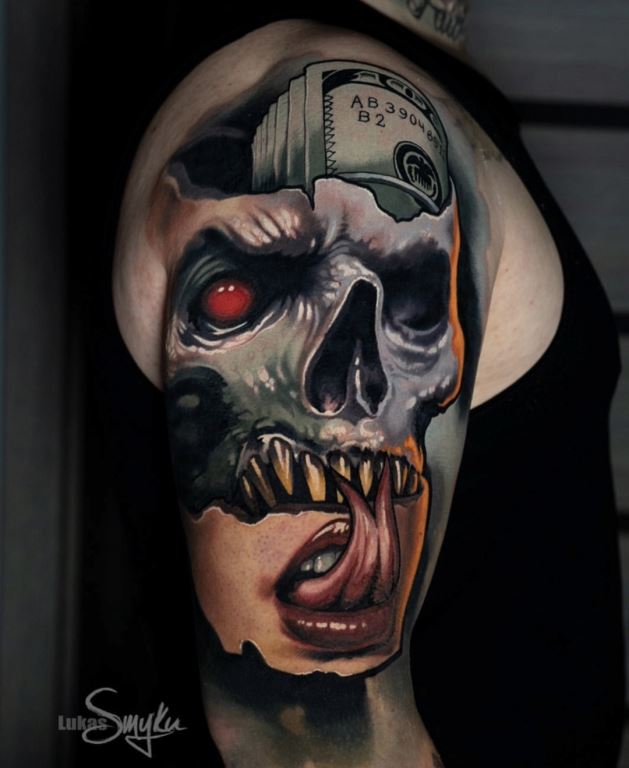
Q: Your work thrives in that captivating
space where breathtaking color and form meet a sense of unease or
surprise. In your opinion, does tattooing need this kind of dynamic
tension to stay powerful and meaningful, or could it evolve beyond
it?
A: The kind of contrast I use is just one of many possible
approaches. There are plenty of incredible tattoo styles out there
that are just as powerful and visually striking in their own way.
For me, contrast is something that naturally draws attention, both
in life and in art. It creates tension, it creates curiosity, and it
makes the work stand out from a distance. That’s why I’m drawn to
it, not because it’s the only path, but because it’s the one that
resonates with how I see and build my compositions.
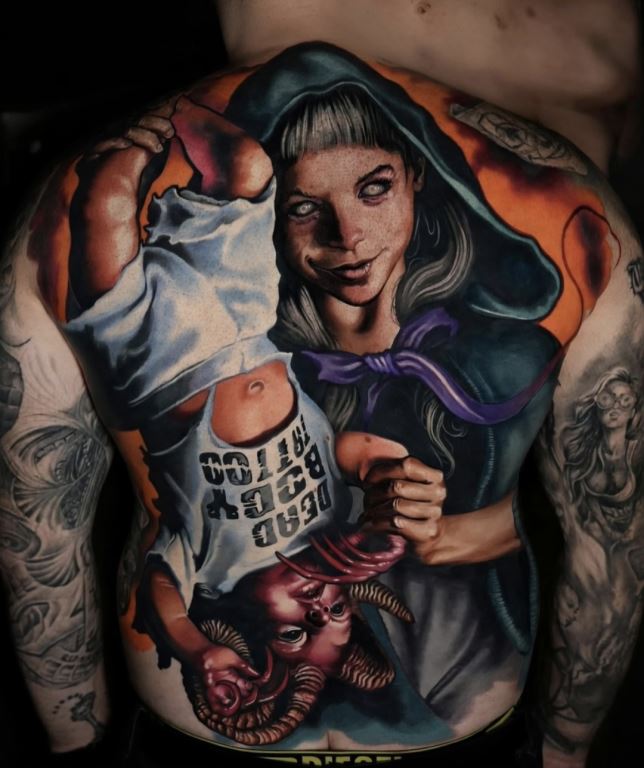
Q: Clients today seem more open to
embracing bold and unexpected imagery on their skin than they were a
decade ago. What do you think has changed in how people want to
express their inner worlds through tattooing?
A: I think, overall, people have simply become more open to
tattooing. Especially in Poland, for many years during my career,
tattoos were often seen as something negative or stigmatized. At the
same time, it gave tattooing a certain uniqueness. It wasn’t
everywhere, it wasn’t obvious. It felt more mysterious, almost
mystical, and it triggered stronger reactions and controversial
opinions from people. Today, tattooing is much more accepted and
present in everyday life. But because of the style I create, I still
manage to hold onto that emotional impact. I want my work to go
beyond just being “normal” or expected. It should still make people
feel something, even in a world where tattoos are no longer
shocking.
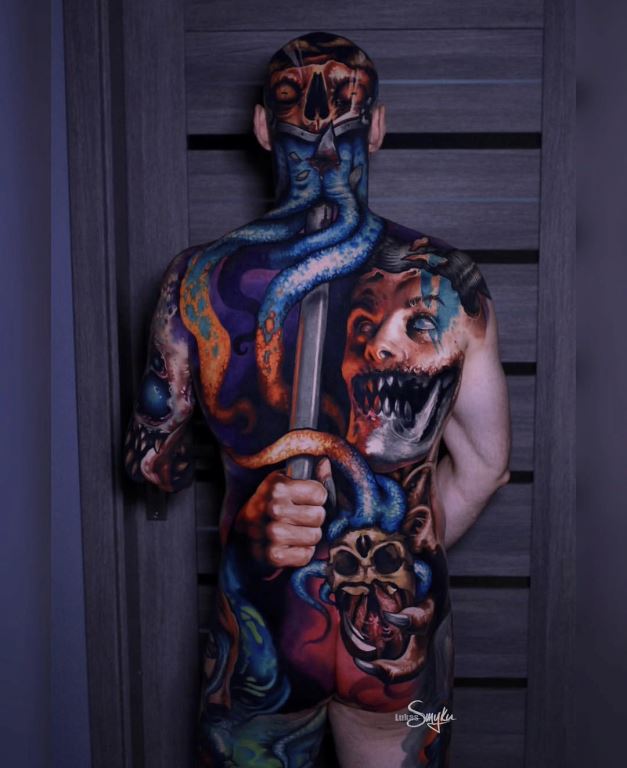
Q: What one common client expectation do you wish people
would let go of?
A: It’s actually difficult for me to answer that, because over the
years I’ve very consciously built the kind of clientele I work with
today. I’m surrounded by amazing people, most of them collectors or
tattoo artists themselves. No one comes to me by accident or without
knowing exactly what I do. When a client sits in my chair, they
already understand my work, my style, and what they can expect from
the process. That gives me a huge amount of artistic freedom. At
this point, it feels less like fulfilling a request and more like
creating art that naturally finds the right person. After years of
building my style and being recognized internationally, I value this
kind of connection more than anything else. That trust is what
drives me forward, and I’m genuinely grateful to every single
client.
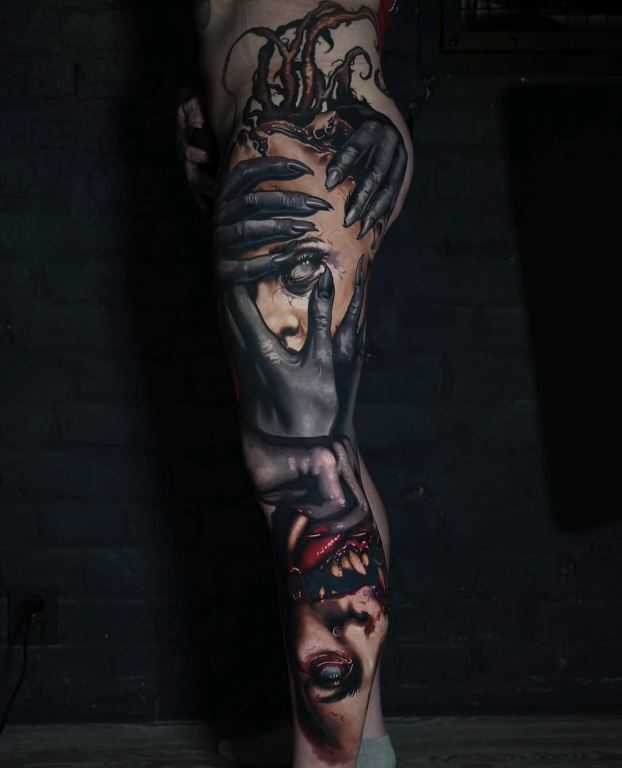
Q: Now that society accepts the needle as
a legitimate brush, has the 'small tattoo' become obsolete? Are
people finally seeking out art that triggers an emotional reaction
rather than just something that looks 'nice' on the surface?
A: I don’t think we can dismiss small tattoos, because even the
smallest piece can carry a strong idea and meaning. That’s actually
one of the reasons I created my second style, Scar Style. Through
smaller tattoos, I’m still able to communicate emotion and create
symbols that stay with the person for a lifetime. I don’t believe
you need a full back piece for a tattoo to be powerful or
interesting. Scale doesn’t define impact. Personally, I love both
forms. I’m deeply passionate about creating large, complex
compositions, but at the same time, I find a lot of satisfaction in
smaller pieces within Scar Style. It’s a different kind of
expression, but just as meaningful.
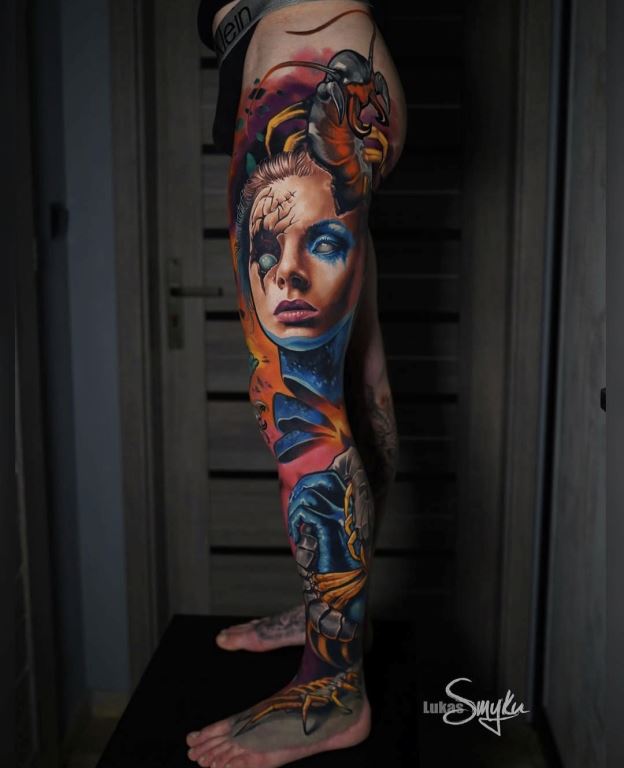
Q: In today’s saturated market, is cultivating one
hyper-distinct signature style like your horror fantasy more
essential for long-term success or does it risk becoming a creative
limitation?
A: I believe developing your own style brings a deep sense of
satisfaction. Being recognizable around the world is, in many ways,
the result and reward of years of hard work. Creating a signature
style isn’t something that happens overnight. It takes countless
hours of effort, reflection, hundreds of designs, and many completed
tattoos to truly shape something that feels authentic. Style is not
something you choose. It’s something you build through years of
work. Having a distinct style makes you clearly recognizable and
allows you to build a strong community around your work. You attract
people who truly understand your vision, which gives you both
creative freedom and stability. For me, that’s completely different
from just doing random tattoos every time. It becomes something much
deeper than that.
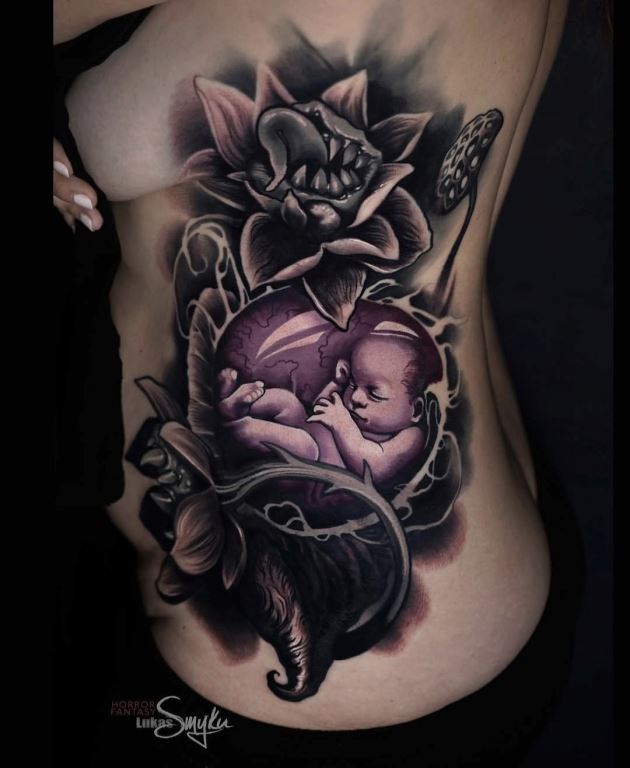
Q: The rise of “celebrity tattooers” has
turned parts of the craft into a luxury experience. Does this
elevate the entire field, or does it risk turning a deeply personal,
energetic process into something more branded and distant?
A: It’s hard to generalize today. There are thousands of tattoo
artists working at a very high level. I’ve seen both sides of it,
artists who truly elevate the craft and push it forward, and others
who create a lot of noise around themselves without offering
anything meaningful. Because of that, I don’t think it’s fair to put
everyone in the same category. There are still many artists doing
incredible work, constantly raising the bar and redefining what
tattooing can be. That’s also something I personally strive for, not
just to improve my own work, but to show what’s possible when you
create something authentic. Tattooing can become more than just a
job. It can be a way of life and, for many of us, the strongest
passion we have.
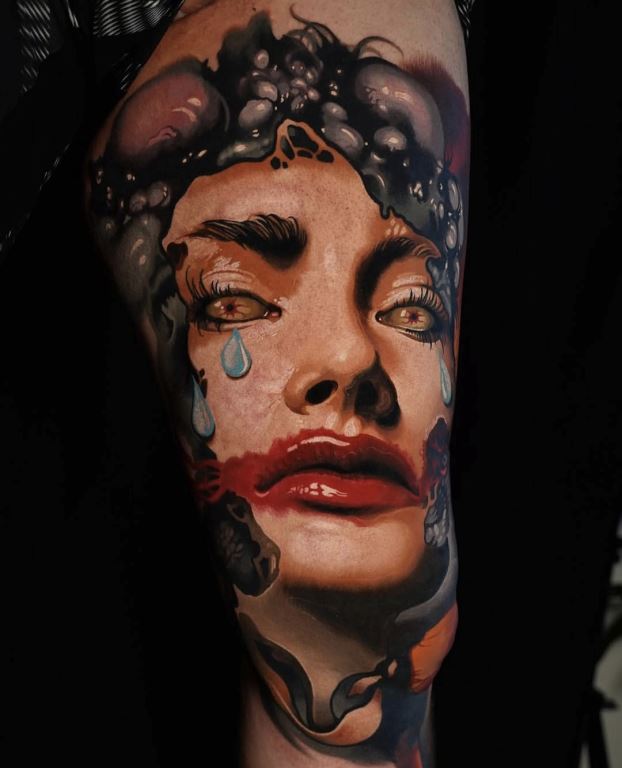
Q: Once an artist reaches 'icon' status,
does the ego become a tool for growth or a trap that kills real
innovation?
A: It’s difficult for me to give a simple answer, because I believe
we all start from the same point. What defines where we end up is
the amount of time, discipline, and energy we’re willing to invest
into our growth. Personally, I try to focus on spreading a positive
mindset around creating and constantly pushing tattooing to the next
level. I believe that when your ego becomes too dominant, it starts
to limit creativity rather than support it. The moment you feel
completely satisfied with your work is the moment you stop
progressing. And in an industry that’s constantly moving forward,
standing still actually means falling behind. That’s why, instead of
feeding your ego, I think it’s far more valuable to exchange energy
with others, to inspire and to be inspired. That kind of flow keeps
you sharp, open, and constantly moving forward.
Q: Tattooing has always been rooted in
real human touch, imperfection, and live energy on skin. If digital
tools and robotic precision make everything smoother and more
“comfortable,” do you worry the craft might lose some of its raw
authenticity or could that pressure spark even bolder evolution?
A: If we’re talking about machines reaching a point where they can
tattoo with perfect precision, I believe it could initially shake
the industry in a significant way. There would definitely be a
moment of fascination, maybe even hype around it. But over time,
that excitement would fade, and people would return to what truly
holds value, craftsmanship, human touch, and real art created by a
person. Perfection is easy to replicate. Authenticity is not. It’s
similar to painting. Today, you can print an image that looks
perfect, but the highest value is still placed on works created by a
real artist. The same will always apply to tattooing.
Q: As the industry shifts toward
hyper-productivity, has AI-driven design become a necessary evil for
the high-demand artist? At what point does the convenience of an
instant, infinite stream of imagery begin to hollow out the
collective originality of the craft?
A: I believe AI only appears to help at first. In reality, it
creates a kind of dependency. It’s similar to what happened with GPS
and navigation. Today, very few people can actually use a
traditional map the way they used to. The same process is happening
in design. Over time, I think people will slowly lose the ability to
think creatively and to create on their own, without relying on
external tools. Real creativity doesn’t come from convenience. It
comes from the process of searching, struggling, and discovering.
When everything is generated instantly, that process disappears, and
that’s where the real risk begins.
Q: Your style already creates a powerful
3D illusion of skin being carved open to reveal vibrant fantasy
beneath. If future dynamic inks or smart materials allowed those
“opened” layers to shift, react to movement, or change with the
body’s energy, would you embrace tattooing a truly living, breathing
horror fantasy story?
A: I see it more as a curiosity than something I would fully
embrace. I genuinely appreciate the current, more analog form of
tattooing, where we as artists decide everything, whether a figure
feels in motion or remains still. We create the dynamics, we build
the entire scene, and we control the narrative within the piece.
That level of authorship is very important to me. At the same time,
out of pure curiosity, I would probably still explore any new
technology that appears in the industry. Tattooing is something I’m
deeply connected to, so I stay open to new ideas, even if I choose
to remain rooted in the traditional process.
Q: When the world has seen virtually every
possible image and nothing feels truly surprising anymore, what will
remain for artists like you to explore?
A: I don’t believe we can say that everything in tattooing has
already been done. The constant emergence of new artistic styles
proves that. Every time people start to think that everything has
already been discovered, someone comes along and shows that there is
still so much more to explore. It’s the same as in nature, or in any
other creative field. The key is to focus on discovering rather than
repeating. If you stay in that mindset, there will always be new
ideas, new forms, and new directions to uncover. Every artist is
different. We all carry unique experiences, perspectives, and
emotions, and that directly shapes our work. Because of that, I
truly believe there is still an endless amount of things left to
explore and express.
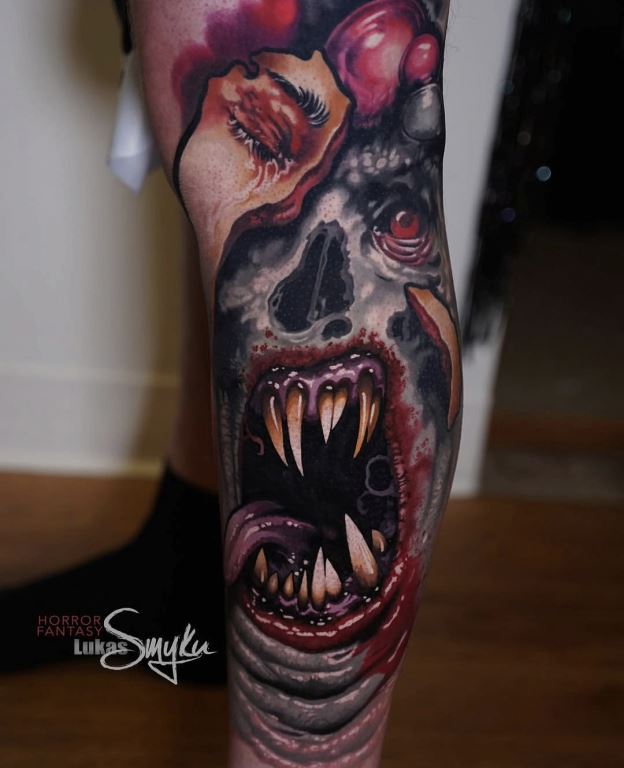
Q: What part of the current tattoo
industry will look completely outdated to us in 10 years?
A: I think every trend in tattooing eventually gets pushed to its
limits. When something becomes too popular, it gets repeated over
and over again until it starts to feel outdated. At a certain point,
too many people are wearing the same or very similar ideas. That’s
why I always encourage people to search for their own expression
instead of copying what they’ve seen on Google or Pinterest.
Tattooing has the potential to communicate something much deeper
than just a “nice image” that someone else already has. It can
reflect individuality, personality, and personal experiences. When a
tattoo is built on that level, it stays meaningful and close to you
over time. And that kind of work never truly becomes outdated.
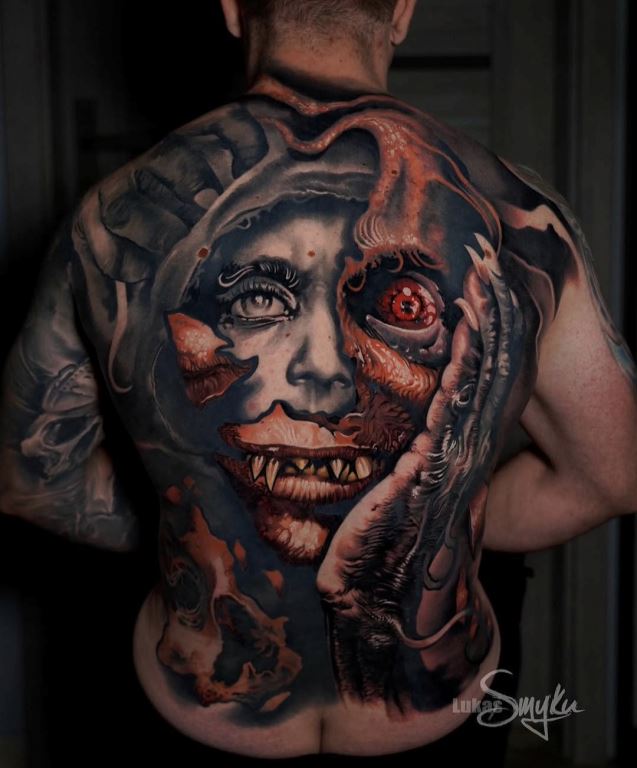
Q: In the desperate rush to 'make it' in a saturated market,
what is the most self-destructive move a new artist can make? Is
there a point where chasing success actually kills the very thing
that makes an artist unique?
A: The biggest mistake young artists make when they want to succeed
quickly is taking shortcuts. Copying one artist’s style, mixing it
with another, and calling it your own is not a real path. It’s a
dead end. Every artist who has developed a strong, recognizable
style has invested hundreds of hours into that process. It takes
time, discipline, and self-reflection. You can copy the look, but
you can’t copy the experience and meaning behind it. In the long
run, it’s far more valuable to slow down and build something
authentic, even if it takes more time. That’s what gives you real
satisfaction and a solid foundation. Trying to be someone else will
never take you where you actually want to go and reach your goals.
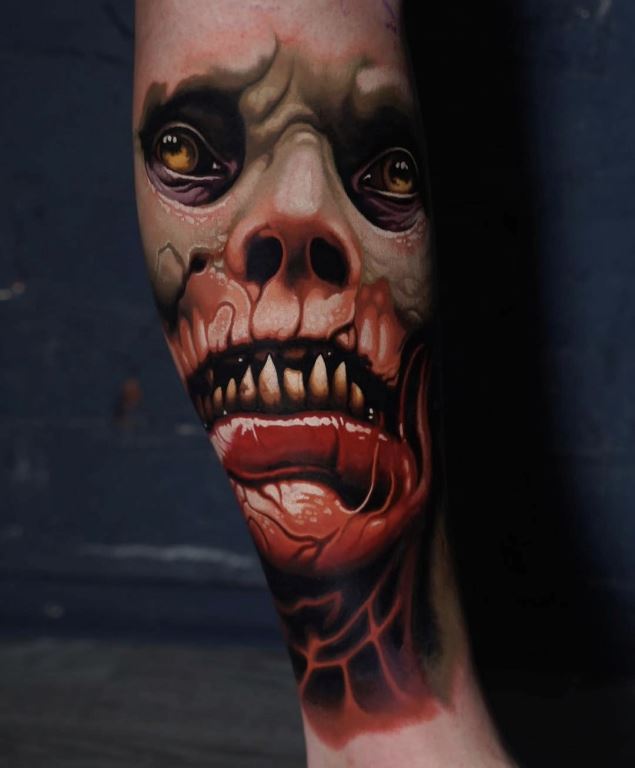
Q: Is the 'Global Tattoo Convention' still
relevant as a marketplace of ideas, or has it just become a
content-farm for social media? What needs to change for the global
community to feel 'real' again?
A: I believe tattoo conventions are still relevant, but not all of
them. Many have lost their original energy and have become more like
machines focused on making money, without offering much in return.
At the same time, there are still events that maintain a very high
level. Those are the places where you can meet incredible artists,
build real connections, and experience something meaningful. It’s
important to remember that conventions are not just about winning
awards. For me, the most valuable part has always been the human
interaction, meeting new people, exchanging ideas, and sharing that
creative energy. If you’re at a convention, it’s worth taking the
time to step away from the competition mindset and actually connect
with others. That’s where the real value is.
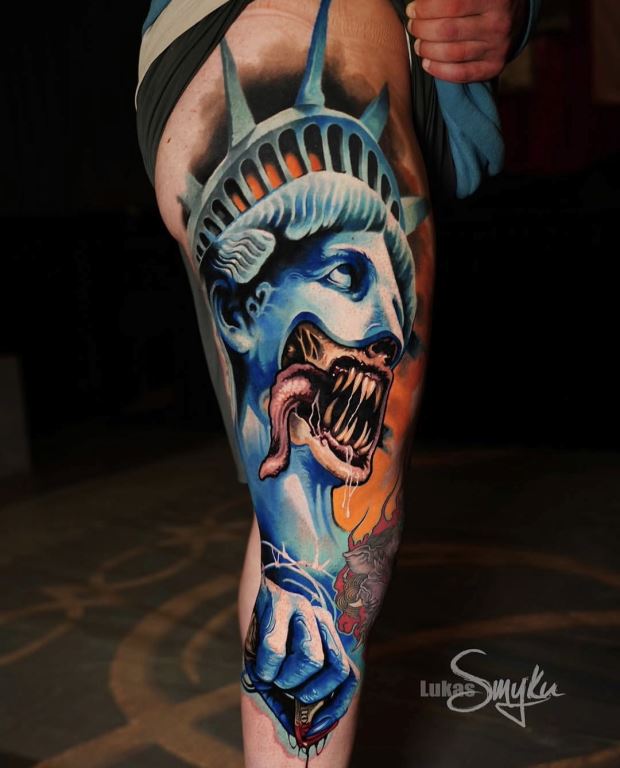
Q: Does the American market still lead the global visual
language, or has it become a "recycling center" for styles that were
actually born in the underground scenes of Europe and Asia?
A: We have to remember that the United States is a melting pot of
cultures from all over the world, so when it comes to styles and
artistic directions, you can find everything there. At the same
time, I don’t believe the U.S. is the only place setting global
trends. There are incredible artists everywhere, even in the
smallest towns and villages, pushing the craft forward. For me,
location doesn’t define the artist. If your work is real and
authentic, it will be recognized sooner or later. I come from a
small town in Poland, where I was born and raised. That’s also where
I opened the first Dead Body Tattoo studio, and it’s a place I’ve
never truly left. My journey proves that you don’t have to move to a
major city or follow trends to be seen. If the work is strong
enough, it will always find its audience.
Q: Has the move from the underground to
the gallery made tattooing too safe? Should we be looking backward
to find our future, and what part of that original 'secret' culture
is worth saving?
A: I believe the changes that have happened in tattooing, like in
any other industry, are irreversible. A true return to the
underground would only be possible if tattooing became forbidden
again. I remember a time when tattooing was still a taboo in my
country, something mysterious, almost hidden. Today, I’m also part
of a reality where tattoos have become widely accepted and extremely
popular. Almost everyone has one or wants one. Was it better back
then, or is it better now? I think both periods had their advantages
and disadvantages. Personally, I focus on doing my work and
observing how things evolve. I’m genuinely curious about the
direction tattooing will take in the future. What I truly hope is
that tattooing continues to move toward a more artistic space, where
the value of art is more deeply understood and appreciated. I’d like
to see it reach a higher level of perception, similar to what we can
observe in parts of Asia, where tattooing is often connected to
culture, history, and identity, rather than something quick or
superficial. I hope we move toward a more conscious audience, where
people come not just for decoration, but for a piece of art created
by a dedicated artist.
Q: We are moving toward a future where
nothing is shocking and everything is a commodity. When the world
finally becomes too 'clean' and too 'perfect,' will the dark,
distorted, and grotesque work you create be the only thing left that
actually makes us feel human?
A: I believe there are many styles in tattooing that are capable of
evoking strong emotions, exploring difficult themes, and shaping the
way we see the world. It’s not limited to one direction. But any
style that carries depth and intention will always stand out more
than something generic or trend-based. Work that comes from a real
place naturally has more presence and a longer life. Tattooing, for
me, is a way of communicating with the world. It’s a language
through which we share our perspective, emotions, and the way we see
reality, just like in any other form of art. In a world that is
becoming more and more perfect, clean, and predictable, I believe
people will always search for something real, something raw,
something that makes them feel. And that’s exactly what art should
do. I truly hope that every artist finds the determination to dig
deep and uncover what is most valuable within themselves, so that
one day, the world can actually see it.


