
Interview with Maks Markov
Today we are speaking with Maks Markov, a
Toronto-based artist who has carved out a significant space in the
world of realism and surrealism. His portfolio is a masterclass in
cinematic lighting and technical precision, ranging from
hyper-realistic portraiture to large-scale, dark surrealist
narratives. With a growing global following and a reputation for
tackling some of the most difficult projects in the industry,
including complex cover-ups and full-body compositions Maks
represents the modern vanguard of tattoo artists who bridge the gap
between fine art and skin.
Q: What was the very first moment you realized that skin,
rather than canvas, was the medium you wanted to master?
A: Since I was a child, I was constantly drawing on myself with
markers. I remember looking at my skin and feeling that it became
more interesting when it carried an image. At the same time, I was
always drawing on paper, so art was a natural part of my life from
the very beginning. As I grew older, I realized that tattooing
combined the two things I loved most: art and people. Unlike a
canvas that hangs on a wall, a tattoo becomes part of someone’s
story. That idea fascinated me and eventually made me choose skin as
my medium.
Q: Looking back at your apprenticeship or early
self-teaching days, what was the hardest technical skill for you to
wrap your head around?
A: There are quite a few skills that I’m still working on and trying
to improve even today. Tattooing is one of those professions where
you never really stop learning. For me, some of the most challenging
aspects have been composition, color theory, and understanding how a
tattoo will age and heal over time. Creating a design that looks
great on a flat screen is one thing, but making it work with the
anatomy of the body and ensuring it heals beautifully years later is
a completely different challenge. The longer I work, the more I
realize that great tattooing is not only about application
technique. It’s about understanding design, skin, healing, and how
all of those elements work together.
Q: How did your early environment or
upbringing influence the darker, more surreal themes that often
appear in your work today?
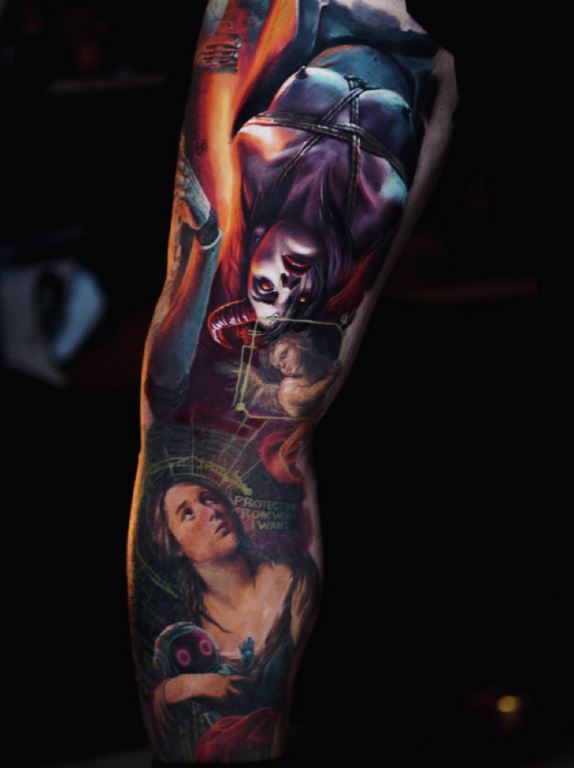
A: I’ve always been attracted to dark and surreal imagery, but for
me, darkness is not about anger, violence, or fear. It’s more about
the hidden side of human nature, the thoughts, emotions, and
contradictions that people often keep to themselves. As for my
upbringing, I was always drawn to things that felt different. Even
as a kid, I wasn’t interested in creating something ordinary. I
wanted to make images that people would remember, something that
would stay in their minds long after they saw it. I think that
desire naturally led me toward surrealism. Surreal imagery allows me
to combine reality with imagination and create something unexpected.
For me, art is most interesting when it makes people stop for a
moment and wonder what they are really looking at.
Q: Can you describe the first tattoo you
ever did? What did that experience teach you about the
responsibility of being an artist?
A: The first tattoo I did for a paying client was a colorful
all-seeing eye with a crown around it, placed on the hand. Looking
back, it was far from a successful tattoo. The ink spread under the
skin, and over time it turned into a blurry mess. At the time, it
was a difficult lesson, but it became one of the most valuable
experiences of my career. It taught me that enthusiasm alone is not
enough. Before taking on the responsibility of tattooing another
person, you need to study every aspect of the craft, technique,
design, skin, healing, and long-term results. That experience taught
me respect for the profession. Every tattoo becomes part of
someone’s body and stays with them for years, so an artist has a
responsibility to constantly learn, improve, and never stop
developing their skills.
Q: You are widely recognized for realism
and surrealism. How do you find the balance between making something
look "real" and adding that surreal, "dreamlike" twist?
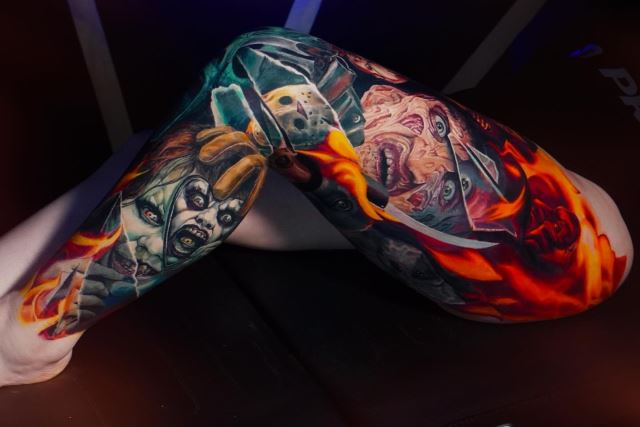
A: For me, realism is the foundation. It creates a connection with
the viewer because people naturally recognize faces, objects, and
familiar forms. Once that connection is established, I can begin to
introduce surreal elements. The surreal side is where imagination
takes over. I enjoy combining things that don’t normally belong
together and creating images that feel familiar at first glance but
reveal something unexpected the longer you look at them. The balance
comes from making sure the surreal elements support the story rather
than overpower it. If everything is strange, nothing feels special.
I like to keep one foot in reality and the other in imagination.
That tension between the two is what makes an image interesting to
me.
Q: Your work often features incredible light and shadow
depth. How do you approach "mapping" a piece to ensure it maintains
its three-dimensional look on a moving body?
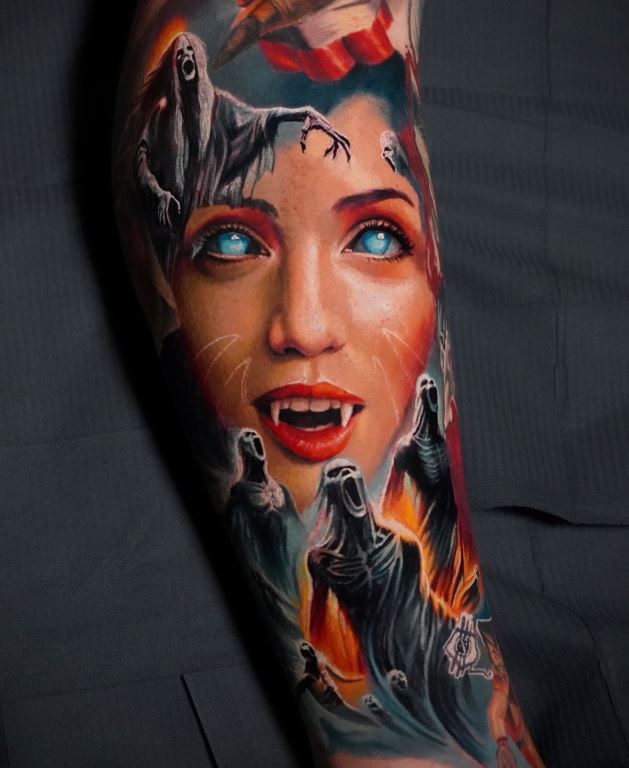
A: I always start by studying the anatomy of the area I’m working
on. A tattoo should flow with the body, not fight against it. I use
light and shadow to emphasize the natural shapes of muscles and
movement, helping the tattoo maintain its three-dimensional effect
from different angles. My goal is to make the tattoo feel like it
naturally belongs there.
Q: In your portfolio, we see a lot of
vibrant, high-contrast colors. How has your understanding of color
theory evolved over the years to achieve that level of saturation?
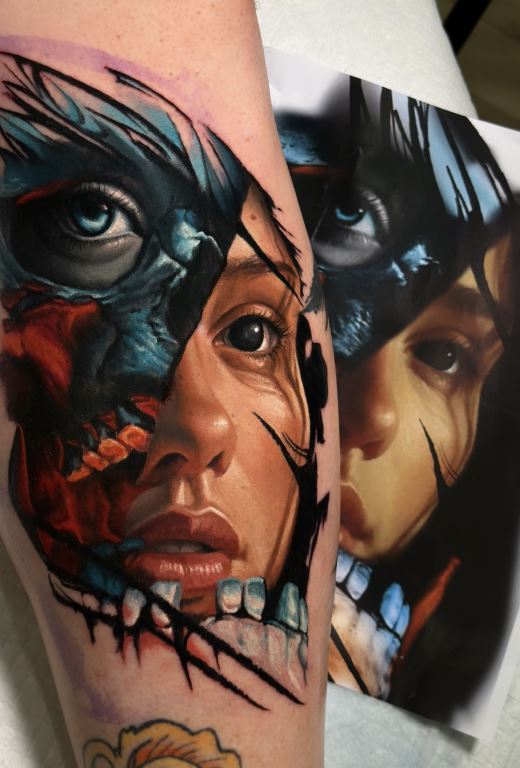
A: When I first started tattooing, I focused mostly on bright
colors. Over time, I realized that saturation is not just about
using strong colors, it’s about contrast, balance, and how colors
interact with each other. I learned to pay much more attention to
values, skin tone, and long-term healing. Today, I use color more
intentionally to create depth, focus, and impact while ensuring the
tattoo stays vibrant for years.
Q: Many artists struggle with surrealism because it lacks a
real-world reference. Where do you draw your inspiration from when
you are creating something that has never existed?
A: It may not exist in reality, but it has always existed in my
imagination. Most of my ideas come from combining different
textures, shapes, and concepts that normally don’t belong together.
I enjoy creating connections between things that seem completely
unrelated. Sometimes a surreal image is simply a new way of looking
at familiar objects. For me, surrealism is not about escaping
reality, it’s about expanding it and giving form to ideas that exist
only in the mind.
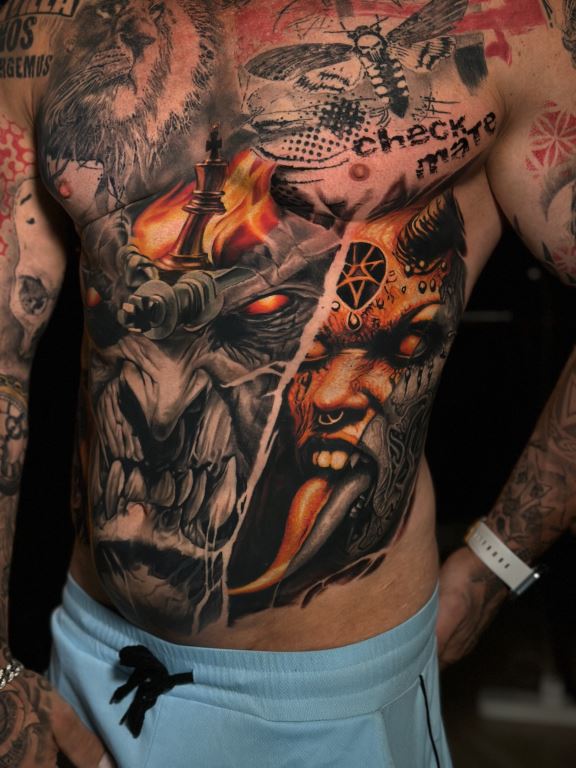
Q: You’ve mentioned in your content that
some pieces are the "most difficult" you’ve ever done. What makes a
project truly difficult for you, is it the technicality, the
placement, or the emotional weight?
A: I think it’s usually a combination of all those factors.
Technical challenges, body placement, and the meaning behind a piece
can all make a project difficult in different ways. However, the
most challenging projects for me are often the ones that fall
outside of my usual style. I only take on those kinds of tattoos
when a long-term client specifically wants me to create it and I am
confident that I can deliver a high-quality result. In those
situations, the challenge is stepping outside my comfort zone while
still maintaining the standards I set for my work.
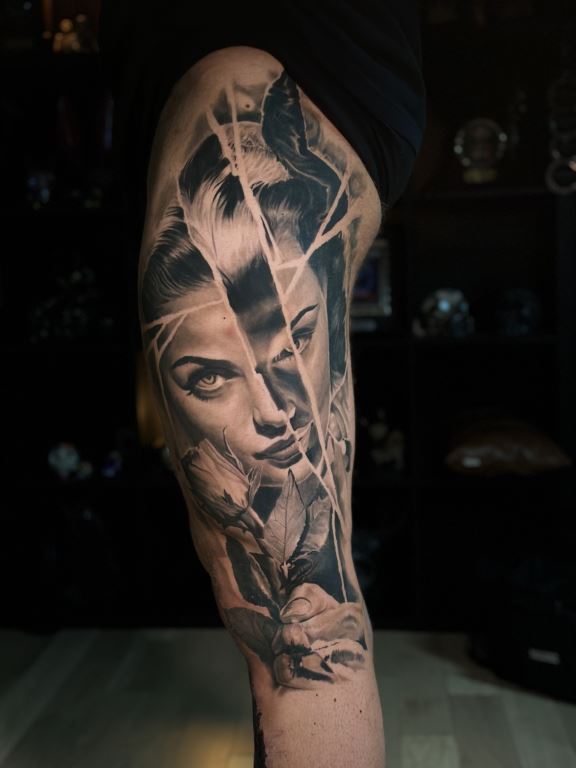
Q. Cover-ups are a significant part of your showcased work.
What is the psychological reward of transforming a piece of "old
regret" into a new masterpiece?
A: Cover-ups are actually one of my biggest passions. Transforming
an old tattoo into something new, beautiful, and readable is often
much more difficult than creating a tattoo on clean skin. What I
enjoy most is seeing the emotional change in the client. Many people
carry an old tattoo that reminds them of a mistake or a difficult
period, or simply no longer represents who they are. Being able to
turn that regret into something they are proud to wear is incredibly
rewarding. For me, a successful cover up is not just about hiding
the old tattoo, it’s about giving it a completely new story.
Q: Is there a specific award or
recognition at a convention (like "Tattoo Konwent") that felt like a
definitive "I’ve made it" moment for you?
A: At this point, I have received 29 awards, and each one of them
has given me the feeling that I’m moving in the right direction.
Every award is a sign that the hard work is paying off. However, the
moments that truly make me feel successful are not the trophies.
It’s when people recognize me at conventions, stop to look at my
work, ask questions, or want to take a photo together. Those moments
mean a lot because they show that the work has connected with people
and left a lasting impression. For me, that kind of recognition is
even more meaningful than winning a competition.
Q: What has been the most ambitious large-scale project
you’ve tackled, and how did it change your approach to tattooing?
A: Most of my work consists of large-scale projects, so long
sessions and complex compositions have become a normal part of my
career. What truly challenges and excites me, however, is when
clients ask me to transform one of my paintings into a tattoo. A
painting exists on a flat canvas with complete artistic freedom,
while a tattoo has to work with anatomy, movement, and the
limitations of skin. Translating one medium into another requires a
completely different way of thinking. More importantly, those
projects remind me that people connect not only with my tattooing,
but with my artistic vision as a whole. Knowing that someone wants
to carry one of my original artworks on their body is one of the
most meaningful compliments I can receive as an artist.
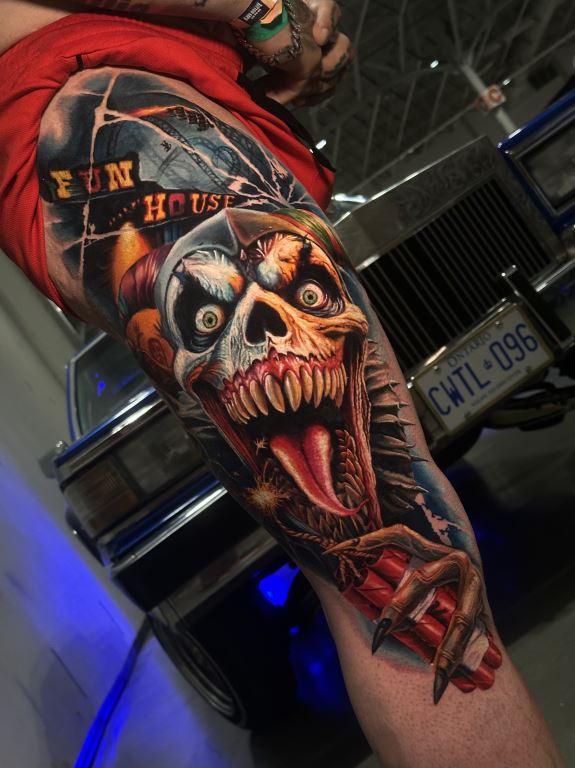
Q: Based in Toronto, how would you
describe the current "vibe" of the Canadian tattoo scene compared to
the rest of the world?
A: Having worked in both Europe and Canada, I would say the Canadian
tattoo scene feels very open and welcoming. Artists here are
generally supportive of one another, and there is a strong sense of
community at conventions and industry events. What stands out to me
is the diversity. Toronto, in particular, brings together artists
and clients from all over the world, which creates a unique mix of
styles, cultures, and ideas. At the same time, the Canadian market
is very competitive. Clients have access to many talented artists,
so simply being technically good is no longer enough. You need to
offer something personal, something people can instantly recognize
as your work.
Q: With the rise of social media, do you feel there is still
a distinct "local style," or is tattooing becoming one giant global
melting pot?
A: I think today style is less about belonging to a specific tattoo
genre and more about the individual artist. Social media has made
inspiration from around the world instantly accessible, so the
boundaries between traditional styles are becoming less important.
What matters now is the artist’s personal voice. Every artist has a
unique way of seeing the world, solving design problems, and
creating images. That’s what makes their work recognizable. In my
opinion, the future of tattooing is not about preserving strict
categories, it’s about developing a unique artistic identity.
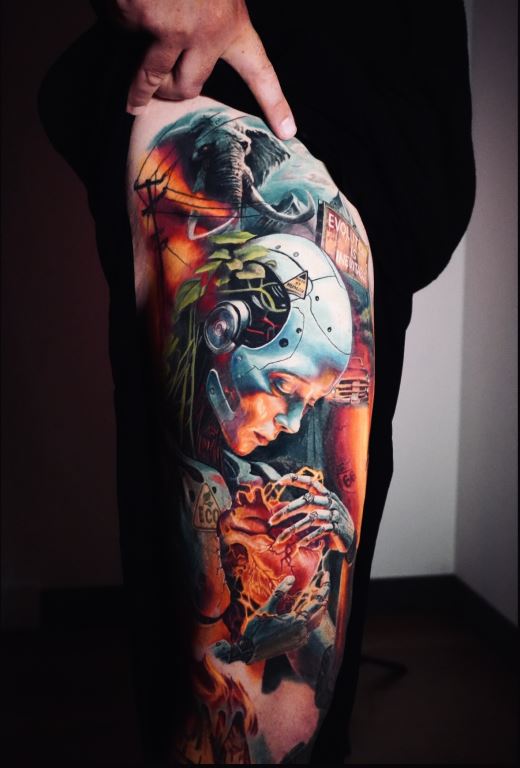
Q: You interact with a global audience
online. How does the feedback from people halfway across the world
affect the art you produce in your studio?
A: One of the best things about social media is the ability to
connect with people from completely different cultures and
backgrounds. Sometimes a person on the other side of the world can
notice something in a piece that I never considered myself. That
kind of feedback doesn’t change my artistic direction, but it does
broaden my perspective. It reminds me that art can be interpreted in
many different ways and that a single image can create different
emotions for different people. At the same time, I try not to create
work based on trends or expectations. I listen to feedback, but I
believe the strongest art comes from staying true to your own
vision.
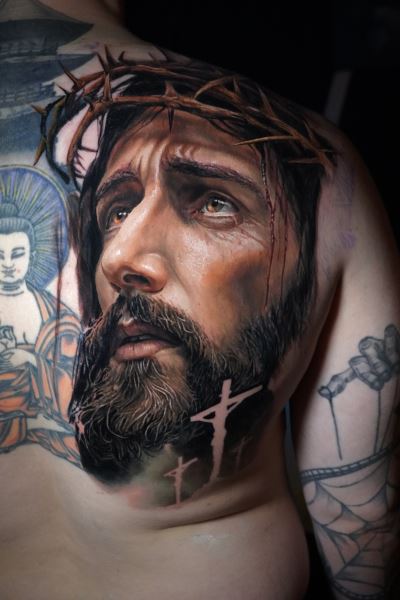
Q: In the age of Instagram and TikTok, how
much of a tattoo artist’s success is based on their technical skill
versus their ability to market themselves?
A: Technical skill will always be the foundation. Without strong
fundamentals, it is difficult to build a long-term career. However,
in today’s world, being talented is not always enough. For many
artists, self-promotion is one of the hardest parts of the job. We
are often more comfortable creating than talking about ourselves.
But social media has made visibility a necessity. If you want your
work to be seen, you need to learn how to share it with the world.
Ideally, success comes from a combination of both. Technical skill
gives you something valuable to offer, while marketing helps people
discover it.
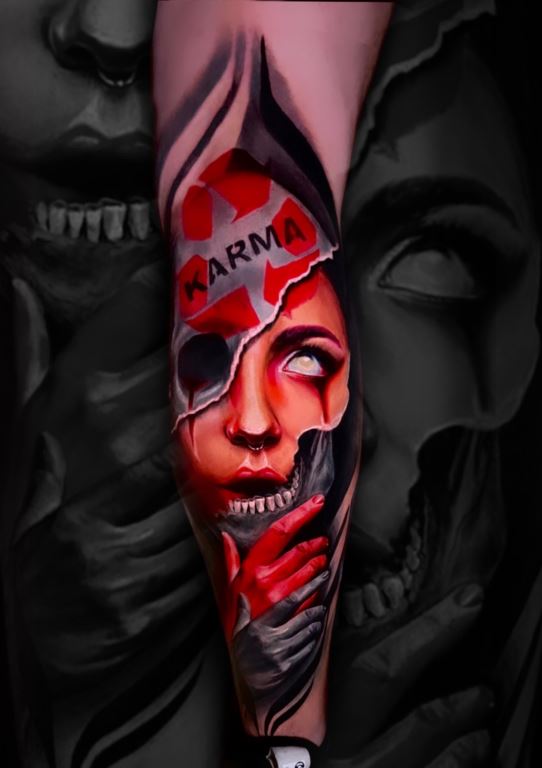
Q: What does "success" look like to you
now? Is it a booked-out calendar, or is it the freedom to only pick
specific projects?
A: Today, success means freedom. Of course, having a fully booked
calendar is important, but for me, it is not the ultimate goal. Real
success is having the ability to choose the projects that truly
inspire me and working with clients who trust my vision. It is the
freedom to create without constantly chasing the next booking. As an
artist, I also see success as the opportunity to explore different
forms of art, not only tattooing, but also painting and other
creative projects. The more freedom I have to create meaningful
work, the more successful I feel.
Q: What is one piece of advice you find yourself constantly
giving to younger artists who want to break into the realism genre?
A: Draw more. It sounds simple, but most people underestimate how
much drawing is behind great realism. Study light, shadow, anatomy,
composition, and observation. Learn to see shapes and values rather
than just copying photographs. Many artists want shortcuts, but
there are none. The strongest realism artists are usually the ones
who spent years drawing, painting, and developing their visual
understanding before focusing on tattooing. The better artist you
become, the better tattoo artist you can become.
Q: How do you feel about the "celebrity" status that some
tattoo artists now have? Does it help or hurt the craft?
A: I believe it helps the industry. Many of those artists inspire me
to keep improving, work harder, and push my skills further. At the
same time, it’s important to understand that this kind of
recognition rarely happens overnight. Behind every well-known artist
are years of hard work, sacrifice, practice, and dedication to the
craft. As long as the attention is built on real skill and genuine
passion for tattooing, I think it can have a very positive impact.
It inspires the next generation of artists and helps bring more
attention to tattooing as an art form.
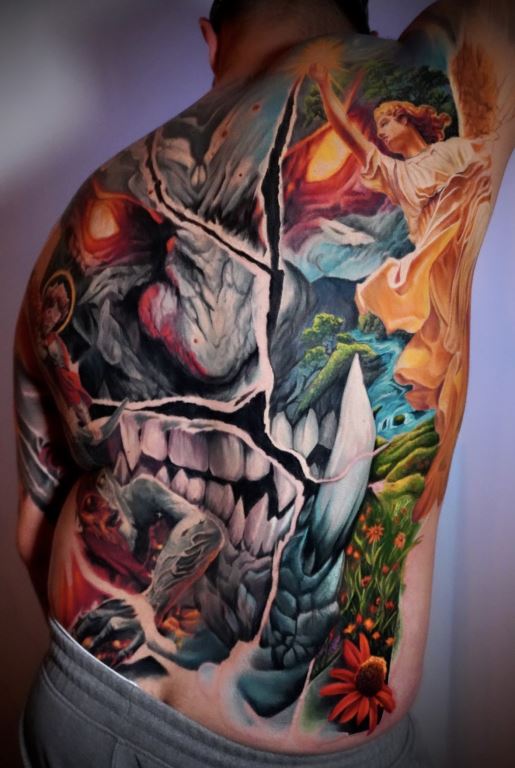
Q: You’ve documented your travels and
guest spots. Are there specific countries or shops abroad where you
feel your style would truly flourish?
A: At this point in my career, I honestly feel like I am exactly
where I need to be. Toronto is one of the most diverse cities in the
world, and it gives me the opportunity to work with people from many
different cultures and backgrounds. Of course, I enjoy traveling and
doing guest spots, and I am always open to new experiences. But I
don’t believe that success depends on finding the perfect shop or
country. I think your style can flourish anywhere if you continue to
develop it and stay true to your artistic vision. For now, I feel
inspired by where I am, and that’s a great place to be as an artist.
Q: What are the biggest hurdles you face when trying to
expand your brand and career into international markets?
A: For me, the biggest challenge is visibility. Today there are
incredibly talented artists all over the world, and social media
gives everyone a platform. That is a great opportunity, but it also
means there is more competition than ever before. Creating strong
artwork is only part of the job. Artists now need to build a
personal brand, communicate with an audience, create content, and
stay visible while continuing to improve their craft. As an artist,
I would always prefer to spend my time creating. But I have learned
that if you want to reach an international audience, sharing your
work is just as important as creating it.
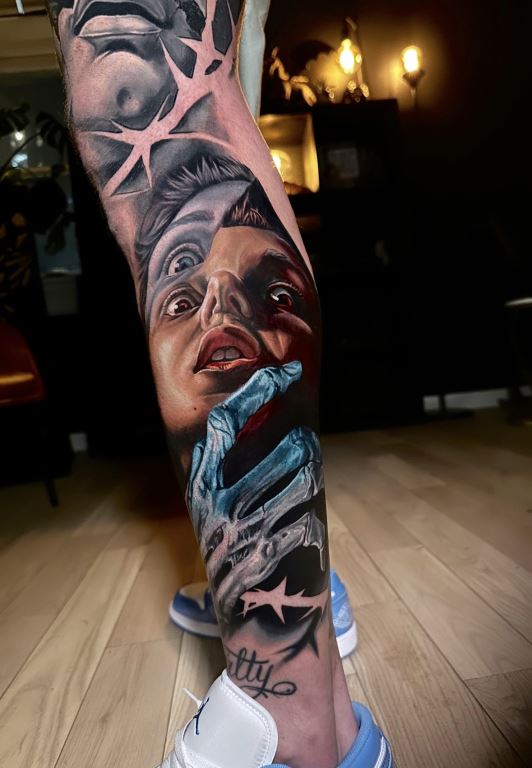
Q: If you could set up a studio anywhere
in the world for one year, where would it be and why?
A: For me, it’s not about the location, it’s about the atmosphere
within. Inspiration can be found anywhere if you’re in the right
state of mind.
Q: If you could go back and talk to "Maks the apprentice,"
what is the one thing you would tell him to stop worrying about?
A: Honestly, I would probably tell him to worry more and study more.
Looking back, there were many things I thought I understood but
actually didn’t. Every mistake I made came from something I hadn’t
learned deeply enough yet. The more experience I gain, the more I
realize how much there is still to learn. I think a healthy amount
of self-doubt can be a good thing. It keeps you curious, humble, and
motivated to improve.
Q: After hundreds of tattoos and thousands of hours, what is
it about tattooing that still gets you excited to go to work every
morning?
A: I am always trying to grow and improve, so every new day feels
like a new opportunity to become a little better than I was
yesterday. Tattooing is one of those professions where there is
always something new to learn, whether it’s technique, design,
composition, or understanding people. That constant process of
growth is what keeps me excited. For me, the moment I stop learning
is the moment I stop moving forward.
Q: Ten years from now, when people look at a "Maks Markov"
piece, what do you hope is the first thing they feel or notice?
A: I hope the first thing they notice is that it feels different.
Not just technically strong, but personal, memorable, and
unmistakably mine.
Date: 16 June 2026
Interview: Fredrik Lindström


