
Interview with Maksym Yakubchyk
Hello Maksym Yakubchyk, it's a pleasure to
connect with you for this interview. To begin, could you share a bit
about your personal journey and background that led you to where you
are today? My journey into tattooing started a long before
I ever touched a tattoo machine. I grew up surrounded by art, and
drawing was the most natural way to express myself. Over the time
that passion evolved into a commitment. I wanted to dedicate my life
to create something meaningful and permanent. I was amazed by the
fact that people can trust me enough to give their body to me to
draw something which they will carry forever. Every step of the way
taught me discipline, patience, and the importance of staying true
to my own vision.
Q: Looking back, when did you first recognize your artistic
inclinations, and were there key individuals who shaped your early
development?
A: I think I realized I was an artist before I fully understood what
that meant. As a kid, I was always sketching portraits or
experimenting with shading. My family played a huge role, they
encouraged me to keep creating, even when it seemed like an
unreliable path. My brother which had a big influence on me, has a
lot of tattoos and every time he came home with new one, I was
exited to see them and analyze. On that time I was hoping one day I
can tattoo him. Now I’ve tattooed my whole family. During my early
years, a few older tattooers I met in my early career opened my eyes
to the technical and philosophical side of the craft. I was lucky
enough to work with Diogo Nunez, which works I admired before
starting working in the same shop. I’m really grateful to all of the
artists from Queen of Hearts Tattoo. Their guidance shaped my
discipline and made me the artist I am today. Also I was inspired by
Carlos Torres, Bob Tyrell,
Anrij Straume and Paul Booth. They made a huge influence on my
development.
Q: Could you describe the journey of
discovering your creative direction and style? Was it gradual or
sudden?
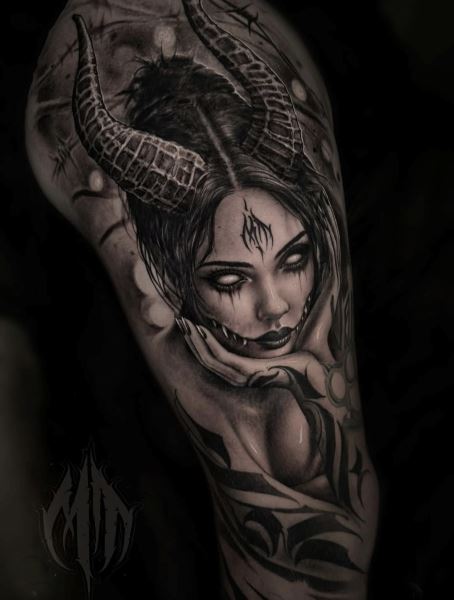
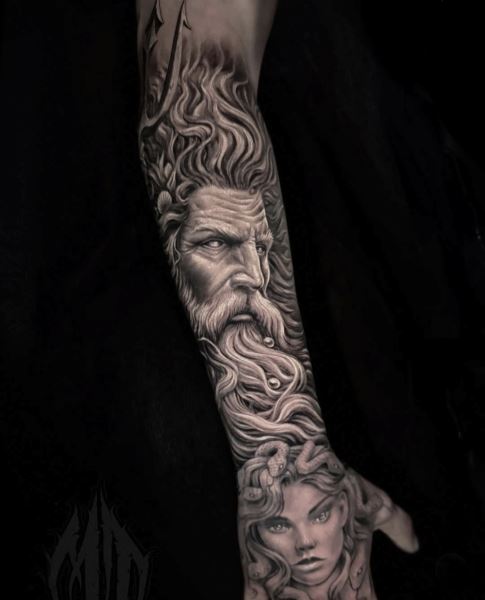
A: It was definitely a gradual evolution. I experimented with many
styles when I began, but realism always felt the closest to my
natural instincts. I love playing with shadows and contrasts, and
lettering grew into a complementary part of that. Layer by layer, I
refined my preferences and techniques until everything aligned into
a direction that felt authentic.
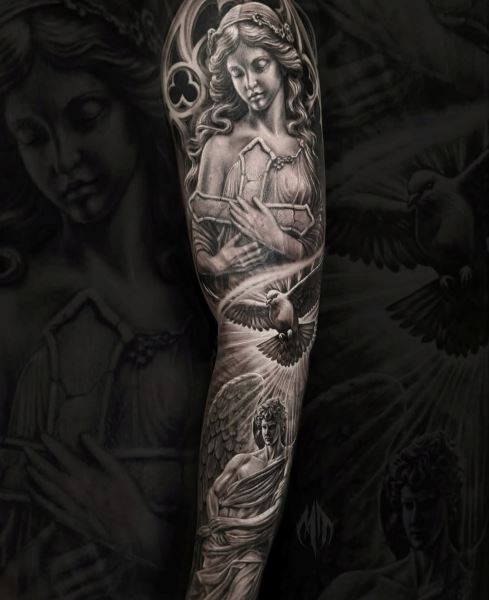
Q: Your style feels like a dialogue between realism and
surrealism. How do you see the interplay of these elements in your
work?
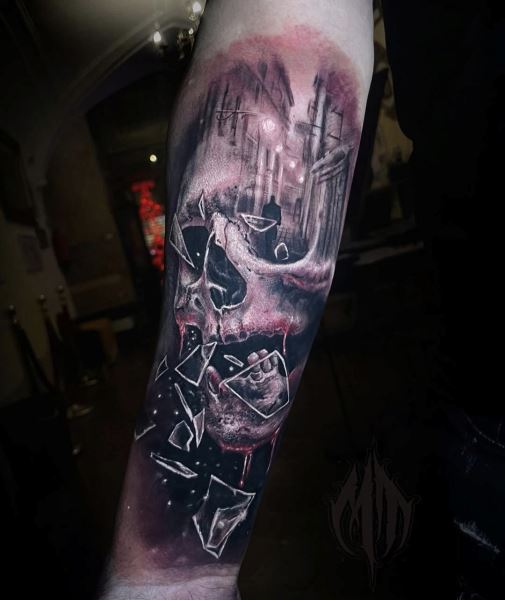
A: For me, realism is about capturing the truth, while surrealism
introduces a sense of mystery or emotion that goes beyond it. I love
the tension between what is real and what is imagined. Bringing both
together allows me to tell deeper stories, ones that feel grounded
yet symbolic.
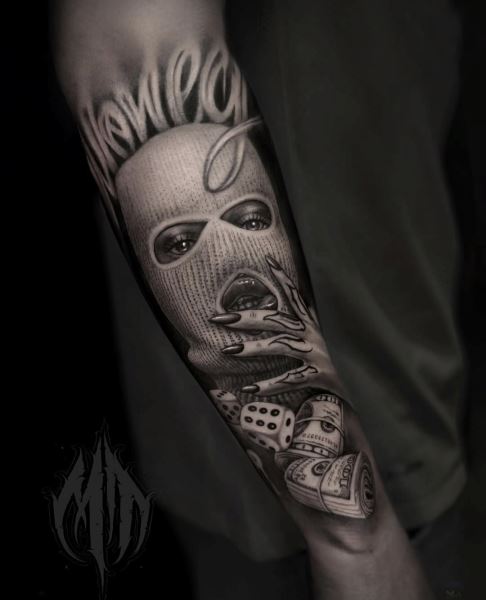
Q: Your lettering integrated into
portraits is compelling. Can you walk us through your creative
process, especially when adding text?
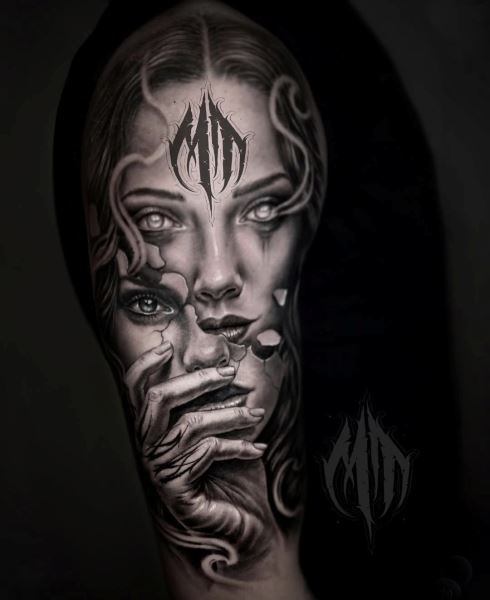
A: When a project involves both portrait work and lettering, I start
by understanding the narrative the client wants to express. I sketch
the portrait or other realistic elements first, then explore how
text can reinforce or contrast that emotion. I treat lettering as a
design element, something that must flow with the shapes, shadows,
and composition. From the first rough idea to the final digital
mock-up, everything is arranged to feel balanced and intentional.
Q: Your lettering has a bold dynamism
reminiscent of bombing graffiti. Have you considered blending
different graffiti styles with your realism?
A: Absolutely. I’ve always been fascinated by graffiti, it has an
energy and attitude that can pair beautifully with realism. Even
though my work leans toward refined detail, I enjoy exploring
contrasts. Graffiti influences appear in the movement, rhythm, and
structure of my lettering. I think there’s still a lot of potential
to develop this fusion even further.
Q: When a client commissions a unique piece, what common
inspirations or narratives shape the design?
A: Most clients come with stories tied to memory, family, identity,
or personal transformation. Some want to honor someone, others want
to mark a turning point in their lives. My role is to listen and
translate their narrative into visuals that still align with my
artistic language.
Q: Have you considered exploring more with color ink?
A: Even though most of my portfolio is black and grey, I genuinely
enjoy working with color as well. Color opens up a different kind of
creativity, and I look forward to taking on more color projects,
especially ones that allow for artistic freedom and experimentation.
Q: Can you recall a project that pushed
your boundaries, and what made the outcome rewarding?
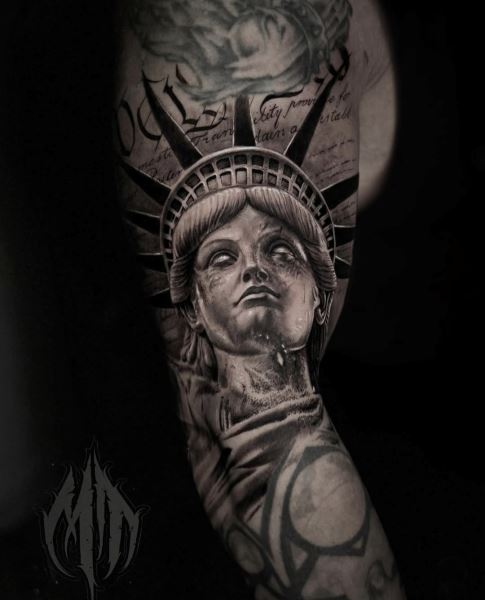
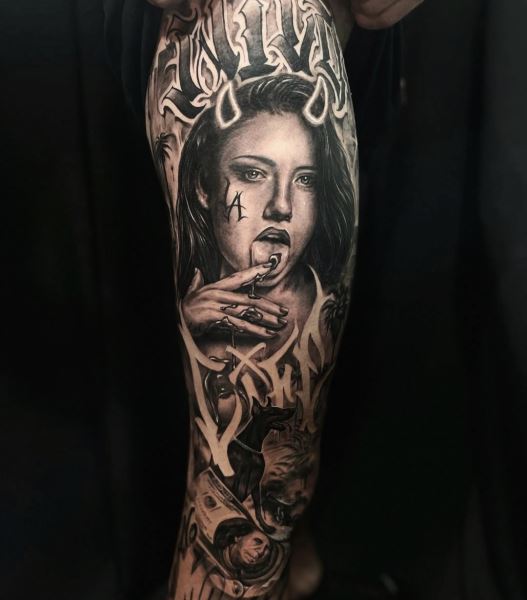
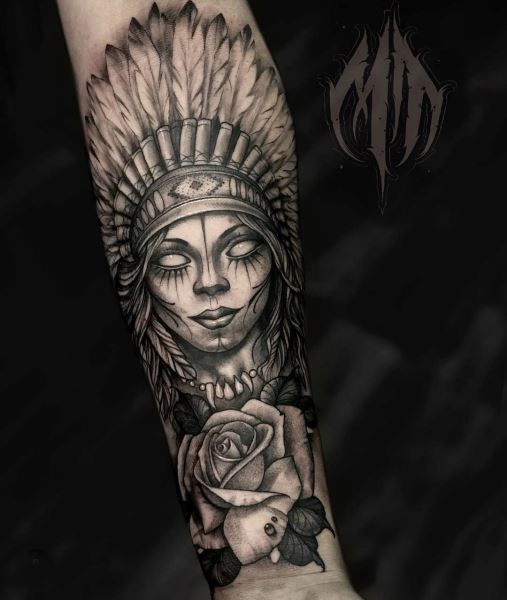
A: One that comes to mind involved a large chicano project with
girls and lettering around with multiple layered elements, each
requiring perfect placement to avoid visual clutter. Which we did in
4 days in a row on the Tattoo&Rock Fest 2023 in Lisbon. It tested my
patience, technical precision, and ability to adapt mid-process. The
final result was incredibly rewarding because everything harmonized
exactly the way I envisioned.
Q: Your paintings complement your tattoo
work beautifully. What role does painting play for you?
A: Painting is my meditative space, it helps me reset and reconnect
with creativity without the pressure of client expectations. It
keeps my artistic vision sharp and influences the mood and texture
of my tattoo work. I would love to see more of my paintings living
in creative spaces like studios, galleries, or unique interiors.
Q: Your own tattoo collection must be a reflection of your
values. What can you share about your pieces and how should one
choose an artist?
A: My tattoos come from friends and artists whose work I deeply
respect, people with strong vision, discipline, and originality.
When choosing an artist, I always advise people to look for someone
whose style resonates with them, whose healed work is consistent,
and who treats the craft seriously. Trust and communication are key.
Q: Do you experience creative blocks or
challenges in meeting client expectations?
A: Like any artist, I occasionally hit creative blocks or face
challenging concepts. What helps is communication, I always want to
help my clients choose the best direction, and I’m open to adjusting
or reworking ideas when necessary. Having empathy is essential. Even
on tough days, I aim to deliver work that exceeds expectations, and
I never shy away from putting in extra effort to make the client
feel confident and satisfied.
Q: Witnessing clients in vulnerable moments must be unique.
How does this affect your approach?
A: I feel incredibly grateful when clients trust me with such
personal moments. Some share deep stories during sessions, and those
experiences stay with me. Their trust motivates me to evolve, to
give my best every day, and to treat every tattoo as something that
carries emotional weight.
Q: What’s your take on the local tattoo scene?
A: The scene is evolving quickly. There are many talented artists
emerging with fresh ideas and unique directions. It’s inspiring to
see the community grow with such diversity and quality.
Q: Are you noticing increasing interest in
unconventional tattoo styles in Europe?
A: Definitely. Clients are more open to experimental concepts and
mixed styles. There’s a growing appetite for tattoos that are more
artistic, personal, and expressive rather than purely traditional.
Q: How valuable are tattoo conventions to you?
A: Tattoo conventions offer amazing opportunities for growth,
inspiration, and connection. They allow artists to learn from each
other and clients to discover new styles and talents. I value the
energy, exposure, and community they create, and I look forward to
being an active participant in future events.
Q: What about guest spots, have you worked abroad or in
other studios?
A: Yes, I’ve worked as a guest artist in several studios and several
countrys. Every experience was a chance to meet inspiring artists,
learn different approaches, and grow both professionally and
personally. A supportive and welcoming environment is essential not
only for clients but also for the artists working there. Traveling
and tattooing abroad is something that pushes you to grow which I
truly enjoy.
Q: Would you be interested in engaging with the American
tattoo world professionally?
A: Absolutely. The American tattoo scene is incredibly diverse and
influential. Working there would be a great opportunity to evolve
creatively and reach a broader audience.
Q: Do you have any favorite American
tattoo artists you’d like to work with?
A: There are several American artists whose work I admire, from
portrait realists to experimental creators. Such as: Nikko Hurtado,
Steve Butcher, Arlo, Kat Von D, Carlos Torres. Collaborating with
any of them would be an inspiring experience and a chance to
exchange ideas.
Q: If you were to establish a presence in the American
scene, what kind of studio environment would you envision?
A: I imagine a beautiful, clean, creative, modern space with a
strong artistic identity, a place that supports experimentation,
respects the craft, and attracts clients who appreciate realism,
surrealism, and custom lettering. The environment should inspire
both artists and visitors.
Q: What impact do you hope to have on the tattoo community?
I hope to contribute to the growth of high-quality, thoughtful
tattooing, to inspire younger artists to refine their skills and
stay true to their vision. If my work can motivate someone to pursue
creativity with discipline and passion, that means a lot.
Q: For bookings, where is your studio and
how can people reach you?
A: I’m currently based at Queen of Hearts Tattoos In Lisbon,
Portugal. Clients can reach me through: Instagram: @maksymtattoo
Email:maksymtattoo@gmail.com
Q: If you could give your younger self advice, what would it
be?
A: I would tell myself to trust yourself and trust your path, be
patient, and don’t rush your progress. Every hour spent practicing
will pay off. Stay focused, stay humble, and remember that
consistency is more important than speed.
Interview: Ivana Kancheska
Date: 01 December 2025


