
Interview with Marcio Machado
Hello Marcio Machado! Thank you so much
for taking the time to do this interview. Let's start with your
story. Could you share where you're originally from, how you first
encountered the art world, and a bit about your educational
background, particularly any art-focused studies?
Originally, I come from Barretos-SP, a small town in the interior of
São Paulo, Brazil. I never liked studying and saw airbrushing as an
opportunity to start my artistic career. This was in 1997.
Q: What artistic styles or movements sparked your
imagination during your formative years, and how did those
inspirations manifest in your early creations?
A: During the years I did airbrushing, I sought references in comic
books, graffiti, and anything I could access. My catalogs were
tattoo magazines. This is how my clients chose their references for
me to print on their t-shirts, helmets, cars, store facades, etc.
Q: Could you tell us about your journey into tattooing? When
did you first pick up a machine, and how long has it been since
then?
A: With the money I saved after three years of airbrushing, I
decided to become a tattoo artist. This was in 2000. The first seven
years were the most challenging, considering that I lived in a small
town where people weren’t very fond of tattoos. Many times, there
would be only 1 or 2 clients per month. Not to mention that,
technically, it was very difficult to progress. At the time, the
best tattoo artists in Brazil were concentrated in São Paulo, and
Barretos is 500 km away. My situation allowed me to travel to São
Paulo once a year. I used to go around the time of conventions to
try to learn something from the tattoo artists of that time, who, to
be honest, didn’t seem like good friends and weren’t open to
teaching.

Q: Looking back, what were some of the
hurdles you had to overcome when you first began? And did anyone
offer guidance or support along the way?
A: In my case, I would say the biggest obstacle was having patience
countless times and, even without clients, keeping faith that,
somehow, at some point, I would succeed as a professional tattoo
artist. I had some positive encouragement from people who crossed my
path, but I never had clear guidance. I had to learn through trial
and error.
Q: Could you describe the evolution of your tattooing style?
How has it changed since you began, and do you feel your current
style fully reflects your artistic vision?
A: I consider the big change in my personal life and a turning point
in my career when I moved to Campinas-SP and started working
alongside other professional artists. This move broadened my
perspective on tattooing on a global level. And yes, today, my style
reflects my journey and the influences I’ve had over the past 25
years.
Q: What aspects of this particular style resonate most
deeply with you, and do you envision exploring other artistic styles
in the future?
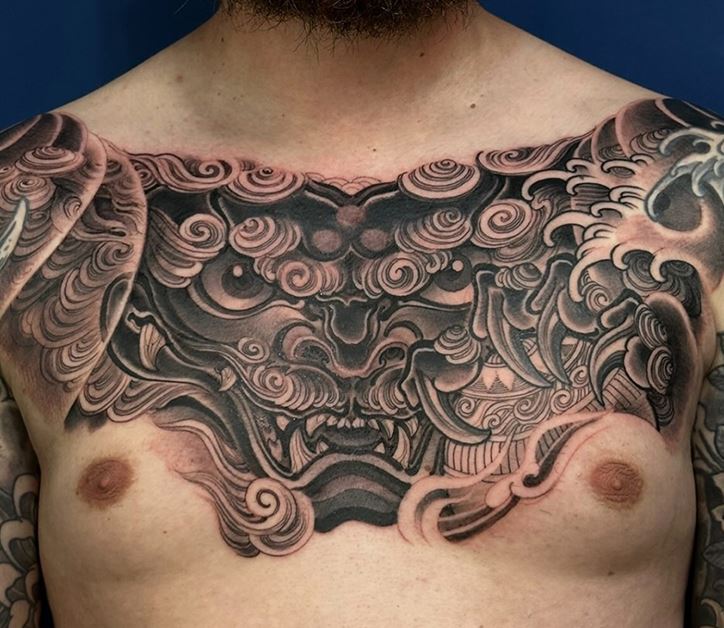
A: Although I enjoy observing all styles, studying, and tattooing
many of them, from the beginning, the oriental style has always
caught my attention the most, and I want to keep learning and
evolving in it.
Q: The rich symbolism of traditional Japanese tattooing
continues to captivate. Are there any particular designs or symbols
that resonate deeply with you, and if so, what personal
interpretations do you bring to them?
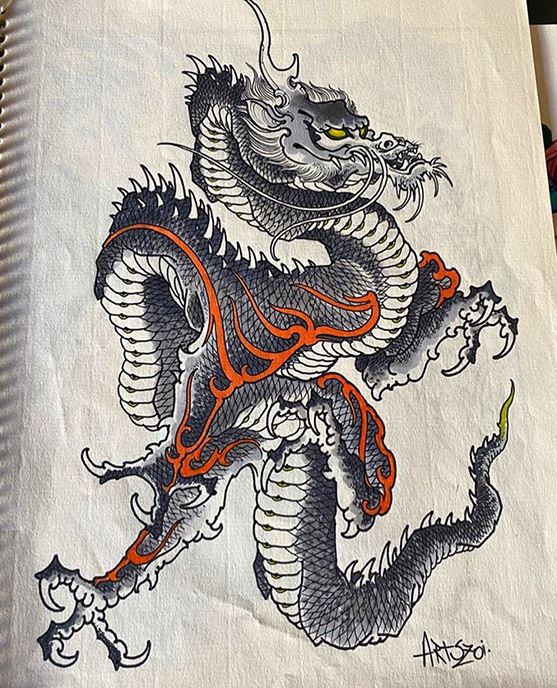
A: Yes! Of all the elements (and there are many), the one I most
enjoy creating and literally unrolling is definitely the dragon. To
draw this creature with grandeur, I always focus on 3 important
aspects: balance, movement, and proportion.
Q: Given the saturated nature of modern
tattooing, how vital is it for an artist to cultivate a strong
portfolio and a unique stylistic identity to stand out?
A: Yes, the scene is growing more and more, and those who don’t keep
up will be left behind. Social media is more than just a portfolio
of tattoo photos and videos. In fact, the biggest challenge is not
just attracting attention, but retaining people and turning them
into clients. That’s why the need to evolve constantly, not only in
tattoo techniques but also in writing, video creation,
communication, customer service, etc is crucial. All of this
enriches the professional’s presentation, which in turn stands out
and is perceived as more valuable.
Q: Your portfolio showcases impressive full-body suit
designs, demonstrating a remarkable ability to integrate multiple
elements seamlessly. What considerations go into planning and
executing such complex, cohesive pieces?
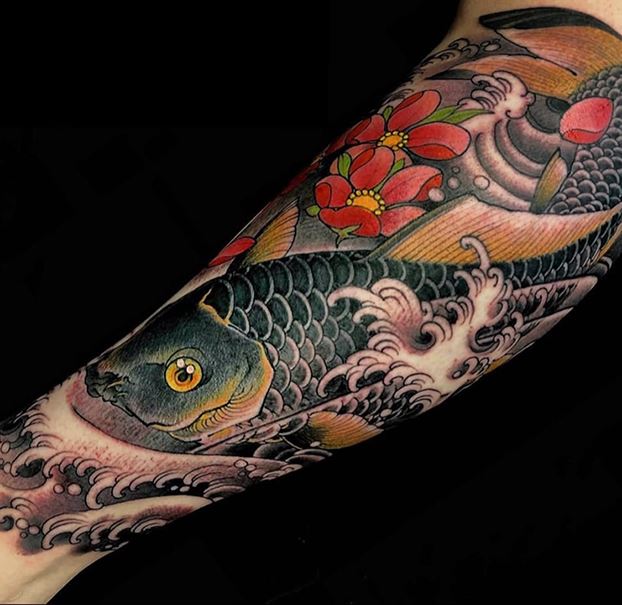
A: When clients ask me to create a design with two or more elements,
I develop the composition full of details and effects, but at the
same time clean and readable, is very simple,“I prioritize.” I start
by emphasizing the main element and then add the others.
Q: How integral are foundational drawing abilities to your
process of developing unique, personalized designs?
A: I don’t have an academic background in drawing. However, over the
years, I developed and have been refining my own method that works
for tattoo drawings. From this, I began teaching my classes,
workshops, and seminars, applying this step-by-step methodology and
teaching other tattoo artists to improve their skills and achieve
new results in their careers as well.
Q: To what extent do you encourage clients to bring
reference images, and how do you balance their input with your own
artistic vision during the design process?
A: I believe that the positioning of each professional automatically
educates clients to understand that seeking references is just the
starting point for an artist who develops original art. So, the more
the artist promotes what they know how to do and their preferences,
the clearer it becomes and encourages the audience who already
follows them to seek them out exactly for a personalized piece of
art.
Q: What, in your opinion, makes a set of
flash designs particularly effective and valuable?
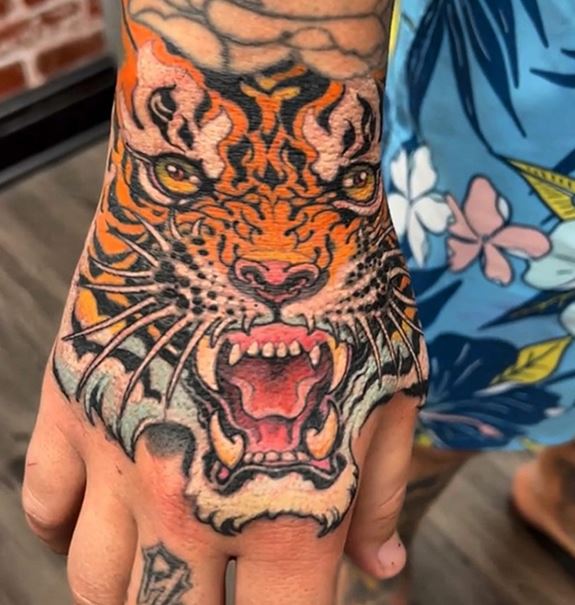
A: I believe that the more the artist presents their drawing and
painting work, the more they make it clear and guide the clients on
what they like and, most importantly, have the technical and
artistic skills to develop. This automatically leads to a funnel of
potential interested clients.
Q: If there were no limitations, what delightfully absurd or
profoundly meaningful tattoo concept would you most love to bring to
life?
A: Definitely the dragon.
Q: Could you describe the content and purpose of the dragon
seminar, and what attendees can expect to learn?
A: The Dragon is a mix of seven animals, and to know how to connect
all of them in an imposing way, it’s necessary to learn how to
unroll this creature from head to tail. Here are the 3 topics that
form the base of the seminar: Proportion, Movement, and Balance. In
this seminar, I teach how to create and literally unroll the dragon
from head to tail with its own original spirit.
Q: Could you describe the role Tattoo
Logia plays within the tattoo community, and what are its primary
objectives?
A: The role of the online platform TATTOOLOGIA goes beyond teaching
tattoo techniques and skills. My purpose is to motivate the students
with enthusiasm and show them that, despite the challenges in the
tattoo industry, there are also many opportunities, and with
dedication and connection, they will be able to achieve things they
never imagined were possible.
Q: In what ways has being sponsored by prominent tattoo
brands contributed to the advancement of your career and the
opportunities available to you?
A: I believe that the main asset of a tattoo artist is knowledge.
When the artist partners with other artists and brands that share
their vision, they can reach even greater audiences. So, sponsorship
goes beyond just providing the artist with benefits like inks,
needles, etc. It’s also an opportunity for networking and
professional growth.
Q: How do you perceive the current state of the local tattoo
scene? Are there any notable trends, emerging artists, or innovative
styles that you find particularly compelling?
A: Artistically, I see tattooing as being in an incredible phase!
New artists with fresh visions and creations. Veterans sharing
principles, renewing their energies, and refining their art. It’s a
privilege and incredibly gratifying to be able to follow, even from
a distance, what other artists around the world are creating.
Q: For our readers, could you please
provide your studio location, website, and social media links?
Additionally, please let us know your current availability for
bookings.
A: On my Instagram @zoiotattoo, clients can access my schedule and
everything I offer. And for those who want to learn to tattoo or
improve their techniques and skills there’s also the link to my
online course platform TATTOOLOGIA.
Q: The tattoo industry offers numerous opportunities for
artists to expand their skills through guest spots. What are your
thoughts on the benefits of this type of experience? And, have you
personally worked as a guest artist at any studios?
A: It’s wonderful to be able to travel and visit, and in some cases,
to work in other countries, meet different cultures, new people, and
artists. This is truly one of the greatest benefits of tattooing and
brings valuable experiences to the artist. I’ve visited many
countries in Europe, participated in conventions, visited museums,
worked in Australia while attending English school, braved the cold
in Canada to attend an important convention, met many artists, made
friends, and all of this was very enriching.

Q: What about tattoo conventions?
A: Participating in conventions can, and often does, open doors for
new opportunities! I’m really excited to be able to attend famous
conventions in the US.
Q: Balancing creative inspiration with a demanding client
workload is a significant challenge for full-time tattoo artists.
How do you manage this balance to ensure consistent quality in your
work?
A: I believe the challenge for the artist also lies in learning and
mastering other arts that are necessary and, together, structure the
professional’s career more solidly. For example: Knowing how to work
in a team. Knowing how to connect with people. Knowing how to serve
clients and provide a memorable experience. When the artist develops
these skills, everyday life becomes easier. With that, maintaining
consistency with quality becomes easier.
Q: Given the breadth of styles and influences in the
American tattoo scene, do you believe there are significant
opportunities for cross-pollination and artistic development?
A: Exactly because of the breadth and diversity of styles in the
American scene, I believe there are significant opportunities for
the artist’s development.
Q: Knowing the diversity of the US tattoo landscape, are
there any areas that particularly resonate with your artistic style
or that you feel would be a good fit for your work?
A: The tattoo scene in the US is inspiring! It’s always been a dream
of mine to meet some of the icons and legends of professional
tattooing who live in this country. I see that in such a scene,
there will always be space for those who work with dedication,
enthusiasm, enjoy serving people, know what they’re doing, and, most
importantly, know where they want to go.

Q: What impact do you aspire to have on
the tattoo community?
A: I believe the best way for anyone who wants to impact someone, a
community, or even the world, is through example. So, I want to
continue working, getting involved, learning, developing, and
sharing to always grow and motivate other artists to grow as well.
Q: If you could offer guidance to your younger self at the
start of your tattooing path, what essential advice would you
provide?
A: I would say, “Zoio, now that you’ve decided to become a tattoo
artist, know that you will face many challenges and frustrations
along the way. You’ll also encounter people who only complain and,
because they lack the courage or don’t find ways to improve their
lives, will tell you that you’re not capable either. Avoid them! You
deserve more! So, study and seek knowledge. Focus on what you want
and, with dignity, work with your mind and body. Keep going! Don’t
stop when you’re tired. Have faith, believe, and only rest when
you’re fulfilled"


