
Interview with Maria Virginia Botar
Hello Maria Virginia Botar! Thank you so much for taking
the time to do this interview. Please start by telling us something
about yourself and your background. I come from Romania,
Transylvania actually. I’ve always been interested in fine arts, so
I kind of knew what I wanted to do since early childhood and
thankfully my family encouraged me into pursuing my passion from the
very beginning. I studied art since I was little, so naturally I
graduated an Art high school (thankfully we have that type of
vocational high schools in Romania), after that I studied Fine Arts
at University of Art and Design in Cluj and graduated both Bachelors
and Masters in the same academic field.
Q: What type of art do you like the most? Are there any
artists whose work you particularly admire?
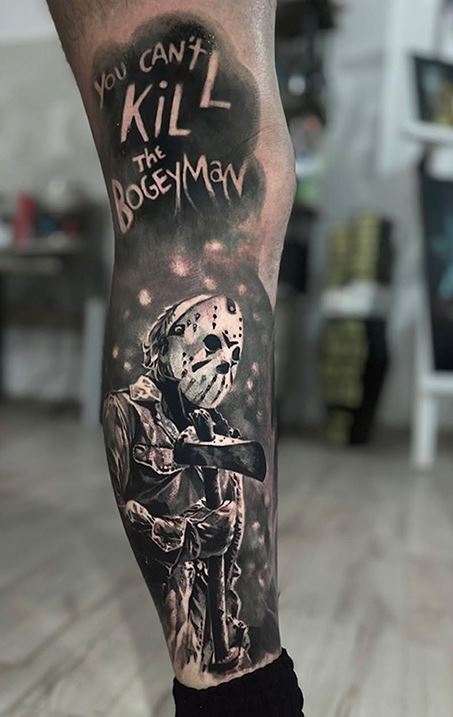
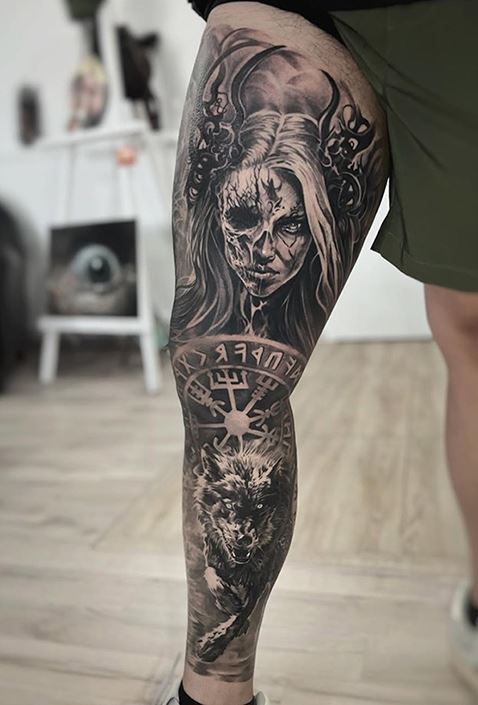
A: I’ve always been a fan of realistic painting and drawing, always
admired Renaissance and Baroque art but also modern and contemporary
painting and drawing, but mostly I’m attracted to realism as a style
therefore it’s my go for in my tattooing preferences as well.
William Adolphe Bouguereau is one of the painters I admire a lot and
I still enjoy studying the all the abundance of volumes and
saturation in colours he used in his paintings. I’ve always been
oscillating between drawing and painting, between black and white
and colour. I love to draw and I practiced it for many years, both
as a student and after that, so much that I myself thought others,
and had a few students of my own. I strongly believe practice makes
perfect and art, drawing in particular can be thought just like
mathematics (I find there are quite some similarities between the
two for eg. measuring and calculating distances and points of view,
proportions, geometrical shapes and so on). Tattooing techniques are
somewhat the same, it’s just a different support and with it
obviously other types of challenges that come along.
Q: What sparked your interest in tattooing? What inspired
you to give it a try?
A: Tattooing wasn’t something I thought about in the beginning. The
artistic background at the university actually helped, because it
was there and then where I first had any type of interaction with
the tattooing industry, since a lot of my ex professors and
colleagues were also tattooers and they were seen as pretty cool at
that time, so I tried it out myself. I did what anybody would:
bought a super cheap beginners kit with a very bad set of inks and
two coil machines. They were terrible but worked just fine on pig
skin and bananas, later on silicone skin. Never actually had any
help from a tattoo artist so I never been through an apprenticeship,
basically I’ve been self thought. Step by step learning and
improving my skills. Art knowledge helped me a whole lot since I
already knew that part, basically I skipped a few important steps
into my tattooing career, then studying and watching online both
free and paid courses and seminars, also visiting and of course
participating in tattoo conventions gave me a better perspective on
things, not to mention the amount of experience one can get while
trying out guest spotting! I’ve also been for these past 8 years as
a guest artist in professional tattoo shops from different countries
in Europe, like UK, Denmark and Germany (different cities too) I got
to see first hand how other tattooers work, collaborate with them as
well and exchange a lot of knowledge. Always meeting new tattoo
artists and keeping in touch with them and keeping up with what
comes out new in the industry, keeps you alive in kicking in your
business, which is extremely important, especially in todays world.
For short, in my opinion shifting from paper to skin felt very
natural so I would never do anything else at this point in my life I
know for sure I chose the best way in my carrier.
Q: Your creative direction seem to be tattoo realism with
some nuances of other styles which I really like. Why this style,
what do you like the most about it?
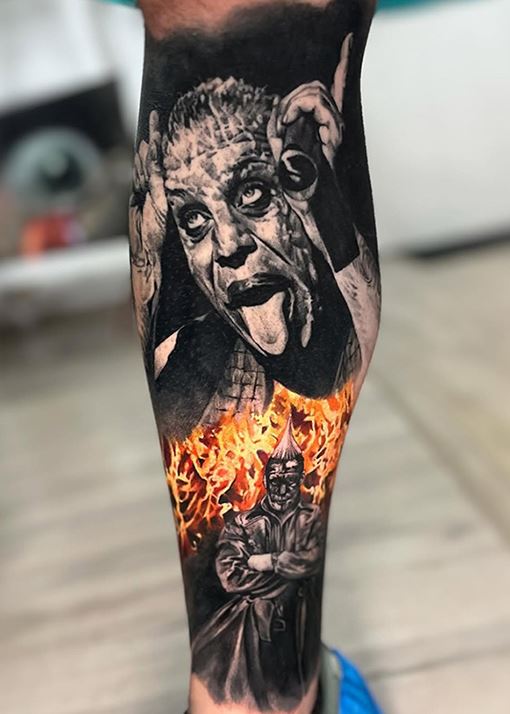
A: Academic and realistic art was the one I loved most and tried to
get better at it since forever so it wasn’t a hard decision when I
got into tattooing, it just went naturally. I’m basically tattooing
the way I’m also drawing or painting. Also sometimes I like to try
other styles as well, not too often and of course, depending on how
it works considering the subject and the anatomical part that’ll
cover. I think I can express myself better this way plus I enjoy
doing it.
Q: You enjoy doing both black and gray style and color
tattoos. Between black and gray and color, which style demands a
higher level of technical precision and why?
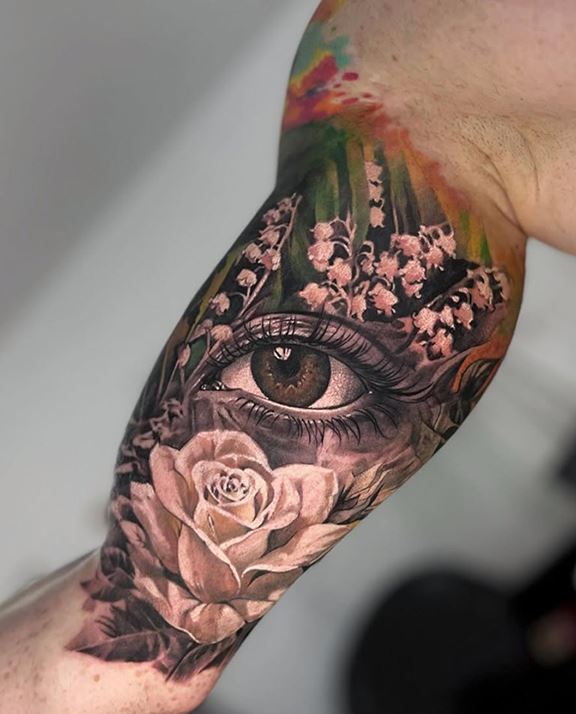
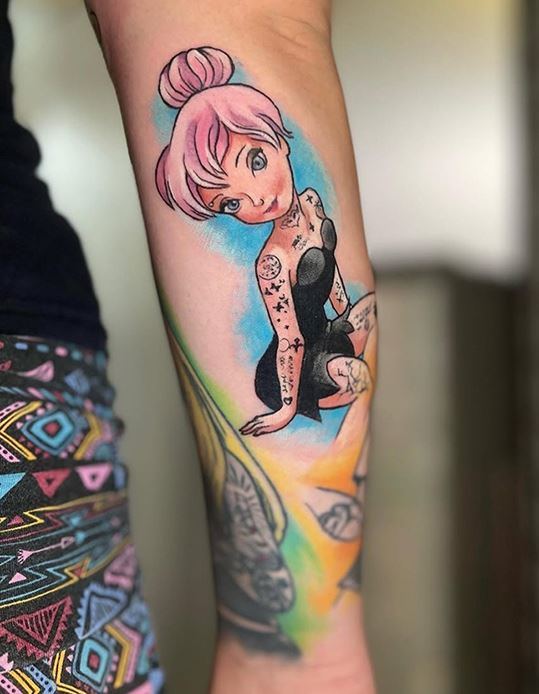
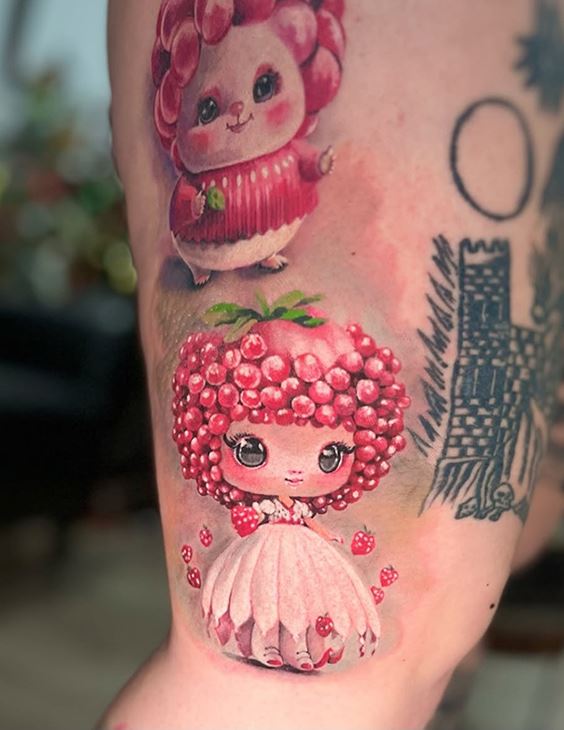
A: While both demand a lot of precision, color tattoos are the most
challenging because they need a lot more saturation and layering of
the tattoo ink into the skin and all that should be done with a lot
of caring for the skin surface. Scarring can occur really easy if
you’re not careful enough and traumatise the skin unnecessarily.
Q: Tattooing involves constant client interaction. How do
you balance fulfilling client requests with maintaining your unique
artistic vision?
A: As a tattoo artist you definitely need social skills and
constantly joggling between client’s demands and your vision, trying
to get somewhere in the middle of it. Basically a tattoo project
should be a collaboration between the artist and the client. Client
comes up with their idea, their subject of interest (with or without
sentimental value) and I do the rest.
Q: The rise of social media has significantly impacted
client expectations for tattoos. How do you navigate the pressure of
meeting high standards while maintaining your own artistic integrity
and avoiding unhealthy competition?
A: Yes, social media can give clients, and everyone actually, a lot
of false expectations in general and can easily become a toxic way
of life so in my perspective, it’s important to keep it real as much
as possible, so I prefer to spend some more time on guiding my
clients into getting a better idea of how and what things really are
and what they can be. The effect of social media into the industry
actually can be very positive, it helps artists to become more
visible and also improve themselves, keeping up with the new
upcoming tools and trends, see what others do, keeping the
competition alive will give you a lot of motivation to improve your
work and abilities constantly and obviously showcasing your
portfolio worldwide which will bring a lot of notoriety as well as
building up trust for your clients, as long as you keep things
absolutely professional and you don’t let social media run your life
and business.
Q: Have you recently completed a challenging tattoo that
you're particularly proud of? How did you collaborate with the
client to overcome the technical hurdles and achieve a result you
both loved?
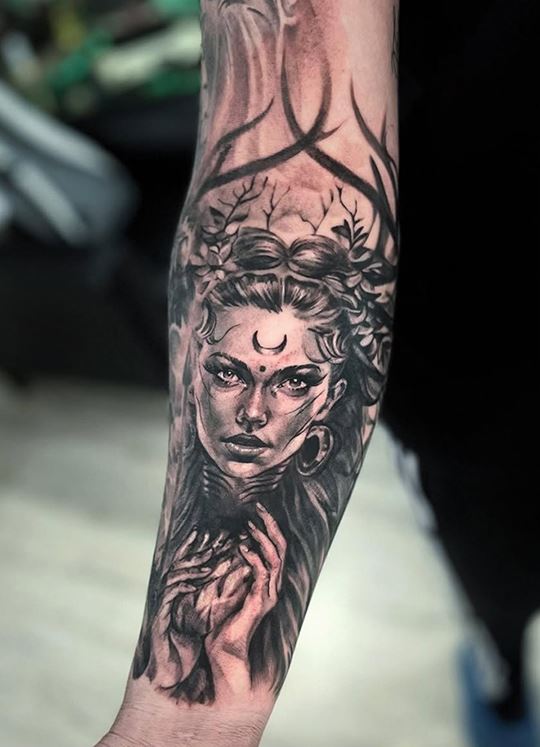
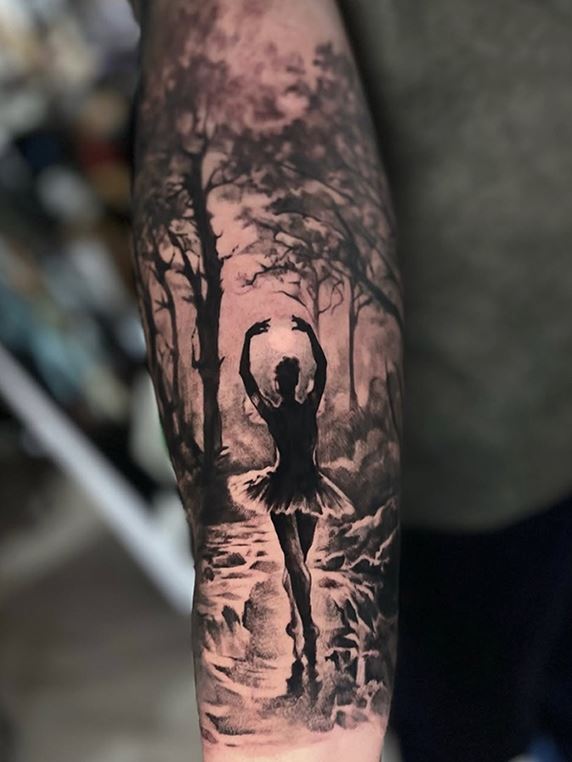
A: Last winter I worked on quite a complex project for a client who
wanted to have two full sleeves done in a short a mount of time
(just a few months): one in color and the other in black and grey.
Considering the amount of subjects he wanted and his impressive arms
length, the amount of skin that had to be covered in tiny details
was quite a challenge. He wanted to have an entire story depicted in
those sleeves so it was not an easy job to do. Everything had a
meaning, everything had a specific reason and purpose to be there so
basically it was a whole life story, an entire biography illustrated
by me. I loved working on it, turning his life story into palpable
art it was quite spectacular and working together into making it
real, was actually a collab of ideas and images put together just
like a director with his actor.
Q: How has the shift from traditional hand-drawn sketches to
digital design tools impacted your design process? What are your
guidelines for incorporating client feedback and revisions into your
designs?
A:.Since I was a student (back in around 2003) I started learning
how to use Photoshop along with my drawing courses as well so step
by step I started using also drawing tablets like Wacom and
constantly improving and getting better at it. Also before tattooing
I worked as a graphic designer and using tablets helped me a lot
when I shifted to tattooing. Nowadays I‘m using an iPad for my
tattoo designs and also for digital drawing and painting. Client
feedback is important and also I try to give them the best
perspective, so it’ll help me as well into designing a project.
Q: With the rise of collaborative projects in the tattoo
world, have you considered collaborating with other artists on a
tattoo design? What are your thoughts on the potential benefits and
challenges of such a venture?
A: I collaborated before and still do. Also I like to ask for
opinions because sometimes you miss things while concentrating too
much on the same subject. Another vision from a fresh and
experienced mind can give you a lot of new helpful input.
Collaboration is key.
Q: How would you describe the current state of the local
tattoo scene? Do you observe any significant growth or evolution in
terms of emerging artists, new styles, and community events like
local conventions?
A: There are a lot of good tattoo artists, young tattoo artists as
well as new ones. The industry is getting better and bigger which is
always a good thing. It improves the quality of the work and the
tools as well, also the people's view over the tattoos in general
has become better and better since nowadays you can almost do
anything you want, be as creative as you want! Conventions are
getting better as well because also the participants bring a fresh
new perspective.
Q: Please write down your studio location and website/social
media links. Also, let us know if you are available for bookings.
A: My studio TabooINK is in Cluj-Napoca, Romania Instagram:
@tabooink @mariavbotar Fb: tabooing.tattoo I’m available for
bookings starting this year’s April.
Q: How frequently do you participate in tattoo conventions,
and how do you leverage these events to enhance your professional
visibility, connect with clients and fellow artists, and potentially
expand your career opportunities?
A: I’ve seen a lot of tattoo conventions as a visitor and
participated once in Berlin tattoo Convention. It was a great
experience and I would do it again even though it’s not the most
comfortable thing to do, it’s pretty stressing and rewarding at the
same time since you’re not in the comfort of your studio and you
pack your basics with you, making it work in a different environment
it’s a positive pressure. Also meeting new people and artists, maybe
sometimes meet artists that you appreciate and follow adds up to the
whole experience.
Q: Any valuable insights gained from working in a different
cultural and professional environment?
A: As I said before, I’ve been working for years as a guest artist
in different professional tattoo shops in Europe. The first was in
Denmark, then in United Kingdom where I also visited the London
tattoo convention, after that in Germany in two different cities,
the last and longest guest spot is in Potsdam. All of these turned
out to be very important in my entire experience as a tattoo artist,
basically helping me grow quicker and learning new things constantly
and of course interacting with a lot of different artists, picking
up tips and tricks from each other and connecting with so many
different people and cultures, making me grow professionally and
personally.
Q: Given the vibrant and diverse nature of the American
tattoo scene, are you interested in exploring professional
opportunities within the United States?
A: Absolutely. Americans make a lot of my clientele in my studio
given the fact that there’s a USAF military base in my city, I’ve
been constantly in touch with the American scene and culture, so
it’ll be a lifetime experience to get to see and experience first
hand the tattooing scene in the United States.
Q: The United States boasts a diverse and thriving tattoo
scene. If you were considering pursuing opportunities in the US,
what specific regions or cities would be of particular interest to
you, and why?
A: I would probably like to experience tattooing close to some of
the people I know, that’ll be Vegas, but I’ll definitely consider
New York, where prolific artists like Sivak have their studios.
Q: What are the most rewarding aspects of your career as a
tattoo artist?
A: The fact that I get to paint on people basically for a living so
work doesn’t mean "going to work”. I enjoy working so that’s a gift
in life and seeing people happy with what I made for them is the
ultimate prize.
Q: What activities or interests help you maintain a balanced
lifestyle and foster personal growth outside of your professional
endeavors?
A: I mix my hobbies with work actually, since my job implies
creativity, it’s easy to mix drawing with tattooing, but then I try
to have other activities that keep me out of the monotony and
sometimes even out of socializing for a while so I enjoy privacy a
lot and spend my free time reading and watching a lot of movies
which in the end help me find better images and ideas for my tattoo
designs. I’m a summer child so all my outdoor activities usually
happen in the summertime and involving water :)
Q: What kind of impact do you hope to make on the world of
tattoo art in the years to come?
A: I would absolutely love to change my environment and the
tattooing scene sometime and experience new ideas and cultures,
meeting more tattoo artists from across the globe and exchange
knowledge with each other (all this while I’m just a quiet girl)
would mean a lot and give me new chances to express myself and maybe
bring a new vibe into my works that people can enjoy actually for
the rest of their lives.
Q: What is the most valuable advice you can offer to someone
who is serious about becoming a professional tattoo artist?
A: Keep things professional at all times and invest a lot of
patience into work and most of all, clients.


