
Interview with Mark Erries Alumisin
Hello Mark Erries Gipulan Alumisin. Thank
you so much for taking the time out of your schedule to speak with
me. I'm genuinely excited to have this opportunity to delve into
your work and process. Please start by telling us something about
your background. My name is Mark Erries Alumisin, and my
career is built on a foundation of technical precision and artistic
passion. Originally from the Philippines, I hold a degree in
education, majoring in Architectural Drafting. This training
instilled a deep, meticulous appreciation for geometry, structure,
and scale, skills that are now fundamental to my primary artistic
practice. I currently work as a professional tattoo artist in Dubai,
where I channel that unique blend of technical rigor and creative
spirit. I specialize in transforming conceptual ideas into
permanent, meticulously crafted designs, driven by my lifelong love
for art.
Q: When did you first recognize you have this unique talent,
and how did that moment of self-discovery steer you specifically
down the path of tattooing?
A: My artistic journey began under the powerful influence of my
father, who is also a dedicated artist. Watching him work provided
my earliest lessons in creativity, passion, and technique,
instilling a belief in my own abilities. Having already mastered
several artistic disciplines, including the structural precision
required for architectural drafting, I was constantly seeking the
next challenge. I realized that the ultimate canvas, and the most
compelling medium, was human skin. The permanence, the intimacy, and
the living quality of this medium presented an artistic challenge
unlike any other. This decision to embrace tattooing wasn't taken
lightly; it required immersion and respect. I was fortunate to be
guided by a number of talented masters who took me under their wing,
sharing the rigorous techniques and ethical standards required to
transition from a general artist into a professional tattooist.
Q: How did you discover or hone the realism style that
defines your work today?
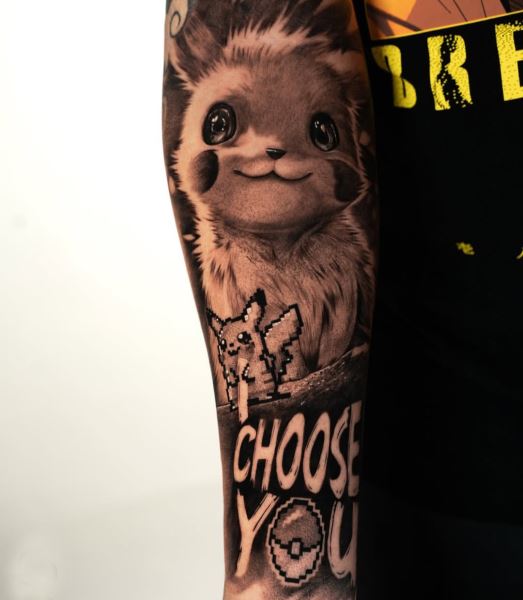
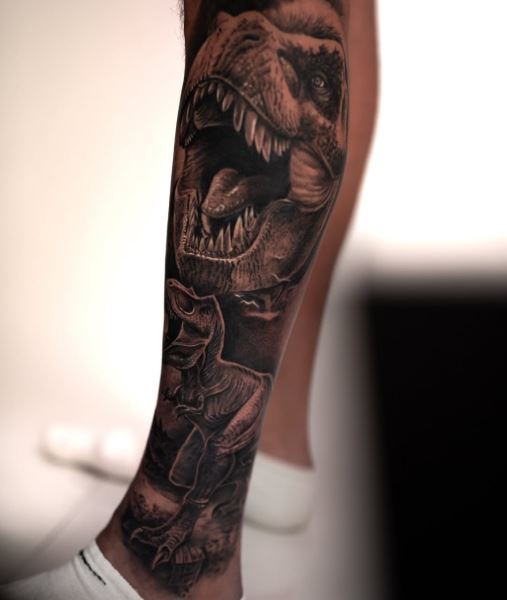
A: The gravitation toward realism was deeply rooted in my
foundational passion for detailed drawing. I already possessed an
understanding of light, shadow, and dimension from my years of
technical drawing and drafting, but translating that onto skin is an
entirely different discipline. The decisive moment came while
observing my master. Watching them apply the principles of
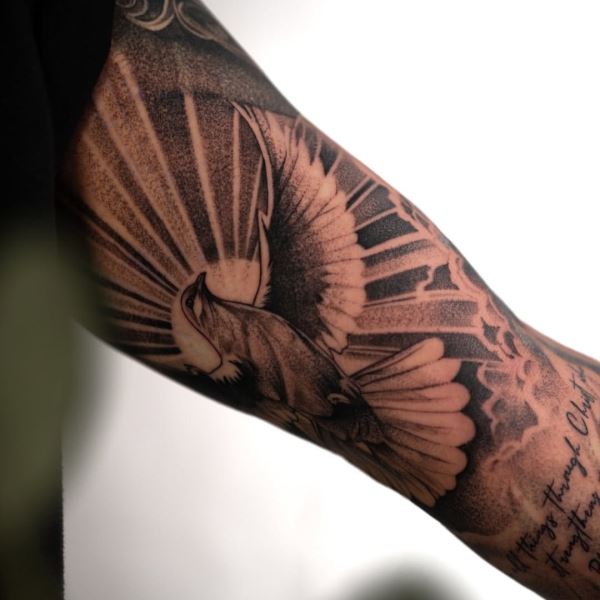
photorealism the meticulous layering of gray wash, the handling of
contrast, and the creation of depth on a living canvas was a
profound revelation. I dedicated myself to adapting my
two-dimensional realism skills to the complexities of tattooing,
focusing intently on mastering the intricate machine handling and
needle depth required to accurately represent texture and light that
defines the realism aesthetic I practice today.
Q: What initially drew you to this highly technical style,
and what is the most rewarding aspect?
A: I was initially drawn to realism because it provides the ultimate
technical challenge, perfectly aligning the meticulous detail of my
architectural drafting background with my passion for art. The most
rewarding part is witnessing the emotional impact when a client sees
their complex vision perfectly realized as a permanent, lifelike
piece of art.
Q: Your versatility is remarkable; mastering black and gray
realism is a full-time pursuit, yet you also work in styles like
Japanese, cartoon, and lettering. How do you mentally and
technically transition between these different styles?
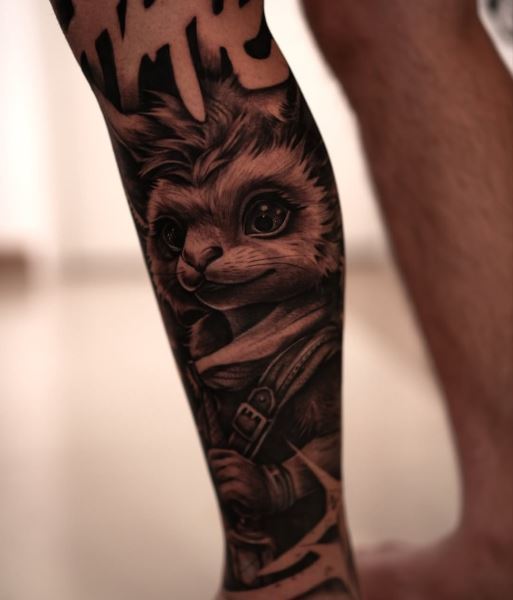
A: The mental transition requires switching the governing artistic
rules: from the observational fidelity of realism (light, shadow,
texture) to the design principles of other styles (such as the
mandatory flow and composition of Japanese, or the structure of
lettering). Technically, I shift my equipment and technique, moving
from the fine needles and soft gradients of realism to the bold
lining, color saturation, and clean packing required for styles like
Japanese and cartoon.
Q: Given your incredibly broad skill set, working across
multiple styles, is there a single tattoo or design you’ve completed
recently that you consider your signature piece, or perhaps a design
that you are particularly eager to tackle again?
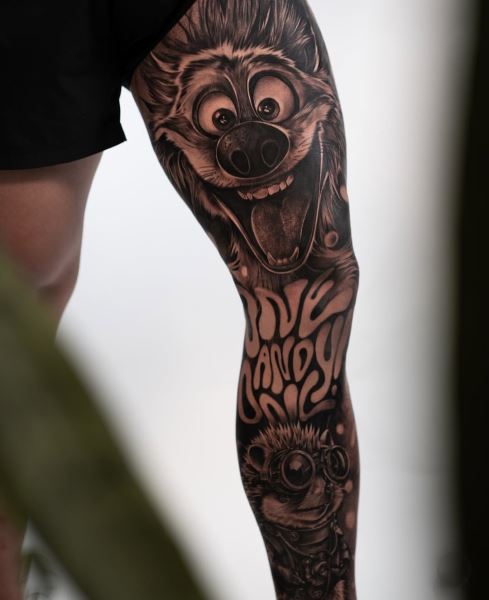
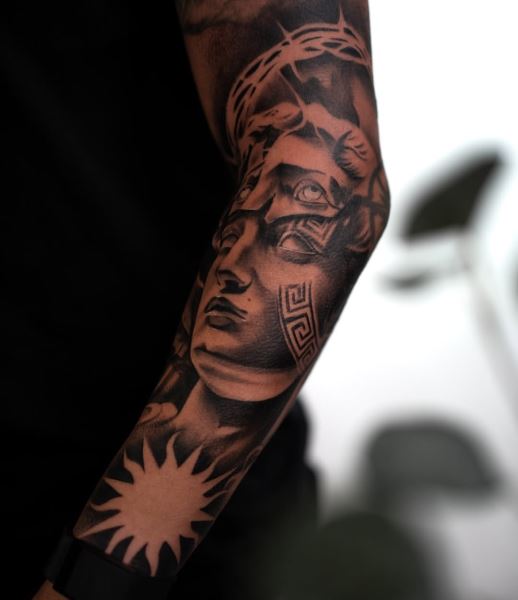
A: My recent Black and Gray Realism portrait of an intensely
emotional subject stands out as my signature piece; it demanded the
perfect use of contrast and texture to convey genuine feeling. I am
particularly eager to tackle another challenging piece that features
deeply reflective surfaces, like chrome or wet obsidian, as the
technical challenge of mirroring light and reality in pure black and
gray is my ultimate passion.
Q: Which design elements or motifs do you find are the most
technically demanding to execute flawlessly on the skin?
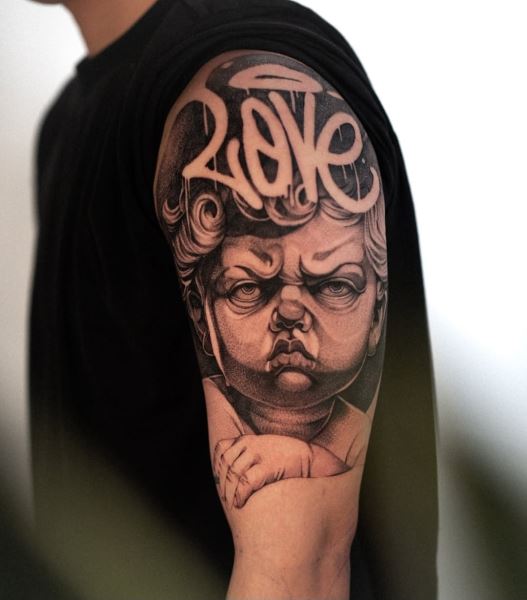
A: The most technically demanding elements to execute flawlessly are
texture and subtle transitions. Specifically, this includes: Hair
and fur: Creating the illusion of individual strands and softness
without lines blending into a solid mass. Reflective surfaces
(chrome, glass, water): Accurately rendering light and reflection
requires perfect contrast placement and smooth, non-pixelated
gradients. Facial expressions and hands: These require flawless
anatomical accuracy and incredibly delicate shading to capture deep
emotion and realism.
Q: What is your approach when a client brings you a specific
reference image or another artist's work? Do you prefer to use them
for inspiration, or as a foundational base for a new, original
design?
A: My primary approach is to redraw the design from scratch to
ensure the piece is 100% original, respects copyright, and is
custom-fitted to the client's anatomy, making it their unique piece
of wearable art
Q: Do you plan to explore other tattoo styles?
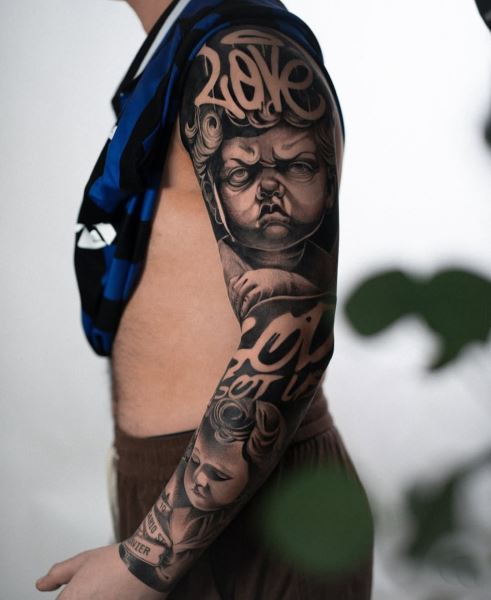
A: Absolutely! While realism is my foundation, I plan to explore
styles that introduce more dynamic color theory, specifically
adapting the meticulous shading of Black and Gray into Color Realism
to achieve even greater visual depth and impact. I also aim to
refine my approach to Neo-Traditional, valuing its bold composition
and the freedom it offers in line work.
Q: In a seemingly saturated industry, how do you prioritize
and maintain your reputation for quality and trust? What are the key
professional practices you rely on to consistently stand out as a
reliable artist?
A: I maintain my reputation by upholding two standards:
uncompromising quality through flawless technical execution in every
piece, and absolute trust through ethical communication. I stand out
by always prioritizing custom, original artwork over reproductions,
combined with rigorous hygiene protocols and professionalism that
ensure the client feels respected, safe, and truly receives a unique
piece of wearable art.
Q: Are you available for bookings and are you open for guest
artists? Please write down your studio location and website/social
media links.
A: I am open for client bookings and actively seeking Guest Artist
opportunities globally. I am based in Dubai, UAE, and you can best
reach me for bookings or collaborations via my Instagram,
@dubaitattoo.manong
Q: You've been fortunate to secure sponsorships with great
tattoo brands. How instrumental have those partnerships been in
providing you with resources, visibility, or new opportunities that
have directly helped you grow and develop your career further?
A: Sponsorships have been instrumental because they provide direct
access to the industry's most advanced technical resources
(machines, needles, and high-quality pigments), which is
non-negotiable for executing flawless realism.
Crucially, these partnerships lend significant credibility and
global visibility, validating my work and leading directly to
higher-caliber client bookings and essential opportunities like
international guest artist spots and major conventions.
Q: How supportive and collaborative is the local tattoo
community, and do you think that sense of camaraderie is important
for the artists' development?
A: It is absolutely essential. The local community is highly
supportive and fosters development through Technical Acceleration
(masterclasses, new workflows) and Artistic Cross-Pollination
(adapting realism skills to new compositional rules). This
camaraderie maintains the high ethical standards and professionalism
required to build trust and increase global visibility.
Q: How often do you attend tattoo conventions? In your
experience, how valuable are tattoo conventions for artistic growth
and building client relationships?
A: I aim for two to three major international conventions annually.
They are invaluable for growth, serving as intense workshops where I
absorb the newest realism techniques and gain crucial professional
validation. For example, competing is what drives quality, leading
to achievements like my recent Black and Gray Champion award at
Inktribe Tattoo Convention in Dubai. They are also essential for
securing high-caliber international clientele who trust live
demonstration of skills.
Q: What's your experience working as a guest artist in
another studio?
A: My experience working as a guest artist here in Dubai has been
incredibly enriching and essential for my development. It provides a
vital opportunity to seamlessly exchange knowledge with other highly
skilled local artists, pushing me to adapt my Black and Gray realism
techniques to new studio environments and protocols. Crucially,
guest spots allow me to dramatically expand my local clientele and
establish deeper connections within the Dubai tattoo community,
reinforcing the professionalism and trust required in this region's
high-standard industry.
Q: Given the significant presence and variety within the
American tattoo world, is that a landscape you might be interested
in engaging with professionally at some point in your career?
A: Yes, absolutely. Engaging with the American tattoo landscape is a
major goal, as it represents the pinnacle of the realism movement
and offers unparalleled competition, which is vital for artistic
growth. I plan to secure guest spots in major cities (like LA or New
York) and compete in the US convention circuit, leveraging my Black
and Gray Champion award from Dubai and other countries, establish my
brand and clientele in that competitive market.
Q: From a business perspective, setting aside local
preference, where in the USA do you believe the market dynamics,
such as artist community, demand, and potential for studio
ownership, create the strongest environment for a top-tier tattoo
artist to maximize their long-term success?
A: For me, Los Angeles (LA), California. It offers the best
combination of extremely high demand from affluent clientele
(especially in media/entertainment), the highest market rates
(allowing for maximum gross income despite high overhead), and a
globally competitive, diverse artistic community vital for
mentorship and long-term reputation building required for top-tier
studio ownership.
Q: As a final thought, looking back at your career so far,
what aspect of being a professional tattoo artist gives you the
deepest sense of personal satisfaction? And on a lighter note, is
there one client story, perhaps the funniest, most surprising, or
most memorable request that you still find yourself telling people
today?
A: The deepest satisfaction comes from witnessing the personal
transformation in a client when a piece of art helps them cover a
scar, close a difficult chapter, and walk out with renewed
confidence. The most memorable request, on a lighter note, was from
a man who wanted a slice of pepperoni pizza riding a motorcycle,
with the musician Meat Loaf's head where the motorcycle's headlight
should be. Below it was a banner that read, "I would do anything for
a slice of pizza, but I won't do that." It was a ridiculous and
surprisingly complex piece of pop culture mashup.
Q: What impact do you aspire to have on the tattoo
community?
A: I aspire to impact the community by championing ethical standards
and education, focusing on longevity and technical excellence, and
fostering a studio environment that prioritizes client empathy and
mental wellness in the consultation process.
Q: For the new artists entering the highly competitive
tattoo industry, what's one key piece of advice for developing their
unique artistic voice and navigating the business side of the
industry?
A: The single key piece of advice is to prioritize securing a
structured, formal apprenticeship under an established professional
above all else.
Artistically, this is the only way you will develop genuine
technique, speed, and safety protocols beyond merely drawing.
Business-wise, the mentorship teaches essential studio etiquette,
client psychology, and professionalism, which are the foundations
you need to build immediate credibility and start charging what your
time and skill are truly worth.


