
Interview with Maryssa Anne
In commemoration of the eighteen anniversary of
Skin Artists Tattoo Magazine, we are featuring a group of top-tier
artists whose work represents the sophisticated bridge between
formal fine art and modern tattooing. Maryssa Anne has been chosen
for this milestone celebration as a definitive voice in the realm of
ethereal realism, recognized for her ability to translate a
"painterly" soul onto the living canvas.
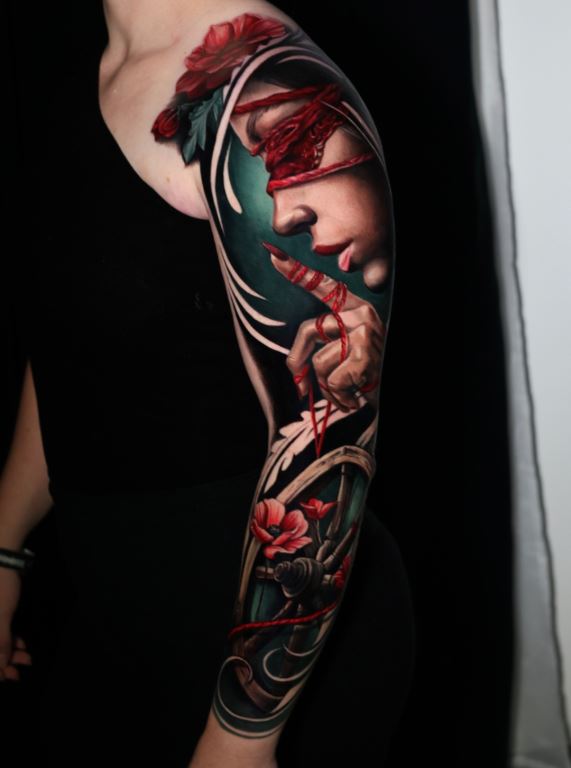
Maryssa’s portfolio is a masterclass in atmospheric depth, blending
hyper-realistic portraiture with dream-like, surrealist elements.
Her work is characterized by an obsessive attention to color theory
and the delicate layering techniques typically reserved for paper or
canvas. By focusing on the emotional narrative behind every piece,
she creates large-scale compositions that feel like breathing
windows into another world, marked by flawless heals and enduring
vibrancy.
The following interview is dedicated to exploring the future of
tattooing. We discuss how a background in fine art influences the
technical approach to skin, the importance of constant
self-education in a competitive landscape, and Maryssa's perspective
on the trajectory of the industry as we celebrate eighteen years of
creative evolution.
Q: What was the "aha!" moment when you realized that skin,
rather than canvas or paper, was the medium you wanted to master?
A: I realized that tattooing was my art form when I decided to get
my first tattoo in a studio. I walked in to the studio and saw that
the artists were creating real art on skin, and I knew from then on
that this career was for me. It was a perfect blend of being an
artist and helping people by telling their story on skin.
Q: Fine artists often use layering and blending techniques
that are technically difficult to replicate with a tattoo machine.
What was the hardest part of translating your "painterly" style to a
living, breathing canvas?
A: I would say the hardest part was more of the technical aspects of
tattooing. I believe as an artist you can create almost anything
with the right dedication and passion, but translating that to skin
is where it became more complicated. Learning how to have clean
heals and making sure the tattoos hold up well over time were
extremely important to me, and I still learn new techniques every
day to improve my skills.
Q: How does your formal art training influence the way you
see color theory compared to artists who are self-taught in the
tattoo industry?
A: I wouldn’t say I was formally taught fine art, aside from art
classes in high school, I mostly taught myself with online videos
and reaching out to local artists to better my skills. It wasn’t
until recently that I took more fine art classes. I think because I
was so obsessed with learning art at a young age it made me have
more of a natural sense towards color theory, but I still learn more
every day. I think anyone can teach themselves more in the industry
if they have the right motivation to do so.
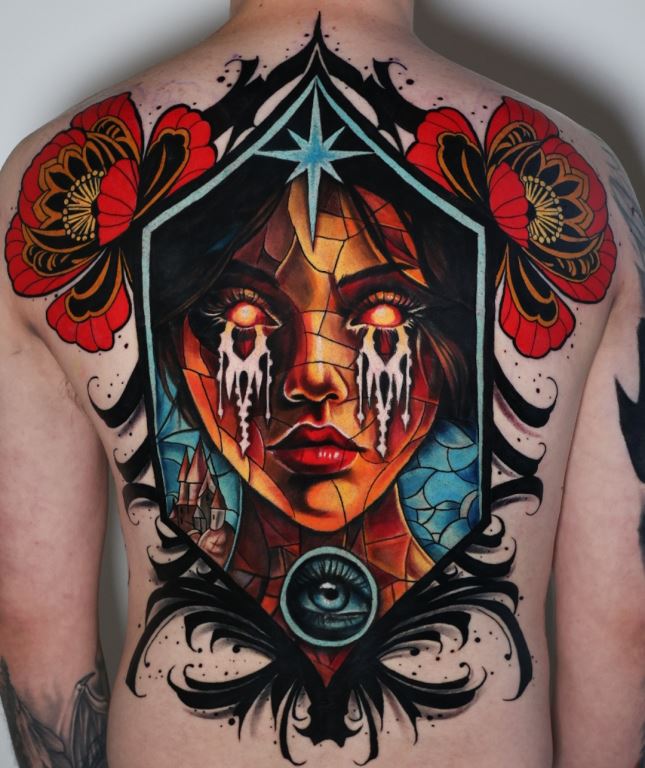
Q: Your work often blends hyper-realism with ethereal,
almost "dream-like" elements. How would you describe your personal
aesthetic to someone who has never seen your work?
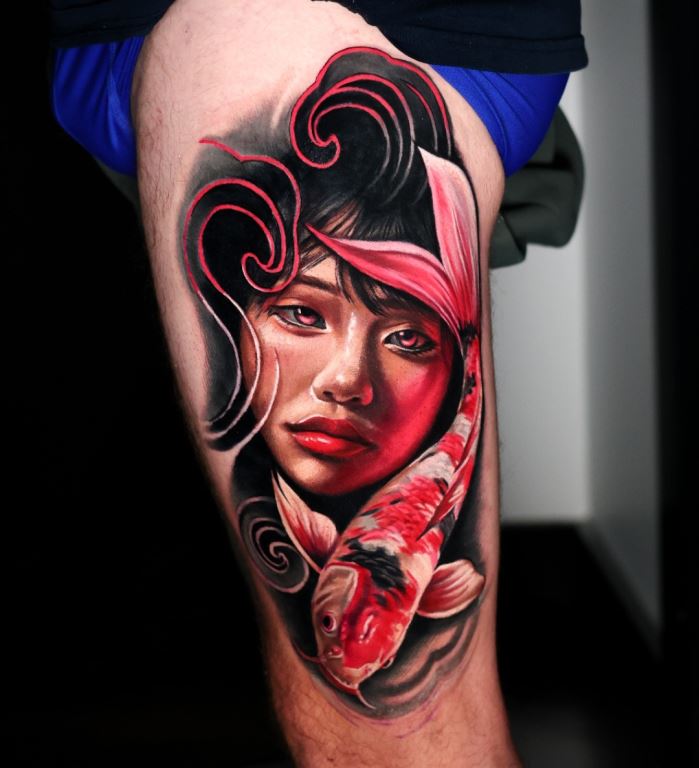
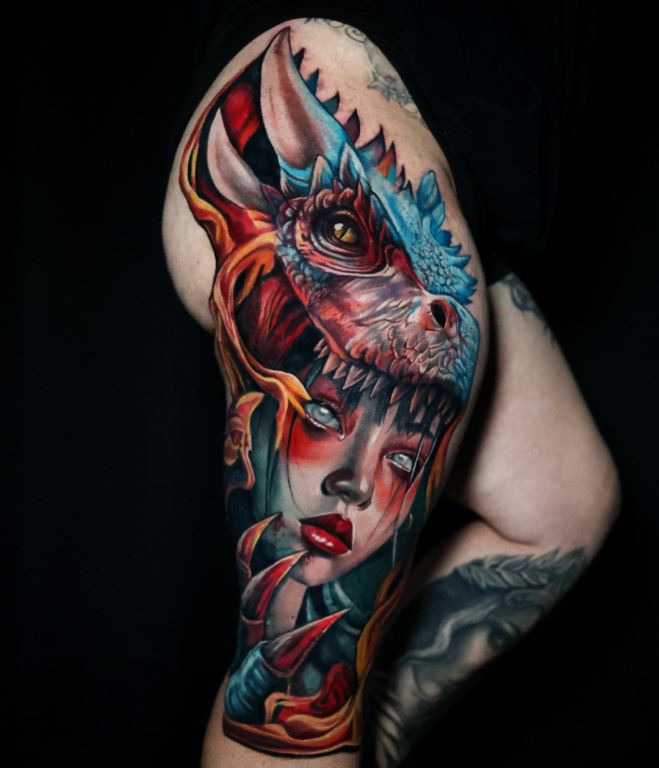
A: I would say that my work is large scale realism/surrealism with
influence of the world I see around me. I spent time traveling full
time for years, and when my eyes opened to the world so did my art
through culture and the art I saw around myself every single day in
that process.
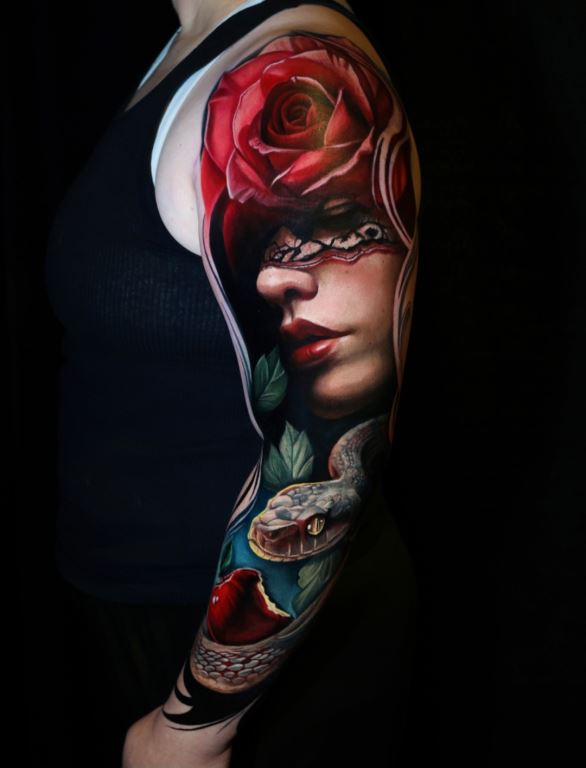
Q: There is often a debate about how color realism ages. How
do you approach your compositions and contrast to ensure these
pieces look as vibrant in ten years as they do on day one?
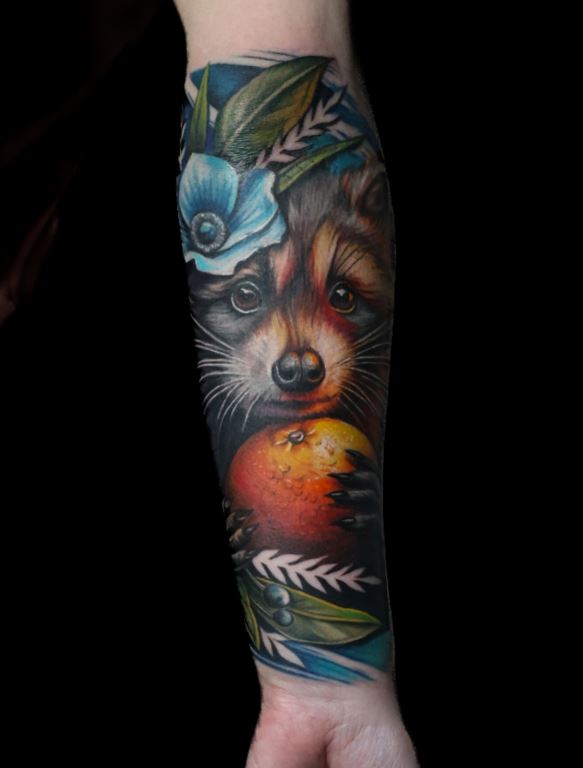
A: I prefer to tattoo simple, and when I say that it sometimes
confuses people. My designs may not “look” simple, but by making the
tattoos larger scale, and taking out some of the distracting details
that won’t hold up over time, I ensure my tattoos will last and stay
as vibrant as the skin allows. Every tattoo does change with the
body, but that’s the beauty of aging and our art form. My job is to
make sure it’s still a readable and clear tattoo and by simplifying
elements and making sure everything has good contrast it ensures
this.
Q: Many of your portraits feature unique lighting, like
glowing eyes or neon highlights. What draws you to these
high-contrast, cinematic lighting choices?
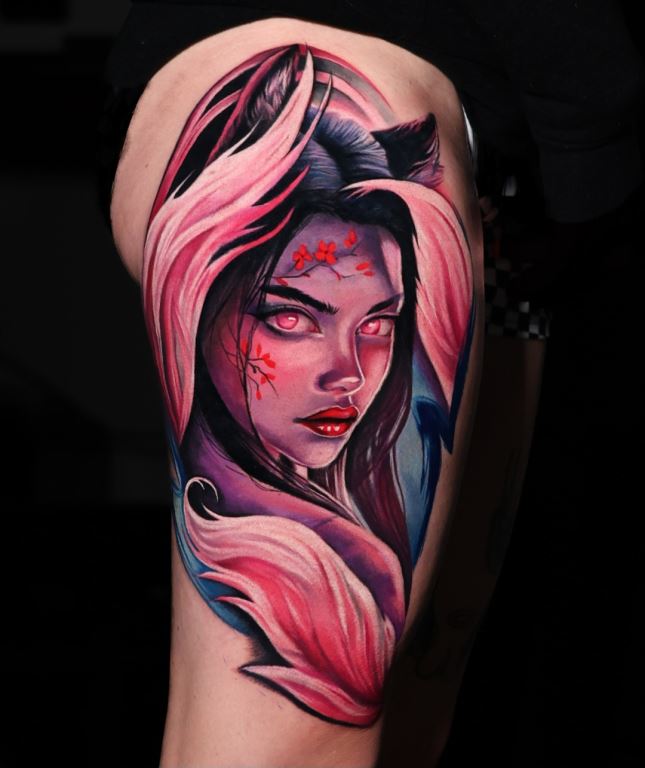
A: I know that with heavy darks around my designs and bright vibrant
colors it ensures the contrast in my tattoos. I am also drawn to
this because there’s no doubting what the tattoo is from across the
room, and it draws the viewers attention to the focal point I want
it to be drawn to.
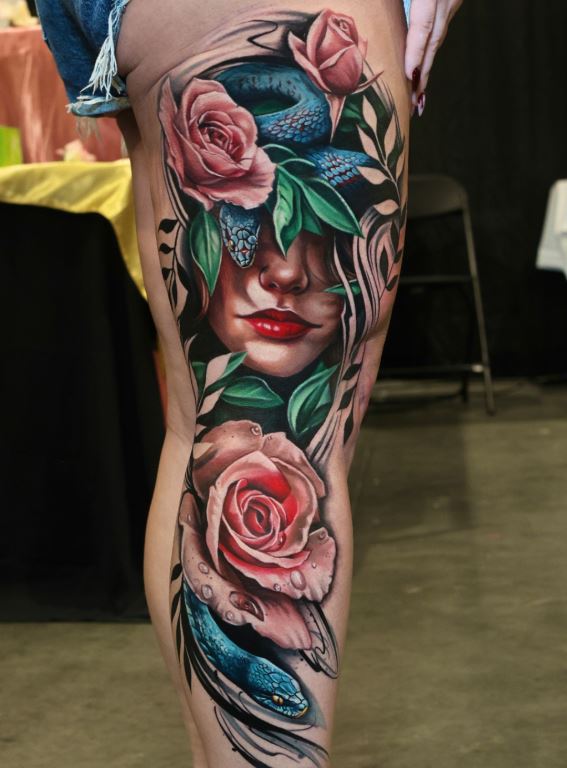
Q: When a client comes to you with a concept, how much of
the final design is their initial idea versus your artistic
interpretation?
A: I actually love when clients give me an idea or concept, but with
my creative flair. Of course, I do require a certain level of
freedom to create my art, but I always try to keep the subjects as
close to what my client wants as possible. Most of the time I just
ask for elements or color schemes and then go from there.
Q: Realism often involves memorial pieces or deeply personal
subjects. How do you manage the emotional energy of a client while
staying focused on the technical precision of the tattoo?
A: Tattooing is a spiritual practice and has been for centuries. I
try to hold myself to a high standard when achieving these kinds of
pieces, and by doing so I make sure to listen to their story and
make sure the art I am putting on them forever will show the emotion
they are trying to portray. I also have a job to do, and I know that
no matter the emotion, I have to be the best I can be every single
day.
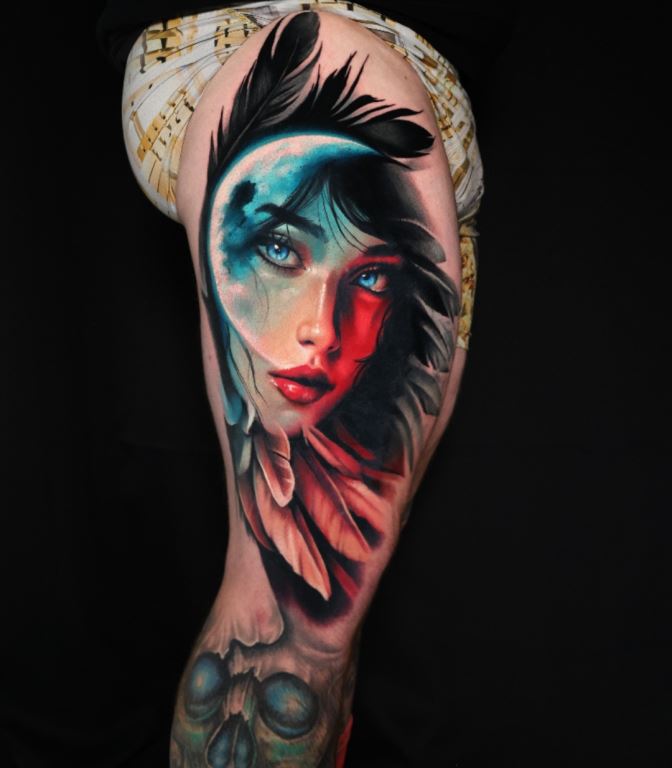
Q: You’ve worked worldwide and participated in major
conventions like World of Ink. How has seeing the tattoo culture in
different countries influenced your own work?
A: It’s been the greatest influence of my career. Like I said
previously I spent years abroad and this changed my perspective and
work so much. I witnessed art being created on skin and asked myself
how did they do that? The constant questioning and pressure of
amazing artists around me just made me want to grow into a better
artist every day.
Q: You’ve won "Best of Show" awards. What is the mindset
required to produce award-winning realism in the loud, high-pressure
environment of a tattoo convention?
A: You have to block out the noise. It’s easy to get distracted at
shows, and while I love speaking to clients and people that come to
my booth, my job is to create the best piece of permanent artwork I
can on my client. If I don’t give 100% to my client I’m doing a
disservice to them, so I make sure to allot time to speak with
people while also focusing on my project. Winning at competitions is
great, but my client walking out of the shows with the best tattoo I
could give them is more rewarding than anything.
Q: Is there a specific country or city where you felt the
art scene pushed you to think differently about your style?
A: There are so many actually. I’ve spent time in 40 countries but I
lived in Spain, Italy, Iceland, Morocco, and a few more. Spain and
Italy were so inspiring by the amazing fine art everywhere, but I
would say I really challenged myself in Morocco when I attended
painting seminars with one of my favorite artists.
Q: Opening Odyssey Art Collective in Cary, NC, is a huge
milestone. What was the driving force behind wanting to create your
own "Collective" rather than just continuing as a resident artist
elsewhere?
A: I found that while there are a ton of amazing artists in my area,
nowhere spoke to me and where I wanted to grow into myself and my
career. Traveling and art has become my driving force in life, and
Odyssey is a collective of people who feel the same and are wanting
to grow into their greatest self. The tattoo industry has given me
so much, so I felt a calling that it was my turn to give back and
create a space of like-minded individuals.
Q: How does having a "global" mindset affect how you chose
the resident and guest artists for your new shop?
A: We only choose artists that have a similar mindset to us because
we know how important it is to have an open mind in this industry.
If you think you’re the best, you’re not. If you aren’t open to
growth and development then you’re only doing yourself a disservice.
We hire people that understand this and push themselves every day to
be the best versions of themselves.
Q: How do you see the tattoo scene in North Carolina
evolving, and what role do you hope Odyssey plays in that local
community?
A: The tattoo scene in NC is only growing, and we hope Odyssey
continues to be a community for not only clients but artists
themselves. We do private one on one shadowing with local artists
who just want to grow their skills, and we hope to host seminars and
make Odyssey a staple in the artistic tattoo community.
Q: With the rise of AI-generated art and new ink/machine
technologies, where do you see the "Color Realism" genre heading in
the next decade?
A: I see that color realism is one of the fastest growing styles in
the industry, but I think it will always stay with the popularity. I
hope people use AI as a tool and not a crutch, and still design
their own tattoos so they can show individuality.
Q: With more artists than ever entering the field, how do
you feel about the current "saturation" of the market? Do you think
the bar for entry has become too low, or has the competition pushed
everyone to be better?
A: I think that the saturation of the market is how you make it. If
you are a good artist dedicated to growing, and you treat your
clients with respect, there’s really no reason you can’t have
clients. I personally believe competition is what drives me to be
better every day.
Q: You’ve traveled and hosted artists globally. Do you think
the future of tattooing is a "borderless" one where artists move
like nomads, or do you still believe in the importance of a "home"
shop with deep local roots?
A: Since I’ve done both I see the value in a home shop and nomadic
tattooing. I think the future will be both, but I think it’s
important to establish roots and also travel to meet other artists
and mindsets, as it’s easy to stay stagnant by staying in one place.
Q: Tattooing is increasingly being treated as a high-end
luxury experience rather than a "counter-culture" act. How are you
designing the client experience at Odyssey to reflect this shift
toward "Fine Art Service"?
A: Tattooing is high end and luxury, for the simple fact that it is
one of the few things in life that is permanent. We are making sure
our clients understand that this is an important experience and that
their decision with an artist will quite literally impact them
forever.
Q: If Odyssey Art Collective could change one thing about
the "vibe" of the tattoo industry over the next five years, what
would you want that to be?
A: To treat clients fairly while also being a dream artist. Our
motto is where dream artists find their dream clients, and we
believe in that. Too many artists and clients are just willing to do
whatever, instead of finding what the artists do best and making an
informed decision for the permanent art on their body. We don’t
think taking on every project makes sense for every artist, and this
would reduce the amount of people who are unhappy with their work
because they weren’t patient to find their dream artist.
Q: If your life’s work were a gallery show 10 years from
now, and the only thing left were the photos of your tattoos, what
story would you want those images to tell about the time you spent
in this industry?
A: I would want the gallery to show my growth and the beauty I try
to put into every tattoo I do.


