
Interview with Mehmet Kutay Sönmez
Today we are interviewing Mehmet Kutay Sönmez, an
acclaimed international tattoo artist based in Ankara, Turkey.
Renowned for his striking expertise in color realism, his innovative
artistic approach, and an impressive collection of convention
awards, Kutay has established himself as a prominent force in the
modern tattooing community. We sit down with him to discuss his
journey, his technical mastery, and his future ambitions on the
global stage.
Q: Every master artist starts somewhere. Looking back at
your beginnings, what first drew you to the medium of skin, and how
did your early artistic background shape your path?
A: I started my journey in the tattoo industry in Isparta and
quickly gained opportunities to work across various cities in
Turkey, and eventually, abroad. Without any formal art education, I
relied entirely on observation, discipline, and an relentless drive
for self-improvement to become an artist recognized on international
platforms. This journey stands as a powerful example of how raw
talent, combined with the right work ethic, can transcend all
boundaries.
Q: Transitioning into professional tattooing requires
immense dedication. What were the biggest technical hurdles you
faced when you first started learning how to manipulate ink and
skin?
A: The steepest learning curve was realizing that human skin is a
living canvas that reacts differently with every individual.
However, this challenge didn't deter me—on the contrary, it pushed
me to rapidly master color saturation, contrast, the healing
process, and technical control. The awards I earn today and the
global visibility of my portfolio are the tangible results of that
technical dedication.
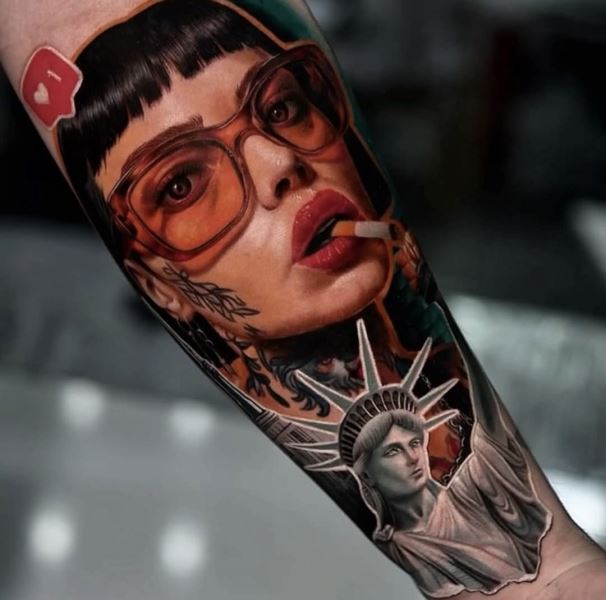
Q: How did the local art and culture in
Turkey influence your early creative vision before you began
expanding your reach internationally?
A: Turkey's rich cultural diversity gave me a profound foundation,
but my ambition was always to look beyond the local horizon; I
wanted to create work that would resonate on a global stage. Working
in different cities with diverse clienteles significantly broadened
my artistic perspective. Today, my work bridges the unique heritage
of my geography with elite international quality standards.
Q: Can you share a pivotal moment from your early career
where you realized you had the potential to make a significant
impact on the industry?
A: When I began winning accolades at national and international
conventions, I realized that my work wasn't just satisfying clients,
it was commanding the respect of industry professionals. Winning six
awards by the age of 22, being featured in global publications, and
launching my own workshops weren't just milestones; they were clear
signs that I was carving out a serious position in the industry.
These successes brought me immense confidence, alongside the
responsibility to chase even greater goals.
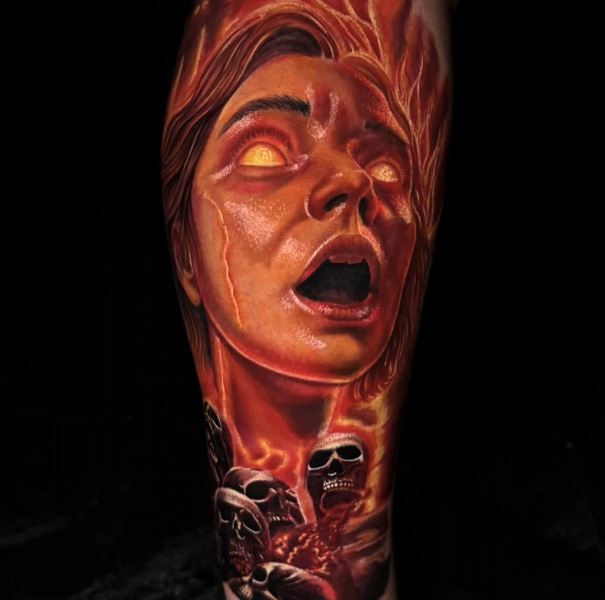
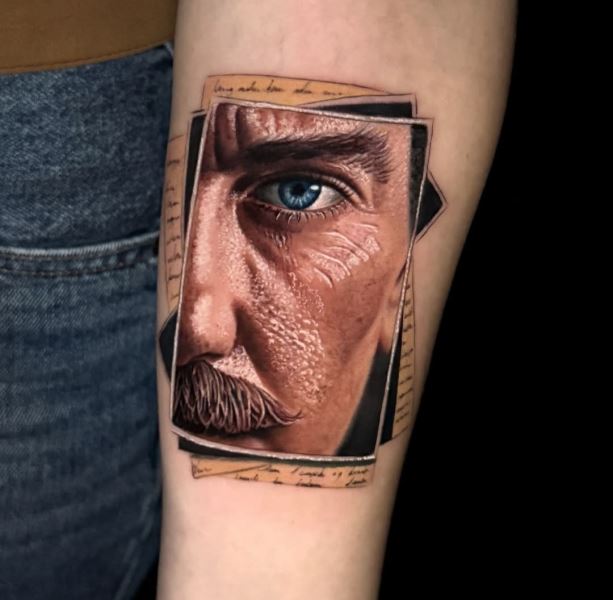
Q: Your portfolio highlights a profound dedication to color
realism. What is it about the complexity of realism that captivates
you as an artist?
A: I am an artist who deliberately chooses the more difficult path,
and realism demands some of the highest technical discipline in
tattoo art. Simultaneously managing light, depth, color, and
microscopic detail is not something everyone can achieve. The
success I’ve found in color realism has allowed me to prove my
capabilities on a global scale in this incredibly demanding field.
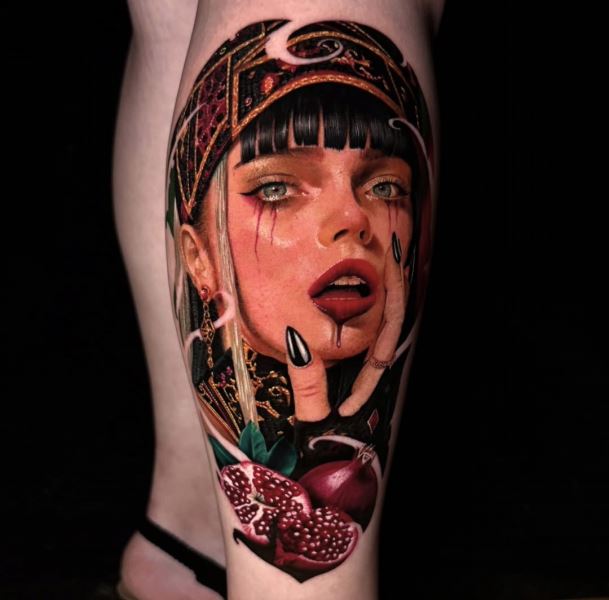
Q: Achieving vibrant, lifelike tones
requires a deep understanding of color theory and skin mechanics.
How have you evolved your technical approach to contrast and
saturation over the years?
A: From the very outset of my career, I focused on producing bold,
vibrant, and enduring color realism. Collaborating with various
artists across different cities dramatically matured my
understanding of color theory, contrast, and how skin heals. Today,
I aim for a technical standard where a tattoo is not only
breathtaking on day one, but retains its striking power years down
the line.
Q: Your work seamlessly balances hyper-realistic depth with
an innovative, illustrative edge. How do you approach the
composition stage to ensure a design flows naturally with the
anatomy of the body?
A: To me, a great tattoo isn’t just a beautiful image, it is a
powerful composition that integrates flawlessly with the human form.
During the design phase, I carefully map out the muscle structure,
the natural contours of the body, and how the piece will look from
shifting angles. This anatomical approach ensures that my work
commands international attention, not just for its technical
execution, but for its compositional strength.
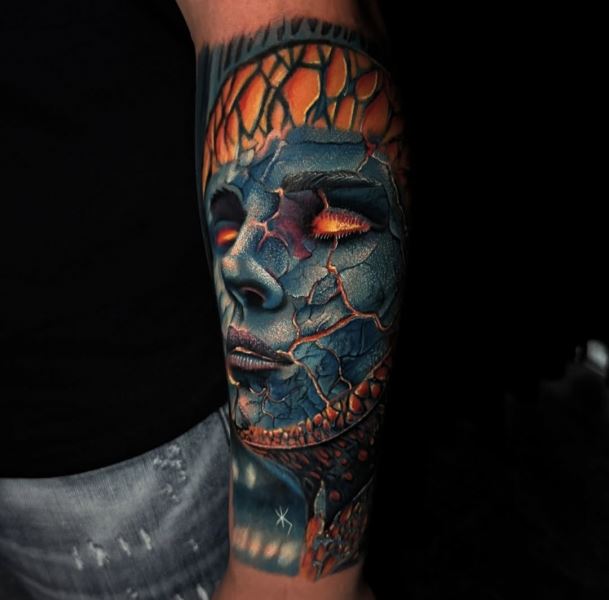
Q: Realism is notoriously difficult to
execute seamlessly. What specific skin preparation or tattooing
techniques have you developed to achieve such smooth gradients and
sharp, micro-detailed features?
A: I believe a successful tattoo begins long before the needle
touches the skin. I provide my clients with thorough guidance on
sleep, nutrition, and skin prep, knowing these variables directly
dictate the final result. Technically, I achieve clean, detailed,
and striking imagery through controlled layering, meticulous needle
selection, and an approach that respects the skin’s integrity.
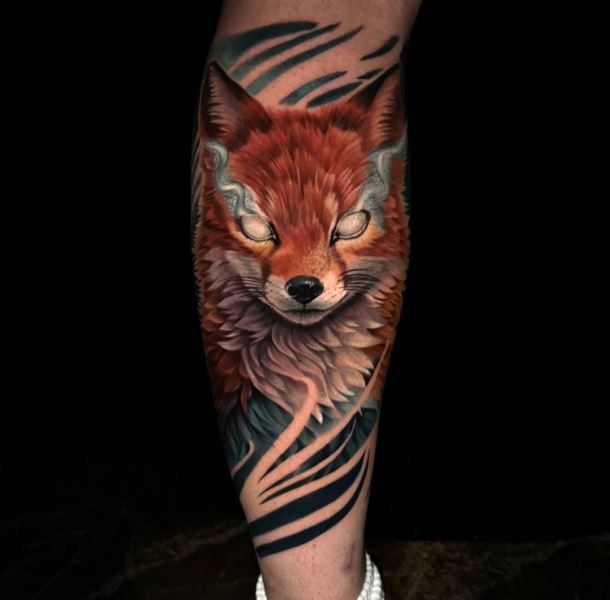
Q: Beyond color work, your portfolio also
demonstrates strong versatility in deep black-and-grey contrast and
heavy graphic styles. How does switching between these distinct
visual languages challenge and refine your overall skillset?
A: While color realism is the cornerstone of my portfolio, I have a
deep appreciation for other styles. In fact, I admire black-and-grey
work so much that I prefer black tattoos on my own body, and this
duality makes me a far more versatile creator. Being fluent in
different visual languages allows me to connect with a much broader
audience and cater to diverse artistic tastes.
Q: You've been a featured artist at major events like the
International Marmaris Tattoo Festival and the Turkiye Art Festival.
How does working in a high-pressure convention environment compare
to the focused atmosphere of your studio?
A: The convention floor is the ultimate arena where an artist proves
their true caliber under intense pressure. While the studio offers a
controlled, quiet atmosphere, competitions introduce a stressful mix
of live crowd observation and strict jury evaluation. I embrace this
pressure as a catalyst for growth; the awards I’ve won serve as
proof that I can excel in the most demanding environments.
Q: Your Instagram profile proudly notes that you are a
6-time award-winning artist. What did winning those specific
categories mean to you personally and professionally?
A: Securing six awards by the age of 22 is more than just a personal
point of pride, it is validation from professional juries that my
work stands up to industry scrutiny. These accolades prove that my
technical execution and artistic vision carry weight
internationally. I don't see these achievements as a finish line,
but rather as powerful stepping stones toward even bigger global
milestones.
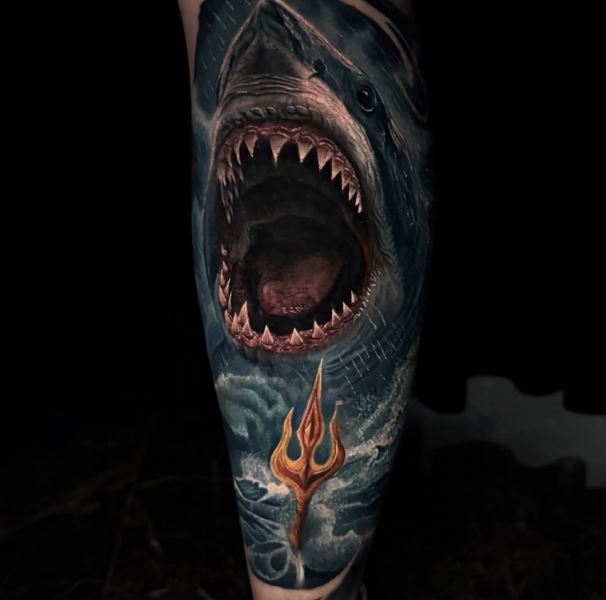
Q: In the broader scope of your career,
how have these prestigious awards and peer recognitions helped
elevate your status within the international tattooing hierarchy?
A: The awards and professional recognition have verified that my art
meets elite international standards. Thanks to this visibility, my
work has reached a much wider audience, attracting clients and peers
from all over the world. Establishing this level of reputation at 22
is an incredible milestone, and it heavily motivates me to set my
sights even higher.
Q: Beyond competing, you also pass on your knowledge, such
as conducting specialized Color Realism Workshops with institutions
like the Cleopatra Ink Academy. What motivates you to teach, and why
is it important to you to help shape the next generation of artists?
A: My first mentor told me: "It is not just being a good artist, but
raising a good artist, that makes you a master." That piece of
advice has always guided my career. Today, leading Color Realism
Workshops at institutions like the Cleopatra Ink Academy allows me
to leave a footprint on the industry itself, rather than just
focusing on my own portfolio. Sharing my knowledge elevates me from
being simply an award-winning artist to a mentor helping shape the
future of our craft.
Q: When you look at the master seminar
posters and magazine features highlighting your name, what do you
consider to be the defining milestone that solidified your
international reputation?
A: For me, there isn’t one singular milestone, because every time I
hit a target, an even bigger goal appears on my horizon. The awards,
publications, seminar features, and workshops are all interconnected
steps in my evolution. It is my constant productivity, staying
relentless, and always wanting more that truly solidifies my
international reputation.
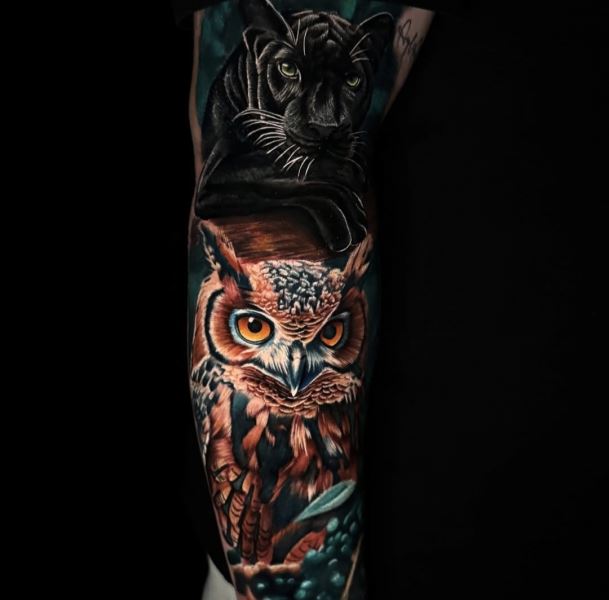
Q: Having built a strong reputation both
locally and on the international convention circuit, what do you see
as the biggest differences in how tattoo art is appreciated locally
versus globally?
A: Locally, the audience gets to know the artist's personal story
and character, whereas on the global stage, the work must speak
entirely for itself. From day one, I structured my career to meet
world-class benchmarks rather than just local trends. Ultimately,
exceptional tattooing resonates universally, and that is the level I
always strive to deliver.
Q: The European and Eurasian tattoo scenes have evolved
incredibly fast over the last decade. What unique artistic
contributions do you think artists from your region are bringing to
the global stage?
A: Artists from Turkey and the surrounding region have become
remarkably visible on the international stage recently. Our greatest
strengths are our intense work discipline, a genuine hunger for
growth, and a creative vision enriched by a melting pot of cultures.
As part of this generation, I am proud to show the world that
master-level art can emerge from our region.
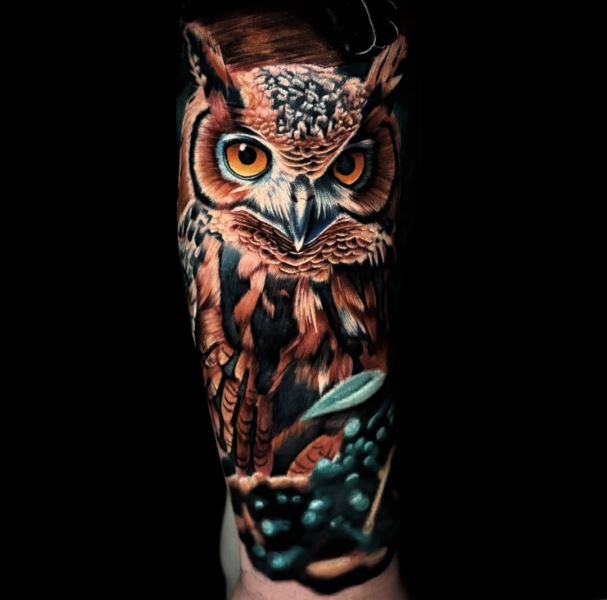
Q: How do social media and digital
publications like Skin Artists Tattoo Magazine help bridge the gap
between regional styles, and how has global connectivity impacted
your own career growth?
A: Digital platforms and publications have allowed my work to break
out of my home city and reach the far corners of the world.
Simultaneously, they’ve allowed me to study diverse global
perspectives, analyze cutting-edge techniques, and benchmark my own
skills against the best in the world. This interconnectedness has
been one of the most vital accelerators of my international career.
Q: What are the biggest challenges currently facing the
international tattoo community, and how can elite artists help
elevate the industry's standards?
A: One of the primary challenges today is information clutter, while
access to information has never been easier, finding accurate,
high-quality knowledge has become more difficult. Elite artists have
a responsibility to look beyond just making beautiful art; we must
lead by example in hygiene, technical execution, education, and
professional ethics. True growth happens when top-tier artists share
their knowledge to raise the baseline for everyone.
Q: Looking back at the trajectory of your life's path, from
your early days to becoming a heavily awarded, globally recognized
artist, what is the most valuable lesson tattooing has taught you
about yourself?
A: Above all, tattooing has taught me to deepen my reverence for
art. It has shown me that clear communication, understanding the
client's emotional intent, and building absolute trust are just as
crucial as technical skill with a machine. Behind my success isn't
just the ability to put ink to skin, but the ability to genuinely
connect with people.
Q: When clients look at the body of work
you've created, or when future students look back at your workshops,
what is the lasting legacy you want to leave behind in the tattoo
world?
A: I want to be remembered not just as a person who executed
beautiful tattoos, but as someone who moved the industry forward and
gave back to the next generation. My awards, features, and
educational workshops show that this legacy is already taking root.
My goal is to remain an artist who delivers elite color realism
while acting as a guiding light for the industry.
Q: For the aspiring artists who dream of one day achieving
international acclaim and traveling the world with their art, what
definitive piece of advice would you give them?
A: The most critical advice I can offer young artists is to never
restrict yourselves with modest goals. I started in this industry
from absolute zero, and today I am winning international awards,
speaking in publications, and mentoring peers worldwide. If you
commit to strict discipline, seek out the right mentors, and
relentlessly demand more from your craft, it doesn't matter where
you start, you can reach the global stage.
Date: 22 June 2026
Interview: Fredrik Lindström


