
Interview with Petr Starkov
Today we are doing an interview with
Petr Starkov, an award-winning artist and international judge based
in NYC. With a career spanning nearly two decades, Petr has become a
powerhouse in the industry, known for his explosive use of color and
surgical precision in both realism and illustrative styles. Petr,
it’s an honor to have you.
Q: Looking at your portfolio today, the work is incredibly
polished. If you could go back 18 years to when you first picked up
a machine, what was the very first thing you tattooed, and do you
think that 'younger Petr' would even recognize the artist you’ve
become?
A: The first tattoo I ever did was a set of hieroglyphs on myself.
It was not only a technical experiment, but a conscious decision to
understand the process on my own skin before working on others. If I
could go back 18 years, I would still begin with fundamentals.
Mastery is built through simple forms, controlled gradients, and
discipline. I first refined black and grey realism before expanding
into complex color work. Structured growth, not shortcuts, shaped my
career.
Q: When you started 18 years ago, tattooing was often
shrouded in a 'counter-culture' stigma. What was the atmosphere like
in those early shops compared to the high-end, professional studio
environments we see today?
A: When I began tattooing in Pavlodar, Kazakhstan, the industry was
largely underground. There were no fully dedicated professional
studios, and supplies were limited. Together with a partner, I
co-founded the first specialized tattoo studio in my city, helping
establish a higher professional standard locally. That early
experience shaped my understanding of tattooing as both an art form
and a structured professional discipline.
Q: In your early days, artists often had
to build their own needles or tune their machines just to get a
decent result. How did that beginning shape the way you respect the
craft today?
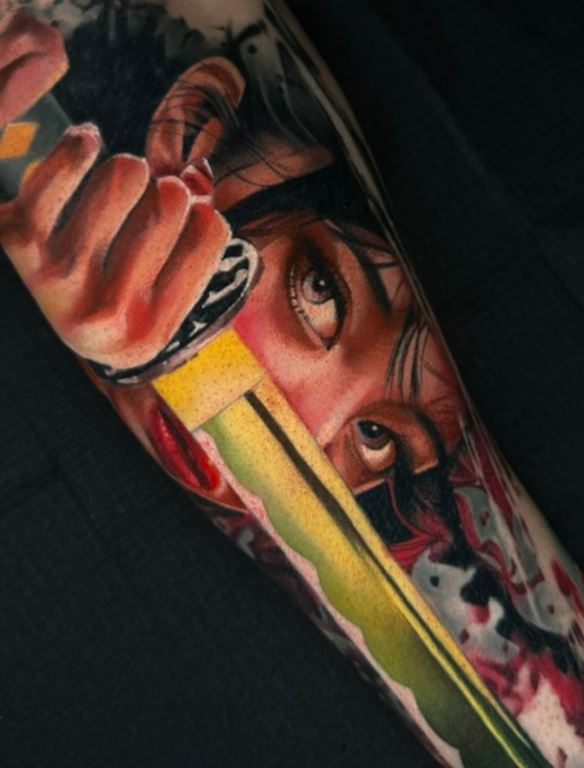
A: In my early years, technical self-reliance was essential. Needles
were soldered by hand, and machines required constant rebuilding and
tuning. Understanding equipment at a mechanical level gave me
long-term control over voltage, pigment behavior, and skin response.
That technical foundation continues to inform the precision and
consistency of my work today.
Q: Back then, trade secrets were closely guarded. As someone who
learned in that era, how does it feel to see the industry become so
open and accessible via social media and digital seminars?
A: When I started, knowledge was guarded and difficult to access.
Growth required experimentation and years of observation. Today,
information is widely available through digital platforms and
seminars. While accessibility has improved, true mastery still
depends on disciplined practice and healed results over time.
Bridging those two eras shaped my professional mindset.
Q: Many artists who started when you did eventually burnt
out or stayed stuck in 'old school' ways. How did you manage to keep
evolving your style so that it remains cutting-edge in 2026?
A: Longevity in this industry comes from evolution. I never confined
myself to one style. After mastering black and grey realism, I
expanded into structured color systems and hybrid compositions. I
continuously study new technologies and pigment advancements,
focusing on refinement rather than trend-following. Consistency and
development keep the work relevant.
Q: Your work often features a 'collision'
of styles, sharp realism mixed with abstract color splashes. How did
you land on this specific aesthetic, and how was it received by the
traditional community 15 years ago when it wasn't yet a 'trend'?
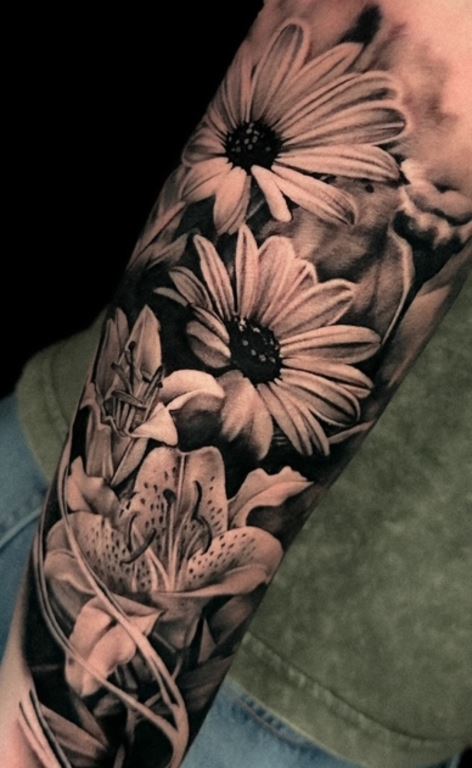
A: My aesthetic developed organically. While working in realism, I
began introducing abstract color movement to add energy without
overpowering the subject. This approach evolved into what many
describe as watercolor realism, realism supported by dynamic color
architecture. These elements are not decoration, they are
compositional tools rooted in academic principles of light and
balance.
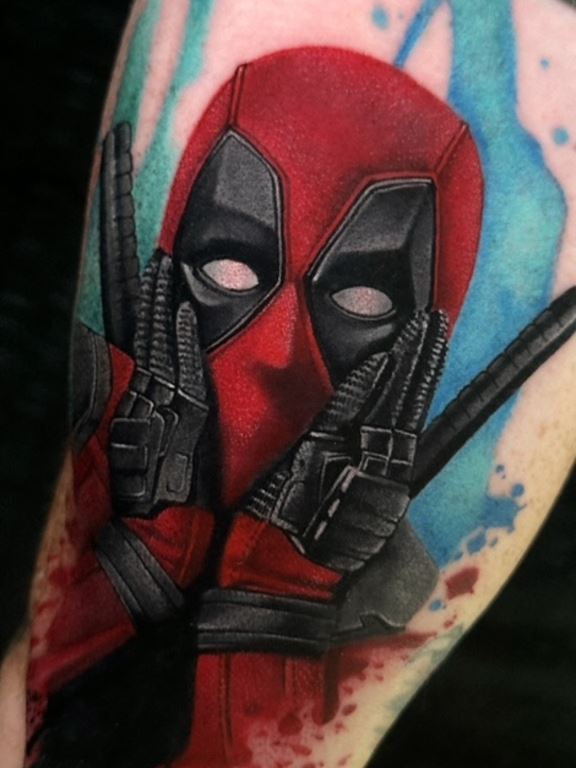
Q: The saturation in your pieces, like the Deadpool or your
neon work, is intense. How do you approach color theory differently
now than you did a decade ago?
A: My approach to color is based on construction rather than
selection. I rarely use pure pigment directly from the bottle,
preferring to build tones through layering. I am part of the Pro
Team for StarBrite Colors, a brand known for vibrant, high-pigment
inks. However, materials are secondary, the structure behind them
matters more. For me, color functions as architecture, not surface
decoration.
Q: Even though you're a color master, your
black and grey realism is incredibly soulful. Do you find your
mindset changes when you put away the color palette, or is the
technical approach the same?
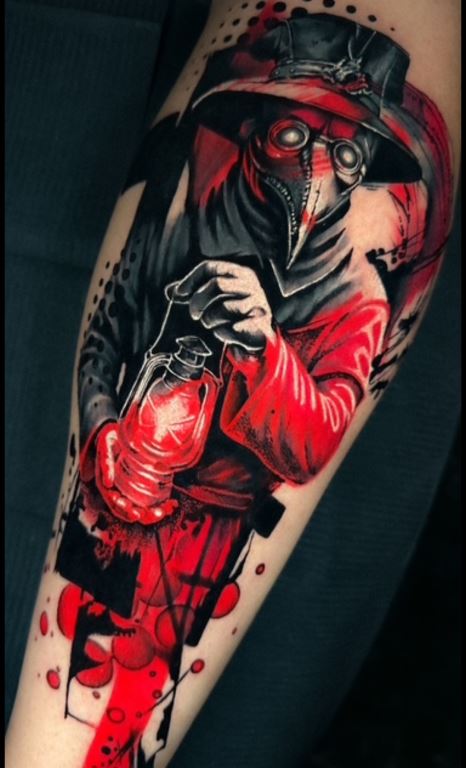
A: Technically, color and black and grey require different machine
settings and pigment control. Conceptually, they are unified by
contrast and tonal hierarchy. I always evaluate work in grayscale to
ensure depth and readability beyond vibrancy. Strong composition
depends on light structure, not just saturation.
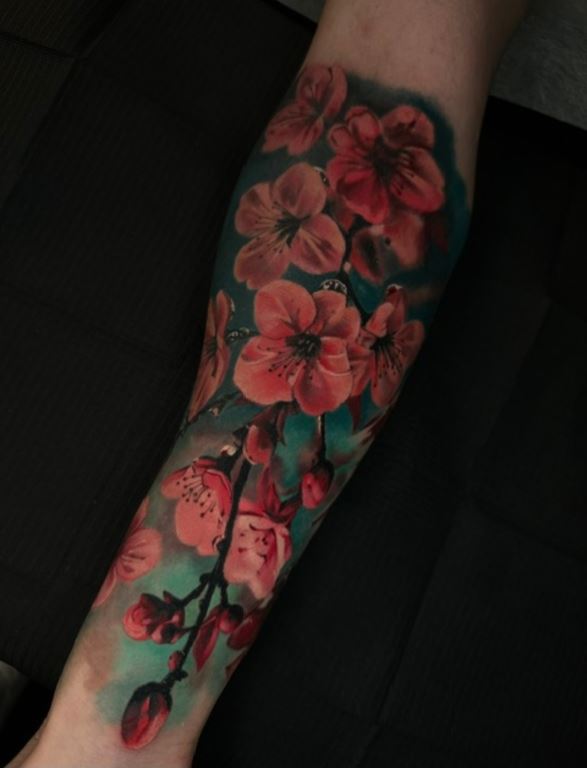
Q: Looking at your larger leg and arm pieces, the tattoo
seems to move with the muscle. How much of your design is done
digitally beforehand versus 'free-handing' the flow directly onto
the skin?
A: When working on large-scale projects, I treat the body as a
unified canvas. I study anatomy and movement to ensure the design
enhances form rather than fights against it. I use a hybrid method,
digital preparation combined with freehand refinement, choosing
whichever approach produces the strongest anatomical integration.
Q: You work with both veteran collectors and people getting
their very first piece. How do you adapt your approach to make a
newcomer feel at ease, especially when they’re committing to such a
bold, high-contrast design for the first time?
A: Every client receives professional guidance. I explain placement,
scale, healing, and long-term durability to create clarity and
trust. Many clients return for large-scale projects, reflecting
sustained professional relationships built on consistency and
transparency.
Q: You’ve built a career in two very
different parts of the world. How has the way you build trust with a
client in Kazakhstan differed from the way you build it in New York?
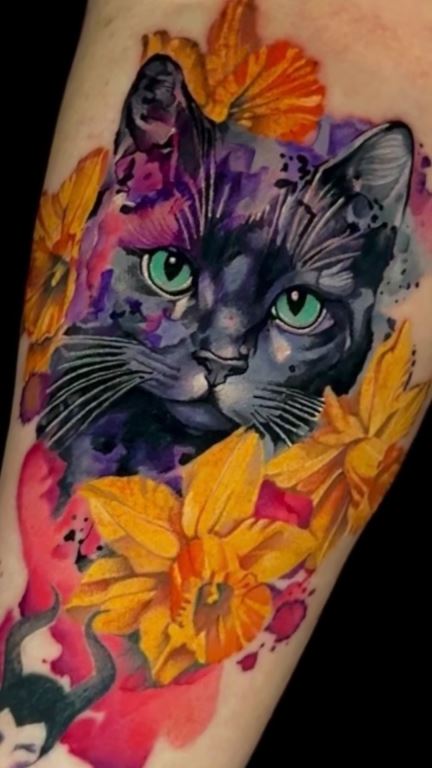
A: Building trust in Kazakhstan and in New York relies on the same
principles: respect, communication, and reliability. While creative
expectations may differ culturally, professional consistency remains
universal.
Q: In the beginning, your reputation was built entirely on
word of mouth. How do you balance that old-school 'neighborhood'
trust with the modern need to maintain a massive digital presence?
A: My early career was built entirely on word of mouth. That
foundation remains central to my philosophy. While digital presence
is important today, reputation is ultimately reinforced through
healed results and returning collectors. Credibility is built
through work, not algorithms.
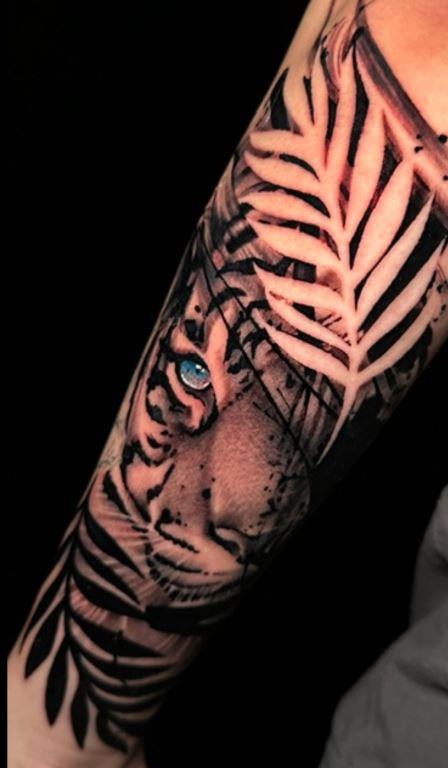
Q: You are very transparent about showing healed work. Why
is it important for the client-artist relationship to continue after
they leave the chair, and how does that follow-up build long-term
loyalty?
A: Healed work represents the true measure of an artist. I regularly
document healed tattoos without retouching to demonstrate durability
and accountability. Transparency strengthens client trust and
reinforces professional standards.
Q: You’ve gone from an underground artist
to an international judge. What does that journey represent to you
is it a personal victory, or a sign of how far the industry has
come?
A: Being invited to serve as a judge represents professional
recognition and industry trust. I had the honor of judging at the
Villain Arts Philadelphia Tattoo Arts Convention, one of the largest
and most influential tattoo conventions in the world, featuring a
high concentration of talented and internationally recognized
artists. Judging at that level requires objectivity, authority, and
experience.
Q: Having seen the industry change so drastically, what is
the one 'pioneer' value from the old days that you think the new
generation of artists is overlooking?
A: Discipline and patience remain essential values in tattooing.
Social media has accelerated exposure, but mastery cannot be rushed.
Real growth requires years of consistent practice and technical
refinement. Fundamentals outlast trends.
Q: Your work has been featured in major industry
publications and trade journals. When critics or magazines analyze
your style, what is the one 'contribution to the field' they
consistently highlight as uniquely yours?
A: My contribution lies in integrating traditional craftsmanship
discipline with modern color architecture and compositional
movement. In my work, color functions as a structural system rather
than decoration. I prioritize tonal durability, minimal skin trauma,
and long-term healed consistency. This methodology has been
recognized internationally, including receiving the “Tattoo Artist
of the Year” award in Kazakhstan for sustained artistic excellence
and professional impact.
Q: Participating in global conventions
requires immense discipline; tattooing for 10–12 hours straight in a
loud, high-pressure environment. What is your 'secret' to
maintaining that surgical precision when the world is literally
watching you work?
A: Tattooing at conventions requires precision under pressure, long
hours, noise, and constant observation. I prepare thoroughly and
approach convention work with the same focus as studio sessions.
Conventions are platforms for professional exchange and
international dialogue.
Q: How does representing a world-class shop like First Class
Tattoo in NYC influence your performance at these global shows?
A: Representing First Class Tattoo in New York carries
responsibility. The studio’s reputation reflects high professional
standards. Maintaining consistency and technical discipline under
that banner is both motivation and alignment with excellence.
Q: In the U.S., tattoo artistry is recognized as a
significant cultural force. How does it feel to work in an
environment where your 'extraordinary ability' is recognized by the
broader American art community?
A: Working in the United States, where tattoo artistry is widely
recognized as contemporary art, provides a culturally supportive
environment for innovation and excellence. Being integrated into
that space reinforces the importance of maintaining high
professional standards.
Q: Now that you are established in the
U.S., do you see yourself taking on a leadership role for the next
generation of American artists, teaching them that 'old-school
grit'?
A: I share knowledge through mentorship and professional
discussions. After nearly two decades in tattooing, experience
carries responsibility. Leadership, for me, means maintaining
standards and encouraging sustainable artistic growth.
Q: Please provide your studio location, website/social
media links, and availability for bookings.
A: Studio: First Class Tattoo
52 Canal Street, New York, NY 10002
www.firstclasstattoos.com
Instagram: @petrstarkovtattoo
Studio Instagram: @firstclassnyc
Booking: pstarkov990@gmail.com
Q: After 18 years and thousands of hours
under the needle, what is the one thing you truly cherish the most
when a session ends? Is it the technical perfection, or the look on
the client’s face?
A: After each session, what I value most is the balance between
technical precision and the client’s emotional response. A tattoo
must be structurally strong and personally meaningful. That moment
of satisfaction continues to motivate me.
Q: lf you were remembered for only one thing in the history
of this industry, whether it’s your specific style, your role as a
pioneer, or your influence as a judge what would you want that
legacy to be?
A: If remembered for one thing, I would hope it is disciplined
integrity, combining bold artistic expression with technical
responsibility and long-term consistency. Legacy, to me, means
maintaining standards and respecting the craft.


