
Interview with Robert Shteinberg
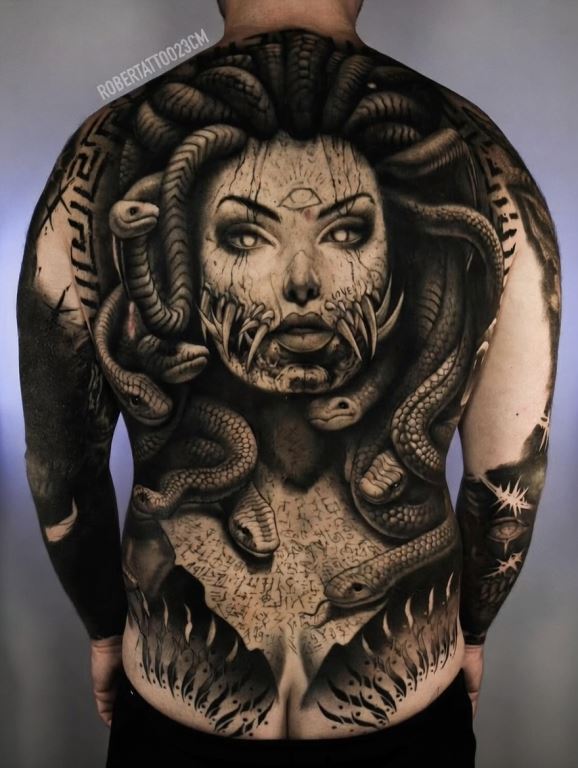
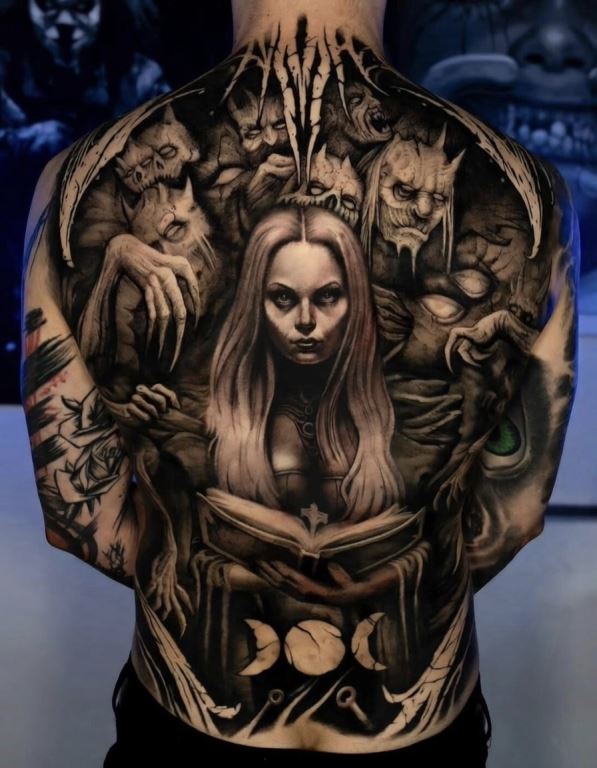
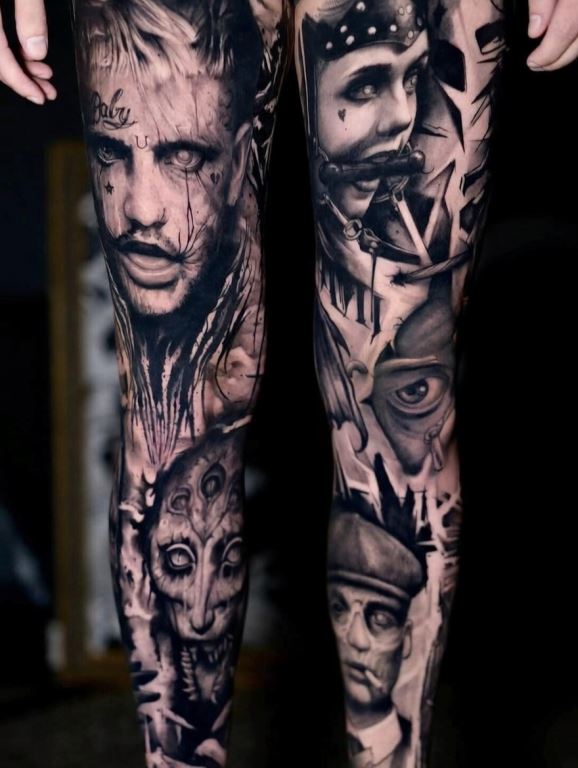
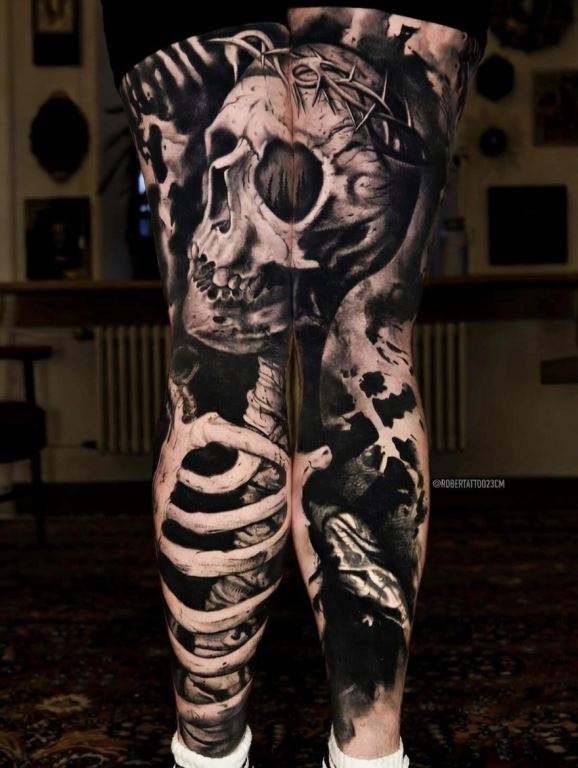
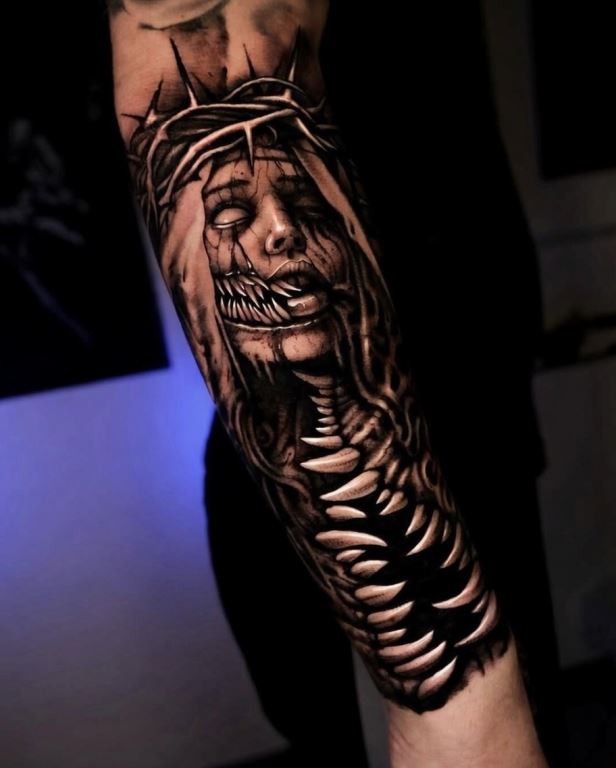
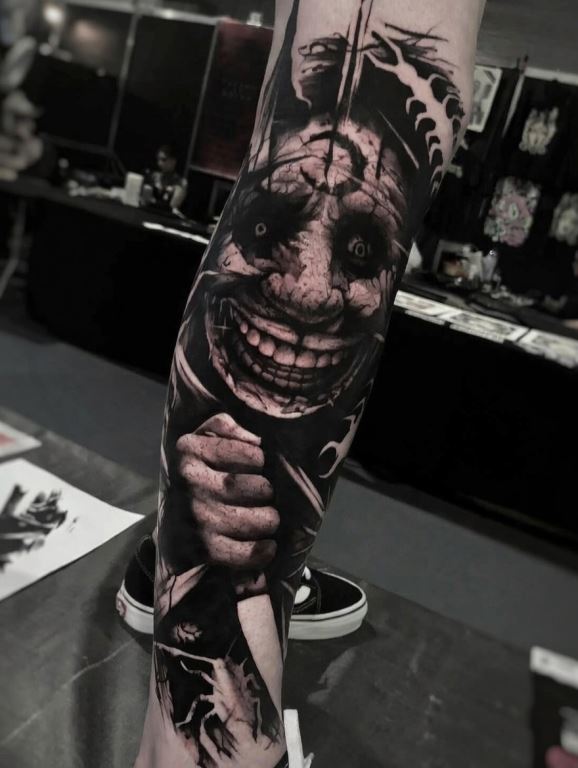
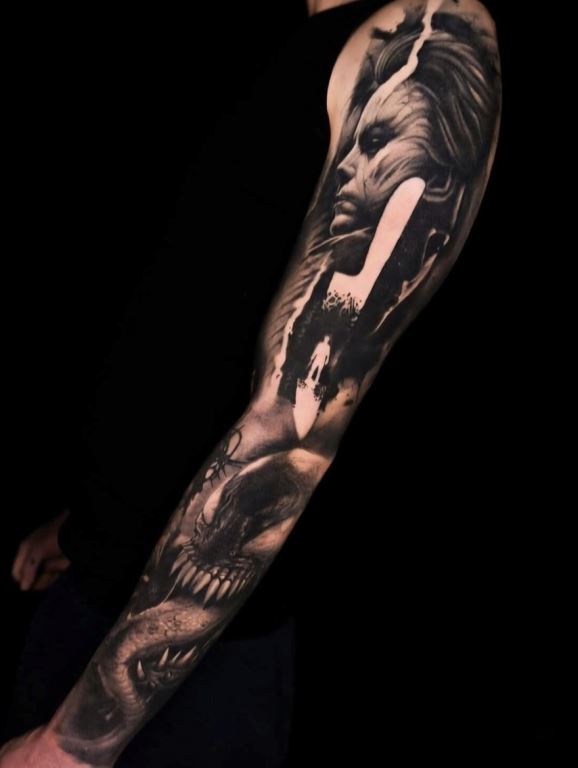
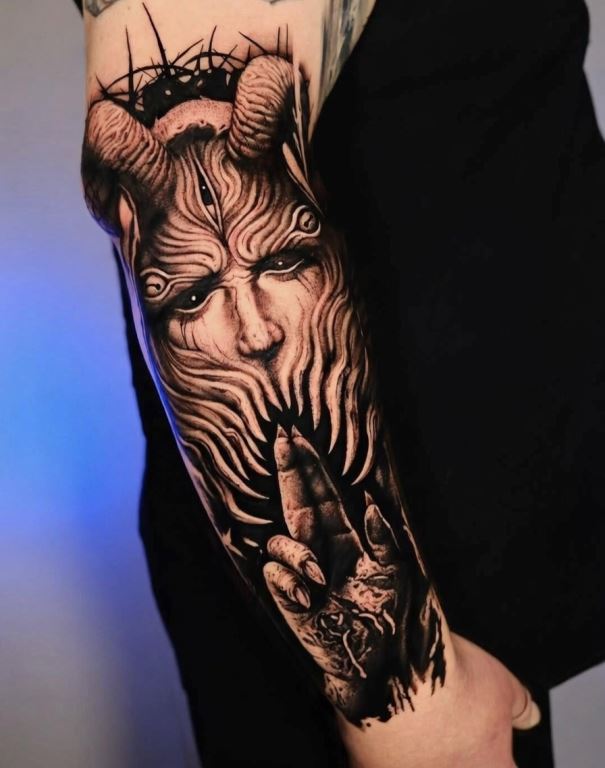
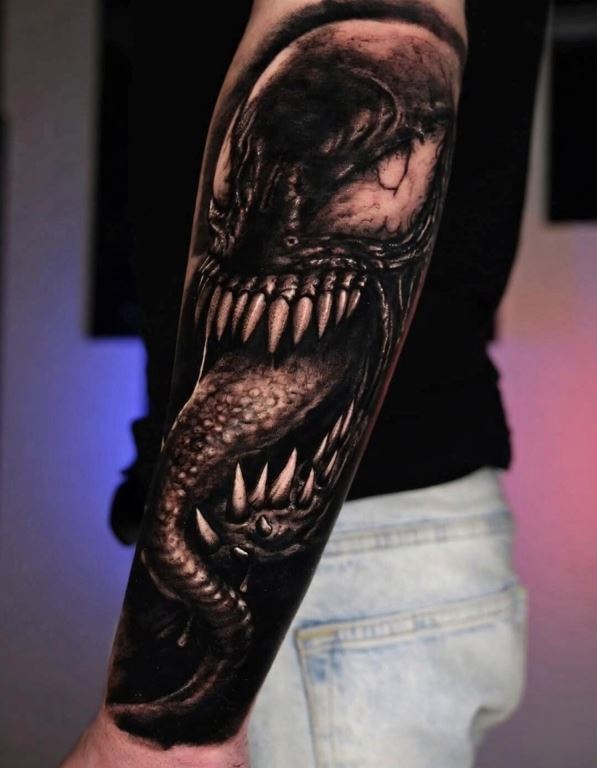
As Skin Artists Tattoo Magazine commemorates its eighteen anniversary of Skin Artists Tattoo Magazine, we are highlighting a selection of top-tier artists whose work defines the current standard of excellence in the industry. Robert Shteinberg has been chosen as a definitive voice in this group, recognized globally for his exceptional mastery of dark, atmospheric realism.
Robert’s work is a masterclass in textures and
psychological depth, characterized by high-contrast compositions
that translate "the monsters under the bed" into permanent fine art.
His portfolio showcases a profound ability to balance intricate
anatomical detail with a haunting, immersive aesthetic, making him
one of the most respected figures in the modern horror and realism
genres.
The following interview, conducted as part of our eighteen
milestone, explores the evolution of Robert's creative process and
the discipline required to execute such complex imagery. The
conversation centers on a pivotal subject: exploring the future of
tattooing. We discuss how the craft is shifting in an increasingly
digital world and Robert's vision for the trajectory of the industry.
Q: You’ve described your work as an exploration of the
monsters that live within us. In 2026, where the world is
increasingly digital and sterilized, why do you think collectors are
still so hungry for visceral, dark imagery?
A: Fear never disappears - it adapts. In a world that is becoming
increasingly digital, sterile and controlled by algorithms, people
are slowly losing contact with their inner shadow. Technology
simplifies daily life, but it does not remove anxiety, doubt or the
feeling of emptiness. Collectors crave dark imagery not because they
enjoy horror, but because it feels honest. A monster is not an enemy
- it is a symbol of the unaccepted parts of ourselves. When someone
chooses to tattoo a dark figure on their skin, they are not
glorifying fear - they are integrating it. It is an act of
awareness. In an era of filters and polished digital surfaces,
people are searching for texture. For something real. Tattooing
remains physical, irreversible and deeply human. That is its power.
Q: Many collectors seek horror as a form
of emotional release or empowerment. Do you view your role as an
artist or more of a "guide" through these darker psychological
landscapes?
A: I have never seen myself as just someone who executes an image.
When a person comes to me asking for a demon or a distorted face,
there is almost always a personal story behind it - trauma,
transformation, internal conflict. In that process, I see myself
more as a guide. I try to form something that previously existed
only as a feeling. But I remain an artist. My responsibility is to
structure chaos, to give emotion anatomy and weight. A tattoo
session is concentration, silence, breath. It becomes a ritual where
fear transforms into form. That is what makes it more than just an
image.
Q: Is the modern horror scene in a "Golden Age" of technical
realism, or is the genre losing its mystery as it becomes more
mainstream and "polished"?
A: Technically, we are living in a golden age. Access to knowledge,
equipment and materials has never been greater. But perfection can
become sterile. When horror is overly polished, it loses its nerve.
Dark art should not be comfortable. It should create subtle tension.
Depth matters more than gloss.
Q: Having roots in Siberia and now working
in Nuremberg, how have the different cultural fears and histories of
these regions shaped the way you design your "monsters"?
A: Growing up in Siberia shaped my perception of silence. Cold,
vast, heavy silence. There, fear does not scream - it exists
quietly. Living and working in Nuremberg added another layer -
historical weight and reflection. Here, shadow carries memory and
responsibility. My monsters are not cinematic fantasies. They are
layered with cultural memory, personal experience and observation of
human nature. The combination of Siberian harshness and European
introspection shaped my visual language - dense, anatomical,
psychologically inward.
Q: In a global market flooded with diverse styles, how do
you maintain the "heavy" and "menacing" energy of your work without
it becoming just another trend on a screen?
A: Darkness becomes a trend the moment it is simplified. Today we
see a lot of “dark aesthetics,” but often without internal tension.
It becomes style without substance. If an artist begins adapting
their work to algorithms or market expectations, the energy
disappears. For me, it is about density. Pressure. Anatomical logic.
A gaze that feels heavy. Teeth that are not decoration but
structure. I do not adapt my style to trends - I deepen it. True
weight cannot be imitated. It is either present or it is not.
Q: AI is becoming hyper-competent at
generating horror imagery. How do you ensure your designs maintain
an "organic horror" that feels born from human trauma and experience
rather than an algorithmic prompt?
A: AI can generate form, but it cannot experience fear. It can
analyze data, but it does not carry a shadow. Organic horror is born
from lived experience - doubt, memory, internal struggle. Even when
I use digital tools for preparation, the final decision always
passes through human intuition. That is what gives the work life.
Q: Do you use modern 3D modeling or AI-assisted lighting to
map shadows on the anatomy, or do you find that digital "perfection"
actually kills the atmospheric grit of dark realism?
A: Technology helps build composition. But digital perfection does
not equal depth. The tool assists - the artist decides.
Q: If "smart inks" could make a tattoo glow or react to the
wearer’s heart rate, would you embrace this for your monsters, or is
the power of your work strictly found in the permanence of
traditional black ink?
A: Technological ink is an interesting idea. But the power of my
work lies in silence. A tattoo should live with the body. It should
not depend on effect or spectacle. Stillness can be more powerful
than movement.
Q: Do you see a future where Augmented
Reality (AR) could "animate" the shadows of your pieces, or should a
tattoo remain a static, silent piece of art?
A: AR can be an addition, but never a necessity. A tattoo must stand
on its own. If it requires animation to impress, it lacks internal
strength. I believe in physical art.
Q: As AI gets better at "composing" large-scale pieces, what
is the one creative decision you make as a human artist that a
computer will never understand?
A: A computer can analyze structure, but it does not understand
pause. Sometimes the strongest decision is removing an element.
Intuition and restraint remain deeply human qualities.
Q: High-contrast horror requires a deep
understanding of skin trauma and saturation. Can the "weight" of
your style truly be taught through a digital seminar, or is the
physical presence of a mentor required to understand the skin's
limits?
A: Theory can be learned online, but skin is not a screen. Skin
breathes. It ages. It reacts. Understanding contrast in dark realism
means understanding how black will look in ten years. How it behaves
on different areas of the body. A mentor does not only teach
technique - they teach responsibility. Respect for skin must always
be stronger than ambition.
Q: If you were teaching a "Masterclass in
Darkness," what non-artistic subjects (e.g., anatomy, horror cinema,
or psychology) would you insist your students study first?
A: If I were to create a “school of darkness,” I would begin not
with demons, but with anatomy and psychology. An artist must
understand muscle structure, light and shadow, tension within form.
But more importantly, they must understand fear as a human
condition. Study classical painting. Study cinematography in horror
films where shadow itself becomes a character. Most importantly -
observe people. Every true monster reflects a human emotion.
Q: With the rise of "fast-track" schools, what is the most
dangerous mistake you see new horror artists making today?
A: The most dangerous mistake young artists make is chasing effect
without foundation. Without a deep understanding of anatomy and
structure, dark realism becomes superficial. Another mistake is
rushing. Wanting recognition too quickly. Darkness requires
patience.
Q: How has your own commitment to
continuous growth (seminars and drawing courses) shaped the way you
look at the younger generation’s access to information?
A: Information is more accessible than ever. That is powerful. But
access does not equal understanding. I continue to study, attend
seminars, refine my drawing skills. Growth keeps an artist alive.
Mastery is built through depth, not speed.
Q: Do you think tattooing should move toward a
university-style degree in the future, or will that
"standardization" destroy the rebellious spirit of the dark arts?
A: Perhaps tattooing will one day become part of academic education.
Structure can provide fundamentals - art history, anatomy, color
theory. But if standardization removes individuality and risk, the
spirit of the craft will fade. Tattooing was born from rebellion and
personal expression. That energy must remain alive.
Q: In a hyper-competitive market where "dark art" is
everywhere, how do you keep your signature style, your specific
focus on teeth and eyes unique from the thousands of other realism
artists?
A: I do not try to do everything. I deepen what feels authentic to
me - eyes, teeth, organic forms, heavy textures. Style is built
through repetition and refinement. Recognition comes from
consistency.
Q: What is your approach to staying
"relevant" without chasing the viral trends of social media that
often favor lighter, more "digestible" work?
A: Social media rewards speed and surface-level impact. But I build
for longevity. I want clients to look at their tattoos years later
and still feel something. Rarity is created through consistency and
refusal to chase noise. Depth over volume.
Q: How much does the atmosphere of your studio in Nuremberg
contribute to the "ritual" of the tattoo for your clients?
A: Our studio in Nuremberg is more than a workspace - it is a
creative laboratory. It was built with intention. The lighting, the
walls, the artwork around us - everything is designed to create
focus and immersion. It feels less like a commercial shop and more
like an artistic factory - a space where ideas are forged, refined
and brought to life. When a client sits on the chair, it is not just
a service. It is a process. A transformation. The atmosphere
supports concentration, ritual and trust. And that energy becomes
part of the tattoo itself.
Q: If you could show your current
portfolio to the boy who first saw "partak" tattoos in a Siberian
village, what do you think he would say about the artist you've
become?
A: If the boy from a small Siberian village could see my work today,
he might not believe it at first. But I think he would recognize the
same curiosity. The same fascination with dark imagery. And maybe he
would say, “Keep going.”
Q: When the digital noise of 2026 is gone, and only the ink
on the skin remains, what is the one thing you want your work to say
about the "darker sides of human nature"?
A: When the digital noise of 2026 fades, only ink and skin will
remain. I want my work to speak about acceptance of the shadow.
Darkness is not evil. It is part of human wholeness. If someone
looks at their monster and feels strength instead of fear, then the
art has fulfilled its purpose. Ink remains. And with it, honesty.


