
Interview with Roman Luhovskoi
Hello Roman Luhovskoi! Thank you so much
for taking the time to do this interview. We really appreciate it.
Please start by telling us something about your background.
Hi, my name is Roman, and I’m from the incredible city of Lviv,
Ukraine. At the moment, I’m based in Poznań, Poland. I’ve been
drawing since childhood, I went to an art school and studied there
for eight years. Later, in college, I specialized in digital
graphics, learning both raster and vector art. Around my 3rd or 4th
year of studies, I got interested in tattooing, really enjoyed it,
and fully immersed myself in the tattoo world.
Q: When did you first recognize you possessed this unique
artistic talent, and how did that moment of self-discovery steer you
specifically down the path of tattooing?
A: It happened back in my college years. Before that I drew
occasionally just for myself, but then my classmates noticed my work
and said, “Why don’t you tattoo us?” They even pitched in to buy me
my first tattoo kit and that’s how my tattoo journey began.
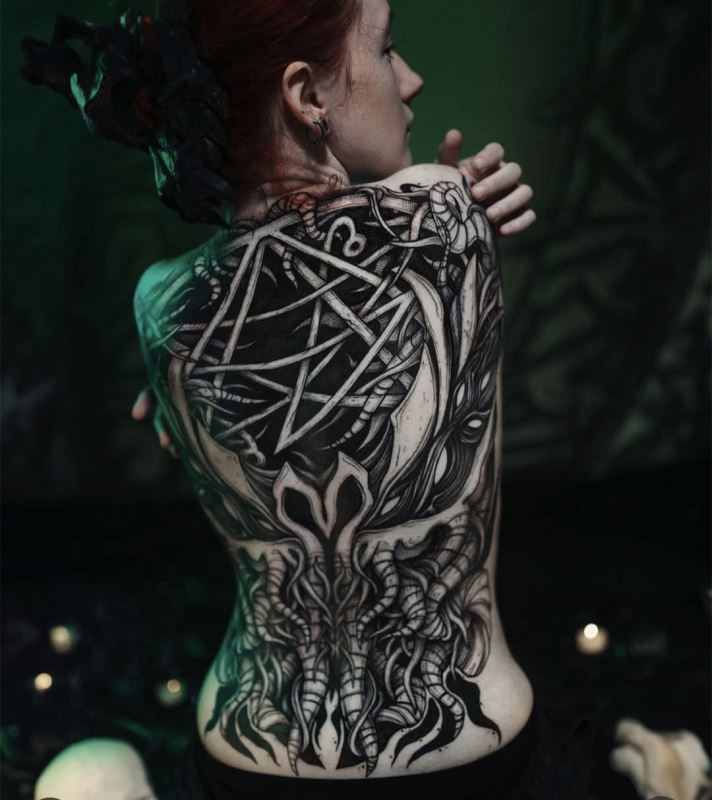
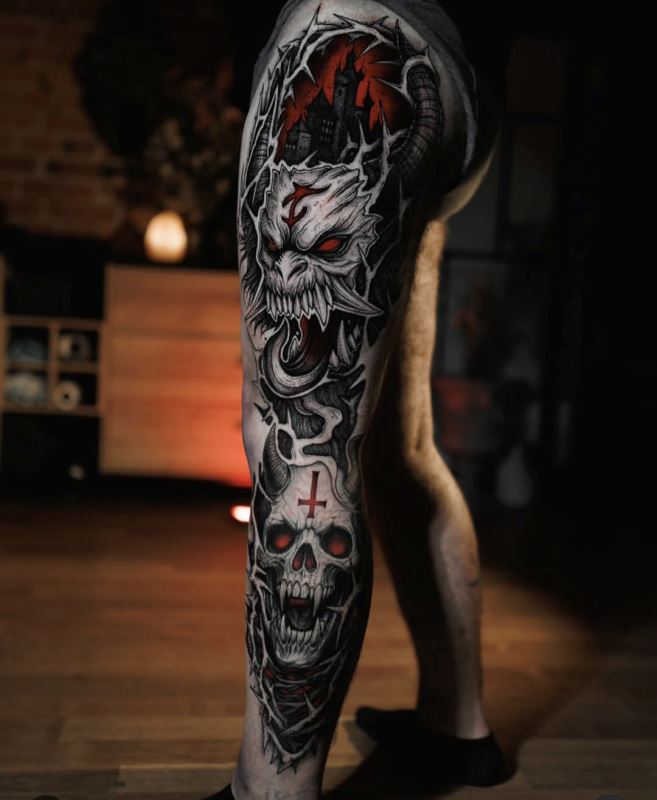
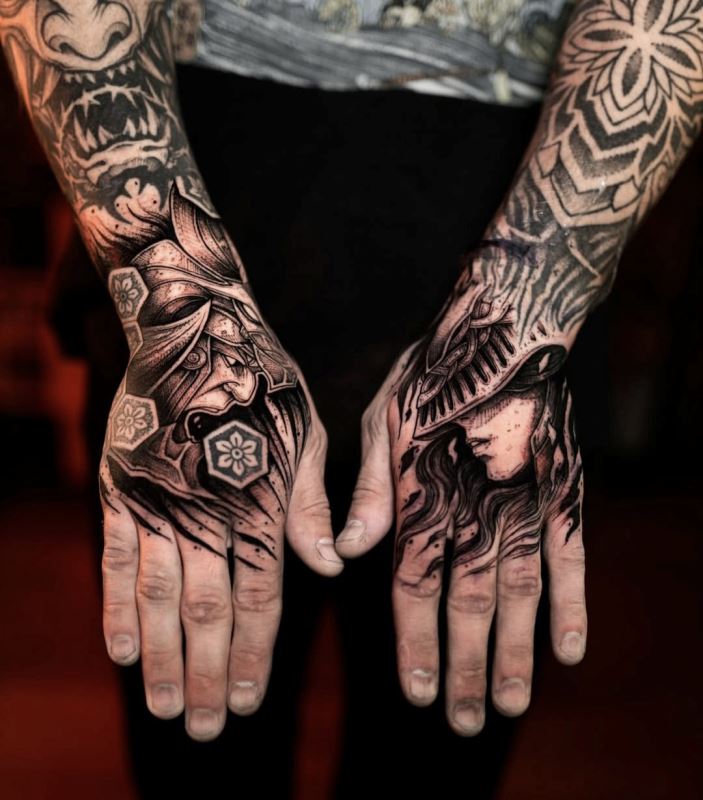
Q: You have a very distinctive style of dark-graphic
designs, infused with elements of anime and fantasy motifs, executed
in a compelling black and gray technique. Could you walk us through
the process of developing this signature style?
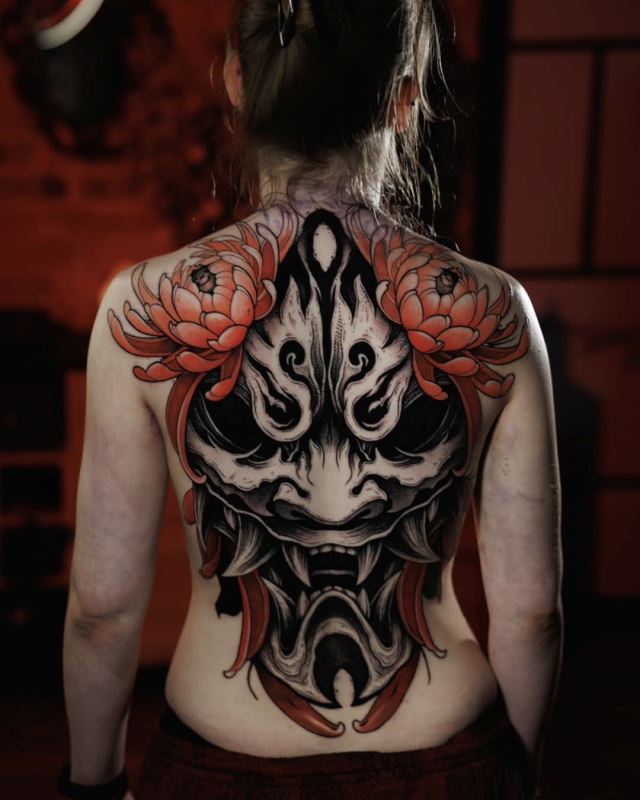
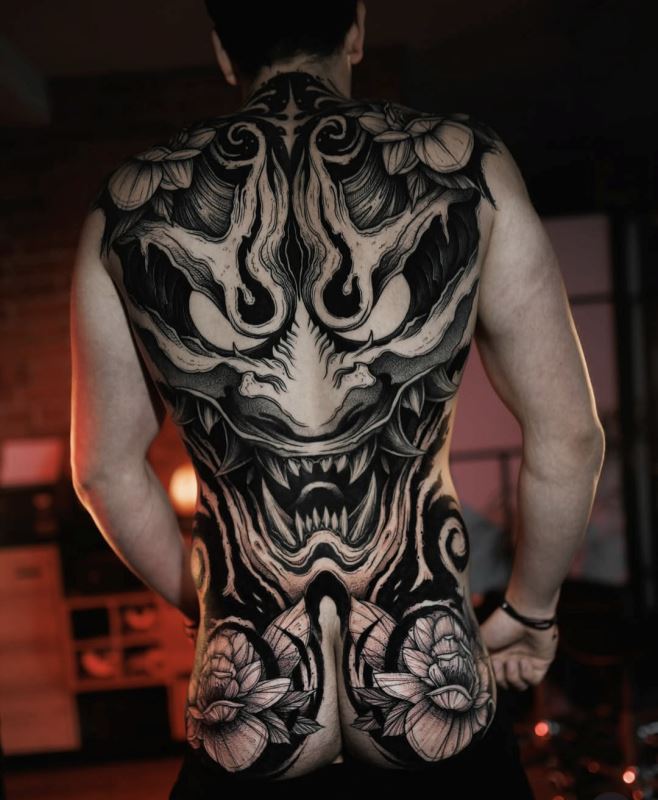
A: I wouldn’t really call my style black and grey, it’s more
graphic. I loved comic books since childhood, and later manga became
a huge inspiration too. That’s where I drew my core visual
influences and composition principles from. Over time, I mixed them
with tattoo techniques, added more contrast and Japanese motifs and
that’s how the style you now see in my work was born.
Q: When a client approaches you with an
idea, what is the most critical first step? How do you take a
concept from a client's mind and translate it into a finalized,
executable design that is ready for the skin?
A: The most important thing is for the client to describe their idea
as thoroughly as possible, send references of what they like, and a
photo of the body part where the tattoo will be placed. This helps
me design something that fits the anatomy perfectly. After that,
everything comes together in my head like a puzzle, and I start
sketching.
Q: What, in your opinion, is the most technically
challenging part of the process, is it perfect line work, color
packing, or maybe working with the curve and movement of the body?
A: I think the hardest part is placing the design properly on the
body so it looks harmonious during movement and complements the
anatomy instead of fighting against it. The actual tattooing process
isn’t the difficult part, it’s the placement that requires true
precision.
Q: Which tattoos in your portfolio typically require the
most time, patience, and intricate detail work to execute perfectly?
A: Probably the neck and hands. These are very visible and delicate
areas that demand extra attention.
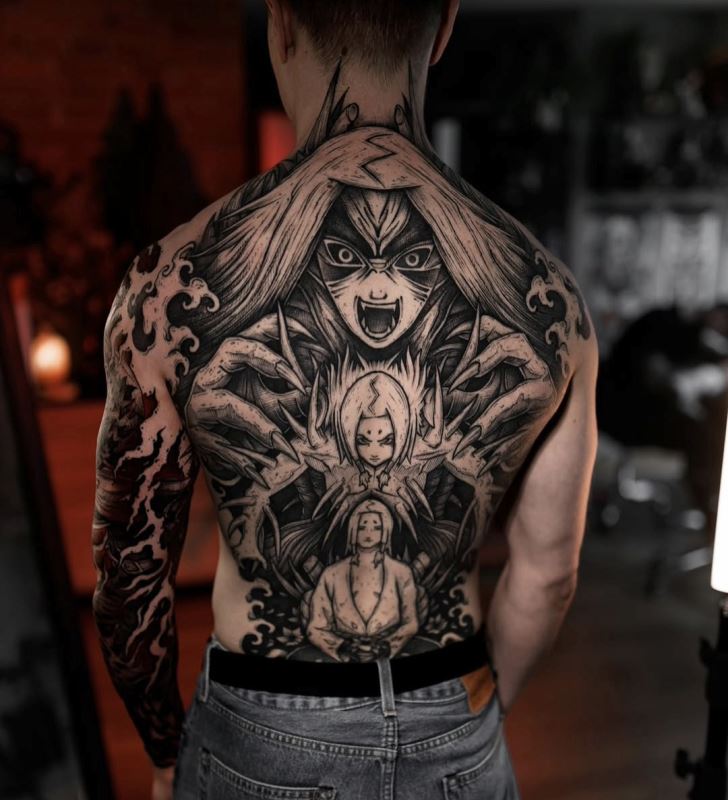
Q: Your work has a fantastic balance
between the vibrant, stylized look of anime and a much darker,
horror-inspired mood. When you're designing a piece, how do you
decide which elements of the anime aesthetic to keep prominent while
ensuring it maintains that recognizable dark and macabre
horror-movie feel?
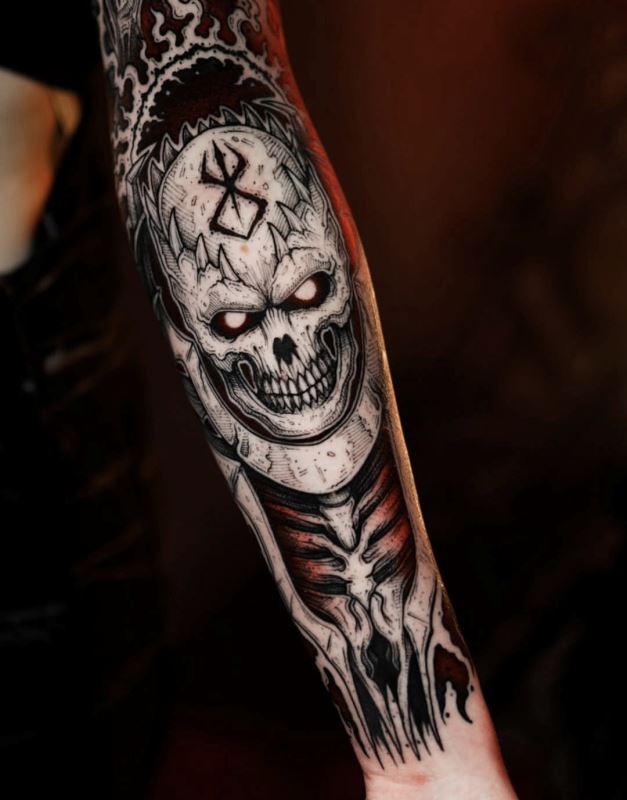
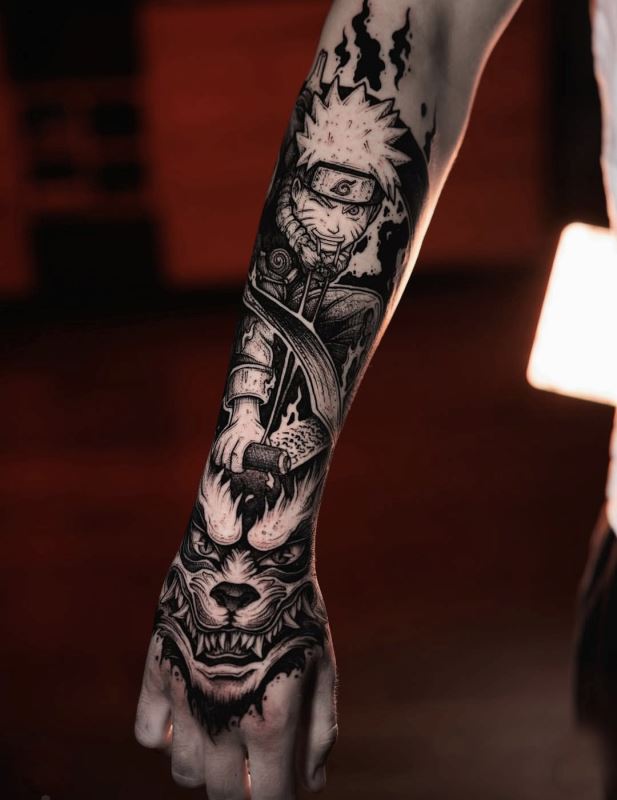
A: It always depends on the client’s wishes. But if the design
involves specific anime characters, I have to preserve
recognizability 100% while still blending it with my darker,
horror-inspired style. So during sketching, I try different
variations, and the client chooses what resonates most.
Q: Since you blend two very distinct genres, what are some
of your favorite anime series or horror movies that you look to for
direct inspiration, and how do they inform your designs?
A: Almost everything influences me, but the biggest inspirations are
Naruto, Demon Slayer, Dandadan, Bleach, One Piece, and many others.
As for horror films, all the classics: Alien, Predator, Van Helsing…
the list could go on forever.
Q: Do you plan to explore other tattoo styles?
A: Yes, lately I’ve been thinking about adding more color to my work
or incorporating ornamental elements. But always in a way that
complements what I already do. You should constantly experiment and
improve your skills.
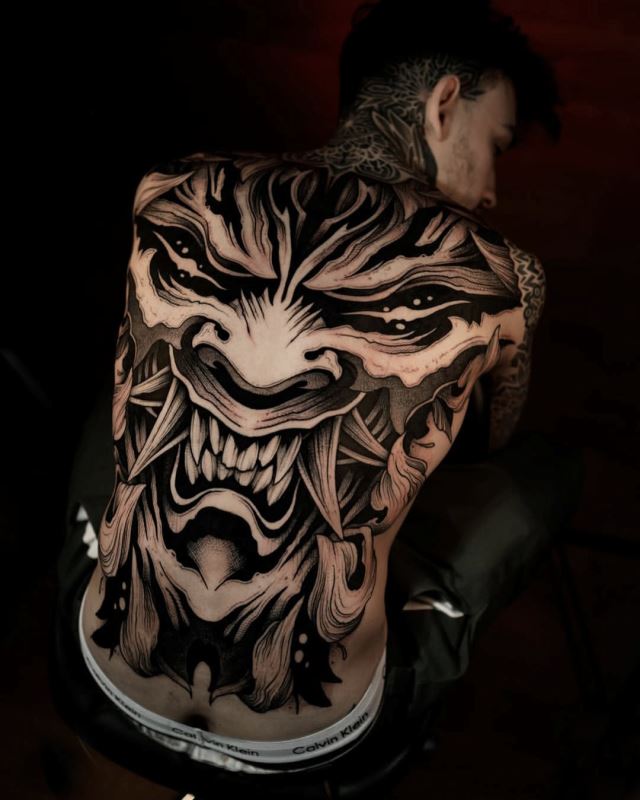
Q: In a seemingly saturated industry, how
do you prioritize and maintain your reputation for quality and
trust? What are the key professional practices you rely on to
consistently stand out as a reliable artist?
A: It’s simple: do quality work, and it will speak for you. Also, be
open, approachable, active on social media, attend tattoo events,
and stay connected with your audience.
Q: In your career, has there been a particular client or a
tattoo story that stands out, perhaps one that was especially
meaningful, transformative, or memorable for you?
A: I think it would be Rostyslav, I created my first full sleeve for
him combining Japanese elements, graphics, and anime. It was his
idea, and over time it evolved into my signature style that many
people now request.
Q: I love the prints displayed in your studio! Are any of
your tattoo designs available for purchase as prints, and if so,
what's the best way for clients to buy them?
A: Thank you for noticing! Yes, I have an Etsy shop and also an
Instagram page where you can purchase prints, T-shirts, temporary
tattoos with my designs, and more: www.etsy.com/shop/DeadyDready
www.instagram.com/deady.dready/
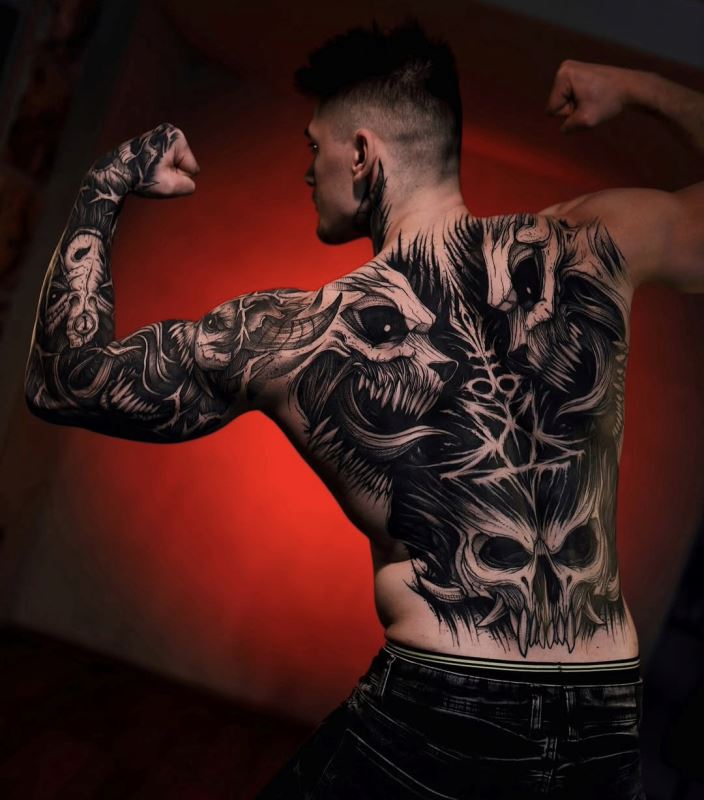
Q: Your incredible drawing skill is
evident in every tattoo you do. Given that level of talent, have you
ever considered exploring other artistic mediums, like professional
character design, illustration for books, or gallery work?
A: Yes, absolutely. I’ve been thinking about organizing an offline
exhibition featuring my artwork, it would be a great way to present
my art to a wider audience and attract new clients. I also often
create artwork for clothing brands, and of course I continue
developing my own merch, DeadyDready.
Q: As the studio owner with such an accomplished crew of
artists, how do you foster an environment that encourages that level
of teamwork and mutual learning, ensuring everyone can grow and push
the studio's collective artistic level even further?
A: We try to hold monthly meetings at the studio where we review
each artist’s work, social media, and overall progress, and discuss
what can be improved. We also frequently host well-known guest
artists, and whenever possible, I invite them to join these meetings
to share an outside perspective. We attend conventions and
art-related events together as well.
Q: Are you available for bookings and are
you open for guest artists? Please write down your studio location
and website/social media links.
A: Yes, of course, we’re always happy to welcome guest artists.
Studio: Elden Ink Address: ul. Piekary 12a, Poznań, Poland, 61-823
Website: https://eldeninktattoo.com Instagram:
https://www.instagram.com/eldeninktattoo/
Q: Running a successful studio while maintaining a full-time
schedule as a tattoo artist requires balancing two very demanding
roles. What is the single biggest challenge you face in splitting
your time and energy between the administrative and managerial
duties of ownership and the focused, creative work of tattooing?
A: It’s not that difficult when you have a strong team and know how
to delegate. I’m extremely lucky to have an amazing studio manager
who takes on a big part of the workload, giving me more time and
space for art and growth.
Q: You've been fortunate to secure
sponsorships with great tattoo brands. How instrumental have those
partnerships been in providing you with resources, visibility, or
new opportunities that have directly helped you grow and develop
your career further?
A: When I started actively developing my Instagram and social media
presence, the sponsors found me themselves, brands need active
ambassadors who can represent their products. What did sponsorship
give me? Recognition, visibility, and another way to promote my art.
I’m most proud of my collaboration with Vesper, I designed the
artwork for their tattoo cosmetics line, and it’s still selling
successfully.
Q: How supportive and collaborative is the local tattoo
community here, and do you think that sense of camaraderie is
important for the artists' development?
A: In Poland right now, I think this is one of the biggest and
strongest tattoo communities in Europe. There are many conventions,
conferences, and various tattoo-related events. The support here is
incredible.
Q: When working on a collaborative piece,
how do you and the other artist typically approach merging your
individual styles to create a cohesive final design that still
showcases both of your unique artistic voices?
A: I’ve already done several collaborations with amazing artists
like Mazur, Babich, and others. It’s an unforgettable experience
where you learn a lot from another artist. If you know the person
well and feel comfortable, there are no problems at all. You simply
sit down in the evening with your tablets and something tasty to
drink, brainstorm together, and eventually a cohesive project
emerges.
Q: How often do you attend tattoo conventions? In your
experience, how valuable are tattoo conventions for artistic growth
and building client relationships?
A: A few times a year, but next year I plan to attend more.
Conventions are extremely important, both for networking and
personal growth. They gather strong artists and high competition,
which helps you grow and gain valuable experience.
Q: As a studio owner, finding time for
guest spots can be difficult. Have you had the chance to work as a
guest artist in another studio, and if so, what were the most
valuable artistic or cultural takeaways from that experience?
A: Unfortunately, not as often as I’d like. Over the past four
years, I’ve only been a guest artist once, in Vancouver and it was
an amazing experience. Their studio and team were incredible. As a
studio owner, I also learned a few things from them that I later
implemented in my own studio. Now I regret not traveling more, so
next year I plan to visit more studios worldwide to learn how
artists work in different parts of the world.
Q: Your studio often hosts great guest artists. Are you
specifically looking to bring in styles that complement your crew's
existing work, or do you actively seek out artists who introduce a
new, distinct style to broaden the studio's artistic offerings?
A: Our studio doors are open to everyone. The more diverse the
styles, the better, sometimes it’s incredibly useful to see and hear
different artistic perspectives.
Q: What key trends, advancements, or
stylistic influences do you see originating from or being
significantly amplified by the U.S. scene, and how is that
specifically driving the overall progress of tattooing worldwide?
A: I believe much of the tattoo industry was popularized by the U.S.
scene. The U.S. is home to many innovators and leading brands like
Bishop, FK Irons, etc. They have top-tier inks, new technologies,
tattoo-assist robots, UV-reactive disappearing inks, the American
influence on our field is definitely huge.
Q: Considering the scale and opportunities in the U.S.
tattoo market, is establishing your career there, perhaps even
opening a studio, a long-term goal for you?
A: At the moment, I don’t have plans to move to the U.S. But I’d
love to travel there, visit conventions, explore studios, meet top
artists, and simply experience the birthplace of modern tattoo
culture.
Q: From a business perspective, setting aside local
preference, where in the USA do you believe the market dynamics,
such as artist community, demand, and potential for studio
ownership, create the strongest environment for a top-tier tattoo
artist to maximize their long-term success?
A: I haven’t studied this topic deeply, but I think New York and Los
Angeles have the highest concentration of top-tier tattoo artists.
So most likely these regions offer the strongest competition and
competition always drives progress.
Q: What impact do you aspire to have on
the tattoo community?
A: I want to be remembered in the industry as a unique tattoo artist
creating large-scale, powerful pieces that inspire younger
generations. I want to help them avoid the mistakes I made through
seminars, online courses, and education and to contribute with
something new and original.
Q: As you reflect on your career so far, what is a specific
project, award, or moment that you consider to be your proudest or
most defining career highlight, and why does it stand out to you?
A: Probably the moment when a Ukrainian “People’s Artist” was
inspired by my illustration, wrote a song about it, and used my
design as the cover art.
(The track was Pavlo Zibrov - “Mertvi Orky Ne Hudut”.)
Q: For the new artists entering the highly competitive
tattoo industry, what's one key piece of advice for developing their
unique artistic voice and navigating the business side of the
industry?
A: Work a lot draw, create, improve. Develop your media presence,
stay active on social platforms, attend tattoo-related events, and
never give up. Results don’t always come quickly, but the key is to
keep going and stay consistent.
Interview: Ivana Kancheska
Date 01 December 2025


