
Interview with Ross Given
Q: What is your earliest artistic memory
and how did it lead you to a career in tattooing?
A: My earliest artistic memory goes back to being a child, drawing
on a freshly decorated bedroom, not realising the gravity of
destruction I had caused never mind the small fortune I cost my
parents back in the early 80’s, but from then I was constantly
drawing and lost in my own creative world, any blank piece of paper
I could get my hands on became a canvas. Even though life took me
down a completely different path first, serving a long career in the
military, that creative spark never really went away. The military
taught me intense discipline, precision, and focus under pressure.
When i fell into tattooing around age 27, those two worlds clicked
into place. Tattooing became the ultimate bridge: it allowed me to
return to my lifelong passion for art, but with the high level of
detail, focus, and dedication I’d developed in the forces. Starting
later in life gave me a maturity and drive that made me take every
single piece seriously.
Q: Can you walk us through your career path so far from your
very first tattoo to becoming a multi award winning artist?
A: Coming out of a long military career and stepping into tattooing
meant starting completely from scratch in a whole new world. My very
first tattoo was a complicated script piece on a brave friends
collar above the chest. Something I likely wasn’t ready for but took
the challenge in my stride. In the early years, I took on every
style that came through the door to build versatility, speed, and
rock-solid technique. Over time, as my confidence grew, I started
gravitating towards black and grey realism, I spent long hours
studying composition, contrast, and how ink ages in the skin,
treating every piece like a mission to execute as cleanly as
possible. The turning point in my career was entering the convention
circuit. Putting your work up against some of the best artists in
the country, and the world, forces you to elevate your game. Winning
my first award was a massive validation that the career change and
late-night grind were worth it. From there, momentum built. Winning
multiple awards over the years wasn't just about trophies; it was
proof of constant progression. Today, my career path is defined by a
relentless work ethic, a mindset I directly credit to my military
background. Going from a late starter to an established,
multi-award-winning artist has been an incredible journey, and I’m
still pushing to refine my craft every single day.
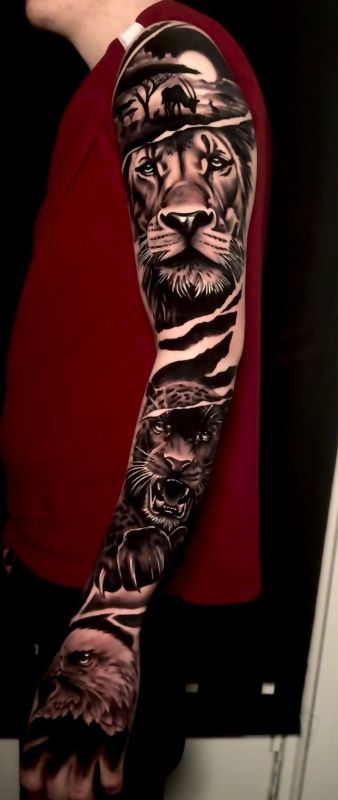
Q: Looking back who would you say were the
artists or mentors that most significantly shaped your skills and
career direction?
A: My biggest and earliest influence was definitely my father, he
laid the groundwork for my discipline, work ethic, and initial
appreciation for art. Alongside him, my creative vision was heavily
shaped by the 70s and 80s Marvel and DC comic book artists. Growing
up, I was obsessed with the high-contrast lighting, bold line work,
and dramatic muscle anatomy drawn by legends like Neal Adams, Jack
Kirby, John Byrne, Berni Wrightson, and Frank Miller. Artists like
Wrightson taught me how to use heavy blacks and shading to create
texture, while Adams and Byrne showed me how to capture movement and
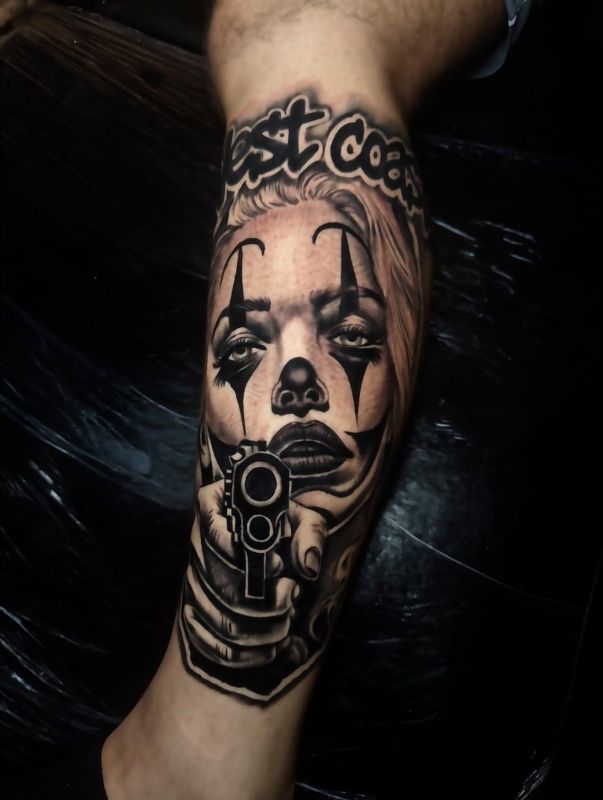
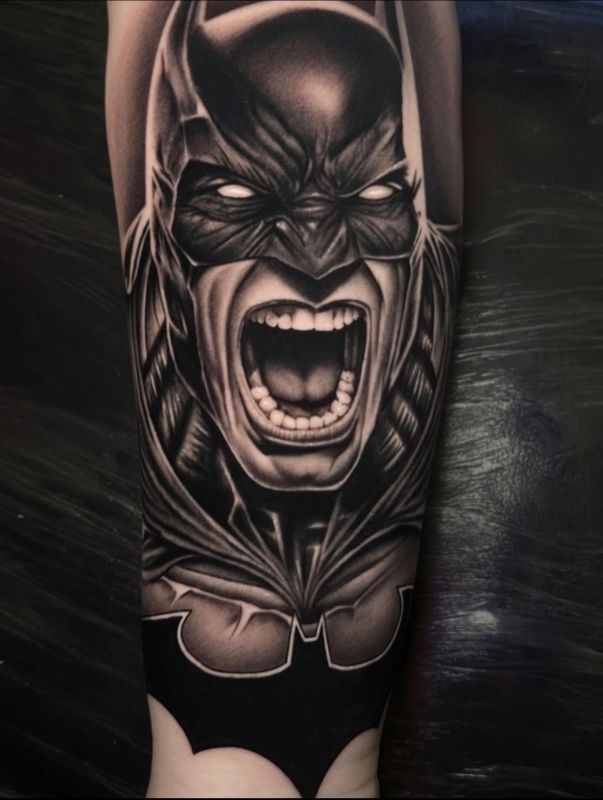
human anatomy with extreme dynamic precision. Looking at my tattoo
work today, especially the high contrast, detail, and black-and-grey
shading you can directly trace it back to those comic panels and my
dad's early influence.
Q: Why did you choose to specialize in black and gray
realism as opposed to color or traditional styles?
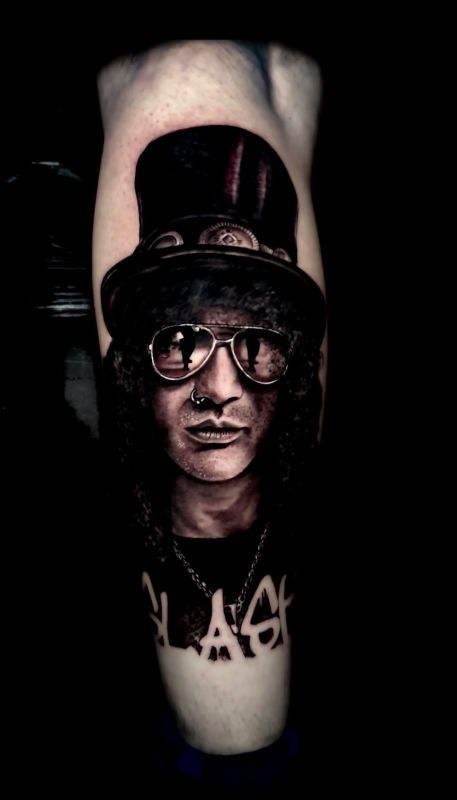
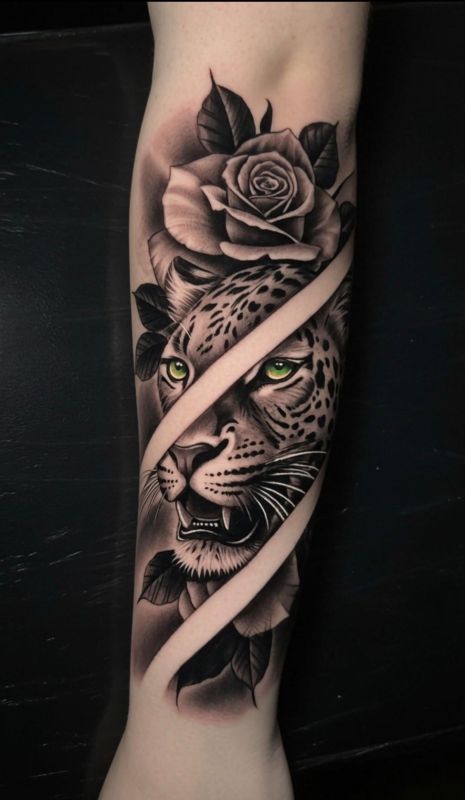
A: For me, black and grey realism especially with heavy contrast,
has a timeless depth and power that you just can't replicate with
color or traditional styles. Color fades and shifts differently over
the years, but a high-contrast black and grey piece relies purely on
light, shadow, form, and texture. It forces you to master the
canvas; there’s nowhere to hide. My passion really lies in making a
piece pop off the skin using deep blacks, clean mid-tones, and sharp
highlights. Going back to my roots loving comic artists and detailed
line-and-shade work, I’ve always been drawn to dramatic lighting and
strong anatomy. Black and grey realism lets me bring a portrait or
design to life on human skin in a way that feels solid, moody, and
built to stand the test of time.
Q: What techniques or practices do you believe have allowed
you to master the fine gradients and deep saturation unique to black
and gray realism?
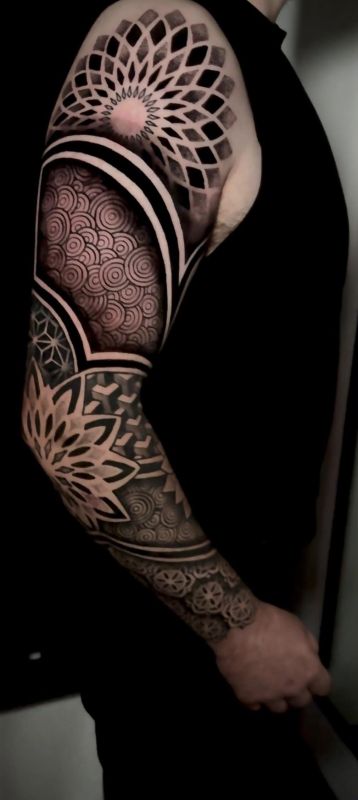
A: Mastering fine gradients and deep saturation comes down to a mix
of strict technical discipline, needle selection, and understanding
skin as a canvas. I don't rely on guesswork for grey tones; I use a
precise grey-wash system. By controlling the exact percentages of
ink-to-water dilution, I can build soft, seamless gradients
layer-by-layer rather than chewing up the skin trying to force a
blend in a single pass. Fine gradients require total control over
voltage, hand speed, and needle depth. To get smooth, airbrushed
transitions without hard lines, I use a consistent pendulum or whip
stroke, letting the needle lightly graze the skin to build up tone
gradually. For rich, solid blacks that give realism its dramatic
pop, you have to pack ink efficiently without causing trauma. I use
specific magnum groupings and slow down my hand speed to ensure full
ink saturation, letting the deep blacks anchor the soft gray tones
surrounding them. Skin changes as you work on it. I plan my pass
order carefully, placing my darkest darks and softest shades in a
sequence that prevents the skin from becoming over-worked or
inflamed, which keeps the gradients clean and crisp during healing.
Ultimately, it’s the military mindset applied to the machine:
consistency, extreme patience, and treating every square millimeter
with total precision.
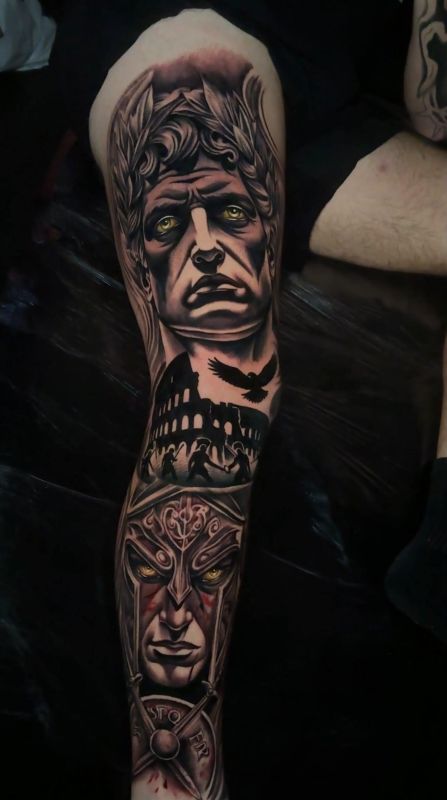
Q: Are there any non tattooing artistic
influences perhaps from photography film or classical painting that
inform your work?
A: Absolutely. Beyond comic art, a massive influence on my work
comes from classic vintage horror cinema, specifically the Hammer
House of Horror era and the iconic films starring legends like
Vincent Price, Christopher Lee, and Peter Cushing. Those mid-century
films were absolute masterclasses in atmosphere and lighting.
Directors like Terence Fisher relied heavily on theatrical,
high-contrast lighting, what you’d call chiaroscuro in fine art,
where deep, ominous shadows meet stark, sharp highlights. They
created mood, drama, and tension purely through light and dark long
before modern CGI existed. When I approach a black and grey realism
piece, I look at the skin the exact same way those directors looked
at a film frame. I use that vintage horror aesthetic, the dramatic
side-lighting, heavy contrast, and eerie atmosphere, to give my
tattoos depth, story, and a timeless, theatrical edge.
Q: How has your creative process evolved since you first
started tattooing?
A: When I first started, my focus was purely on technical execution,
getting the ink into the skin cleanly and making sure the lines were
solid. As my career progressed, my focus shifted from just applying
a tattoo to composing a piece. Today, my process is far more
strategic: I design around the body’s natural flow, prioritize bold
light-and-dark contrast upfront, and spend much more time perfecting
the reference balance so the tattoo holds up over time, not just for
a healed photo.
Q: Which awards or competitions stand out as the most
defining moments in your career and why?
A: While winning trophies at conventions was always a massive drive
early on, the single most defining moment of my career was being
invited to be a guest judge at the New York Tattoo Convention. To go
from starting my tattooing journey late after a long military career
to standing alongside international icons in one of the world's
biggest tattoo capitals was incredible. Moving from competing to
judging meant my peers and the industry recognized my technical
standard, eye for detail, and mastery of the craft. It was the
moment where everything came full circle validating all the
late-night grinds and solidifying my place as an established artist
on the global stage.
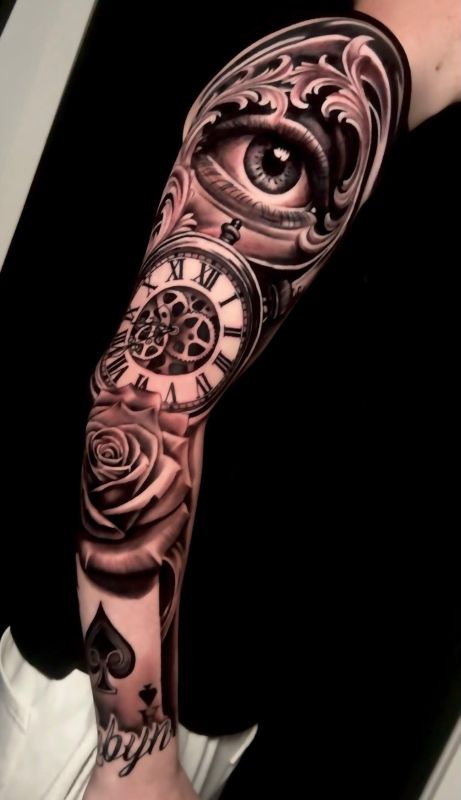
Q: Being a member of a high profile pro
team must be a significant achievement what has that experience
brought to your career?
A: Being named to the CNC Tattoo Pro Team was a huge milestone and a
true badge of honor. Beyond the recognition itself, that experience
has impacted my career in three major ways: Validation of Technical
Mastery: Being sponsored and trusted by a industry-leading brand
like CNC proves that your work, consistency, and standards are
operating at an elite level. It’s a powerful vote of confidence from
the industry. Testing & Elevating Equipment: Working closely with
the team gives me direct access to cutting-edge tech, machinery, and
needle configurations before they hit the general market. Testing
equipment at the absolute limits ensures I’m always working with
tools that match my demand for deep saturation and smooth gradients.
Global Network & Inspiration: Being part of a pro team connects you
directly with a tight-knit network of world-class artists. Sharing
knowledge, techniques, and insights with top-tier talent constantly
pushes me to elevate my own craft and never settle into a comfort
zone. Ultimately, it turned my individual daily grind into a
collaboration with a global brand, reinforcing my reputation as a
high-level black-and-grey specialist.
Q: Can you tell us about a specific career achievement or
mile stone that you are most proud of outside of awards?
A: Beyond winning physical awards, the milestone I’m most proud of
is gaining the respect of the international tattooing community,
specifically being invited to attend some of the world’s most
prestigious conventions and being asked to guest spot alongside
top-rated, world-class tattooists. Earning a place in those elite
spaces meant everything. Being invited to major global conventions
isn’t something you can buy; it’s earned through years of consistent
quality, rock-solid work ethic, and technical skill. Working
side-by-side as a guest artist in shops with legend-tier tattooists,
artists I used to look up to when I first picked up a machine, was
the ultimate validation. Sharing a studio floor with world-class
talent, trading techniques, and having them trust and respect my
work as a peer proved that I had built a standing in the industry
that goes far beyond any trophy on a shelf.
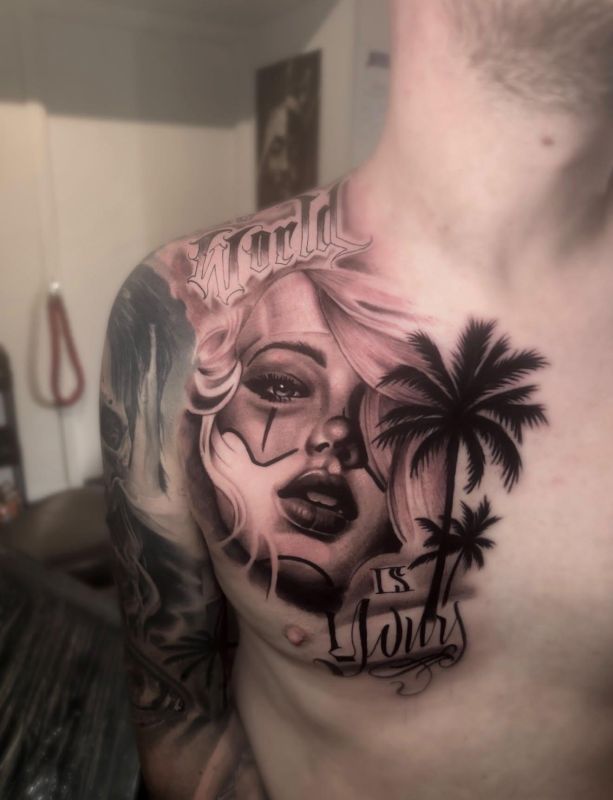
Q: How does the tattoo community and scene
in the UK compare to other places you have experienced or
researched?
A: The UK is one of the most tattooed nations in Europe. Tattoos
have crossed heavily into mainstream culture, with low workplace
stigma compared to places like Japan or South Korea. UK studios
operate under tight local authority licensing and public health
standards, making the hygiene and safety baseline much higher than
in countries with unregulated markets.
Q: What trends are currently dominating the global tattoo
scene and how do you see black and gray realism fitting within or
challenging those trends?
A: The global tattoo scene is being shaped by two main shifts:
technological advances in execution and aesthetic
minimalism/nostalgia. Dominant Global Tattoo Trends Micro-Realism &
Fine Line: Highly detailed, miniature tattoos (pet portraits,
single-needle floral, tiny icons) are massive globally, favored for
their delicate look and ease of placement. Cybersigilism &
Abstract/Fluid Art: Sharp, futuristic, digital-inspired line work
and organic, non-linear shapes that flow naturally with body
placement. Patchwork & "Sticker Sleeves": Moving away from cohesive
single-theme sleeves toward collections of distinct, individual
pieces that tell a casual, evolving personal story. Y2K / Nostalgia
Revival: Early-2000s motifs like chrome textures, tribal revival,
and stylized graphics modernised with crisp technical execution.
Q: How would you describe your lifestyle and approach to
being a professional artist, does it affect the way you balance
creativity with business?
A: I approach being a professional artist like a athletic discipline
as much as a creative one. Creativity isn't just waiting for
inspiration, it’s showing up every day with a structured routine.
Balancing business and creativity means treating the business side,
admin, drawing time, client management, as the scaffolding that
protects my creative work. I set clear boundaries between design
hours, studio time, and recovery so I can stay focused and deliver
my best work on every project.
Q: What are the common misconceptions
about the tattooist's lifestyle that you have found most untrue in
your experience?
A: The biggest misconception is that tattooing is a laid-back,
'rockstar' lifestyle where you just hang out and draw all day. In
reality, it requires intense discipline and functions much more like
running a demanding small business. People see the hours spent at
the station, but they don't see the late nights spent drawing for
tomorrow's clients, handling emails, managing supplies, and the
physical toll it takes on your back and neck. It’s an incredibly
rewarding path, but it's a full-time commitment that demands hard
work both on and off the machine.
Q: How do you prepare yourself physically and mentally for
long tattoo sessions?
A: Preparing for a long session is all about stamina and risk
management. Physically, it starts before the tattoo even begins,
eating a solid meal, staying hydrated, and setting up my station
ergonomics so I’m not straining my back or neck. During the session,
I take quick, scheduled breaks to stretch my wrists and reset my
posture. Mentally, I make sure 100% of the design work and prep are
finished beforehand so my focus is completely on execution. I break
the piece down into clear visual stages, which keeps my focus sharp
and maintains a calm, steady environment for both me and the client.
Q: How important is building a close relationship with your
clients?
A: Building a genuine connection with clients is vital to my work.
Tattooing is an intimate, permanent process, and when a client feels
safe, heard, and valued, their trust goes up, which directly
translates to a better, more relaxed experience in the chair. It
allows us to collaborate openly on the design rather than just doing
a simple transaction. That rapport builds long-term loyalty and
word-of-mouth recommendations, which are the backbone of a
sustainable tattoo career.
Q: Beyond technique what kind of
experience are you aiming to give your clients when they book with
you?
A: Beyond the tattoo itself, my goal is to deliver an experience
built on trust, comfort, and collaboration. Getting tattooed can be
vulnerable, so I focus on creating a welcoming, non-intimidating
environment where clients feel entirely comfortable asking questions
and speaking up about their ideas. From transparent communication
during the booking phase to a calm, comfortable session in the
chair, I want every client to walk away not just loving their new
artwork, but feeling genuinely valued and respected throughout the
entire process.
Q You use social media to show your complete process from
design to application how do you think that transparency builds
trust and manages client expectations?
A: Documenting my process from initial concept to healed tattoo
creates complete transparency. It demystifies the craft and shows
clients the exact level of hygiene, technical planning, and detail
that goes into every piece. By sharing raw, unedited work and healed
photos alongside design stages, clients gain a clear, realistic
understanding of how tattoos age and what to expect during their
session. It turns a potentially intimidating experience into a
familiar, collaborative journey long before they sit in my chair.
Q: Why do you feel the United States is the next essential
step in your professional development as an artist?
A: The United States is the birthplace of so many foundational
movements in modern tattooing, making it the natural next step for
my growth as an artist. Beyond the size of the market, the US hosts
an incredible concentration of world-class talent, including several
of my personal idols and peers whose work I’ve studied for years.
Having the opportunity to work alongside these artists in premier
studios, exchange techniques, and immerse myself in that environment
is essential for pushing my artwork to the highest level. Stepping
into the US scene allows me to challenge my skills, collaborate with
high-caliber artists, and share my vision with a deeply passionate
community of collectors.
Q: What uniquely American cultural aspects
or artistic scenes are you most looking forward to interacting with?
A: I’m especially excited to experience the regional diversity of US
tattoo culture firsthand. The West Coast has such a rich history in
fine-line single-needle work and Chicano black and gray, while the
East Coast has an incredible legacy of dark realism and classic
tattoo history. Beyond the tattoo scene itself, I’m looking forward
to how tattooing intersects with broader American subcultures—like
streetwear, hip-hop, lowrider art, and fine art galleries. Engaging
with passionate collectors and collaborating with artists in
high-caliber US studios will push my art into new territory.
Q: Based on your research and specialization in black and
gray realism where would you say the best place in the USA would be
for you to continue your work?
A: Looking at the US through a Southeast lens, Miami and Atlanta
stand out as the premier destinations for Black and Gray Realism.
Miami is an international gateway with a massive cultural preference
for smooth, high-contrast black-and-gray work. Its blend of luxury
tourism, international guest artists, and Latin American fine-line
influences creates a high-demand market for large-scale custom
pieces. On the other hand, Atlanta offers an incredible urban art
scene driven by the music, film, and sports industries. It’s a city
filled with dedicated collectors who seek out detailed portraiture
and dark realism, supported by top-tier custom studios that
prioritize large-scale work. Basing myself in either city would
provide direct access to high-budget collectors, strong peer
collaboration, and a culture that truly values realism as a fine art
form.
Q: When you look at your entire career path so far what is
the single most important lesson you have learned about yourself as
an artist?
A: The single most important lesson I’ve learned is that consistency
and self-discipline matter far more than raw talent alone. Early on,
it’s easy to think that passion is enough to carry your career. But
over time, I realized that true artistic growth comes from showing
up every day with purpose, refining my technique when no one is
watching, taking care of my physical stamina, and staying
disciplined with my preparation. Learning to trust my process and
stay focused on constant, incremental improvement has been the
biggest key to pushing my work to a higher standard.
Q: Three favorite moments in your career
that were completely crazy at the time, but you still look back on
with a huge smile?
A: Looking back, the moments that felt the most chaotic at the time
are the ones I cherish most now: Winning an Award with My Best
Friend: Entering a major convention with my best friend as my canvas
was intense. The clock was ticking, the pressure was on, and I was
tattooing someone I cared deeply about for hours under a microscope.
Walking up to collect that award together at the end of the day,
knowing we conquered that high-stress environment as a team, is
something I’ll never forget. Finishing a Piece in a Studio Power
Outage: During a massive storm, the entire town lost power
mid-session on a complex realistic piece. Instead of calling it off,
we rigged up battery-powered ring lights and phone flashlights.
Working through that absurd setup and pulling off a clean piece
proved to me that focus trumps environment every time. My First
12-Hour Marathon Session: A client travelled in for a limited
window, and we pushed through a brutal 12-hour session to finish a
detailed sleeve piece. By hour 8, my back was aching and my eyes
were burning, but when we wiped away the final pass of ink at 10PM
and saw the completed piece, the sheer exhaustion immediately turned
into pure pride.
Q: Do you have any favourite American
tattoo artists you would love to work with in the future?
A: Absolutely. The US is home to so many artists I’ve looked up to
throughout my career, but two in particular stand out at the top of
my list: First is Bob Tyrrell. He’s a true legend and one of my
ultimate idols in black and gray realism. The way he revolutionized
smooth shading and fine detail paved the way for everything we do in
realism today. Having the chance to share a studio space or work
alongside him would be a surreal full-circle moment. The second is
Paul Acker. His work in horror and dark realism is something I
admire insanely. The level of saturation, texture, and deep contrast
he gets into his pieces is unmatched. Both represent different ends
of the realism spectrum, Bob with classic, butter-smooth black and
gray transitions, and Paul with dark, high-impact imagery. Being
able to exchange ideas and observe their workflows firsthand would
be incredible for my growth.
Q: What has tattooing given to you and taught you that no
other profession possibly could?
A: Tattooing has given me a deep sense of purpose and taught me
lessons in presence and accountability that no other profession
could. Because there is no 'undo' button on skin, it forces you to
cultivate absolute focus, confidence, and respect for the craft
every single time you turn on your machine. Beyond the technical
discipline, it has given me a profound appreciation for human
connection. People hand over their bodies, time, and personal
stories to you. Learning how to earn that level of trust and
delivering a piece of art that becomes a permanent part of their
identity, has given me an unmatched level of fulfillment and
humility that I couldn't have found anywhere else.


