
Interview with Ryunchae Jeong
Hello Ryunchae Jeong! Thank you so much
for taking the time to do this interview. Please start by telling us
something about yourself and your background. When did you first got
interested in art? I’m Jeong Ryunchae, also known as Ryu, a
tattoo artist from South Korea. I originally studied fine art and
wanted to become a contemporary artist. My early interest in art
came from the desire to express emotions through simple, minimal
forms. Although I once dreamed of being a painter, I eventually
found a deeper connection between my art and tattooing.
Q: When tattooing came into the picture?
A: Tattooing came into my life when I realized I wanted to make a
living through art without losing creative freedom. I started
learning on my own, studying and practicing every day. About six
months later, Dino Oriental invited me to join his studio crew,
where I learned a lot from the experience.
Q: Thinking back to when you were just starting out, what
was the single most surprising or difficult thing you had to learn
about the tattoo industry that no one really prepared you for?
A: The most surprising thing was that being a tattoo artist requires
much more than artistic talent. It demands communication,
responsibility, long hours of focus, and physical endurance. No one
really tells you that part in advance.
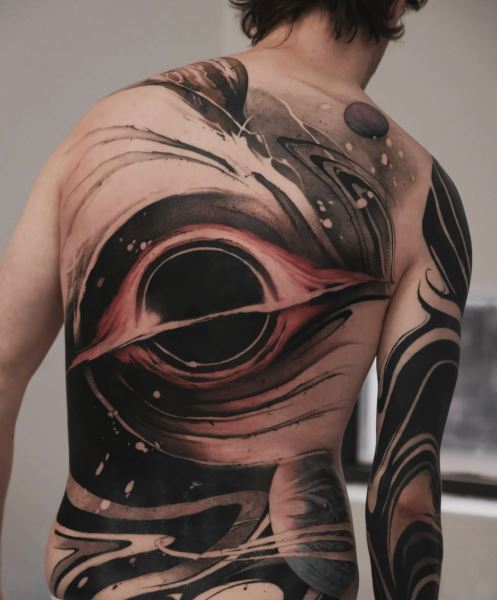
Q: Your style is really unique. When you were first
developing your style, was there a specific pivotal moment or a
single piece that you felt really defined the direction your art
would take?
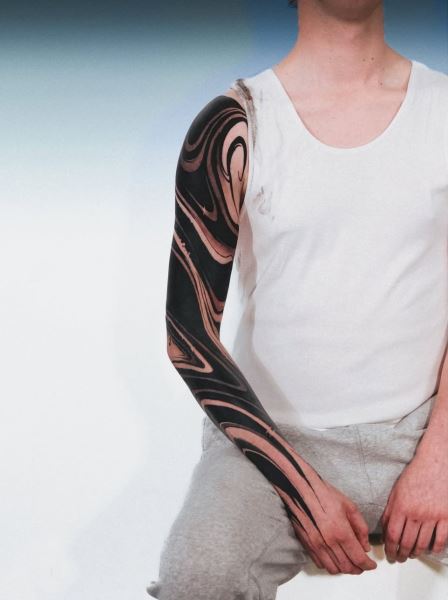
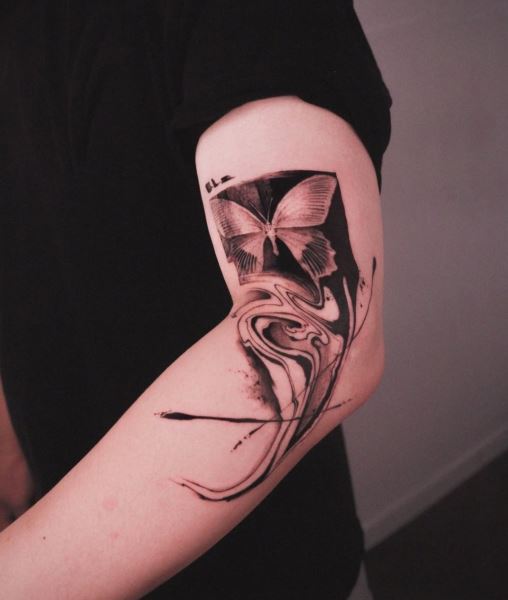
A: When I began exploring abstract brushstroke tattoos, I realized
that my love for monochrome contemporary art could merge with
tattooing. That was the turning point when I knew my artistic
direction would focus on emotion expressed through simplicity and
movement.
Q: Can you describe what the vibe or environment was like in
the first shop you ever worked in, and how that experience shaped
your approach to tattooing today?
A: My first studio was incredibly kind and supportive. They taught
me many things I had missed while learning on my own and forgave all
the mistakes I made when I was inexperienced. I believe I wouldn’t
be who I am today without them.
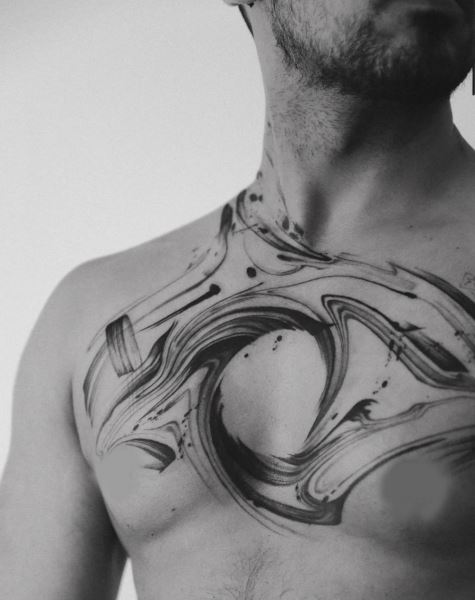
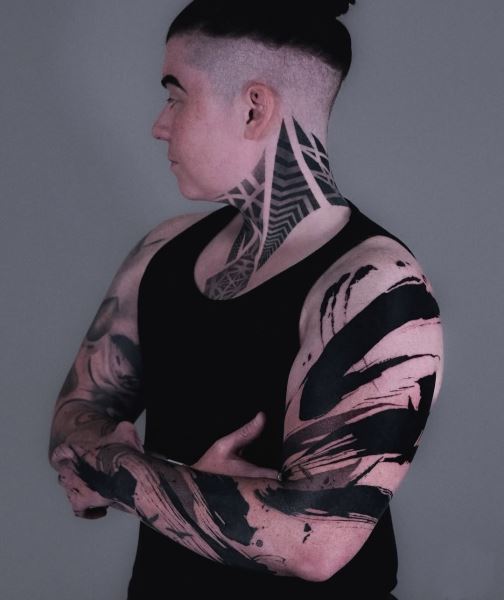
Q: You incorporate large, bold areas of solid black and
heavy black flowing lines. What is your specific technique for
achieving maximum, even saturation in these large black sections to
ensure they heal smoothly without patchiness or fading?
A: There are many technical aspects to consider such as needle angle
and keeping even tension on the skin, but I think the most important
thing is patience. If I approach it calmly, almost like meditation,
the result turns out great.
Q: How would you define your style?
A: I describe my work as abstract tattoos, but honestly, I’m not
sure. I just do what I want to do.
Q: What do you like the most about this style?
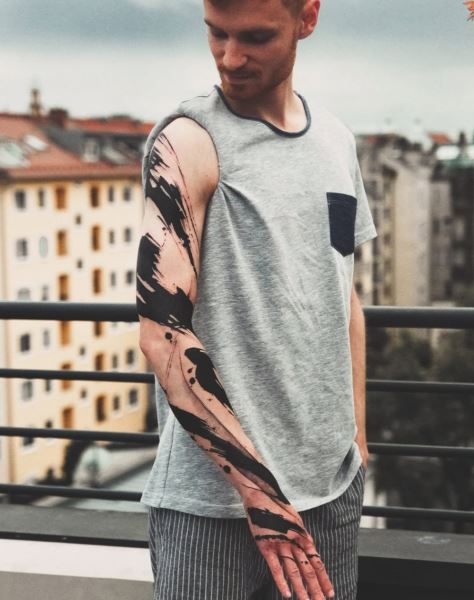
A: What I like most about this style is its emotional honesty. The
simplicity allows raw expression, and the fluid brushstrokes feel
alive and personal each time.
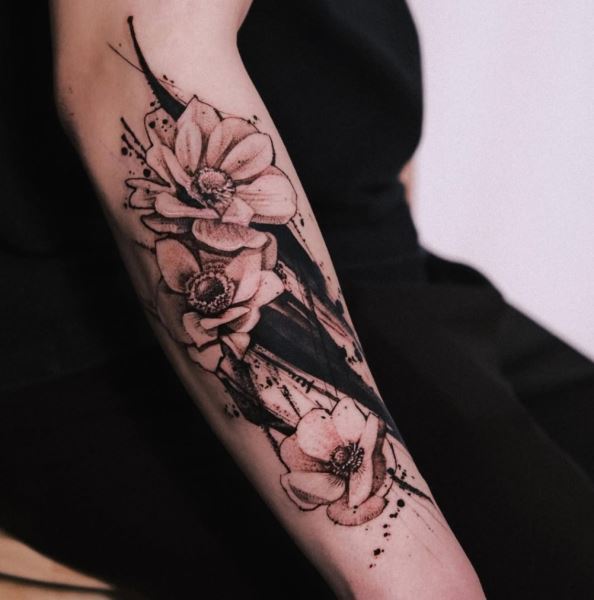
Q: For the fluid, organic shapes and splashes (like the
black marble effects), do you rely primarily on freehand work with
markers, or do you use a highly customized stencil process?
A: I rely mostly on freehand work. Using markers directly on the
skin helps me follow the client’s body flow more naturally, creating
designs that truly fit their form.
Q: Designs like the large back pieces or full sleeves must
take significant planning. Do you create the entire design before
the first session, or is there an element of on-the-spot composition
once the client is ready?
A: For large pieces, I complete the overall design first but often
make spontaneous adjustments while applying the stencil. When the
design is placed on the actual body, it changes slightly with the
curves of the skin.
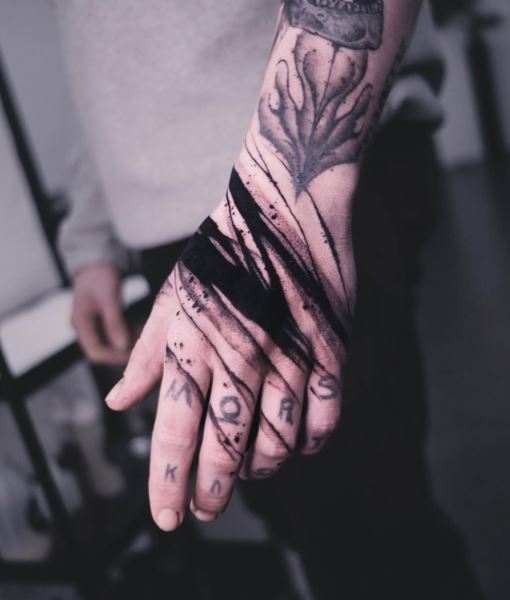
Q: How do you guide your clients’ vision while maintaining
the integrity of your art?
A: I always respect the client’s vision but make sure the final
design reflects my artistic sense and balance. I communicate openly
about composition, placement, and flow, so the result becomes a
collaboration based on mutual trust.
Q: Pieces like the cross or the enso circle are minimal yet
incredibly powerful. What is your design philosophy when asked to
create a tattoo that is simple, but needs to be impactful?
A: Simplicity doesn’t mean emptiness to me. Even a small, minimal
tattoo should carry strong balance, rhythm, and emotion. I focus on
clean movement and contrast to make minimal designs powerful.
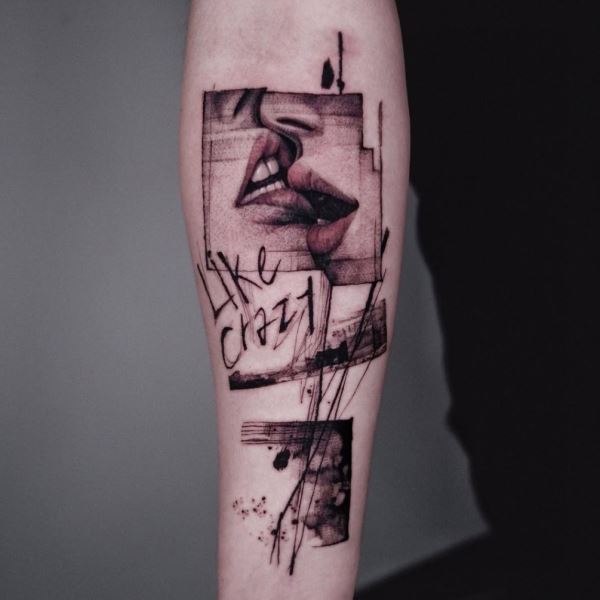
Q: Do you have any favorite tattoo you did recently?
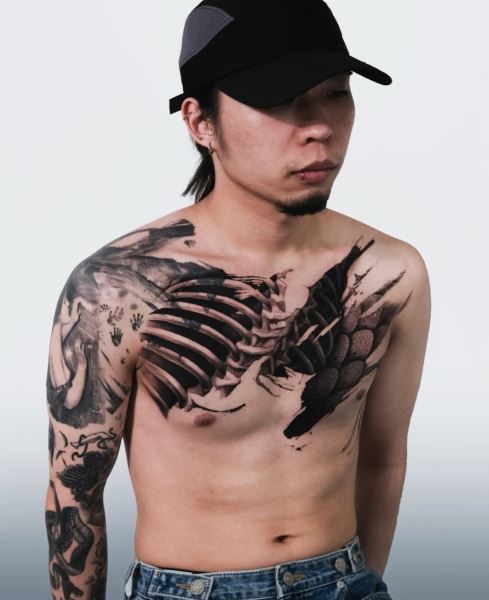
A: It’s really hard to choose. I always like the ones where I
challenge myself with something new, but one of my recent favorites
is a chest piece combining brushstrokes, snake bones, and abstract
snake scales. I love how it healed beautifully.
Q: Given the density of black in your work, these must be
long sessions. How do you accurately estimate the time and cost for
these intense, highly saturated pieces, and how do you manage client
comfort during long appointments?
A: At first, I estimate the time based on the client’s skin
condition, area size, and design complexity. However, since large,
black-heavy pieces can be stressful, I take frequent breaks and
adjust the session dynamically according to the client’s condition
to keep them comfortable.
Q: Since your style involves so much dense black, how do you
handle requests for cover-ups? Do you factor in the longevity and
future ‘coverability’ of the tattoo into your initial design?
A: I often use solid black sections and dynamic brush forms to
integrate old tattoos naturally. I always consider future touch-ups
and skin healing when designing cover-ups to maintain longevity and
harmony.
Q: Being a sponsored artist is a significant achievement. In
your experience, how has that sponsorship helped accelerate your
career development, not just in terms of supplies, but in aspects
like public recognition, networking opportunities, and securing a
higher level of respect and trust from your industry peers and
high-end clientele?
A: Being sponsored by Cartiel Needle and Emalla has been a great
honor. Their products help me achieve precise work and smooth
healing, and the sponsorship has definitely increased my visibility
and credibility within the industry.
Q: What’s your take on the local tattoo scene? Do you see
progress?
A: Australia’s tattoo scene is full of diversity, just like its
multicultural population. There are artists who quickly adapt to new
trends and others who preserve traditional styles, and that balance
gives me a lot of inspiration.
Q: Could you share how the experience of traveling and
working as a guest artist in different tattoo studios around the
world has specifically advanced your career and unique style?
A: Working in different studios around the world helped me
understand new techniques and cultural approaches to tattooing. It
pushed me to adapt and grow artistically while gaining confidence in
my own unique visual language.
Q: What is the most valuable or unexpected technique or
cultural insight you’ve learned from the local tattoo scenes you’ve
visited?
A: Each country has its own atmosphere and style, but compared to
South Korea, I felt a stronger sense of cultural respect and pride
for tattooing as a long-established art form. It made me value my
profession even more.
Q: Do you participate at tattoo conventions?
A: Yes, I’ve participated in several conventions, including Thailand
and Korea, and won first place in linework when I was only ten
months into tattooing. In 2024, I also received “Best of the Day” in
Melbourne. Each convention motivates me to grow and connect with
amazing artists.
Q: Given your current international recognition and
experience guesting abroad, is exploring long-term professional
opportunities or a permanent move to the USA part of your career
plan, and if so, how do you feel your highly specialized style would
translate into the American tattoo market?
A: It would be an honor to work in the United States. Just like in
other countries, I believe my style would be recognized as unique
and positively received in the American tattoo market.
Q: From a business perspective, setting aside local
preference, where in the USA do you believe the market dynamics,
such as artist community, demand, and potential for studio
ownership, create the strongest environment for a top-tier tattoo
artist to maximize their long-term success?
A: The United States is considered the largest tattoo market in the
world. With its freedom and numerous tattoo conventions and events,
I think it provides the best environment for growth and success.
Q: What impact do you aspire to have on the tattoo
community?
A: I hope my work inspires more artists to explore abstract
expression in tattooing and see it as a form of emotional art, not
just a craft.
Q: For the new artists entering the highly competitive
tattoo industry, what’s one key piece of advice for developing their
unique artistic voice and navigating the business side of the
industry?
A: Keep going and stay strong!


