
Interview with Sandra Daukshta
Marking the eighteen anniversary of Skin Artists
Tattoo Magazine, we are bringing together the industry’s most
respected figures to reflect on the evolution of the craft. As a
top-tier artist chosen for this milestone celebration, Sandra
Daukshta represents a level of technical and artistic maturity that
only comes with years of relentless dedication. She is a pioneer of
the painterly realism movement, known for her ability to treat the
skin like a master’s canvas.
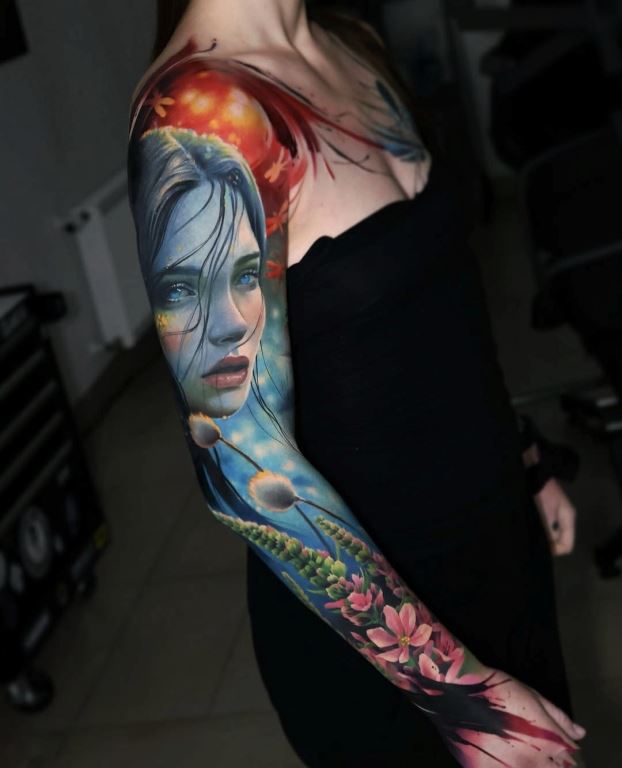
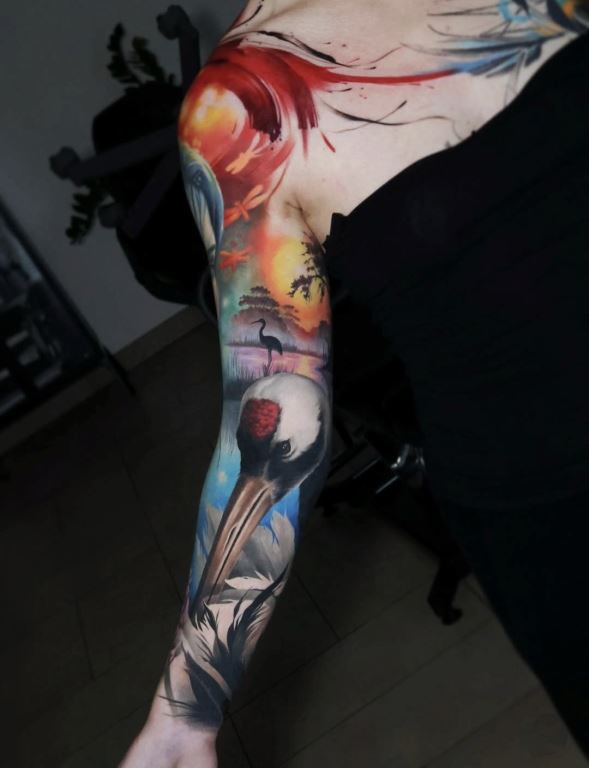
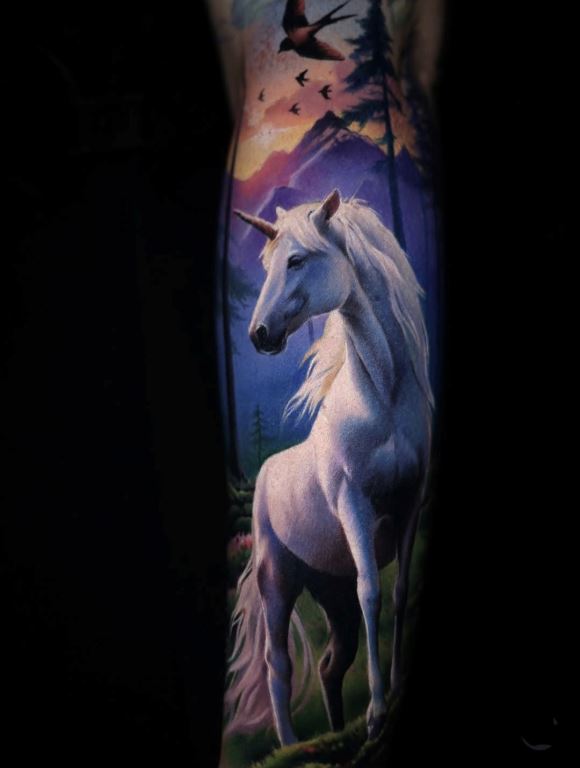
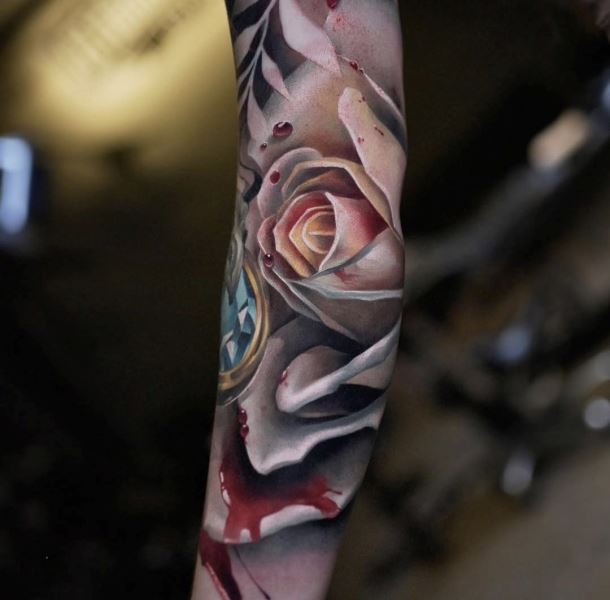
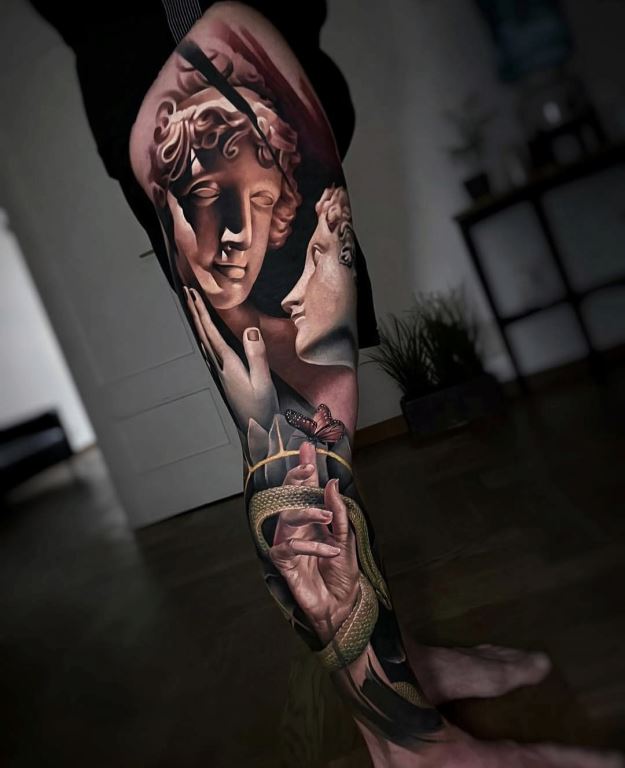
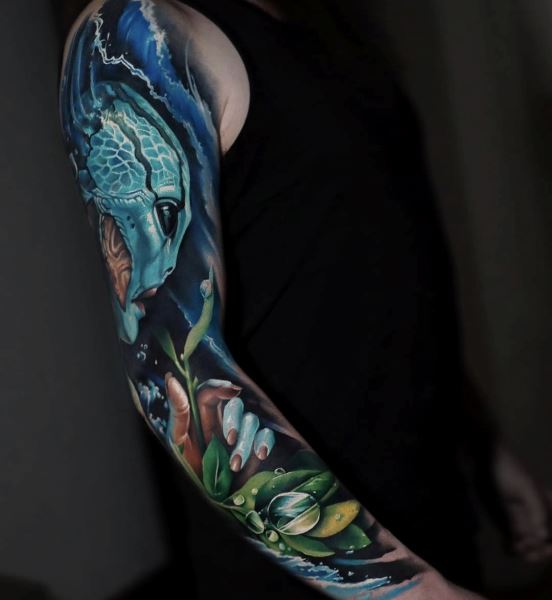
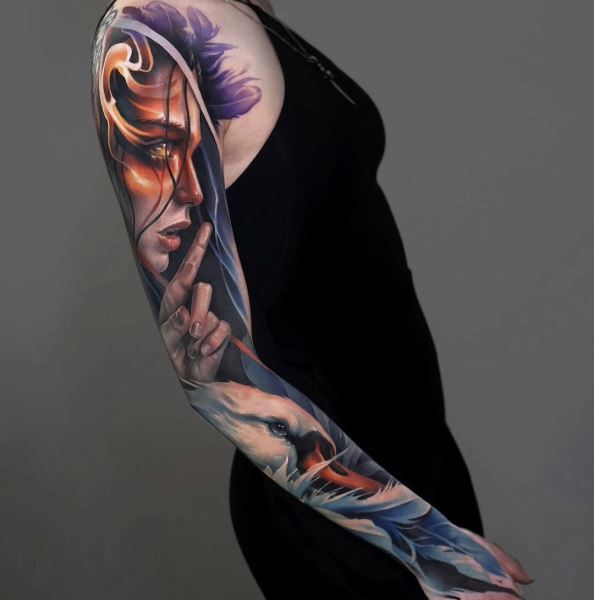
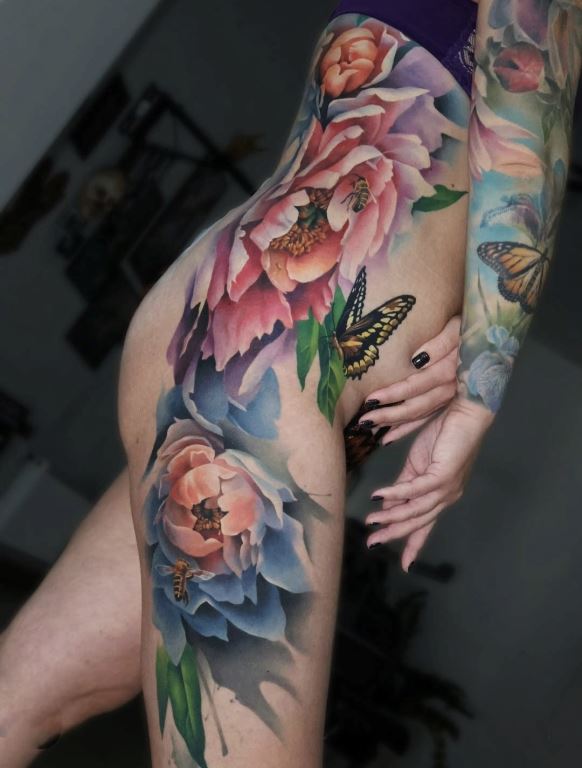
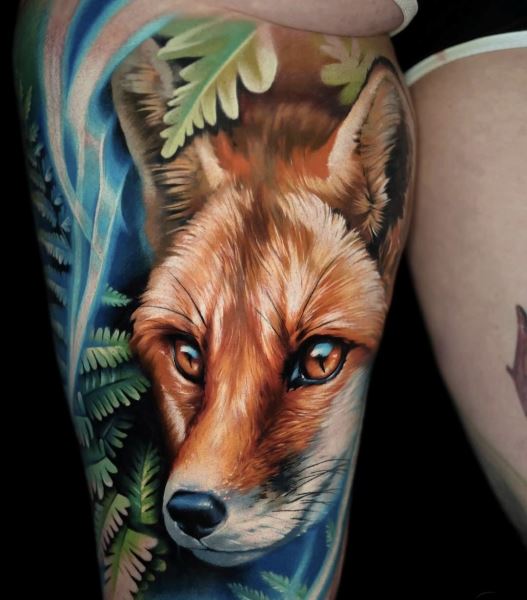
Sandra’s portfolio is defined by an extraordinary use of color and
light, moving away from rigid lines and toward a fluid, atmospheric
style. Her work captures the subtle textures of nature and the human
form with a depth that feels alive. By blending the precision of
tattooing with the soul of fine art painting, she has become a
global influence for artists striving to push realism into more
emotive territory.
The following interview focuses on the central theme of this
anniversary series: exploring the future of tattooing. We look back
at how the industry has transformed over the last eighteen years and
discuss Sandra's vision for where the medium is headed. The
conversation offers a rare look into the mind of an artist who
continues to redefine what is possible on the living canvas.
Q: You’ve witnessed the transition from basic realism to the
hyper-painterly styles of today. In 2026, when 'perfect' technique
is accessible to many, what is the one thing that still separates a
'technician' from a 'Master'?
A: You can understand the technique, but do you understand the
drawing. For me, it’s about feeling the image, not just repeating
it. Anyone can learn technique now, but not everyone puts their own
thinking into the work. Tattoo ‘master’ is someone who can make long
lasting solid tattoo, and make the tattoo look unique even if it’s a
photo copy. Show a simple photo through artists eye.
Q: As a veteran, you’ve seen how tattoos
age over decades. How has your technical approach to “packing” color
changed to ensure your masterpieces don’t just look good for a
photo, but stay vibrant for a lifetime?
A: I focus on making image not too complicated, so it’s readable
from distance. Design needs to have high contrast and vibrant
colours. I prefer vibrant colors over desaturated ones. I do not use
too many details, so the tattoo stays bold and readable for years.
Q: You’ve seen the center of the tattoo world move through
different continents. How do you feel the “European Style” of
realism has permanently altered the global standard of the craft?
A: It made artists slow down and think more about composition and
quality. It pushed realism to be more like painting, not just
copying photos.
Q: The industry is much faster now than when you began. Do
you worry that the “Instant Success” culture of 2026 is robbing
young artists of the deep, quiet discipline required to truly
understand skin?
A: Good work takes time. You need years of practice to really
understand skin. There are no shortcuts for that. I believe you need
to love tattooing it can’t be just a job. We are making art on human
bodies, we need to be fully connected to this process.
Q: Today, every artist is competing
globally. Does this “Global Melting Pot” help excellence rise, or
does it homogenize art until everyone starts looking the same?
A: Both. It raises the level, but also makes people copy each other.
I think it’s important to focus on your own path and not compete too
much with others.
Q: Your work is often called “illustrative realism.” In a
future where “micro realism” and “sticker sleeves” are trending, why
is it vital to keep the “large scale, bold blend” alive?
A: Because it lasts. Big, bold work ages much better. Small details
can get lost over time.
Q: In a sea of AI-perfect portfolios, what is the “Human
Glitch” or specific “imperfection” in your work that you are most
proud of?
A: I don’t try to make everything perfect. Sometimes small
irregularities make the work feel more real and alive.
Q: When you choose a subject, be it a
predator or a flower, how much of your own emotional state at the
time influences the “vibe” of the final piece?
A: Doesn’t matter in what emotional state I am, my tattoos need’s to
bring positive emotion. I love vibrant colours and they
automatically turns your mood up.
Q: You spend an incredible amount of time on micro-textures.
How do you balance the desire for hyper-detail with the necessity of
a design that “reads” clearly from across a room?
A: I wouldn’t say I do micro textures, they still are quite big. The
tattoo should look strong from far away. Balance is everything.
Q: Many see AI as a threat, but you’ve
always been a “photographic” thinker. Do you see a future where the
“Visionary” is more of a “Creative Director” who uses machines to
composite impossible natural textures that never existed in reality?
A: It’s just a tool. The important part is still the artist’s eye
and decisions. I'm not a fan using Ai images, they feel cold and
unnatural.
Q: As AI begins to dominate the “design”
phase, do you see a future where the artist’s primary value is no
longer their “imagination,” but their “physical touch” and their
ability to translate digital light into human skin?
A: I believe that human art will always look more alive than Ai.
Many artists will keep creating they’re designs by themselves. Even
if Ai can do it faster, it will never have the same style and point
of view what the artist has.
Q: As 3D mapping and AR allow us to
project perfect designs onto bodies, are we in danger of losing the
“analog” intuition that makes a tattoo feel human? How do you
protect the “soul” of the needle in an era of digital perfection?
A: I don’t think we need to be scared of innovations. Each artist
can choose their own path, doing everything olds cool or using new
technologies. Tattooing is still about feeling the skin and adapting
in the moment.
Q: With the talk of “smart” inks and 3D-printed skin grafts,
do you envision a future where your realism could literally “move”
or “breathe” with the client’s biology?
A: Maybe it will happen, but I think skin and simple inks is already
enough. That’s what makes tattoos special.
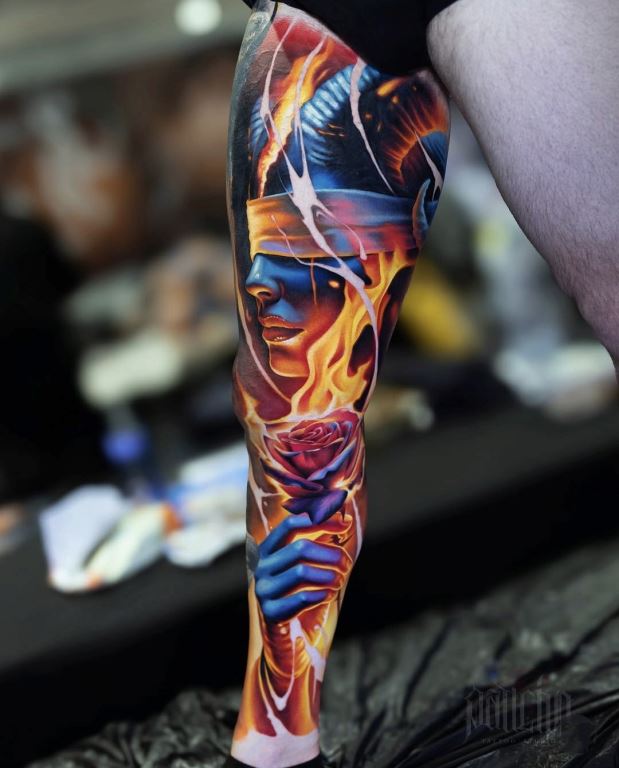
Collaboration with tattoo artist AD Pancho
Q: We are moving toward “Destination
Studios” and private art havens. Do you believe the “Street Shop”
model is becoming a relic of the past for high-level realism?
A: No, I think there is still place for street shops. But high level
works needs a different environment more focus, more privacy, less
distraction.
Q: If you could change one thing about how conventions and
awards are handled in 2026 to make the industry healthier, what
would it be?
A: Maybe clearer judging. It should be about the quality and
composition, rather them personal preferences of specific style. And
it would be nice, if conventions would be more about getting
together than competing with each other.
Q: How can the veterans of the industry
better protect the next generation from the “Apprentice Mills” and
the “Shortcuts” that threaten to dilute the craft?
A: You can’t really fight it. There will always be low quality
teachers. Only thing we can do is teaching properly and not
supporting shortcuts. Quality matters.
Q: In the past, being a “Master” meant
having secrets. Today, it means sharing them. How has your
relationship with “teaching” changed your own artistic growth?
A: It made me understand my own work better. You have to be clear
when you explain things. I have learned so much by teaching others,
because I needed to analyse my own and other works and techniques.
Q: Being at the top for so long requires
immense sacrifice. What is the one thing you’ve had to give up to
maintain your status as a global visionary?
A: A lot of free time. To keep improving, you have to stay focused.
Only last years when I became a mother I slow down. And it taught me
to be in balance. Overworking can bring you to burnout. Slow down
and enjoy life, that will give you inspiration when you get back to
tattoo machine.
Q: When the digital world of 2026 is long gone, and only the
skin remains, what is the one “vibration” or “message” you hope your
lifetime of work has whispered to the world?
A: That tattoos can be more than decoration. They can hold meaning
and feeling.


