
Interview with Seray Kafadar Tunc
Hello Seray Kafadar Tunc, it's a pleasure
to have you with us today for this interview. To begin, would you be
so kind as to share a little about yourself and your journey as an
artist? We're particularly interested to know if your artistic path
has been a self-guided one, and if you could recall the moment or
period when you first recognized your talent for arts.
Hello, thanks for having me. Since childhood, I’ve always had a deep
passion for visual arts. I started drawing at a very young age, and
over time, this passion evolved into a professional journey. I
studied painting and sculpture at the Faculty of Fine Arts, and
later worked as an art teacher while continuing to create in various
studios.
My artistic path has been driven entirely by inner motivation. I’ve
always felt most authentic when expressing myself through art,
whether it’s painting, sculpture, playing the piano, or singing. I
first realized I had a talent for art as a child when the drawings I
created without any formal education received strong reactions and
admiration from those around me. From that moment on, I knew art
would always be a permanent and meaningful part of my life.
Q: Could you share with us the story of how tattooing became
a part of your artistic journey? How long have you been tattooing?
A: My connection to art has always been strong, but tattooing became
part of my journey when I felt the urge to go beyond traditional
forms of artistic expression. I began tattooing about six years ago.
At first, it was quite challenging, working on living skin is
completely different from canvas or paper. But that challenge was
exactly what drew me in. I started by learning the basics on my own
through research and trial and error. Later, I had the opportunity
to meet and work with experienced tattoo artists, which was
incredibly enriching. Over time, tattooing became more than just a
craft, it turned into a way of life for me, a new dimension where I
could bring both technique and emotion together on skin.
Q: Reflecting on your journey of
self-discovery and the evolution of your signature style, what kind
of tattoos did you explore or create in your earlier practice?
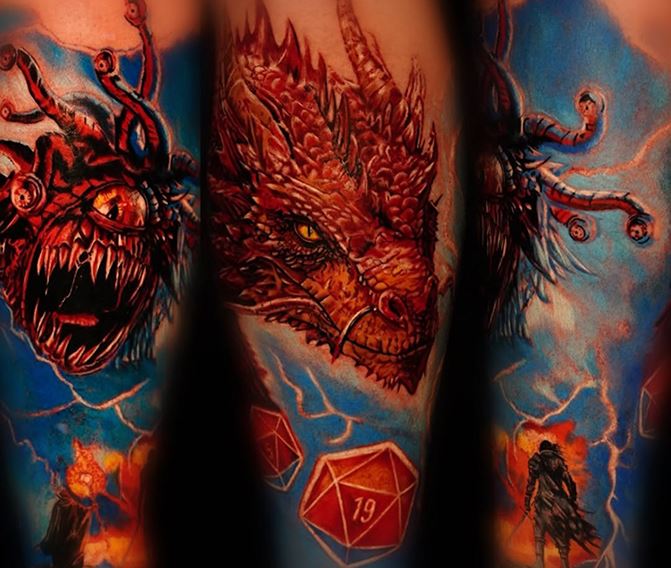
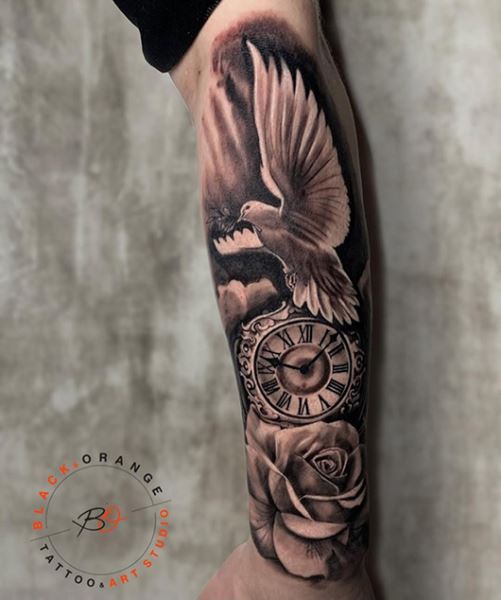
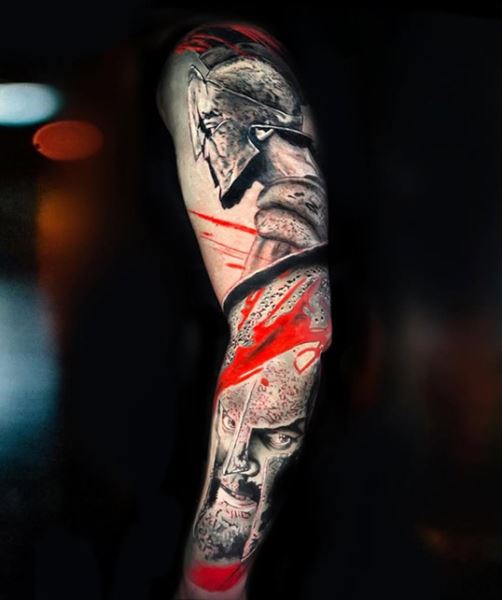
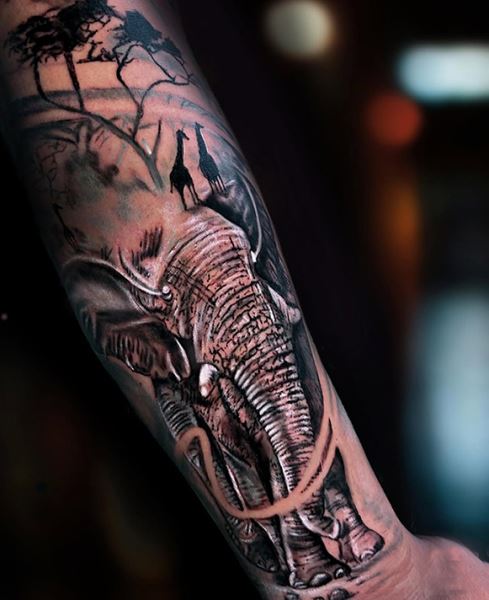
A: In the early stages of my tattoo career, I started with small and
minimal pieces, mostly line work and blackwork. I used that period
to explore different styles, refine my technical skills, and better
understand where my artistic voice truly belonged. As time went on,
I found myself increasingly drawn to realism. I was fascinated by
depth, texture, and the challenge of capturing subtle details. That
naturally led me to black and gray realism, and eventually to color
realism, where I discovered a whole new level of creative
fulfillment. With every tattoo, my style became more refined and
personal. This evolution has been deeply valuable in shaping not
only my technique, but also my identity as an artist.
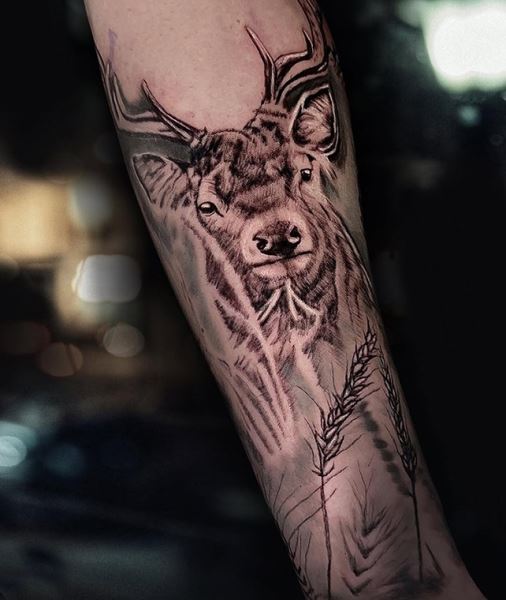
Q: What draws you specifically to tattoo realism? What
aspects of this style do you find most compelling or rewarding?
A: I’ve always been captivated by realism because it requires not
only high technical precision, but also emotional sensitivity. Being
able to make a tattoo look “real” on the skin, to bring something to
life with form, light, and shadow, is an incredibly powerful
artistic experience. What fascinates me the most is the emotional
impact realism can carry, especially in portraits. I still remember
the first time I did a portrait tattoo: it was based on a
photograph, and once it was finished, the likeness and emotion it
carried were so striking that the response from both the client and
my peers left a lasting impression on me. From that moment on,
realism became more than just a style, it became a passion. It
allows me to express emotion through detail and create work that
resonates deeply with people.
Q: That’s fascinating that you work with
both black and gray and color tattoos. From your perspective, which
of these techniques presents more unique challenges, and what makes
it so?
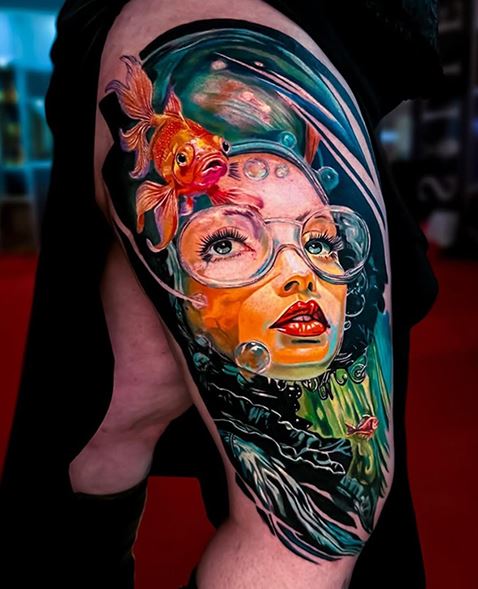
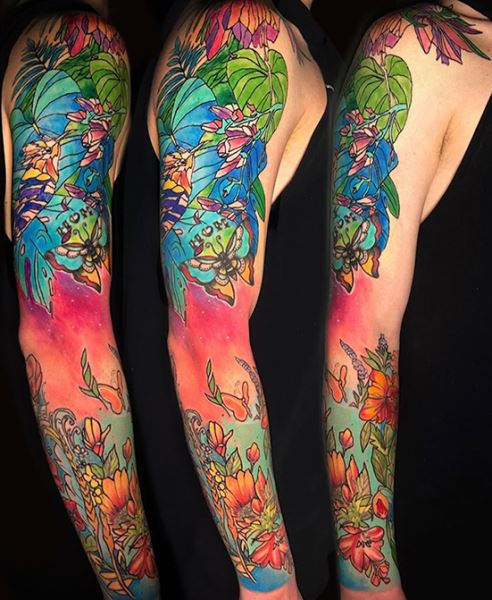
A: Working with color is, for me, both technically demanding and
emotionally rich. Every skin tone requires its own custom palette,
and blending colors with the right balance of contrast and harmony
is a delicate process. In color realism, capturing emotion through
subtle transitions and tone variations takes an incredible amount of
patience and observation. What I love about color work is how it
allows me to build realism not only with form, but with energy and
vibrancy. I genuinely enjoy using a wide range of colors together,
it gives me infinite space for expression. The visual energy that
comes from bold color combinations adds emotional weight to the
tattoo. Before every project, I study the color dynamics carefully
and often use contrast to evoke stronger feelings. Creating a tattoo
that’s not only visually striking but emotionally resonant is what
makes color realism so special to me.
Q: Given your talent and evident artistic curiosity, have
you ever considered venturing into other tattoo styles, perhaps
something like neo-traditional, to further expand your creative
horizons?
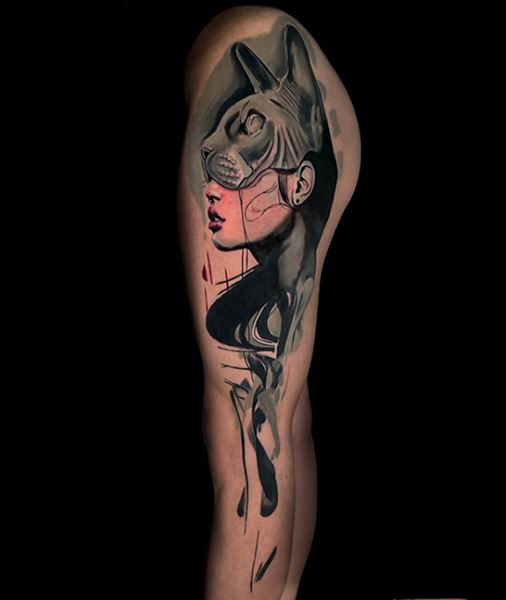
A: Absolutely. While realism is my primary focus, I’ve always been
curious about exploring other styles. In fact, after color realism,
neo-traditional is probably my favorite style. Its strong linework,
exaggerated forms, and bold color schemes are incredibly inspiring
to me. Although most of my work leans toward realism, I occasionally
experiment with different styles as a way to grow technically and
creatively. Mixing elements from various approaches, especially in
concept-driven tattoos, often leads to more unique and personal
outcomes. I find the idea of combining structure with creativity
very exciting, and I definitely plan to continue pushing my
boundaries in the future.
Q: Given the demanding precision and skill
inherent in realism tattooing, especially with human portraits where
even minor deviations can significantly impact the final piece, I
imagine there have been some particularly challenging projects. Do
you have a favorite piece that, despite its difficulty, ultimately
yielded a result you were exceptionally proud of?
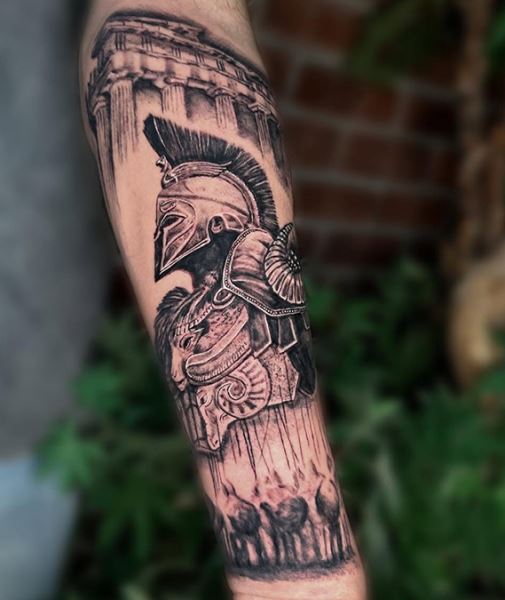
A: Yes, working in realism means every piece is a challenge, but one
project, in particular, has stayed with me. It was a very
small-scale portrait with a deeply emotional backstory. My client
had lost a close friend and wanted a memorial tattoo in the form of
a mermaid representing her. It was an incredibly personal piece, and
even a single wrong breath could have jeopardized the balance of the
work. Every detail, the lips, the shading, the transitions in skin
tone, required microscopic precision. The tattoo took two days to
complete, and I stayed in a deep state of focus throughout. When we
finished, the client was overwhelmed with emotion. She hugged me and
cried, saying, “Now she’ll always be with me.” That moment reminded
me why I do this, art that not only looks real, but carries real
meaning. It was a turning point for me, both technically and
emotionally.
Q: Could you share some of your most
cherished or memorable experiences you’ve had while working with
clients?
A: The bond I create with clients often goes far beyond the tattoo
itself. Because the sessions can be long, we naturally find
ourselves having deep conversations, and in many cases, tattoos
become a form of shared emotional experience. Especially with
meaningful pieces, I find myself bearing witness to their most
pivotal life moments. One experience I’ll never forget was with a
man who asked me to tattoo three coffee beans. He and his wife had
met at a coffee shop, fallen in love, and were planning to have a
child. Tragically, their baby passed away in the womb, and not long
after, his wife also passed. He was devastated. The two large coffee
beans and one small one were symbols of the life they had built and
lost together. The story behind that tattoo moved me deeply. Seeing
the emotions in people’s faces after the tattoo is finished, whether
it’s a quiet smile or tears reminds me why this art form is so
powerful. It’s about connection, healing, and memory.
Q: Building and maintaining client trust
and reputation as an artist is paramount in the tattoo industry. In
your experience, what core principles are most essential for
cultivating and preserving a strong reputation?
A: For me, building a strong reputation goes far beyond artistic
talent. Creativity and vision are essential, of course but
professionalism, hygiene, and ethical standards are just as
critical. I strictly follow health and safety regulations and ensure
that every studio I work in meets legal and sanitary requirements.
Cleanliness and responsibility are non-negotiable, not only for my
clients’ safety but also out of respect for the craft itself.
Equally important are qualities like being punctual, honest,
respectful, and truly listening to the client. People don’t just
come in for a tattoo, they come for an experience. Earning their
trust means providing both technical skill and emotional presence.
Over time, I’ve seen how this commitment to integrity, quality, and
care has been recognized and appreciated by my clients and peers. In
my view, longevity in this industry is built on consistency,
transparency, and a genuine passion for what you do.
Q: The tattoo industry has seen a significant shift in
educational accessibility. How do you perceive the impact of these
changes on the current landscape for emerging artists?
A: The increased accessibility to education has transformed the
tattoo industry in a really positive way. In the past, learning the
craft often depended on personal connections or traditional
apprenticeships. Now, with online platforms, workshops, and social
media, aspiring artists can access a wealth of information and
inspiration from anywhere. This democratization of knowledge has
elevated the overall quality of the industry, but it also brings
greater responsibility. Learning techniques isn’t enough, artists
need to be educated on hygiene, communication, and design principles
too. I believe this shift is empowering a new generation of artists
who are more aware, more professional, and more intentional. When
education and ethics go hand in hand, the future of tattooing looks
very bright.
Q: With your experience and perspective,
what are your thoughts on the current trajectory of the global
tattoo scene?
A: The global tattoo scene has evolved dramatically over the past
few years. Tattooing is now widely recognized as a serious art form,
and artists are pushing boundaries by merging styles and drawing
from multiple disciplines. I’m especially inspired by the quality of
work emerging in styles like color realism, neo-traditional, and
black and gray. Thanks to social media, artists worldwide can learn
from one another and grow together, this kind of creative exchange
is truly exciting. That said, growth should always be accompanied by
strong ethics and mutual respect. Hygiene, professional standards,
and artist integrity must remain at the forefront. I also believe
young artists should be encouraged not just to create beautiful
work, but to work responsibly. Overall, I feel incredibly
optimistic. The tattoo world is becoming more inclusive, expressive,
and artistically daring. I’m proud to be a part of that movement.
Q: To allow our audience to connect with you, please provide
your studio location, website, and social media links. Let us know
if you are currently accepting new bookings.
A: I am currently based at Cleopatra Ink Seattle, located in
Washington, USA. I’m open for new projects and always excited to
connect with people who have meaningful stories to share. You can
find my work and reach out to me through the following platforms:
Instagram: @bao_tats
Studio: Cleopatra Ink Seattle

Q: How often do you attend tattoo
conventions? In your experience, how valuable are tattoo conventions
for artistic growth and building client relationships?
A: Tattoo conventions are incredibly valuable for artistic growth.
They offer a chance to meet artists from around the world, observe
different techniques, exchange ideas, and gain direct feedback from
clients and peers. I’ve actively followed many conventions so far,
including international events like the İzmir Tattoo Fest. I
recently relocated to the U.S., and I’m excited to begin
participating in conventions here as well. I previously competed in
the color realism category, and the experience was both technically
challenging and personally inspiring. I look forward to attending
more conventions in the U.S. and globally, it’s the perfect
environment to grow as both an artist and a member of the worldwide
tattoo community.
Q: Your talent has clearly garnered international
recognition, leading to guest artist residencies in various
countries. Could you elaborate on your experiences working in these
foreign studios, and are there any specific locations you’d be
particularly interested in returning to?
A: Working as a guest artist abroad has been a turning point in my
career. Being immersed in different cultures, collaborating with
other artists, and interacting with a diverse client base has
expanded my perspective both creatively and professionally. My
experience in the U.S. has been especially exciting. Being actively
involved in the American tattoo scene feels like stepping into the
heart of the global community. Sharing insights, learning new
approaches, and exchanging feedback with other artists has been
truly rewarding. There are many places I’d love to return to, but
the energy and respect for tattooing in the U.S. have left a lasting
impression. I look forward to continuing my journey here and
contributing more to this vibrant scene.
Q: Congratulations on becoming a sponsored
artist, a well-deserved recognition of your talent! How has being
supported by prominent tattoo brands influenced your recognition and
career progression in the industry? What’s your perspective
on the role of such sponsorships for artists?
A: Thank you! Becoming a sponsored artist was a proud and affirming
moment in my career. It not only increased my visibility but also
reinforced my professional credibility within the industry. Working
with trusted brands means using tools I believe in and that
confidence shows in my work. It’s more than a partnership, it’s a
reflection of mutual trust and shared standards. Sponsorships can be
incredibly valuable, especially for emerging artists. When companies
support artists who demonstrate strong ethics and creativity, it
elevates the entire industry. For me, it was a clear sign that
consistent effort and passion truly pays off.
Q: How has your passion for tattooing evolved since you
first started? Are you just as enthusiastic, or even more so now?
A: My passion for tattooing hasn’t faded, it’s grown deeper with
time. In the beginning, everything was fueled by excitement and
curiosity. Over time, that energy was joined by respect, discipline,
and a stronger sense of purpose. Every project still excites me, but
now I approach it with greater experience, confidence, and clarity.
I see each tattoo not only as a creative challenge, but as a
meaningful collaboration with the person wearing it. In short, I’ve
never lost the passion, if anything, I feel it more intensely now.
The more I create, the more inspired I become.
Q: The American tattoo scene offers a wide range of styles
and influences. Do you see any potential benefits or opportunities
for artistic growth in exploring that environment?
A: Absolutely. The American tattoo scene is incredibly diverse and
creatively rich. Artists from different backgrounds come together to
create a vibrant, constantly evolving artistic landscape. Being in a
city like Seattle, which deeply values creativity and artistic
freedom makes the experience even more meaningful. Both the artists
and the clients here appreciate tattooing not just as an aesthetic,
but as a personal form of expression. This opens up space for more
unique and bold work. The collaborative spirit, high standards, and
passion in the U.S. have all contributed to my artistic growth. It
feels like being at the heart of something global and important, and
I’m grateful for the opportunity to be part of it.

Q: Do you have any favorite American
tattoo artists you would like to work with in the future?
A: Definitely. There are so many inspiring artists in the American
tattoo scene that I’d love to collaborate with. Their technical
skill, artistic storytelling, and ability to push boundaries
constantly motivate me. Some artists don’t just create beautiful
tattoos, they also have a deep understanding of composition,
symbolism, and visual narrative. Working alongside such creative
minds would be an incredible opportunity for growth, both personally
and professionally.
Q: What’s the plan?
A: My plan is to keep evolving, keep learning, and keep creating. In
the short term, I want to fully engage with the U.S. tattoo scene,
attend conventions, collaborate with other artists, and push the
boundaries of color realism. In the long run, I envision building a
name that reflects both artistic quality and emotional depth. I’d
love to eventually create my own educational platform or mentorship
program because to me, growth means sharing what you’ve learned.
Also, I never want to lose my connection to Turkey. It’s a huge part
of who I am. Being involved in projects that bridge both cultures
would be incredibly fulfilling.
Q: What impact do you aspire to have on the tattoo
community?
A: I want to leave an impact that goes beyond aesthetics, something
that touches both emotionally and ethically. I believe in the
healing power of art, and I want my work to be more than just ink on
skin. I want it to hold meaning, connection, and empathy. As a woman
in the industry, I also hope to be a source of inspiration, to show
that with passion and perseverance, anything is possible, even in a
space that can still feel challenging at times. I want to be
remembered as someone who shared openly, created with purpose, and
contributed positively to the culture of tattooing.
Q: If you could go back and give your younger self advice
about pursuing tattooing, what would it be?
A: I’d tell her: “Trust yourself. Your courage will take you further
than you think.” In the beginning, I had doubts, fears, and a lot of
outside noise. But over time, I learned that listening to my inner
voice was the most important step forward. Don’t aim to be perfect,
aim to stay open and committed to learning. Mistakes will teach you
more than success ever could. Every tattoo will be a lesson, every
client a story, every challenge an evolution. And most importantly:
Don’t compare yourself to others. Your path is uniquely yours, and
it’s going to lead you somewhere beautiful.


