
Interview with Seth Holmes
Hello Seth Holmes! Thank you so much for
taking the time to do this interview. We deeply appreciate you
taking the time to speak with us today. To begin, could you please
share a bit about your background and the journey that led you to
your artistic pursuits? In particular, we're curious about when you
first recognized your talent. Growing up, I did some
drawing, but it was mostly Dragon Ball Z characters or charcoal
drawings of my teachers’ kids so I could make some money. However, I
never really saw myself as an artist when I was growing up. I first
started playing guitar around age 14, and once I found music I
pretty much stopped drawing altogether for years. I had a serious
band after high school and was hired at a local tattoo shop as
summer help, where I worked my way up to piercer and shop manager.
When my band broke up I needed a job. Since I already worked in a
shop and had been reteaching myself to draw for a couple years, it
seemed like I had a good foot in the door to the tattoo industry. I
had always been passionate about getting tattooed, and tattoo
culture in general. From there I got an apprenticeship in 2012 and
have been professionally tattooing since 2013.
Q: Could you describe the initial catalyst that drew you to
tattooing, and how your motivation has developed and transformed
throughout your career?
A: I had always been fascinated with the “heavily tattooed” look
ever since I was a child. I’ve known since I was 9 or 10 years old
that that’s how I wanted to look when I became an adult. I was
enamored with rock stars, bikers and outlaws to the point that I
used to draw on my arms as a child. As a late teen, getting to work
in a tattoo shop only fueled that fire even more. I was getting
tattooed at the shop on a bi-weekly basis for a while until I had a
sleeve, my hand, and neck tattooed. As I progress into my career, I
try not to concern myself with “motivation” as it tends to come and
go. But I believe it’s more important to stay disciplined in this
craft. Where motivation wanes, discipline will aid the progress of
your art more effectively. It’s 10,000 hours of hard work that makes
you great at something, not 10,000 hours motivation.
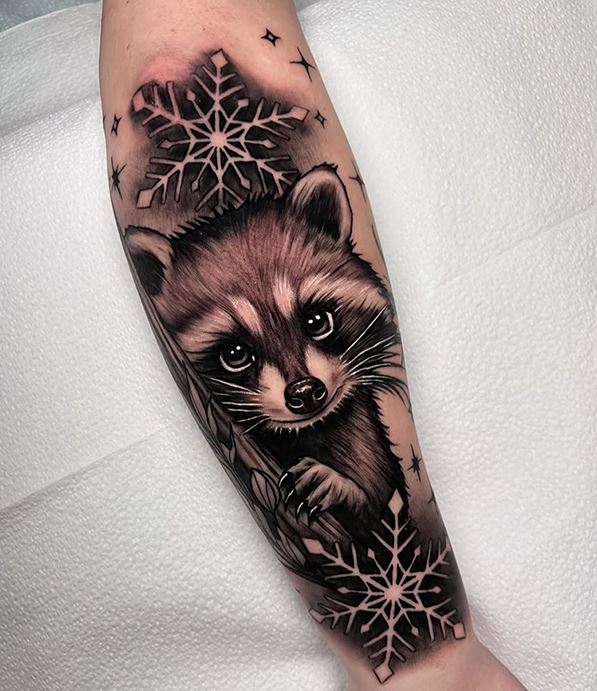
Q: Your portfolio showcases a remarkable
range of styles, from realism to traditional and neo-traditional
designs. Within that diverse spectrum, are there any particular
styles that resonate with you most deeply, and if so, why?
A: Thank you so much for the kind words. For me, personally I enjoy
and respect every style of tattooing. I don’t just love one style. I
love TATTOOING in general. I am constantly trying to find ways to
mix styles together, or to take certain aspects of one style and
apply it to another. And to be honest, trying to achieve different
styles helps to prevent burnout and creative plateaus. If you’re
never able to perfect one style, you’ll never stop progressing and
your work is less likely to get boring.
Q: Which one do you find as most difficult?
A: I used to say that color realism is the most challenging style to
tattoo. However, as I become more diverse in my portfolio and
continuously try different techniques, my opinion has changed.
Geometric, biomech, and Japanese traditional are the most difficult
in my opinion now. Each one of these styles have certain “rules” to
abide by, and to me, rules are only meant to be broken AFTER you
learn them thoroughly first.
Q: To what extent do you feel that strong drawing skills
contribute to the overall quality and artistry of a tattooing,
recognizing that tattooing itself is a specialized technique?
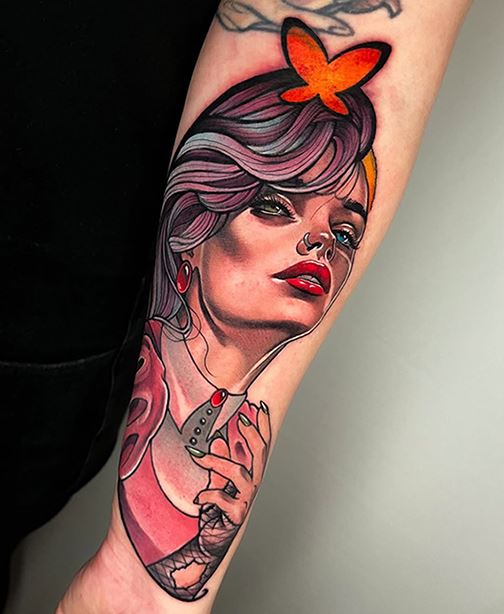
A: This might grind the gears of a lot of tattooers out there, but
honestly I think there’s a few tattoo styles where you don’t really
have to know how to draw. As long as you can copy something
efficiently, and have great tattooing technique, realism, American
traditional, and geometric tattoos don’t require a ton of pure
drawing skill. New school, biomech, illustrative, neo traditional
(or neo romantic as some tattooers are calling it now), etc require
a lot more ability to draw in my opinion. This is why I believe it’s
significantly more important to hone your technical skills as a
tattooer. Art itself may be subjective, but tattoos are not. If a
tattoo is not applied well technically, it’s still a bad tattoo
regardless of the drawing ability of the tattooer. Over the years
I’ve seen great artists who can’t tattoo well, and great tattooers
who can’t draw.
Q: What was your learning process like?
Were you guided by experienced artists, or did you primarily rely on
self-teaching?
A: I had a less-than-traditional apprenticeship, but I did have the
ability to learn from some amazing artists at the shop where I
started. I feel like every tattoo artist has a mix of both learning
from others, and self-teaching. Personally, a lot of the technical
side of this craft came from getting tattooed and watching others,
while a lot of the artistic side came from self-teaching and
experimentation. I’m still learning from the artists I work with
every day.
Q: Reflecting on that journey, at what point did you feel
confident in your abilities?
A: I became confident in my ability to produce great tattoos after
about 4-5 years into my career. Much of that time was spent
traveling doing guest spots, attending conventions, asking for
portfolio critiques from artists I looked up to, and getting
tattooed by those artists as well.
Q: How significantly do you believe the widespread exposure
to tattoo art through media platforms, like social media and
television, has influenced the demand for more personalized and
unconventional designs?
A: Social media and television shows have completely changed the
industry. I started working in a shop before Instagram was an app,
so I remember when you had to wait for the next physical tattoo
magazine to come in the mail to read an interview and see amazing
tattoos. Since the advent of Instagram, you now see incredible
tattoos every minute of every day. And you can message those artists
directly to talk about supplies, technique, references, etc. I feel
like it’s so much easier to get good at tattooing in such a short
period of time now that social media has taken over how we
communicate with each other. As for TV shows, I’m all for them. I
know a lot of tattooers complain about the clientele acting like
they know more about tattooing just because they’ve seen every
season of LA Ink or Ink Master, but these shows are great for our
industry. They’ve made us all significantly busier and they’ve made
tattoos more socially acceptable. Look, TV shows are a double-edged
sword, but I believe they’ve been more helpful than not. These shows
are a big reason why more people want custom artwork instead of
flash off of the wall.

Q: Considering the contemporary expansion
of tattoo styles, such as neo-traditional, how do you approach the
possibility of combining diverse techniques to create unique,
cohesive designs?
A: As I mentioned earlier in this interview, I am always trying to
push the boundaries of what I can incorporate into a tattoo
style-wise. If, for example, a color realism piece would be more
visually appealing if it had a bold black outline, I’m going to add
it. I care most about how this tattoo is going to be read from
across the street. If you can tell what the design is from 10 feet
away, regardless of style, I feel that I’ve done my job well.
Q: That Salvador Dali portrait... Amazing! Tattoo realism
demand extraordinary technical skill. What specific artistic
challenges within this style do you find most compelling?
A: I truly appreciate that! Thank you so much! With color realism,
especially portraits, I think the most challenging part is tattooing
the eyes accurately. What’s most compelling for me is trying to get
the viewer of the tattoo to know who that portrait is without any
hesitation.

Q: Which do you find more creatively
stimulating: working with color or black and gray tattooing, and
why?
A: They’re both equally stimulating for me. I genuinely enjoy
tattooing both color and black & grey designs. That way I never get
bored with my work.
Q: For a tattoo artist seeking recognition, is it more
beneficial to specialize in a single style or to demonstrate
proficiency in a variety of styles?
A: Here’s the thing when it comes to picking a style in tattooing. I
completely understand why some people believe in picking a single
style and only doing that one thing. I get where they’re coming
from. Make your one style PERFECT, right? However, in my opinion
that is incredibly boring and will lead to burnout eventually. Maybe
I’m wrong? Maybe the artists who only do one specific style never
get bored. But I do, so I can’t relate to that way of thinking. I
also believe that versatility is a strength when it comes to having
a lot of clientele, and keeping yourself busy during the slow
seasons or economic recessions. Let’s say 50% of people in your area
want black & grey tattoos, but you only do color. Well, you’ve just
potentially cut off 50% of your ability to bring in money when it
gets slow. To me it always made sense both artistically and
financially to be as good at as many styles as you can.
Q: Can you recall a technically demanding tattoo that you
found exceptionally rewarding upon completion?
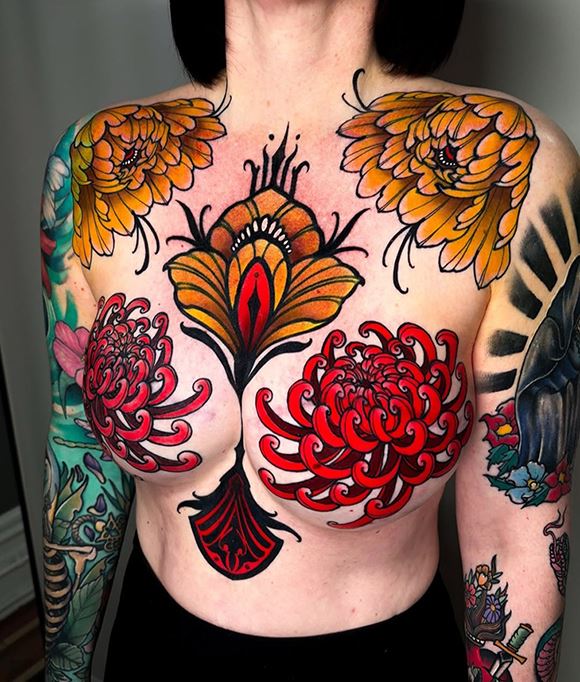
A: Absolutely. I recently completed a large torso tattoo that
included mastectomy scar cover ups. Not only was it rewarding
artistically, but personally as well. To be given the trust to
change someone’s life like that means more than words can describe.
I am forever grateful for the clientele I have built over these
years.
Q: Your digital work is fantastic. How
does your design process work? Do you prepare sketches in advance,
or do you prefer to develop the design collaboratively with clients
on the day of their appointment?
A: I truly appreciate that. My process is different than most
artists. I typically draw for the client’s tattoo early that same
morning, before they arrive. I have my assistant get all of the info
for their design ahead of time, and I’ll often request consultations
with them as well in order to get every detail of what they want.
Then when they arrive for their appointment time, my drawing and
stencil are already complete. My station is also always set up and
ready before they arrive as well. This way, the client never has to
wait more than 30 minutes after arriving before the needle is
touching skin.
Q: Your portfolio suggests a strong visual style that could
translate effectively to mediums beyond tattooing, like book
illustration or clothing design. Are there any avenues of creative
expansion you're currently exploring or considering?
A: I'm actually working on some clothing for release in the near
future. Although I’ve never considered book illustrations, that
might be something I’d be interested in if an author ever came to me
with an inquiry.
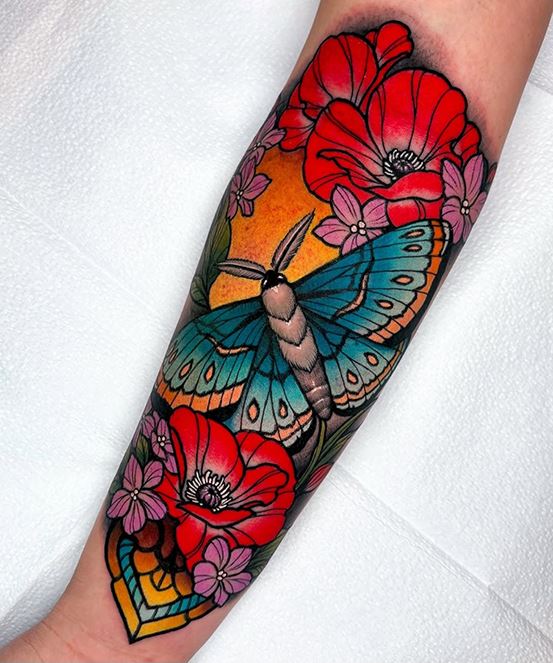
Q: Presenting fresh and healed tattoo
photos demonstrates a high level of transparency and
professionalism. It's a key factor in setting realistic expectations
for clients. What inspired you to incorporate this practice into
your portfolio?
A: This stems back from before I tattooed, when I was just a client.
I would always see mountains of portfolios from artists with only
fresh pictures, and very rarely would there be healed photos in
them. So it’s been important to me from the time I started tattooing
to document the healing process. I believe that it’s the ultimate
transparency for your clientele. If you can’t see any healed photos
from an artist, whether the tattoos look amazing or not, that is a
huge red flag.
Q: Earning client trust requires both exceptional tattoo
skills and unwavering ethical behavior. A good reputation solidifies
this trust, guaranteeing clients a quality tattoo. What, in your
opinion, is the most effective way to maintain this crucial
reputation?
A: To me, a great reputation stems from providing the client with a
great experience first and foremost. There are too many good
tattooers now to be able to compete with artistic ability alone.
Making sure the client is comfortable, respecting their time, good
conversation and some hospitality will go a long way for your
reputation. I know of countless tattoo artists who do incredible
work, but have poor reputations. If you are always late, don’t care
about the pain level of your clients and wear headphones while
tattooing (essentially ignoring your client), then I can totally
understand why someone would stop getting tattooed by you regardless
of your skill with a machine. I’ve said it before, and I’ll say it a
million times over. I would rather be covered in mediocre tattoos by
someone I enjoy being around, than have one “masterpiece” tattoo by
someone who was late and had a poor attitude while tattooing me.
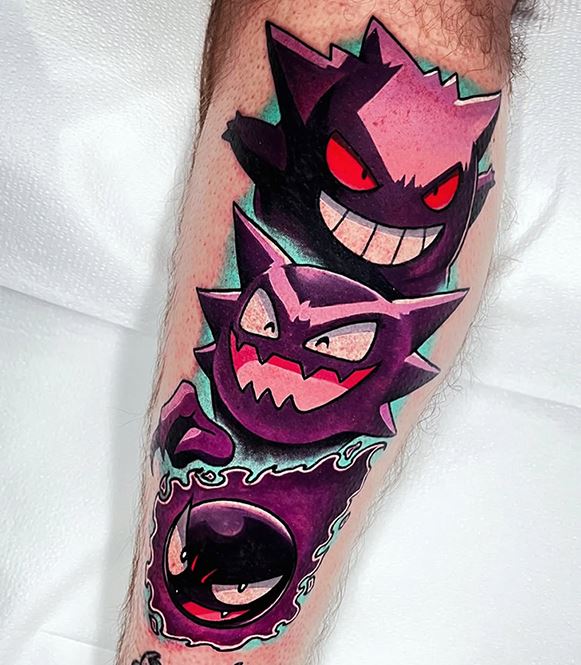
Q: Given complete creative license, what
would your ideal tattoo design project be?
A: This is a difficult question to answer. Any large scale project
where I’m able to combine any style and subject matter into a
cohesive sleeve/leg panel/backpiece/torso would be a dream come
true.
Q: Collaborative tattooing is becoming increasingly
prevalent. Are there any other artists whose work you admire and
with whom you'd be interested in exploring a collaborative project?
A: This is interesting to me because I have been doing collaborative
tattoos for a very long time. I love the idea of two artists coming
together and creating something extremely unique for the client that
nobody else can have. I have done collab tattoos with Jake Ross,
Ulyss Blair, Jay Joree, Matt Wright, and Manu Cruz. I would love the
opportunity to do a collab tattoo with London Reese or Steve Moore.
I am always down for collaborations!
Q: What's your take on the local tattoo scene? Are you
seeing any exciting developments, like new artists, styles, or
events?
A: Pittsburgh has always been a “tattoo city.” We have artists of
every style here and the talent pool is insanely deep. I have to
shout out the shop and the people I work with. Ross, Dexter, Matt,
Ari, Michele. Each one of them are killer artists and I feel like
Foundation Tattoo Parlor, where I call “home,” is the best shop in
the city. I also have to shout out Somewhere Good Tattoo and
Triumphant Arts Tattoo Studio. These shops have amazing tattooers
and great people working there as well.

Q: Please write down your studio location
and website/social media links. Also let us know if you are
available for bookings.
A: Foundation Tattoo Parlor, Pittsburgh PA. And you can find me on
Instagram or Threads @sethholmestattoo. If you search “Seth Holmes”
on Facebook I’m there as well, just not very active. As for booking,
all inquiries go through my amazing assistant Brittany at
sethholmestattoos@gmail.com. I typically don’t book myself more than
2 months, so it’s not usually a long wait to get an appointment.
Q: How do you perceive the current trends and evolution of
the global tattoo scene, and what aspects do you find particularly
promising or concerning?
A: For the most part I think the evolution in tattooing around the
world is incredible. It seems like every day I’m finding a new
artist from a different country who is producing mind-blowing
artwork and solid technical tattooing. The only thing I find
concerning is the advent and popularity of “ignorant style”
tattooing. Sorry not sorry, but tattooing horrible designs on
purpose is not a “style” in my opinion. You’re just guaranteeing
that local artists have cover ups to do in the future.

Q: How has your passion for tattooing
progressed throughout your career? Do you find your enthusiasm has
remained constant, or has it evolved and deepened over time?
A: I had some dark years in my career fueled by alcohol and drugs. I
was in a horrible place mentally and almost quit tattooing at one
point. Realizing the problem was internal, I quit drinking and hard
drugs 5 years ago. Since then, my fire has never burned brighter. I
am more passionate about tattooing now than when I first started.
With a clean mind, and clean bill of health, I am producing the best
work of my entire journey in this trade.
Q: If you could go back and give your younger self advice
about pursuing tattooing, what would it be?
A: My advice to my younger self would be that the grass isn’t always
greener. For a long time in my early career, I was constantly trying
to find the right place to fit in. Not artistically, but personally.
Over the years I’ve learned a few important things I wish I knew
earlier. Mainly that while drugs and alcohol are fun, they’ll also
destroy your ambition, and that it’s true when they say “never meet
your idols, they’ll only disappoint you.”


