
Interview with Sir Tinta
In honor of the eighteen anniversary of Skin
Artists Tattoo Magazine, we are spotlighting the top-tier talents
whose unique backgrounds have enriched the cultural landscape of the
industry. Sir Tinta joins this milestone celebration as a
distinctive voice in modern surrealism, bringing a high-end,
classical sensibility to the world of color and black-and-grey art.
With a foundation deeply rooted in traditional fine arts including
charcoal sketching and sculpture studies Sir Tinta approaches the
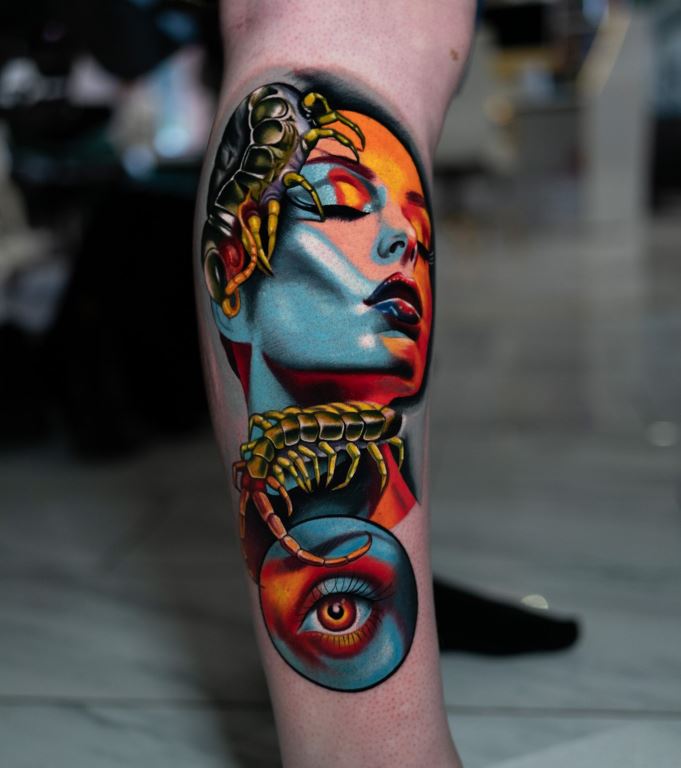
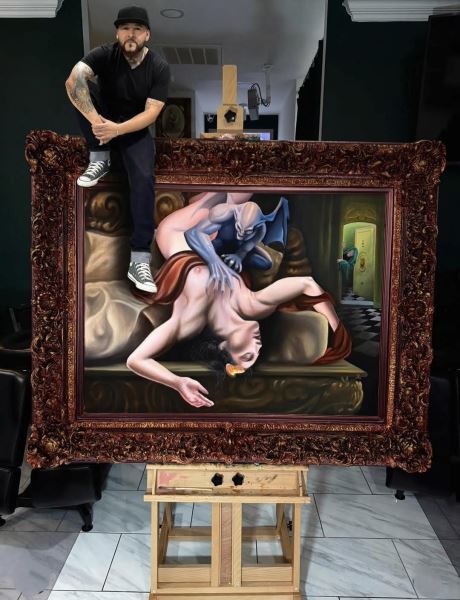
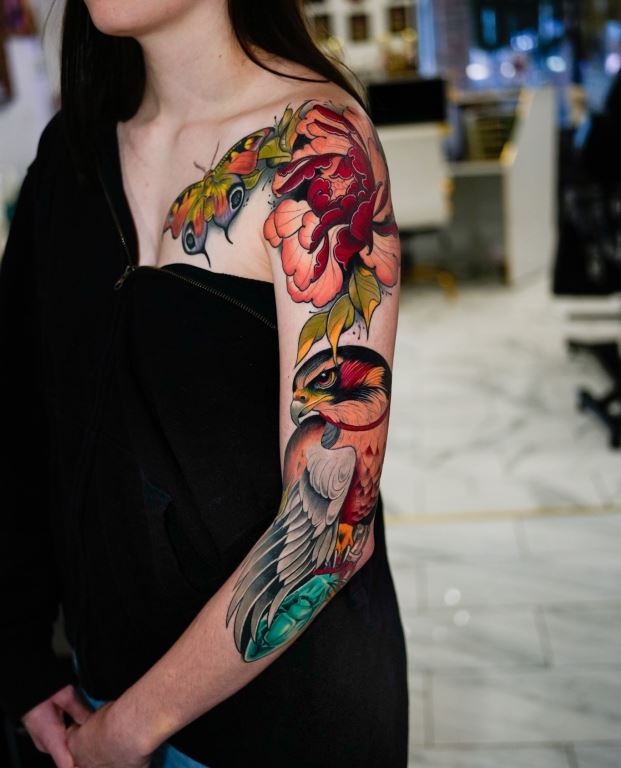
skin with the eye of a classical painter. His work is heavily
influenced by the time spent in Spain and Italy, absorbing the
baroque aesthetics and lighting techniques of the Old Masters. The
result is a portfolio of incredible depth, where mythological
mashups and haunting, dreamlike imagery appear almost like
three-dimensional sculptures on the body.
The following interview is dedicated to exploring the future of
tattooing. We discuss how classical art education provides a vital
bridge to technical mastery, the importance of "artistic madness" in
the creative process, and Sir Tinta's vision for the industry's
evolution as we move into this next chapter of the magazine’s
history.
Q: You have a clear background in traditional fine arts -
paintings, charcoal sketches, and sculpture studies. At what point
did you realize that skin was the medium you wanted to master?
A: Tattooing actually found me. I grew up in a rougher part of town,
tagging up walls. The local hoodlems saw my tags. They brought me a
homemade tattoo machine, I did my first tattoo on real skin.
Thinking of it being another medium to express myself, I soon fell
in love with the medium.
Q: Your highlights show a strong connection to Spain and
Italy. How have the classical aesthetics of these cities influenced
the way you approach a tattoo design?
A: The Classical and baroque art styles are my favorite. Being able
to visit and learn from these areas has really influenced the way I
tackle values and contrast on skin.
Q: Your work features incredible depth, almost like a 3D
sculpture on skin. How do you approach "lighting" a design before
you even pick up the machine?
A: Currently studying classical painting…with instructors having
studied at the Florence art academy in Florence Italy. There’s so
much to art. Drawing from real life has made it easier for me to
determine my lighting on tattoo designs. I normally add a lot of
black where it needs to go. I do this as I tattoo.
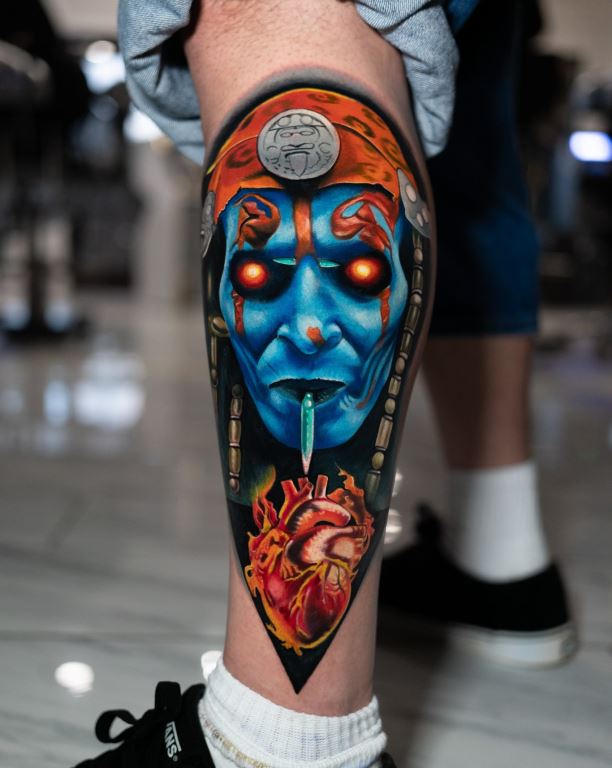
Q: We see a lot of dreamlike, sometimes haunting imagery in
your portfolio, clowns, melting faces, and mythological mashups.
Where do these stories come from? Are they collaborative with
clients, or do you prefer total creative freedom?
A: As of now, most of the black and grey designs are a collaboration
of frequencies between my client and myself. I love to design
surrealism/stories. Most of the color pieces are my originals.
Q: You seem equally comfortable with high-saturation color
and smooth black-and-grey. Which of these allows you to express your
"artistic madness" more effectively?
A: Black and grey and color balance themselves out, when doing black
and grey I focus a lot on values. I then use those values from black
and grey to give enough contrast to my color works. When they meet
in the middle it's always color that pushes me and is more
rewarding.
6. Working at Visual Impact Tattoo, how does the studio
environment and the artists around you push your personal
boundaries?
A: I love my team, I’m a big believer in energy and frequencies.
Everybody at visual impact is searching for greatness. We’re all
floating in the same plane. When I see any of my team members
elevate, that elevates myself.
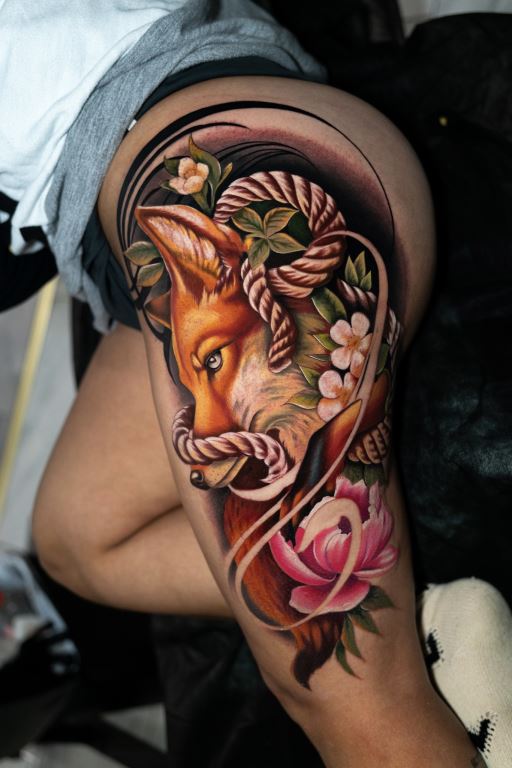
Q: Your bio says you’ve "lost your mind" to art and aren't
interested in finding it. How does that intense level of obsession
translate into a long 8-hour session with a client?
A: It is so cool when I’m tattooing my clients our conversations are
endless. A lot of times I attract individuals that have also lost
their mind somewhere, like myself.
Q: We see you working on iPads, canvases, and skin. Do you
feel a design is "finished" when the stencil is done, or do you let
the piece evolve during the tattooing process?
A: I find a lot of fun letting the design go where it wants to go.
It’s an artform. Sometimes if I see a mistake in the stencil, I use
that mistake as part the tattoo. To make it one of a kind. Mistakes
can sometimes put you in a place outside of everybody wanting to be
perfect.
Q: With the rise of AI-generated art, how do you think
"hand-drawn" tattoo artists can maintain their soul and uniqueness
in the coming years?
A: This is a hard topic, I started tattooing professionally when the
industry changed from coils to rotary. I used to see a lot of
artists being prideful not wanting to flow with the growth. If we
don’t move with the flow, we will eventually fall behind. Use AI as
a tool, a tool to help you see images not found on the internet.
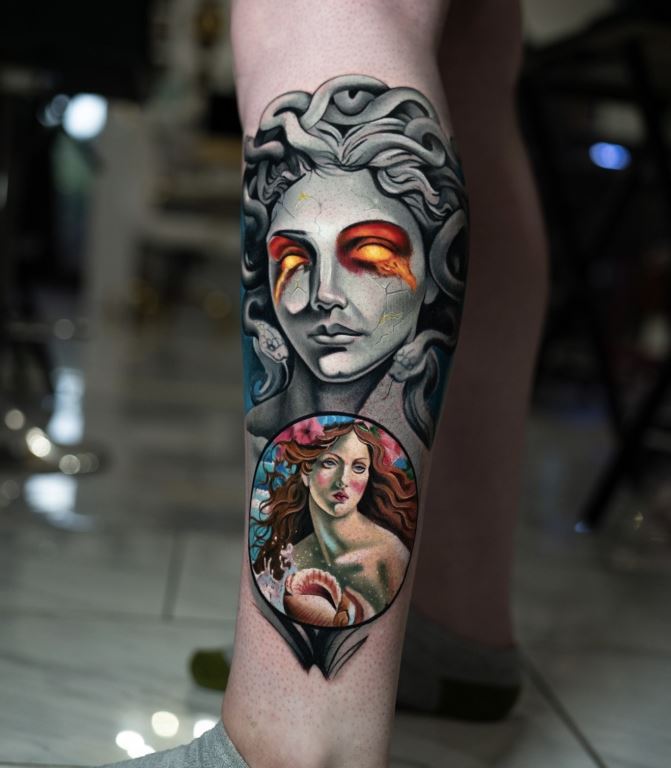
Q: What is one trend in tattooing today that you think will
stand the test of time, and one that you think will disappear?
A: The trend right now that’s blossoming into a beautiful flower, is
the art of individualism. Driven artists are now finding a way, a
way to erase the term starving artist. The trend that’s a weed in
our garden is non artists jumping into the industry as a way to make
money.
Q: Many current trends (like micro-realism) are criticized
for not aging well. As someone who mimics stone and sculpture in
your work, how much does "permanence" weigh on your design choices
compared to immediate visual impact?
A: I’m in this for the long run, learning from my past self, I’ve
notice adding contrast is the key, also adding white ink in areas
that might expand over time. Personally I'm not a big fan of micro
realism, though I have much love for the artists.
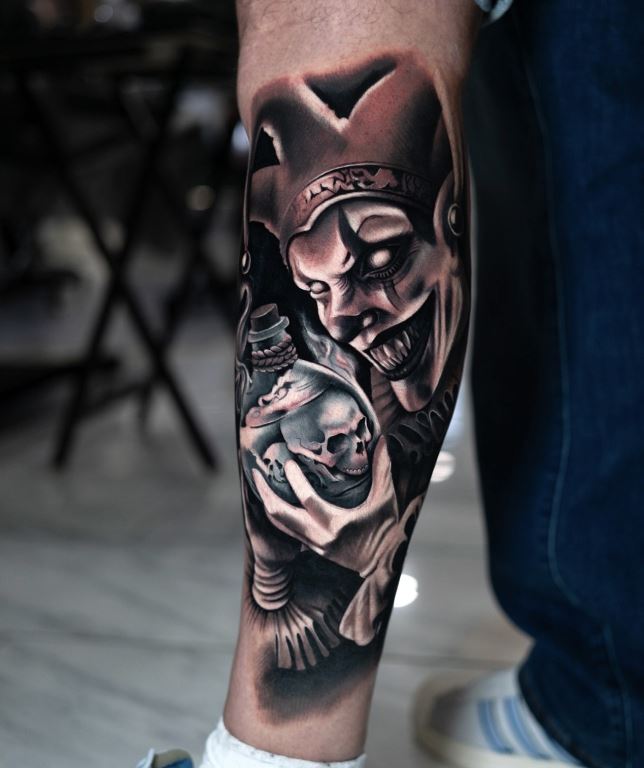
Q: We are entering an era where clients can "try on" tattoos
via AR apps before the first drop of ink. Do you see this as a
helpful bridge for communication, or does it strip away the mystery
and trust required in the artist-client relationship?
A: I think this will help us giving our clients exactly what they
want, as long as they are aware of the style the artist does. It is
just a tool.
Q: With 2026 seeing a major push for eco-conscious
formulations and sustainable studio practices, how do you see the
"physical" side of tattooing changing? Is Visual Impact moving
toward a more sustainable future?
A: Nowadays everything is disposable. We try to buy eco friendly
disposable materials for the studio. Visual impact evolves as I do
with time.
Q: You’ve mentioned that art is a "passage to save us from
our deepest fears." Do you see your future expanding beyond skin,
perhaps into digital galleries, VR art experiences, or returning to
the physical sculpture that clearly inspires your work?
A: Yes as a tattooers, we must be aware that at some point in our
journey we won’t be able to tattoo as good as while we are younger
and have the stamina. Tattooing is hard on our body. At a certain
point, I’m going to transition comfortably to just being an artist.
Q: If the 90s were about rebellion and the 2010s were about
the explosion of realism, what do you think the "headline" for the
2020s will be when we look back at tattoo history?
A: I think it’s going to be about “artists”. The transition of art
to skin.
Q: The global tattoo market is projected to reach nearly
$2.7 billion this year (2026). As tattooing moves from "rebellion"
to a "mainstream luxury," do you feel we are losing the "soul" of
the tattoo shop, or is this professionalization exactly what the
industry needed?
A: It’s only making it better… Companies now have money for better
equipment, there’s now more money for more knowledge, the tattoo
industry has always had that (growth) mentality. It’s an artist
industry, we starve for growth.
Q: We see conventions like Gods of Ink in Frankfurt and
major hubs in Bali and Madrid bringing artists together from every
corner of the Earth. Does this global "melting pot" help artists
find their own voice, or is it leading to a "globalized style" where
everything starts to look the same?
A: International tattoo conventions are the best. This is how crazy
styles are formed, different cultures, different believes. It is
beautiful.
Q: Europe and North America still hold the largest market
shares, but Asia-Pacific is growing rapidly. Do you see the next big
aesthetic movement coming from the West, or should we be looking
toward the East for the next wave of innovation?
A: I feel Asia is going to move fast! Since they are starting with
the higher tech, more user friendly machines, and all this knowledge
that’s now available in modern tattooing.
Q: When people look at a Sir Tinta piece ten years from now,
what is the one thing you want them to recognize as your
"signature"?
A: I am constantly evolving, always bettering myself. Ten years from
now I want my art to have the signature of growth and complete
dominance.


