
Interview with Taki
In recognition of nearly two decades at the
forefront of the global tattoo community, Skin Artists Tattoo
Magazine is spotlighting the top-tier creators who have transitioned
from being "service providers" to true destination artists. Taki
joins this eighteen anniversary celebration as a master of
character-driven surrealism, known for a style that is as
technically flawless as it is narratively rich.
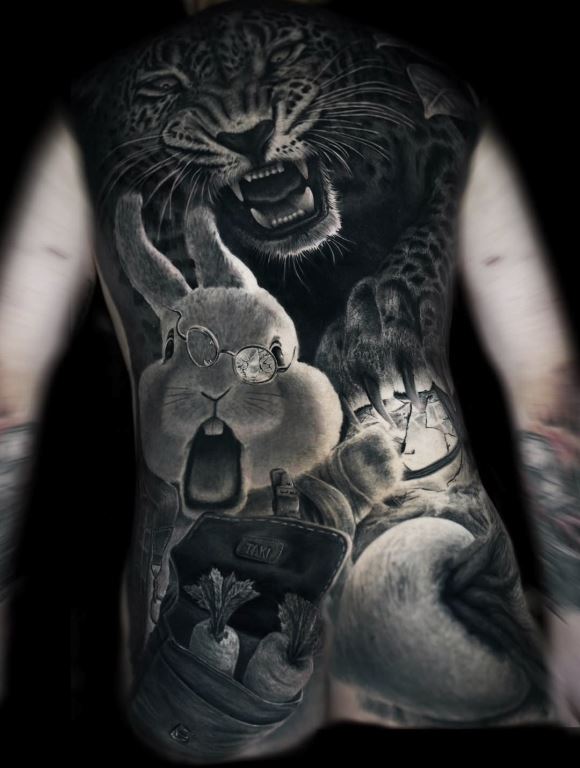
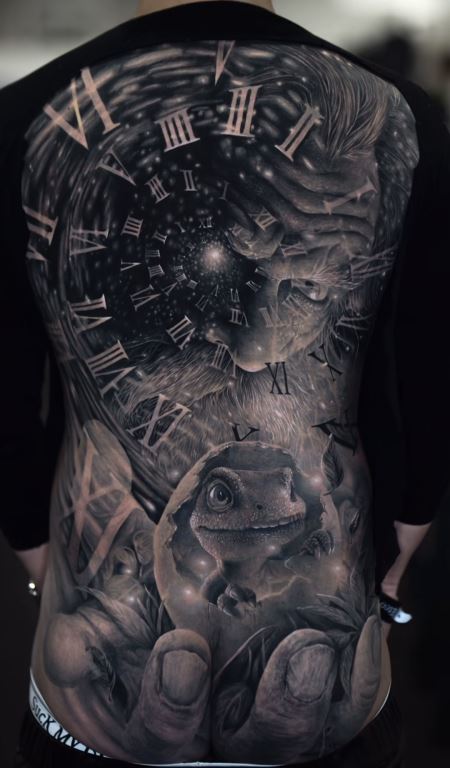
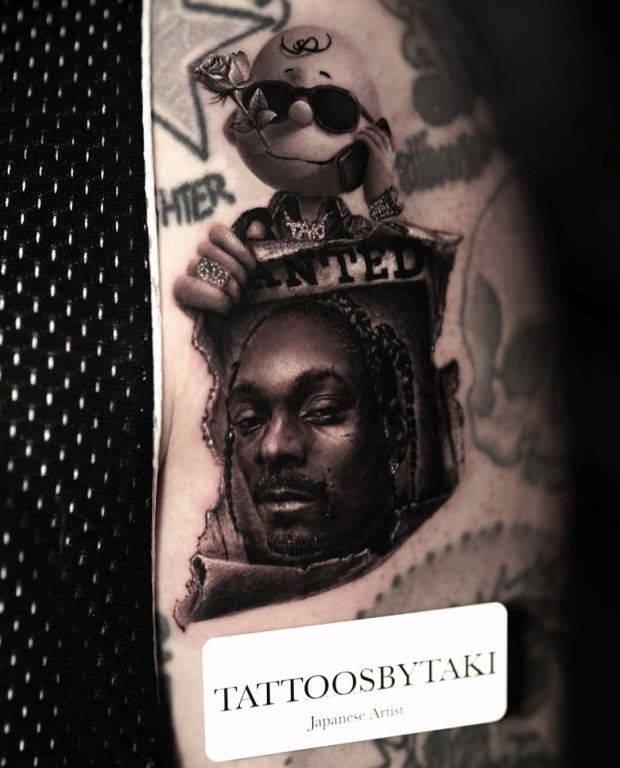
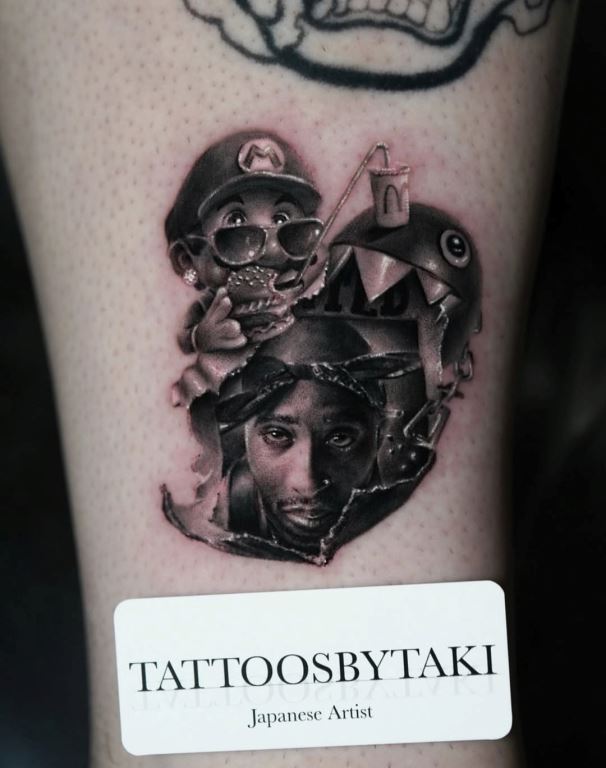
Taki’s work is an explosion of personality, blending cinematic
lighting with a playful yet highly sophisticated approach to
composition. His portfolio is a masterclass in texture and depth,
moving effortlessly between large-scale, atmospheric backpieces and
vibrant, hyper-detailed character work. By relying on a mix of
physical intuition and a deep study of human contours, he ensures
that every piece doesn't just sit on the skin, but flows with the
natural architecture of the wearer. The following interview is dedicated to exploring the future of
tattooing.
We discuss the mental shift required to build an uncompromising
personal brand, the role of hybrid technologies in the creative
process, and Taki's vision for how the "soul" of the craft will
remain its most valuable asset in an increasingly digital world.
Q: In 2026, trends move at light speed and die just as fast.
Do you believe we are entering an era where 'styles' no longer
exist, and only 'individual artist brands' remain?
A: Today, anyone can imitate a style and in many cases, even that
imitation gets recognition. But the person who truly created that
style went through a process. They lived, experienced things, and
translated all of that into their work. A real style is not just a
visual result. It is a reflection of a life. That is why it cannot
be fully understood or reproduced by someone else. Artists who have
gone through that process will naturally stand as a brand, not
because of the style itself, but because of the depth behind it.
Q: Tattooing is fighting for its place in fine-art
galleries. As an award-winning artist, do you see the future of your
work hanging on a museum wall as much as it lives on skin?
A: For me, tattooing is already fine art. The only difference is the
medium. Instead of canvas, I work on skin. Instead of hanging on a
wall, it lives with a person. I can see my work existing in
galleries or museums in the future. But that is not my goal. The
moment it exists on the skin, it is already complete as art. If it
ends up on a wall, that is just another form, not a higher one.
Q: We are seeing the first generation of
'Hybrid Artists' who use AI for brainstorming and 3D mapping for
placement. In 10 years, will 'analog' tattooing (drawing by hand on
paper) be a dead art, or a luxury premium?
A: Unless AI can truly absorb and express every experience an artist
has lived through, I don’t believe it can surpass human creation.
What we create comes from what we have actually felt, seen, and gone
through in real life. That kind of depth cannot be fully replicated.
Technology can support the process, but it cannot replace the weight
of real experience. That is something only a human can carry.
Q: The old-school 'rules' of who can tattoo are
disappearing. Does this decentralization of the craft excite you, or
do you worry the 'soul' of tattooing is being lost to the machine?
A: Today, it is easier than ever for anyone to start tattooing. But
not everyone can reach a real level. Tattooing is not just about
technique. It is built through time, experience, and how seriously
you approach it. Machines don’t take the soul away. They simply make
the difference between real and superficial artists more visible.
Q: With the rise of bio-tech, do you
envision a future where your tattoos interact with the wearer’s
body, perhaps pigments that react to light or movement?
If that kind of technology helps express something
meaningful to the client, I think it is something worth embracing?
A: At the end of the day, tattooing is about representing something
important to the person wearing it. If new technology can deepen
that expression, then I see it as a positive evolution. What matters
is not the technology itself, but how it is used to give more
meaning to the work.
Q: Winning major awards so early in your career can be a
trap. How do you prevent 'success' from making you play it safe? How
do you keep the 'hungry apprentice' mindset alive?
A: This question is very close to something I struggled with myself
last year. At one point, I became too focused on winning awards. I
was imitating existing styles and, for a moment, I was satisfied
with that. But because I had the goal of winning, I was able to
realize that mistake. It forced me to face what really matters as an
artist, and I spent a long time confronting that. Through that
process, the results started to follow, and I was able to win
awards. People sometimes evaluate me based on the fact that I
achieved those results in a short time. But I don’t see myself as
someone who has achieved something. I still see myself as someone
who is in the process of reaching a higher level.
Q: You are young, yet you respect the
heavy, dark traditions of Oriental and Surrealist art. How do you
translate 'ancient energy' for a Gen Z and Gen Alpha audience that
has a much shorter attention span?
A: Many young artists today start without building a proper
foundation, and rely too much on their own fixed ideas. Because
Japan is an island, it is easy for information and perspectives to
become limited. If people say that I respect traditional art, I
think it is because I try to step outside, gain different
experiences, meet different people, and first accept the opinions of
those who came before me honestly. From there, I try to express it
in my own way.
Q: When the industry labels you a 'prodigy,' they expect
every piece to be a masterpiece. How do you handle the psychological
toll of never being allowed to have an 'off' day?
A: I would be lying if I said I don’t feel that pressure. At first,
I was trying to create a masterpiece, and went through a lot of
trial and error. But because I went through that process, I think
I’m starting to bring out the inner colors that exist within myself.
There are 8.3 billion people in the world, and 8.3 billion different
inner colors. If I can bring that out, and it becomes a masterpiece,
I would be happy.
Q: As an Asian artist, you are part of a
movement taking 'Oriental' styles back from the Western gaze. How
does it feel to be the one defining the 'New East' aesthetic for the
entire world?
A: I don’t really think of myself as defining something for the
world. I’m just expressing what comes from my own roots. If that is
seen as a new perspective, I think it’s because it comes from
something real, not something borrowed.
Q: Your work uses black not just as a shadow, but as a
structural element. Do you view the body as something to be
'decorated,' or are you using your ink to 'reconstruct' the client's
physical identity?
A: I’ve learned the importance of placing black through pain,
mistakes, and experience. I use it to create impact, to make other
elements stand out, and to control depth, space, the flow of the
eye, and to place the design in a way that fits the body structure
and muscle flow. If the black is weak, the entire piece becomes
unclear. Black is not just something you add, it is what defines the
structure of the whole piece.
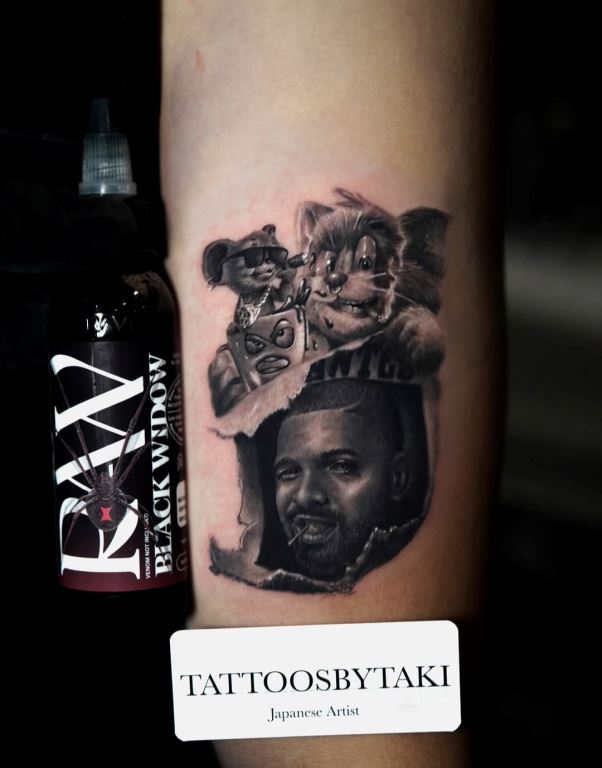
Q: There is a 'sharpness' in your work
that feels almost dangerous. Is this aggressive precision a
reflection of your personality, or a technical rebellion against the
'softness' of modern fine-line trends?
A: This is the first time I’ve been told that my work feels sharp.
But thinking about it, I don’t do things halfway, I don’t go back on
what I say, and I try to live in a straightforward way. So maybe
that is where the sharpness comes from.
Q: Many artists over-complicate their designs. Your work has
a powerful 'editorial' feel. How do you know exactly what to leave
out of a design to make it feel more impactful?
A: Even now, there are times when I overcomplicate my work, and when
I step back, it becomes harder to read. The most important thing,
above everything, is clarity and impact. If a detail interferes with
that, I remove it. I’m often appreciated for detailed work, so I
don’t want to lose that strength. But at the same time, I keep it at
the minimum level of detail where people can still clearly
understand it. It’s about staying on that edge between clarity and
my own strength in fine, delicate expression.
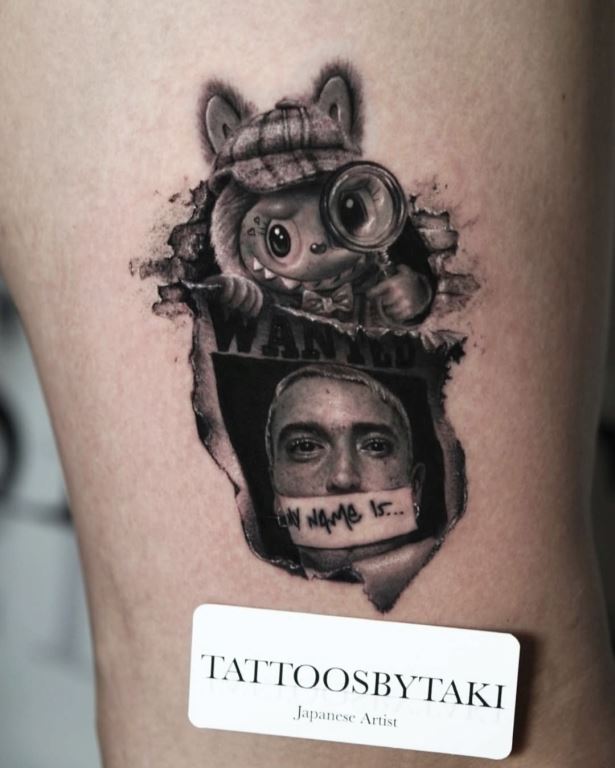
Q: You design for the 'fresh' photo and
the '20-year' reality simultaneously. How do you maintain that
razor-thin balance between hyper-detail and long-term legibility?
A: When I see my work after it has healed, there are times when the
details I spent a lot of time on are no longer there. Every time
that happens, I take notes. From there, I continue to study which
details can actually hold with my technique, and which details are
truly necessary.
Q: In a field of millions of artists, being 'good' is the
baseline. What is the one thing about your process that is a
complete anomaly compared to everyone else?
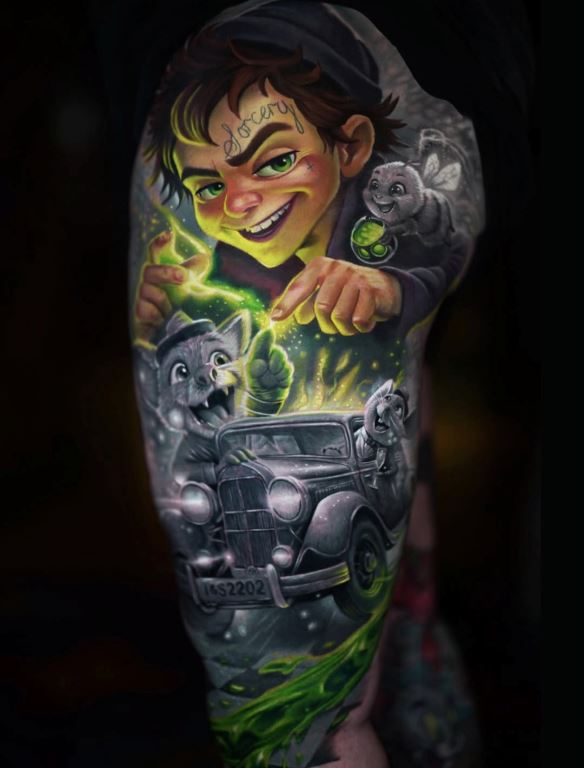
A: I aim for a level of composition that feels like a paused scene
from a movie. I place a strong focus on depth, storytelling, and how
light and shadow shape the image. Through consultation, I listen to
the client’s profession, personality, goals, and the way they live,
and I translate that into the design. From there, I decide the story
and theme, and focus on what the piece should represent. Everything
I create has a meaning behind it.
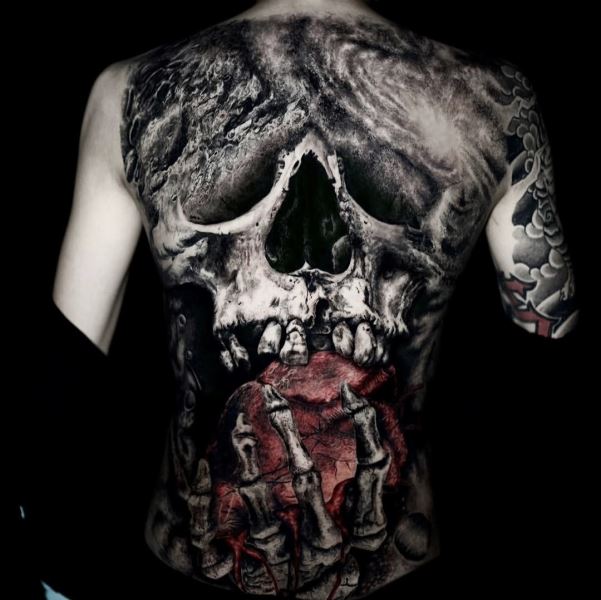
Q: In 2026, the artist is often more
famous than the art. How much of your success do you attribute to
your personal 'vibe' and the story you tell, versus the actual
technical application?
A: For me, personality comes first. Your experiences, the way you
live, and what you truly care about will always show in your work.
That is what moves people. I actually have a barber license as well,
and within a year and a half, I was selected in the top 25 out of
200,000 entries at one of the biggest barber awards in the world.
But I’ve never called myself just a barber or just a tattoo artist.
I see myself as an artist. More than anything, I believe in not
compromising my way of living or my beliefs. That foundation is what
makes people connect with the work, and even support it. Technique
is important, but it exists to carry what is behind it.
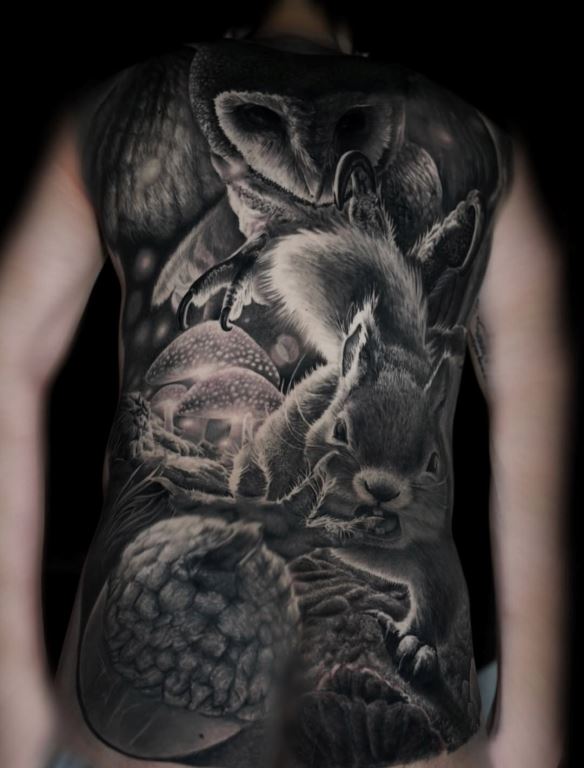
Q: Do you use digital body-mapping to
ensure your work flows with the human form, or do you rely on
'physical intuition' for the placement?
A: I study the fundamentals of creating a beautiful flow that
follows each person’s body, including the shape of their muscles and
natural contours, and I always keep that in mind. I wouldn’t say I
have mastered it yet, but I’m constantly working on it. Especially
for larger pieces, I draw directly on the body with a pen and build
the design from there. For example, with back pieces, I try to use
the natural shape and contours of the body, including the form of
the hips, to enhance the flow.
Q: What was the mental shift required to
stop being a 'service provider' and become a 'destination artist'
where the client follows your vision?
A: I’m very conscious about building my artist brand. As a person
first, I want to be someone who is respected. I don’t want to be
afraid of challenges. Instead of just facing the wall in front of
me, I try to look for a higher one. I want to be the kind of man
that my younger self thought was cool. By staying true to that, I
think people have started to trust me and leave things to me.
Q: How has the high-standard, high-pressure tattoo scene in
Asia influenced your personal pace and your definition of
excellence?
A: I think environment is a very important factor. Because it
changes what you consider “normal.” For example, if you are
surrounded by people who are naturally working on their art from
morning until the next morning, or people who take on challenges
that most would avoid as if it’s normal, your own standard of what
is “normal” begins to change. I believe who I am today is strongly
influenced by the fact that I’ve been surrounded by world-class
artists, both seniors and friends. If you call yourself an artist,
then you have to be ready to accept what comes with that.
Collaboration tattoo with artist Sam McAleese
Q: In a world where artists are taught to
say 'yes' to everything to build a brand, you’ve reached a level
where you must refuse projects. What is the most difficult 'no'
you’ve ever had to say, and how did it accelerate your career?
A: To protect my own direction, I gave up chasing money and
stability. Honestly, making money as a tattoo artist is not that
difficult. That’s exactly why I felt it wasn’t something I should
focus on. Because of that decision, I believe I started to attract
clients who trust me enough with their bodies.
Q: Tattooing eventually returns to the earth. Does this
'impermanence' make you more aggressive in your pursuit of
greatness, and what is your final piece of advice for those who are
afraid to leave their mark on a world that eventually forgets
everything?
A: Because it’s not permanent, I believe life itself is valuable. We
have a limited time, and that’s exactly why that time matters. When
someone trusts me with a full back piece, I approach it with the
intention of changing their life. Tattooing is not just something
that goes on the body. The longer I’m involved with someone, the
more we talk, and the more influence it can have on their life. As
an artist, I believe I need to be someone who can have that level of
impact. In reality, there are people who have told me that their
lives changed because of me. Being invited as one of the
representatives of the new generation for an 18th anniversary event,
I believe all of this is because of the people who raised me— my
mentors, my family, and my parents. I want to prove their greatness
through what I do. I want to become someone who can prove that when
I am recognized all over the world. I understand the idea that
nothing matters because everything will eventually be forgotten.
People have different roles, and if someone wants to live a normal
life with that mindset, I think that’s fine. But in a world this
big, it’s not strange that there is at least one person who chooses
a different path. I just happen to be that person.


