
Interview with Tomek Glinski
Hello Tomek Glinski! Thank you so
much for taking the time to do this interview. Please start by
telling us something about yourself and your background. Do you have
any formal art education or you are a self taught artist?
My name is Tomek, and I was born and raised in Germany. Art has
always been an essential part of my life. I became actively involved
in the graffiti and street art scene when I was 14 years old, and
from that point on, I developed a deep appreciation for all forms of
visual art. I knew early on that I wanted to create artwork that
could inspire and bring joy to others. In 2012, I began my formal
training as a tattoo artist, while also completing a specialized
program as a Design Technical Assistant. This path has allowed me to
build a strong foundation in both technical and creative skills,
combining my passion for art with professional training.
Q: What inspired you to try tattooing?
A: I was definitely inspired by street art and graffiti. My early
work focused mainly on commissioned pieces, and I think that’s where
the foundation for my tattoo career was really laid. In those
projects, clients would come to me with an idea, and my job was to
bring it to life creatively. This close collaboration working
directly with people to shape their vision has always fascinated me.
Additionally, in the graffiti scene, there’s a constant drive to
think outside the box and stand out from other artists. Graffiti
taught me a lot about flow and composition, skills that have been
essential in developing my tattoo style.
Q: How long have you been tattooing and when did you feel
like you are heading in the right direction creatively and
technically?
A: I’ve been tattooing for over 10 years now. It’s a continuous
journey of growth, and there’s always more to learn. My focus has
always been on creating the best possible tattoo for each client,
and I’m often surprised by the directions my artistic path has
taken. When I started, my work revolved almost entirely around
typography and comic characters. I never imagined back then that I
would specialize in realism and cover ups. But that’s exactly what
makes every creative journey - and life itself so exciting.
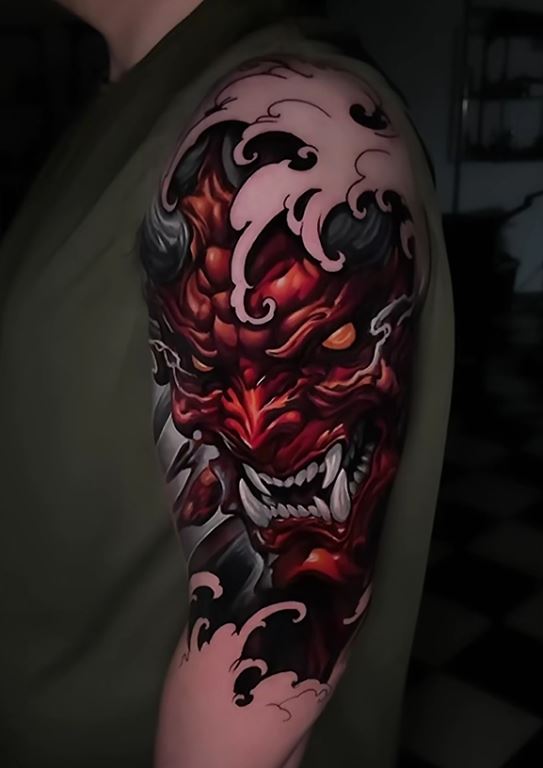
Q: Many will say that tattoo realism as a
style is limiting" from a creative point of view. You are required
do a perfect resemblance of the original design, often a photograph.
Although it's challenging, I believe talent and experience will do
the magic. I like how you still manage to add some unique touch to
each piece. Creatively comes here! Tell me about the creative
process. Do you draw sketches before the appointment or?
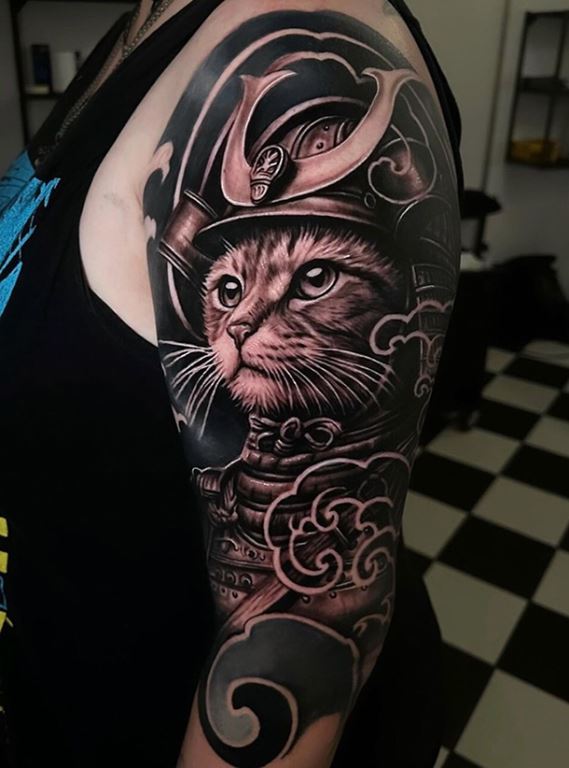
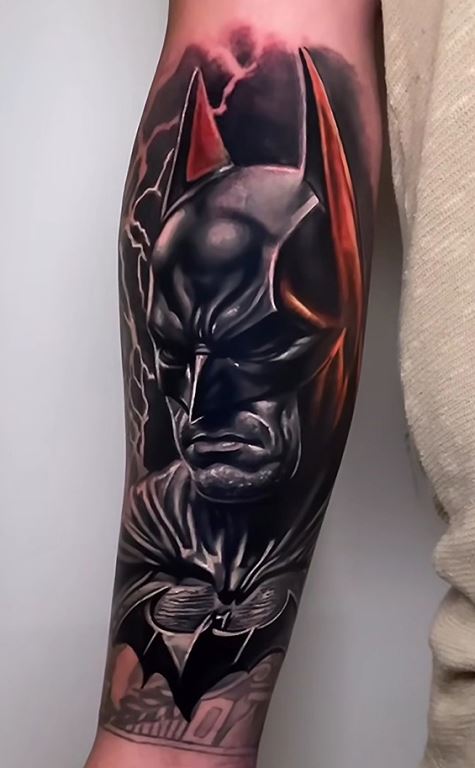
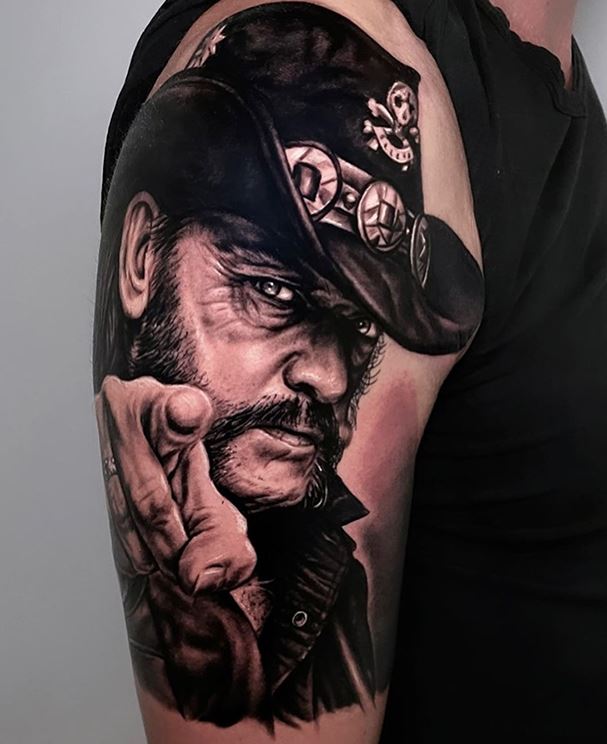
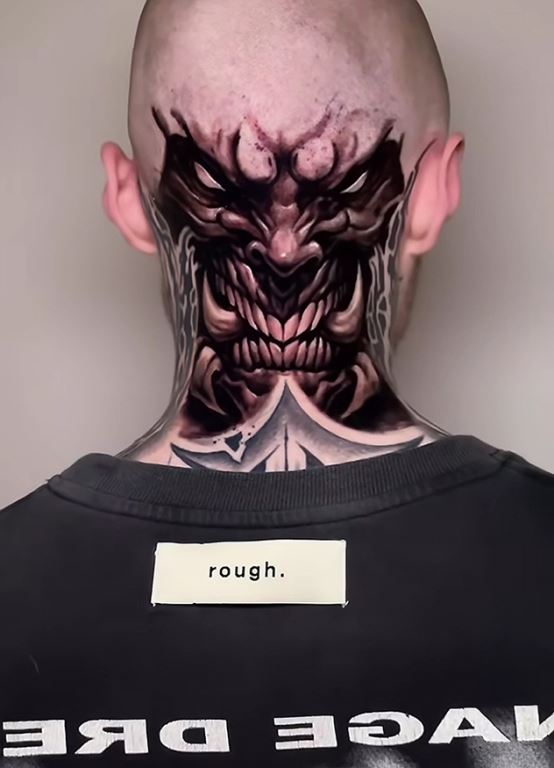
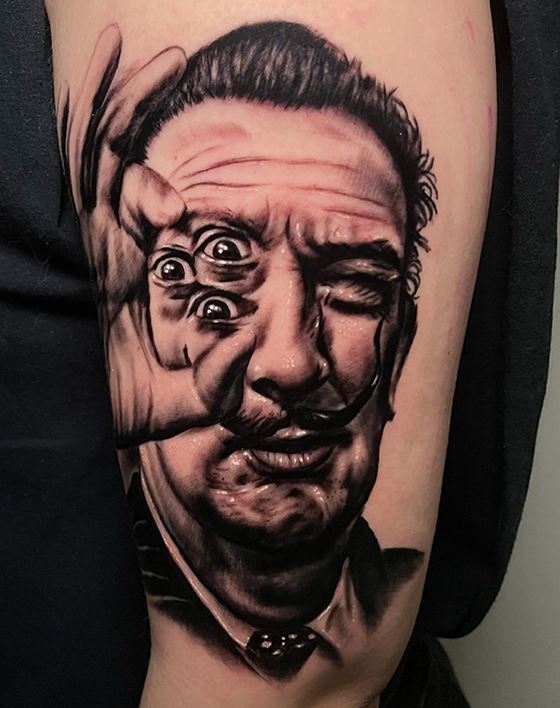
A: While realism as a tattoo style can seem creatively limiting, I
find that this challenge is actually what makes it so exciting.
Realism, in many ways, is about interpretation. If you gave the same
reference image, tools, and colors to five different tattoo artists,
each result would be distinct. Everyone’s style, touch, and vision
bring something unique to the final piece. For me, it’s less about
achieving strict photorealism and more about creating a sense of
depth and bringing figures to life with a three-dimensional feel. In
recent years, I’ve focused on incorporating more illustrative
elements into my work, carefully playing with light and shadow
contrasts as well as complementary colors to make each piece dynamic
and unique. When it comes to my creative process, I work with
digital sketches on a pen tablet. This gives me flexibility to
adjust and refine details, ensuring the design is both true to the
client’s vision and infused with my own artistic perspective.
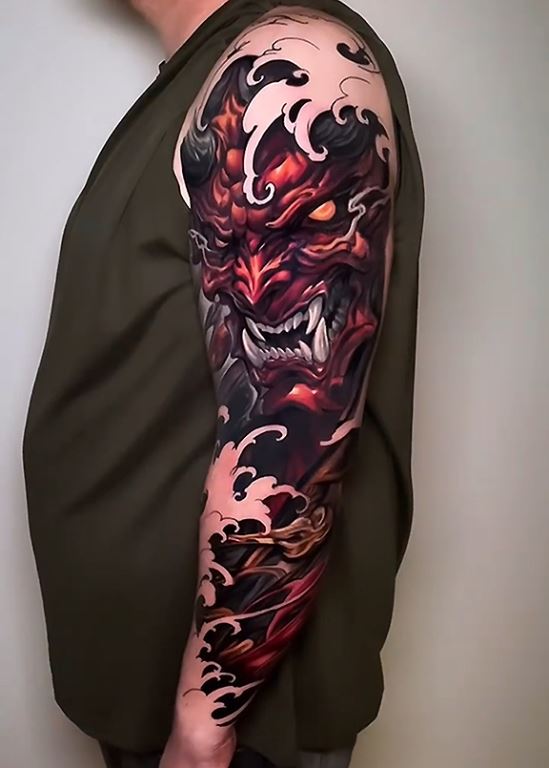
Q: Some of the designs are quite complex,
especially the big ones like sleeve designs. Sometimes the clients
want more decorative elements like flowers or interesting
backgrounds etc so the design has to be well prepared. Do you have
any rules when it comes to design correction?
A: When designing complex tattoos, especially larger projects like
sleeves, I always keep in mind that a tattoo isn’t just about
technical precision - it’s ultimately a decorative piece that should
look natural and enhance the client’s body. Composition is key, as
is adapting the design to the specific placement and body shape,
which makes each project unique. By now, most clients who come to me
are familiar with my style and approach, but I still take their
ideas and preferences seriously. I value the close collaboration and
communication, even after all these years, as it’s a huge part of
the creative process. When it comes to cover-ups, however, the
design constraints are much stricter. In those cases, I require
clients to give me full creative freedom. This allows me to create a
cover up that not only hides the old tattoo effectively but also
holds up beautifully over time.
Q: Do you have any favorite tattoo you did that was a bit
challenging to do but in the end it all looked amazing?
A: To be honest, probably every second cover-up I’ve done, haha!
Each cover up is unique, and so is the approach I take with each
one. Even after hours of work, there are moments where the design
can look like a total mess - but in the end, everything comes
together beautifully. That’s the rewarding part: seeing a
challenging cover-up transform into something that looks seamless
and fresh.
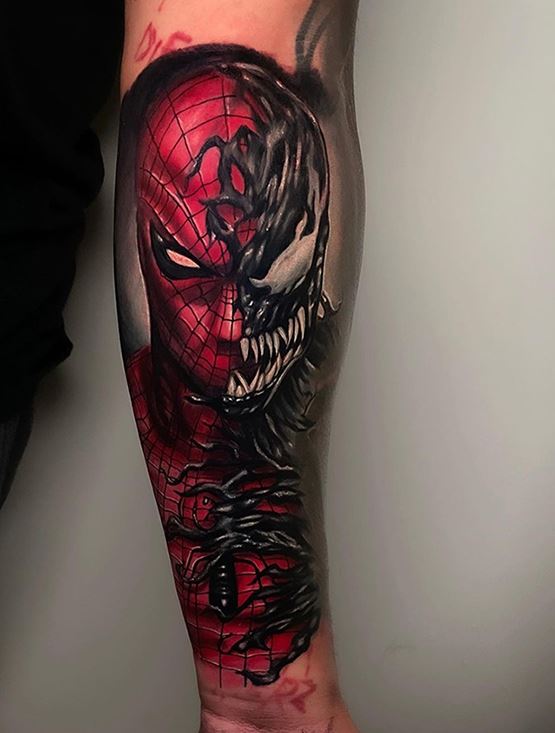
Q: The longest session with a client? How
do you handle a busy schedule and the pressure to always give your
best?
A: I work a lot, and my sessions can go very long. I put a great
deal of time into preparation and design, especially when it comes
to cover-ups. If there’s a chance to complete a tattoo in one
session, I’ll usually go for it - even if that means working late
into the night. My longest session so far was a full 12 hours of
pure work. Handling a busy schedule and always delivering my best
can be intense, but the satisfaction of creating something
meaningful for my clients keeps me motivated. For me, each piece
deserves that dedication and focus.
Q: Are there any tattoo artists you would like to work on a
big tattoo like a full back piece? Collaboration tattoos are usually
a great mix of the artists' styles and look really cool.
A: Absolutely! There are so many incredible artists I admire and
would love to collaborate with, especially when our styles and
approaches differ. Working together on a large piece like a full
back can bring such complexity and excitement to the project. The
challenge of finding common ground to create a cohesive design is
inspiring and often leads to amazing results. I had the opportunity
to collaborate with Pascal Benecke, a fantastic artist, on a
client’s chest and stomach. He did his part in black and gray, while
mine was in color. Combining our styles brought out something really
unique in the final piece, and I’d definitely love to do more
collaborations like this in the future.
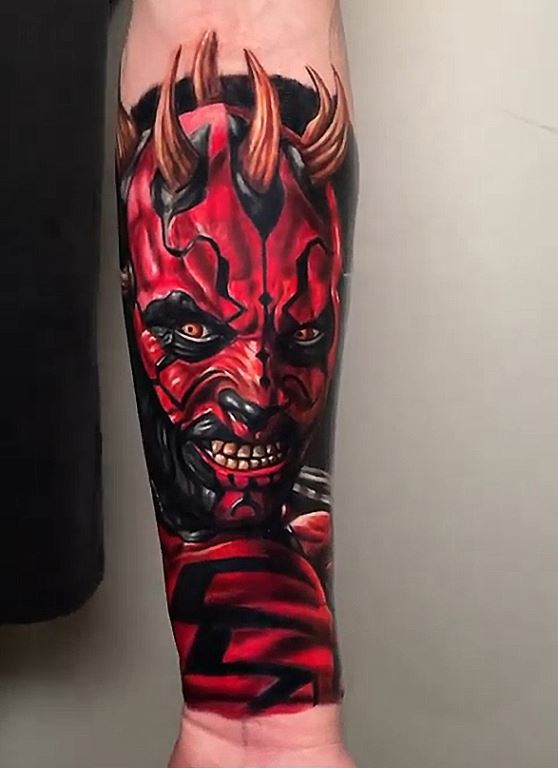
Q: I believe not many artists want to do
these kinds of tattoos simply because there are some limitations -
technically and creatively. What is the most crucial factor when
choosing a design for a cover up tattoo? Is it true that when doing
cover ups the skin gets more irritated than when working on "bare"
skin? Guide us a little bit please.
A: It’s true that creating a successful cover up tattoo comes with a
lot of limitations. Careful preparation and clear communication with
the client are essential to achieving the best possible result. The
process itself is often longer and more demanding than working on
“bare” skin, especially with full color tattoos. Each cover up is
unique, but overall, it’s a more challenging procedure - for both me
as the artist and the client’s skin. I understand that many clients
come to me hoping to transform a tattoo they regret, and I’m
committed to giving them something they’ll be proud to wear for
life. Patience, precision, and knowing exactly how to work with the
existing tattoo are key factors. In terms of healing, cover-ups can
be more complex than fresh tattoos, as the skin has already been
inked and can be more sensitive. In some cases, follow-up sessions
and touch ups are essential to ensure the cover-up looks vibrant and
lasts over time. The addition of a second layer after some healing
time is often needed to make sure the tattoo holds up beautifully
and permanently. Getting a tattoo should be an beautiful experience.
I’ve made it my mission to give this feeling back to people who did
not had the chance to experience this with a poorly done tattoo.
Q: How one day goes for you as a tattoo artist? Do you have
any interesting hobbies?
A: I travel a lot, and I love to combine my passion for exploring
new places with my work by doing guest spots wherever I can or it’s
possible. Meeting people from different countries, experiencing new
environments, languages, cultures, and perspectives is incredibly
inspiring to me. I still enjoy painting and drawing and often try my
hand at different art forms to keep my creativity fresh. Years ago,
I would have listed skating and playing guitar as hobbies too, but
art has taken such a central place in my life that those activities
have taken a backseat. As for a typical day as a tattoo artist, it’s
a mix of preparation, design, and focused time with clients, making
each day unique and creatively fulfilling.
Q: Would you try to experiment with other
tattoo styles?
A: Absolutely! I’ve already started incorporating more illustrative
elements into my work, and experimenting with other styles can be
incredibly inspiring. Exploring different approaches not only
broadens my skills but also helps me evolve and grow as an artist. I
can’t say exactly how my work will look in five years, but that
uncertainty is what makes this journey so exciting. Embracing new
styles and techniques keeps my creative process dynamic and open
ended.
Q: Where are you located? Please write down your studio
location and website/social media. Let us know if you are available
for bookings.
A: I am based at Paintera Tattoo in Krefeld, Germany. You can find
the studio on Instagram https://www.instagram.com/paintera_tattoo
I’m also a regular guest artist at Artfaktors in Münster, and I
frequently do guest spots across Germany and Europe. For bookings,
feel free to reach out through my social media or contact the studio
directly. I’m always open to discussing new projects and would love
to bring your ideas to life!
Q: What's your opinion about the local tattoo scene? Do you
see progress?
A: When I first started tattooing, the scene in Germany was
relatively small and close-knit. Since then, the industry has grown
immensely, developing at an incredible pace. Today, there are so
many diverse and talented artists, making the tattoo community here
both vibrant and inspiring. However, it’s also become more
challenging for newcomers to establish themselves. With the
industry’s growth, there has been a rise in studios that prioritize
profit above all else, resembling factories more than the classic
tattoo studios with unique character and atmosphere. Despite this,
there are still many authentic studios and artists who value
creativity and craftsmanship. I believe it’s essential to keep
pushing creative boundaries, stay open to learning, and draw
inspiration from the talented local community. This openness is what
keeps the art form evolving.
Q: How often do you participate at local
or international tattoo conventions, expos or seminars?
A: I used to attend conventions all across Europe quite frequently.
For me, it was all about building a name for myself, getting to know
the tattoo community and industry, and gaining recognition for my
work. I only participated in two contests throughout my career, but
I’m proud to say I won awards both times. Unfortunately, COVID has
led to a significant drop in the number of conventions in Germany.
That said, I definitely plan to participate in more conventions in
the future, including international ones. In addition to attending
events, I’ve also taken part in seminars to further my skills, and
I’m planning to start hosting my own seminars soon, focusing on my
knowledge and techniques for cover-ups. Partnering with some
excellent figures in the industry, this is an important next step
for me and a chance to share what I’ve learned along the way.
Q: Do you think these types of events are good for the young
and talented artists who still need some time to develop and grow?
A: Connecting with other artists is incredibly valuable! Even though
we all use the same basic equipment - a machine pushing a needle
back and forth - tattoos today are more diverse and varied than
ever. The exchange of experiences, techniques, and fresh inspiration
from working in different studios, cities, or countries can be
transformative for any artist’s growth. Proper marketing is also
essential. While quality work will always stand out, we now have an
array of tools that can help us reach a potentially vast audience.
This is both a great opportunity and, at times, a bit overwhelming.
Establishing a name - and even a brand - for yourself can open
unexpected doors in this field, allowing for a more dynamic and
fulfilling career. For young artists, conventions and events offer
an ideal space to make connections, showcase their work, and gain
inspiration. This profession is challenging, but it’s also endlessly
rewarding and exciting for those willing to invest the time and
energy.
Q: Talking about progress... it is super
cool if someone is lucky enough to get sponsored by tattoo brands
like you. Congratulations! How and when these collaborations
happened and how much their support helped you as an artist?
A: I think I can speak for every tattoo artist when I say it’s a
huge honor to be approached by a well-known brand in the industry
for a sponsorship. It’s a real mark of respect when a company sees
potential in you and wants you to represent their products. I’ve
always used products from Unigloves and EZ Tattooing, so being
sponsored by both is a true blessing, as I genuinely believe in
their quality. EZ Tattooing reached out to me earlier this year
(2024), and it’s been a fantastic partnership. My collaboration with
Unigloves began in 2020 when we started the Paintera project.
Together with Dima Pawlenko, a good friend and business partner, and
Majoe, a well-known rapper in the German-speaking world and a
long-time client, we worked on a shared vision of creating our own
studio. Majoe and Dima opened the studio as owners, and I joined as
an artist. Thanks to Majoe’s visibility and reputation, Unigloves
became aware of Paintera and, in turn, of me. Their support has been
invaluable, providing both recognition and resources that allow me
to push my work even further as an artist.
Q: What would be the next career highlight?
A: As I mentioned, a major career milestone for me will be
organizing and leading my own seminar, where I can share my
experiences and knowledge with talented artists. This is a
meaningful step, and I’m excited to contribute to the growth and
development of others in the industry. I also hope that, even years
from now, I’ll still have moments where I can tell myself I’ve just
completed the best tattoo of my career. For me, these moments of
progress - where I can see that I’ve taken my skills and techniques
to a new level - are the real highlights. I remember each of those
milestones vividly, and they keep me motivated. Stagnation is my
biggest fear as an artist. In 2025, I’ll be touring and working
across Canada for almost six months. While I have experience with
international guest spots, staying in one place for such an extended
period will be a new challenge and an incredible opportunity for
growth. It’s a big step for me, both as an artist and as an
individual, and I’m looking forward to everything this journey will
bring.
Q: The American tattoo scene is huge and
very diverse, if given chance would you consider trying your luck
there? I think that would be amazing!
A: I’ve always been fascinated by America, and for years I’ve
traveled to different places there to experience the culture and
meet incredible people, some of whom I’m now lucky enough to call
friends. It’s clear to me that my path is leading in that direction,
as there’s no other place where an artist’s potential can be
explored as fully as in the U.S. Over the years, I’ve been contacted
by various American studios inviting me for guest spots, which only
strengthens my desire to work there someday. While securing the
opportunity to work in the States is no easy task, it’s definitely
my long-term goal. My extended stay in Canada next year will at
least bring me to the North American continent, where I’ll learn and
adapt to life outside Europe, establishing myself in a new
environment. This step brings me closer to realizing my vision of
working in the U.S. in the future.
Q: What do you like the most about being a tattoo artist?
A: What I love most about being a tattoo artist? First and foremost,
it’s the pure enjoyment. Of course, there are good and bad days,
like in any profession, but being able to wake up most mornings and
think, “Amazing, I get to work today!” feels like a true privilege.
The connection with people is also a huge part of it. Over the
years, you build meaningful bonds with clients through collaboration
and shared experiences. It’s not often you find a job where you’re
hired and paid to create something for someone else, but in the
process, you’re also creating something for yourself—something that
enhances your portfolio, pushes your skills, and brings new
challenges to help you grow. It might sound sentimental, but I
genuinely love making people happy. People get tattoos for all kinds
of reasons - sometimes to remember a place or a person, to express
themselves, or simply because they find it beautiful. For so many, a
tattoo can hold incredible personal meaning. One of the most
rewarding experiences is seeing how a tattoo can impact a person’s
confidence. I’ve had clients who, at first, were insecure about
their bodies - some felt too heavy, others too thin—and were
hesitant, even shy, about taking off their shirt for the tattoo.
Then, months later, I’ll run into that same person, proudly showing
off their tattoo in public, a complete transformation in how they
carry themselves. Knowing that my work can have such a positive
effect on someone’s self-esteem is deeply fulfilling and keeps me
motivated - even after more than ten years.
Q: If you were starting today, what would
you do differently? What's your advice for those who want to get
into professional tattooing?
A: As the more mature and experienced person I am today, if I were
starting over, I’d probably have a clearer sense of direction and
style from the beginning. I spent many years in a phase of
self-discovery, and while that journey was important, knowing where
I wanted to go would have saved me some time and focus. For anyone
starting out: stay open and eager to learn. Embrace a healthy level
of self-criticism, but above all, let passion drive you. Never make
earning a lot of money your main goal. Quality and dedication will
always stand out. When you commit to producing meaningful,
well-crafted work, success and financial reward will naturally
follow. Choosing the path of a tattoo artist isn’t easy. It’s
intense and highly competitive, and it’s natural to compare yourself
to other talented artists you admire. But be patient, and remember
that, as much as you want to express yourself artistically, you’re
being entrusted by someone to create a tattoo that will truly
resonate with them. Always try to see the person behind the tattoo,
and strive to translate their vision with your own professional
insight and creativity


