
Interview with Tye Tremblay
Hello Tye Tremblay! Thank you
so much for taking the time to do this interview. Please start by
telling us something about yourself and your background. Do you have
any formal art training or you are a self taught artist?
Well firstly, thank you for doing this interview! I am French
Canadian and come from a small mining town up north. I moved to
Toronto to study Fine Arts and Art History at UofT, which eventually
led to me getting a part-time job at a tattoo studio.
Q: What sparked your interest in art?
A: I’ve always been a huge art nerd! I grew up hiding in my room
just drawing and painting all day. There’s something so satisfying
about creating something from nothing and the need to make art is
constant. I joke about it, but when I’m on vacation I end up feeling
the need to do something artistic within a few days of relaxing or I
go crazy!
Q: When did you try tattooing? Was it hard to learn the
basics?
A: I was lucky enough to get a job doing tattoo designs at a studio
when I was still a student. I was making decent money serving
tables, but I wanted to do something that would allow me to be more
creative and this job seemed perfect! I wasn’t really planning on
having a career in the tattoo industry but, after just a few months
of being there I knew that this was going to be my passion for life.
I ended up dropping out in my final year of university to pursue
tattooing full time and I alternated learning through my
apprenticeship and continuing to design for one of the artists at
the studio. It was a crazy schedule, but it really made me fall in
love with the industry. And I always say that “it’s easy to tattoo,
but it’s very hard to tattoo well”. The basics can be picked up
pretty quickly, but it takes years and years of practice to really
hone your skills to the point where you start to get the results
that you’re looking for. Tattooing is a constant journey of
improvement and I think that’s why I love it so much. It feels like
a constant challenge that drives you to always push yourself
further.
Q: What type of tattoos did you do as a beginner and how
long did it take until you figured out your creative style?
A: I was kind of thrown to the wolves when I first started! We had
an apprentice with more seniority than me who was requesting to
start doing more large scale work so the owner started filling in
their schedule with big appointments. Fast forward a few weeks and
they decided to back out of all the projects so they got handed over
to me. I was stoked because it was the type of tattoos I already
loved designing and dreamt of making. Looking back now I feel like I
definitely was not 100% prepared, but I think it made me speed up
the process a little bit!
Q: I really love your style. Tattoo realism is one of the
most difficult styles to master, simply because the expectations are
high. I guess time and hard work are really the key for success and
not just talent and professional equipment. What are your thoughts?
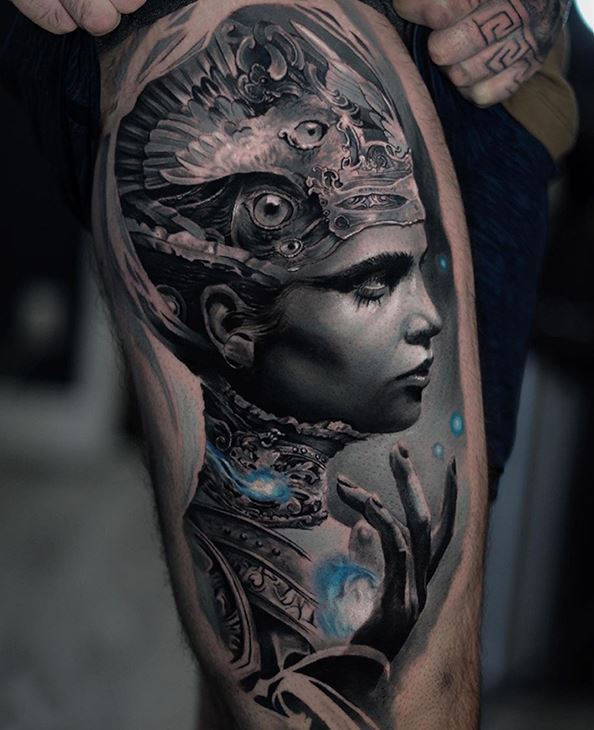
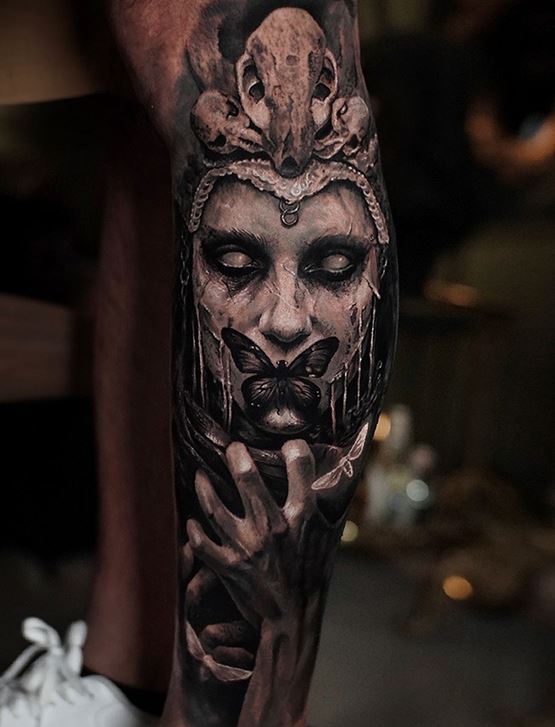
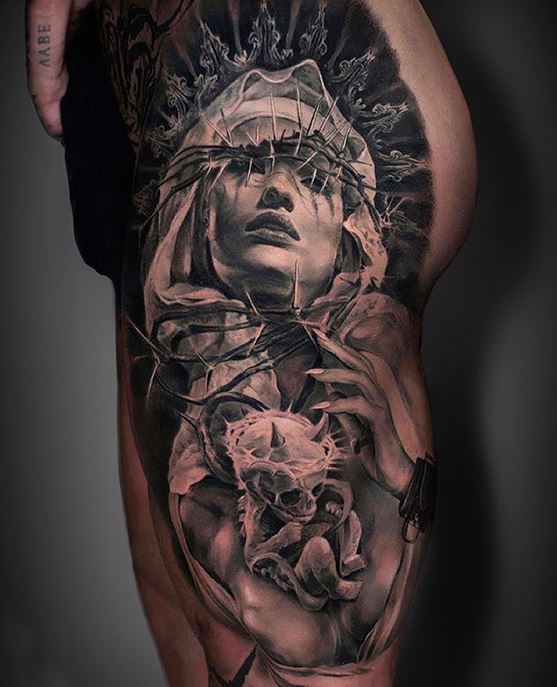
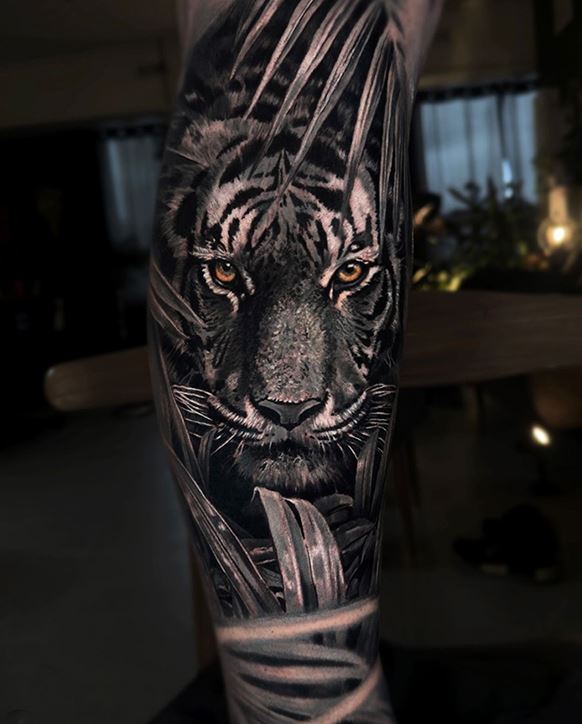
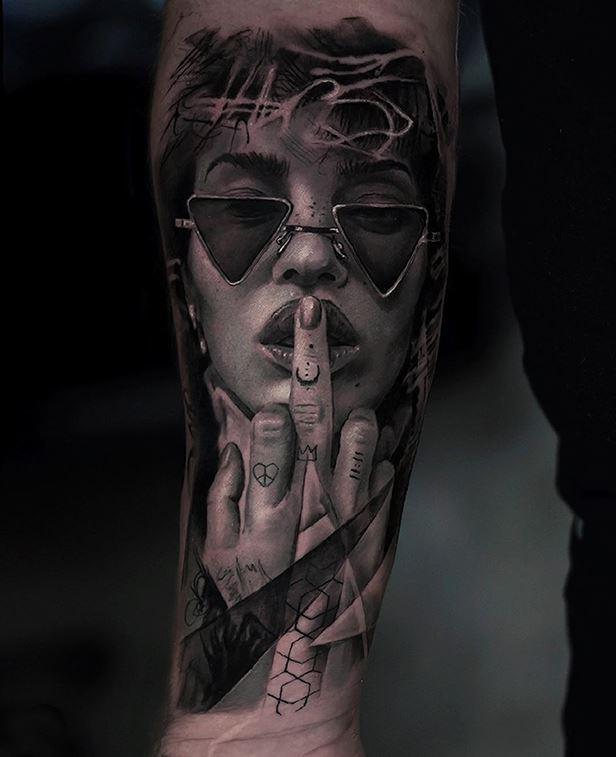
A: Well thank you! Realism is tricky because you’re really pushing
the limits of what you can do on skin. We’re essentially trying to
create a photo with pigment suspended in skin on a moving body part
with muscles that twist and turn. It’s kind of ridiculous in such a
good way when you really think about it! I think good equipment is
important when tattooing, but experience and knowledge far outweigh
anything else. Knowing how tattoos will settle with time,
understanding how light travels on surfaces when building values,
creating proper balance and flow on a design. All these things are
what will make or break a tattoo. Even if you’re the most skilled
tattooer in the world, a bad design that’s well executed will still
be a bad tattoo. That’s why I think that an artistic background is
the most crucial component for a tattoo artist to make solid
tattoos.
Q: What do you like the most about tattooing realism?
A: I think it’s the challenge of creating emotion in the piece. With
realism, and portraiture specifically, there’s a chance to capture a
feel or story that people can react to when they look at the piece.
Sounds weird, but when I’m designing, I think of things like “how
would this smell? How would this feel? What exact moment is this
capturing?” That helps me focus on what the overall feel of the
piece is and I hope that the final result gives people that
reaction.
Q: I don't even know which ones I like more, the black and
gray or the color tattoos... I love everything I see in your
portfolio. Do you have any preference or do you enjoy doing both
techniques?
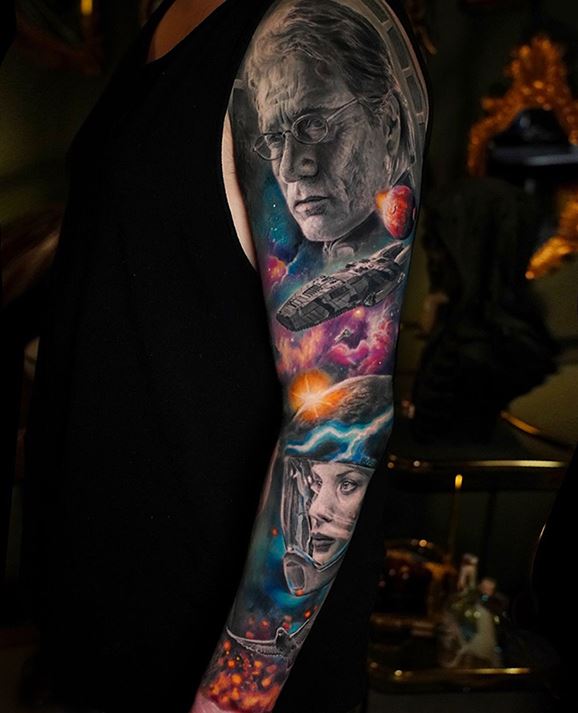
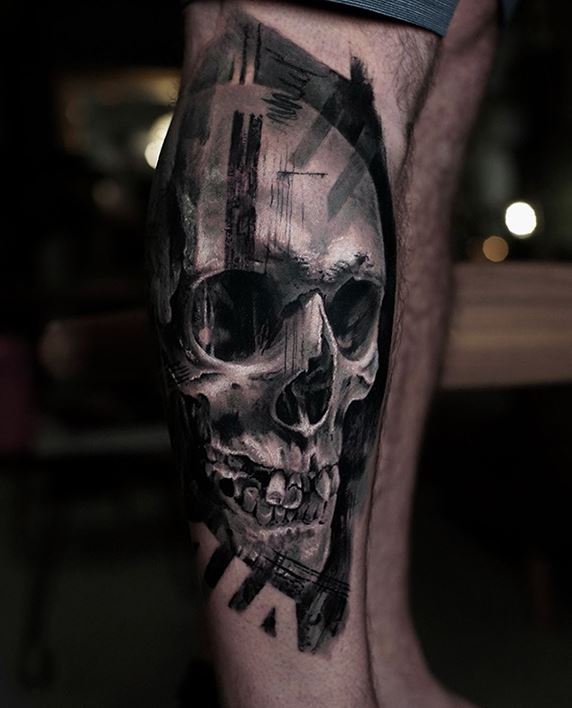
A: Well I’m definitely more comfortable with black and grey as I’ve
been doing that for about ten years now, but there’s something
really exciting about experimenting with color. It’s one more layer
you get to play with to really push the work forward. Because now
the tattoo isn’t just built on light and dark values, but also
contrasts with bright and muted colors or cool and warm tones. One
way I describe it is that black and grey feels a bit more like
drawing while color feels like painting and I feel like those both
interact well with each other.
Q: Some of the designs are quite complex but very
interesting. I bet it takes extra time and effort to figure out the
whole idea and then execute it in the best way possible. You have a
separate Instagram account for your designs. How cool! Are those
ready-made designs for clients or just reference images?
A: Yeah I usually spend hours and hours on every single piece. I
want it to feel like it’s completely custom and that it belongs to
the client. I use reference images in my designs, but I make sure to
add lots of elements and layers so that it transforms into something
new. Most of my designs end up having about 50 layers blended
together so that they really start to take on a life of their own.
- Do you negotiate with your clients when it comes to ideas,
placement or color choice etc?
Of course! I see tattoos as a collaboration between the client and
me. Each time feels different because it’s different minds working
together to create something. With that said, I also think it’s the
job of the tattoo artist to inform the clients when things won’t
work well or when there are better options. They’re paying for the
tattoo, but they’re also paying for the knowledge to guide them
through the process.
Q: You meet all kinds of people every day. What was the
"weirdest" request ever?
A: Oh boy, there’s been some good ones! The first one that comes to
mind was a sloth sitting on a turtle on a slice of pizza flying
through space. I didn’t even know where to start with the questions
about the inspiration for that design!
- Have you ever turned down someone?
Yes, I have. I’m lucky enough to have a good client base that I can
be a bit pickier with the projects I take on. I want to be excited
about it so I can get creative and feel dedicated to see the project
through. I do mostly large scale work so a lot of these projects can
be 60+ hours so you want the work to be something you’re passionate
about so you can keep your focus. I also think it’s important for an
artist to be honest with a potential client that an idea is out of
their comfort zone. I’d rather recommend them to an artist whom I
know will knock their idea out of the park as opposed to me taking
it on and not delivering my best work.
Q: I love the tattoos that are mainly black and gray, but
they have some colored parts too. It really makes the details "pop"
and overall the tattoo looks more vibrant. How important is it to
know how the inks will react/heal in time in order to get good
results, even after the tattoo fully heals?
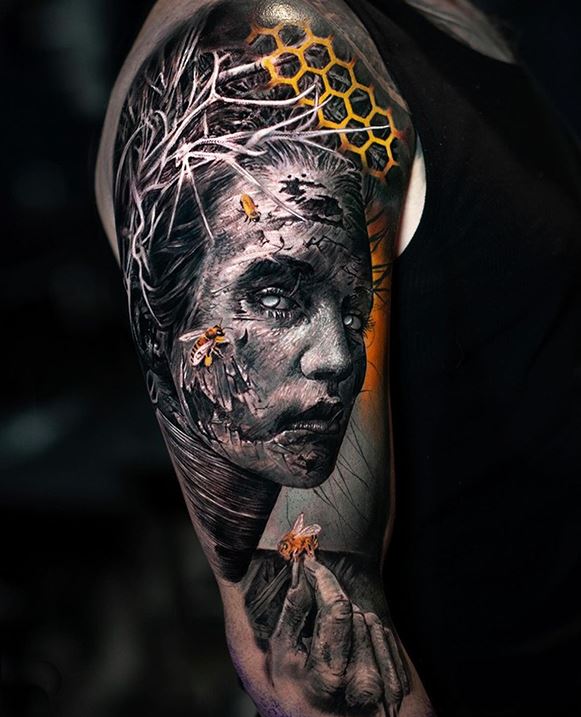
A: Luckily the quality of inks has gone a long way! I’ve been using
Electrum Ink for a while now and the colors come back healed true to
how they were applied fresh. I think it’s important to know how to
build contrast in the design so that the image still holds as ink
does gradually fade and spread. For example, if I’m using a very
light color like yellow then I make sure to have darker colors
around it. That way the yellow looks brighter but it also guarantees
that, should the yellow fade from years of sun damage, then the area
will still appear yellow in the tattoo as those dark colors around
it help your brain to read it as a light area.
Q: It takes a good tattoo artist to do the tattoo, but also
it takes a responsible client to take care of the tattoo until it
fully heals, right? Do you give your clients some aftercare
guidelines?
A: Yes, I give them my regular spiel when I’m bandaging them at the
end of the day and have an online link with a step-by-step guide as
well. The tattoo looks super cool when it’s finished, but it's still
a large area of compromised skin that can welcome potential
infections if aftercare isn’t followed properly. If the tattoo was
done properly then the aftercare should be pretty easy with very
little discomfort. I always tell my clients to reach out to me with
any questions they have during the healing process so they don’t
stress too much about it.
Q: What was the most challenging piece you worked on, that
took probably hours and many sessions to complete it?
A: Well I’m just about to finish a very intricate back piece that’s
going to be about 80 hours of work now. It’s a baroque styled figure
with tons of lace, architectural elements and a jeweled mask. We
really pushed ourselves with this one and it’s been such a fun
challenge!
Q: How do you cheer up your clients during those long
sessions?
A: Haha no one is better at fake optimism than a tattoo artist! We
always joke that five minutes means an hour and “almost done” means
you’re halfway there. I use very gentle products when I’m tattooing
and I treat clients like they’re guests in my home. We got lots of
extra pillows, coffee, fun chats and great music. The full day
sessions just fly by!
Q: Talking about long sessions, sometimes clients reveal the
meaning of their tattoo and it could be something funny or even
sad... you hear about their life stories... Yup, you have a really
cool job! Any memorable moments you wanna share with us?
A: I’m so lucky with this job, you get to really build connections
with people. Some of my really good friends first started off as
clients and we just ended up getting along really well. I think a
lot of people end up getting tattoos after passing through a tough
time in their lives. It gives you a chance to take command of your
body and create a permanent memory of what you were able to
overcome. It’s always such an honor when someone allows me to be a
part of this experience. I’ve tattooed portraits of loved ones who
have passed away, I’ve tattooed over self harm scars, I’ve had
people come out to me while they’re getting tattooed. It’s truly a
transformative experience and I’m so grateful that I get to
experience that with people that hop onto my chair.
Q: Keeping a busy schedule and being constantly creative and
providing the best results on a daily basis - is that hard? Come on!
You gotta be a hero! However, sometimes I guess it gets a bit
overwhelming... What do you those days? Do you have any interesting
hobbies?
A: Tattooing is such an awesome job but you’re right, it can get
really draining trying to attain perfection every day. If I did a
wicked portrait on Wednesday that I’m happy with, I immediately feel
like I need to do even better with the portrait booked the day
after. A client is also expecting their tattoo to be the best and
that’s understandable (it is permanent after all!). It helps, to
tell myself that I gave it my best and that I’m still just a human.
I’m very self critical, so chances are every little mistake I see is
probably not noticeable to anyone else. At least I hope it isn’t! I
eat, drink and breathe tattoos so I don’t have much time for
anything else, but I do like to go camping whenever I need some time
to clear my head. I also have a pretty decent collection of plants
that I think I can now consider a hobby.
Q: You also own the tattoo studio Odalisque Studio in
Canada. When did you open the studio and do you have any resident
artists there?
A: We opened in 2017 and I’ve got three other awesome artists I work
with. Two of them were my apprentices and they are growing into some
crazy talented artists that I am so proud of!
Q: Are you open to working with some international artists,
offering a guest spot in your studio?
A: Absolutely! We’ve had a few guest artists throughout the years
and it’s always cool to get some new energy at the shop and to just
talk about tattoos. We recently had a guest artist from Ukraine who
was just an incredible person and a fantastic artist so we’re really
looking forward to having him at the studio again!
Q: Please write down your studio location and website/social
media links. Also let us know if you are available for bookings.
A: Odalisque Studios Inc. is located in the west end of Toronto and
we’re on most social media apps under @odalisquestudios
Q: Tell me about the local tattoo scene, do you see
progress? How often do you participate at local or international
tattoo conventions, expos etc?
A: Toronto is BIG on tattoos! There are so many studios in this city
and the industry just keeps growing. I think a lot of studios are
starting to go more private and we’re seeing less and less of those
large “street shops” that were the industry standard for so long.
With social media everything is booked online so there isn’t as
strong of a need for that street presence. I try to get around to
doing at least one or two shows a year. It’s always fun to catch up
with friends and meet some new artists as well. I had the
opportunity to recently work alongside the incredible Daniel Rocha,
which was amazing, and I’m hoping to do that again in the near
future. We also just came back from a tattoo convention last week in
Quebec and it was a blast. I was lucky enough to bring home some 1st
and 2nd place awards from the competitions and that's always nice!
Q: We get so many opportunities nowadays... In my opinion
the internet made us more connected and well aware of further
progress. It's a powerful tool for people, for sure. It's inspiring
to see new artists thriving and progressing much quicker than the
previous two generations of tattoo artists. The quality is much
better, the overall environment is much healthier and tattoos aren't
"underground" taboo stuff anymore. Hmm your thoughts?
A: The internet (and social media in particular) has really changed
the tattoo industry. Everyone has online portfolio and direct
communication with clients, which is pretty cool! It’s also helped
with learning to tattoo because you can learn so much just by
following your favorite artists online. Of course, the good always
come with some bad as well so this new online tattoo world has made
it a little easier for people to pick up tattooing without seeking a
proper apprenticeship. There are also some artists working from home
that may not be following proper health and safety standards, which
put people at risk. I’m hoping the industry can come together and
work on regulations that will keep our clients safe.
Q: The American tattoo scene is huge and very diverse. I
think your talent wouldn't go unnoticed there! Seriously, if given
the chance, would you consider trying your luck there? It would be a
great career highlight Tye.
A: Definitely! My husband and I have been traveling to the States
for years now as we have family there and it is such a beautiful
country. I’d love to tattoo in the United States in the future to
tattoo next to some of my favorite artists. There’s also so many
conventions there that are well organized with some really heavy
hitters. Sounds like a fun challenge!
Q: What keeps you motivated? What do you like the most about
being a tattoo artist?
A: My biggest motivation is needing to see constant improvement. I
know I can get better and I’m always learning and trying to push
myself. I want to tattoo until my dying day so I still have lots of
time to grow and improve. I hope one day I can look back and see
someone who really transformed themselves.
Q: What is your advice for those who want to try getting
into professional tattooing?
A: I’d say be ready for hard work. Start by building up a strong
portfolio and a solid background in art theory. From there I’d say
reach out to your favorite artists and get tattooed by them. You’ll
learn a lot just watching their process and there might eventually
be an apprenticeship opportunity that opens up.


