
Interview with Ugur Bilgic
We are honored to present an in-depth look into
the career of Uğur Bilgiç, an award-winning tattoo artist whose work
represents the vanguard of modern micro-realism. With a portfolio
that harmonizes classical fine art principles with contemporary skin
illustration, Uğur has established himself as a distinguished figure
on the international circuit. This interview explores his transition
from a traditional art background to becoming a leading voice in the
global tattoo community, and his strategic vision for contributing
to the prestigious artistic landscape of the United States.
Q: Your work frequently merges classical iconography with
modern structural elements. What is the philosophy behind blending
'Old World' art with contemporary design?
A: For me, blending “Old World” art with contemporary design is
about creating a dialogue between permanence and evolution.
Classical iconography carries a timeless authority rooted in
anatomy, symbolism, and discipline, while contemporary structure
introduces clarity, rhythm, and modern visual intelligence. My aim
is not to replicate the past, but to reinterpret it through a
refined, current lens that feels both cultured and relevant.
Q: How do you approach the challenge of maintaining the
flow of human anatomy while incorporating rigid, geometric motifs?
A: I always prioritize the body as the foundation. Anatomy dictates
the flow, and geometric elements are carefully integrated to
complement rather than disrupt it. The challenge is to maintain
harmony, allowing structure and movement to coexist naturally on a
living canvas.
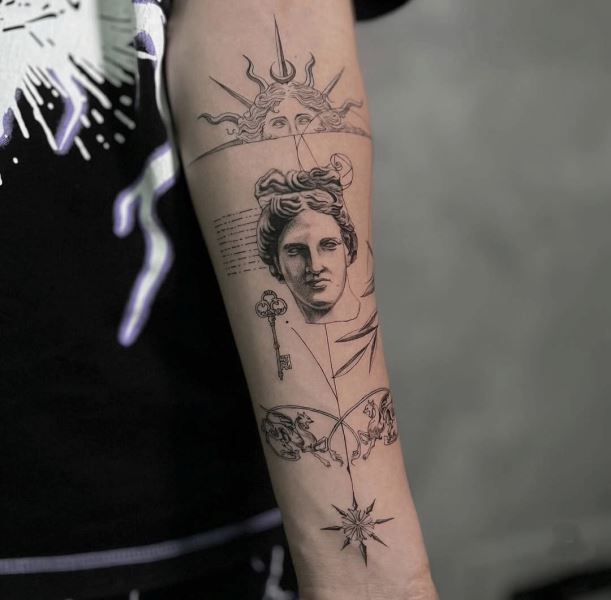
Q: A signature of your style involves the
fragmentation or layering of subjects. What does this visual
"deconstruction" convey about the themes you explore?
A: The fragmentation in my work reflects the layered nature of
human experience. Identity, memory, and emotion are never singular;
they are built through complexity. This visual deconstruction allows
me to express depth beyond surface-level realism.
Q: Your use of high-contrast blackwork is a defining
feature. How do you determine the balance between heavy saturation
and the use of negative space to create depth?
A: High contrast is a tool for directing attention. I use heavy
saturation to anchor the composition, while negative space
introduces balance and depth. It’s a deliberate tension between
presence and absence that gives the work its dimensional quality.
Q: Do you view your compositions as singular images, or do
you aim to create a narrative that unfolds across the body?
A: I rarely see my work as isolated images. Even a single piece is
designed with a sense of continuity, as if it belongs to a larger
narrative unfolding across the body. The goal is to create something
that evolves with the wearer over time.
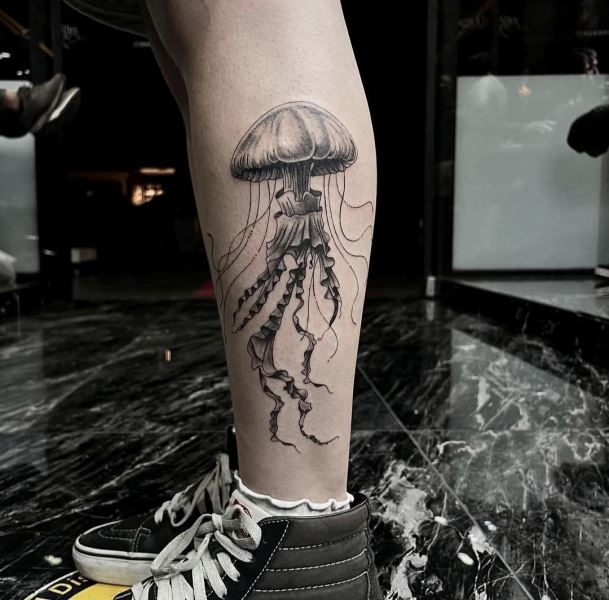
Q: How has your foundation in fine arts
and traditional sketching influenced your perception of a
three-dimensional, living canvas?
A: My foundation in fine arts trained me to think in terms of
structure, proportion, and light. Translating that knowledge onto
skin shifted my perception what was once a static surface became a
dynamic, three-dimensional form that moves, ages, and lives.
Q: Given the extreme precision required for micro-realism,
what is your mental process for maintaining focus during such
high-intensity sessions?
A: Maintaining focus in micro-realism requires a controlled mental
state. I approach each session with discipline and patience,
breaking complex work into precise stages. It becomes almost
meditative an intense but controlled concentration.
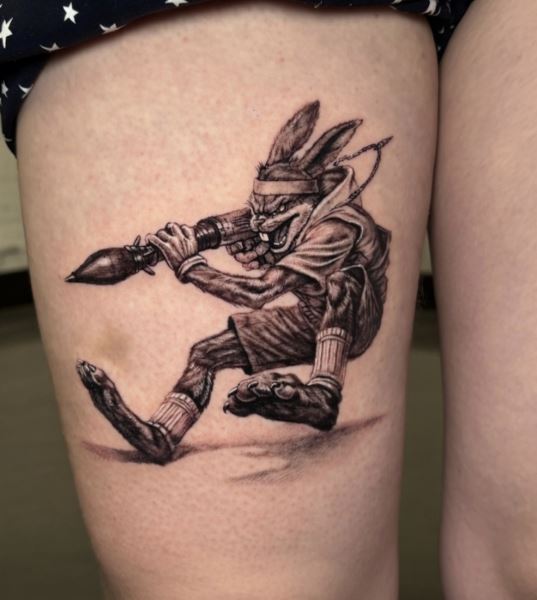
Q: You often take traditional motifs, like skulls or
weaponry, and give them a sophisticated edge. How do you elevate
"classic" imagery into high-end art?
A: I believe the transformation of classic imagery lies in
execution. Through composition, contrast, and refined detailing,
even the most familiar motifs can gain a new level of
sophistication. It’s about elevating perception rather than changing
the subject itself.
Q: When depicting nature and wildlife, you lean toward a
more "ancestral" and realistic look. Is there a specific emotional
resonance you try to capture in these portraits?
A: When I work with nature and wildlife, I aim to capture something
instinctive an ancestral presence that feels raw and authentic. It’s
less about representation and more about evoking an emotional
connection that feels timeless.
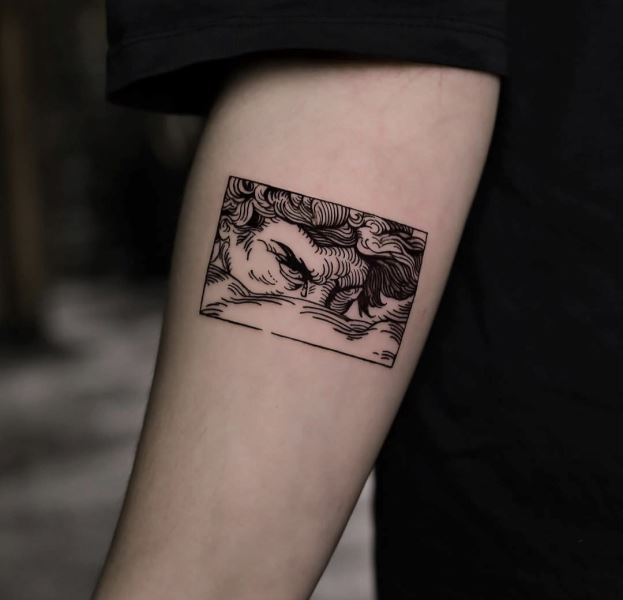
Q: Your fine-line work is exceptionally
delicate. What do you consider the primary technical requirement for
creating art that remains timeless as it ages?
A: The key to timeless fine-line work is understanding longevity.
Precision alone is not enough; it requires deep knowledge of skin
behavior, ink dispersion, and how designs age over time. Every line
must be intentional.
Q: How do you decide which parts of a design should be
rendered in hyper-detail and which should remain abstract or
minimalist?
A: I approach each composition with a clear visual hierarchy.
Certain areas demand hyper-detail to create focus, while others are
intentionally simplified. This contrast allows the eye to move
naturally through the design.
Q: Your portfolio demonstrates a mastery of light and
shadow. Which classical art movements have had the greatest impact
on your use of light?
A: Baroque and Renaissance art have had a profound influence on my
use of light. The dramatic interplay of shadow and illumination in
those movements often referred to as chiaroscuro, continues to shape
how I create depth and atmosphere in my work.
Q: In what ways does your cultural background or heritage
subtly influence the symbolism you choose for your designs?
A: My cultural background influences me in a subtle but meaningful
way. It appears through symbolic choices, emotional tone, and a
certain sensitivity to storytelling rather than through direct or
obvious references.
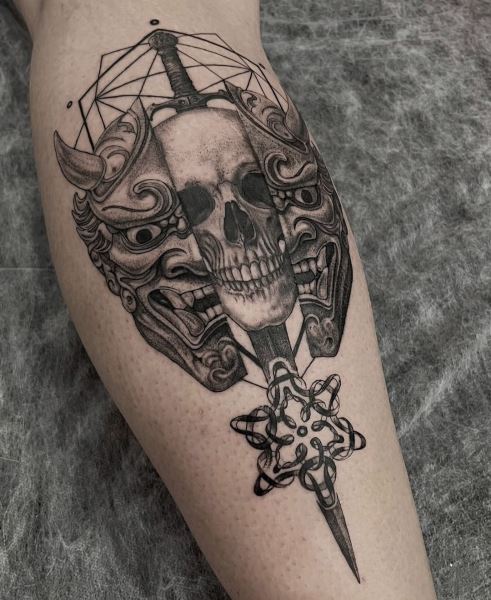
Q: What do you consider to be the "Uğur
Bilgiç" hallmark, that specific element that identifies a piece as
yours?
A: I would say my hallmark is the balance between realism and
structure. My work is defined by depth, contrast, and a strong
compositional identity that feels both controlled and expressive.
Q: Art is often a reflection of the era. How do you think
your current aesthetic contributes to the 2026 tattoo zeitgeist?
A: I see my aesthetic contributing to a shift toward more refined,
concept-driven realism. It’s about moving beyond technical execution
and into a space where tattoos carry both artistic and conceptual
weight.
Q: If you had to define your artistic identity in three
words, which would you choose?
A: Precise. Timeless. Intentional.
Q: Looking back at your early days, what was the catalyst
that shifted your focus from traditional media to the specialized
world of tattooing?
A: The transition came from a desire to make art more personal and
permanent. Tattooing allows for a direct and intimate connection
that traditional mediums cannot replicate.
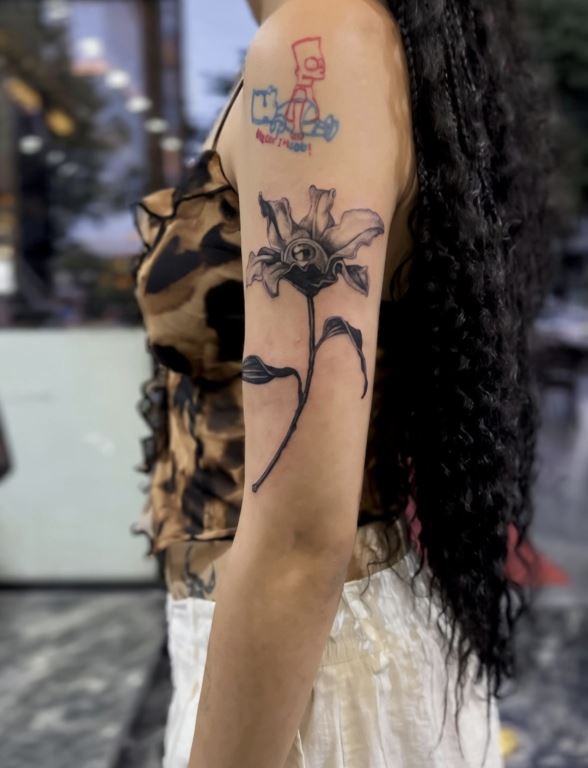
Q: Every professional faces a defining
challenge. What was the most significant hurdle you overcame while
establishing your reputation?
A: One of the greatest challenges was establishing recognition in a
highly competitive global industry. Overcoming that required
consistency, discipline, and a clear artistic voice.
Q: With four major awards to your name, which recognition
do you feel best represents your peak as an artist so far?
A: Each award marks a different stage of growth, but those
recognized at international conventions hold particular significance
as they reflect global standards.
Q: Is there such a thing as a photograph that is too simple
to be turned into one of your tattoos?
A: I’ve come across this many times. If the photograph is a
close-up selfie of one or two people, or if the subjects are turned
away and photographed from close range, there’s very little
composition to work with. Since I don’t draw facial details,
close-up selfies end up as little more than an oval shape. In those
cases, I ask them to look for an alternative photograph.
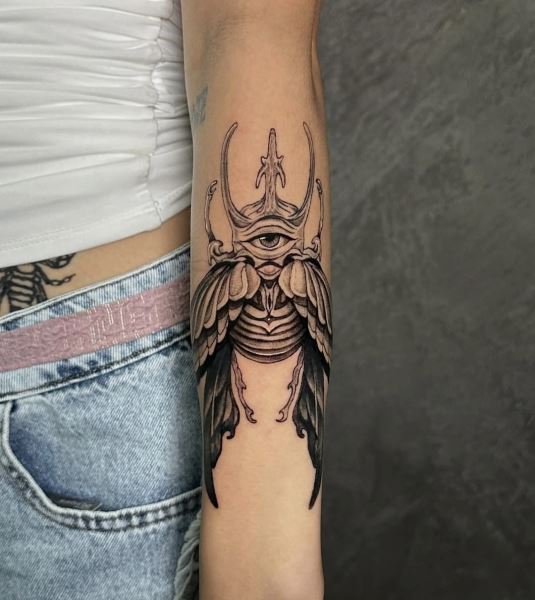
Q: How would you describe your artistic
philosophy to someone who has never seen your work?
A: I approach tattooing as a balance between control and freedom.
My work is rooted in fine-line precision, and more personal,
understated pieces like family portraits are part of that same
approach. But I intentionally allow certain elements to break
structure like color that moves beyond its boundaries or lines that
feel deliberately imperfect which is the essence of "Flow-A," a new
style I have been developing. That contrast is what gives the piece
life. I'm not interested in copying reality or following trends.
Every design starts with the idea of flow on the body: how it moves,
how it sits, and how it ages. The goal is to create something that
feels natural on the skin, not just visually appealing on a screen.
Q: Since you began this journey, how has your style
evolved?
A: The style was never static; each piece shaped the next. In the
beginning, everything was very bare. Over time, different styles and
techniques found their way into the work. Now I operate across a
much wider range, but I also recognize much faster what needs to be
stripped away. Staying in the same style eventually starts to bore
even the people watching. Even though I have no love for the "age of
consumption," I’ve come to understand that I need to draw something
positive even from that and keep pushing myself forward. That
tension keeps me excited.
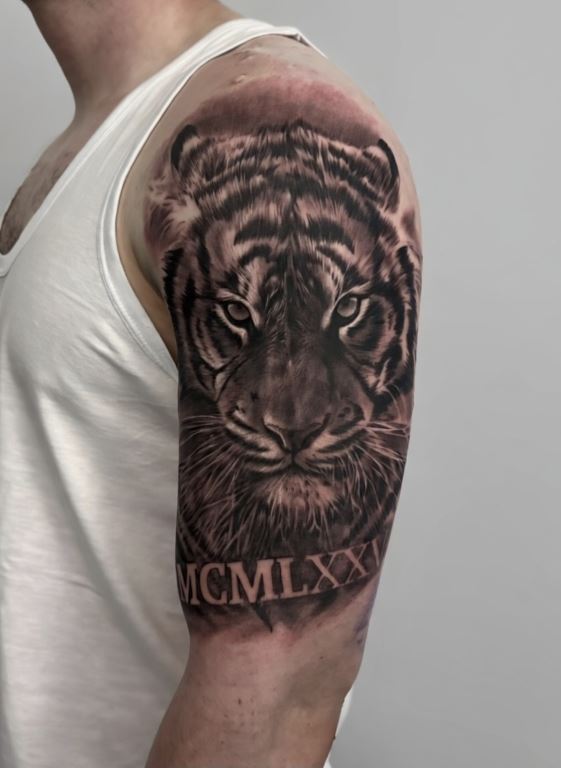
Q: Following your recent success at the
Jacksonville Tattoo Arts Festival, how has that international
recognition changed your perspective on your own work?
A: That recognition reinforced my belief that my work resonates
beyond local contexts. It gave me confidence to position myself
within a broader international landscape.
Q: Having worked across different regions, what are the
most notable differences in how "Extraordinary Ability" is
recognized in the international tattoo scene?
A: While recognition systems differ, true “extraordinary ability”
is universally defined by originality, consistency, and influence
within the field.
Q: How do you see the "Global Citizen" mindset among
artists today influencing the way different cultures share artistic
techniques?
A: The “Global Citizen” mindset has removed boundaries. Artists now
exchange ideas more freely, accelerating innovation and raising the
overall standard of the industry.
Q: What is the most important message you hope to convey to
the global tattoo community through your unique style?
A: I aim to show that tattooing can exist at the intersection of
technical mastery and artistic depth. It is not just craft it is a
serious artistic discipline.
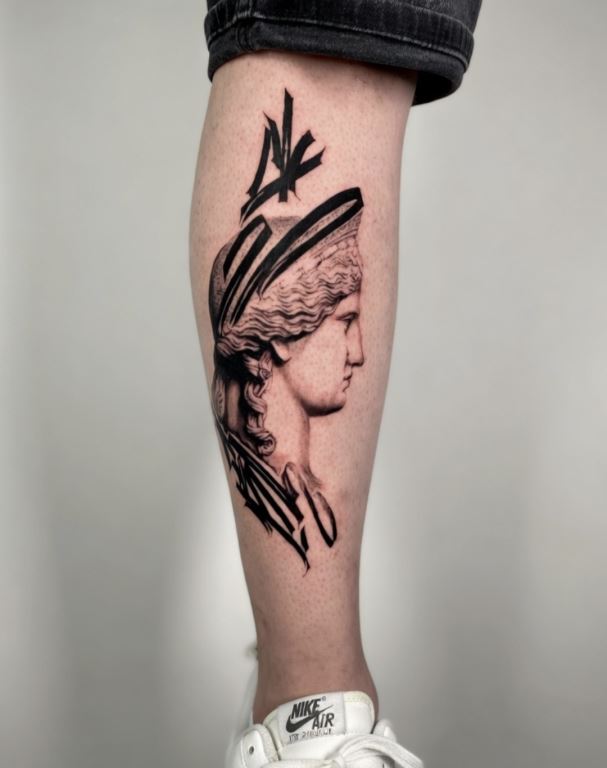
Q: The United States is a global epicenter
for tattoo innovation. What specifically about the American
professional environment draws you to work there?
A: The United States offers a highly competitive and diverse
environment. That level of intensity encourages growth, innovation,
and constant evolution.
Q: How do you believe your specialized approach to
surrealist micro-realism will provide a unique contribution to the
American art market?
A: My approach combines technical precision with conceptual depth.
I believe this brings a more refined and thoughtful perspective to
the micro-realism space in the American market.
Q: Your success at U.S.-based festivals indicates a clear
demand for your work. How did those experiences influence your
decision to pursue a long-term professional path in America?
A: Those experiences confirmed that there is a strong demand for my
work and encouraged me to pursue a long-term presence in the U.S.
Q: Why do you feel that this current stage
of your career is the optimal moment to transition into the U.S.
artistic community?
A: At this stage, I have developed both the technical skill and
international recognition needed to contribute meaningfully at a
higher level.
Q: Looking ahead, how do you see yourself contributing to
the growth and mentorship of the next generation of artists within
the American tattoo scene?
A: I see myself contributing by sharing knowledge, mentoring
emerging artists, and helping to elevate the overall artistic
standard within the community.
Date: 18/04/2026
Interview: Fredrik Lindström


