
Interview with Viktoria Kovtun
Hello Viktoria Kovtun! Thank you so
much for taking the time to do this interview. To begin with, please
tell us about your education and how you got acquainted with the
world of art. I was born in a small town in Russia. From
early childhood, I was fascinated by drawing, mainly I'm
self-taught, but I attended an art school for some time. After
finishing secondary school, I planned to enter an art college
because I always felt a pull towards art. However, in my family,
more “prestigious” professions were considered the rational choice.
My parents saw me in medicine. Throughout my studies, I continued
drawing, considering it my hobby. However, after graduating from
medical school, I realized that medicine was not my true calling.
Following my artistic reflection, I turned to tattooing. In 2017, I
completed courses and began accepting clients for tattoo sessions.
Q: Which styles or movements fascinated you during your
formative years as an artist, and how did they influence your early
work?
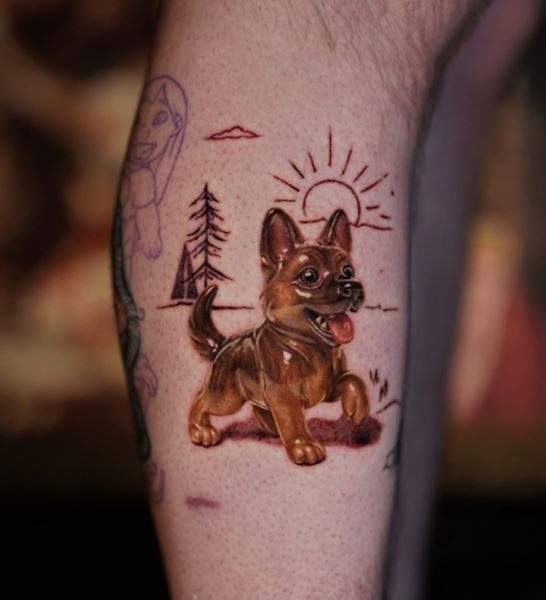
A: I tried many styles at first, I learned to make very thin and
even outlines, then I painted with watercolors. I thought I was
ready for anything except for the colorful realism that looked so
complex and captivating, which eventually resonated with me more
than anything else. I found it difficult to select the right colors,
create smooth gradients, and of course, it seemed almost impossible
to replicate a realistic portrait on skin. However, over the years
and after many hours of practice, what once seemed impossible, I
managed to turn into reality.
Q: How important are basic drawing skills in your process of
developing unique, personalized designs?
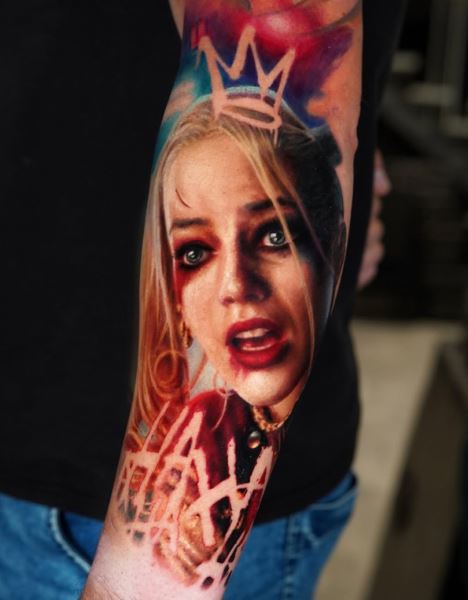
A: I don’t have formal art education, and I had to learn design and
academic drawing while already working as a tattoo artist. On one
hand, it’s very difficult because people with art education are more
confident in composition, anatomy, and color theory, and their
progress is faster. On the other hand, you will have to relearn and
work with different tools anyway, and as the saying goes, teaching
an old dog new tricks is quite challenging. I believe the most
important thing is - the artist to have passion and the desire to
grow then everything will work out.
Q: How did you find your way to forming your unique creative
direction and developing a strong sense of confidence in your work?
A: I searched for my style for a long time and encountered many
hardships on my path. In 2018, at a tattoo convention in
Yekaterinburg, I thought I had come up with something brilliant: I
was preparing models for the convention to showcase healed works.
However, some of the judges decided that realism combined with pop
art - a style patented by one artist - meant my three models were
disqualified. A drunken old-school judge told mу clients “tell the
artist to go fuck himself.” Now this style is quite common, and no
one gets disqualified for it anymore. When you’re just starting out
and receive such harsh criticism, it either breaks you or
strengthens you. After that incident, I did not participate in
tattoo conventions for a long time because the first experience was
quite difficult. But I handle constructive criticism well and
analyze my work, trying to make each tattoo better than the last. I
believe it’s very important to work on mistakes to perfect your
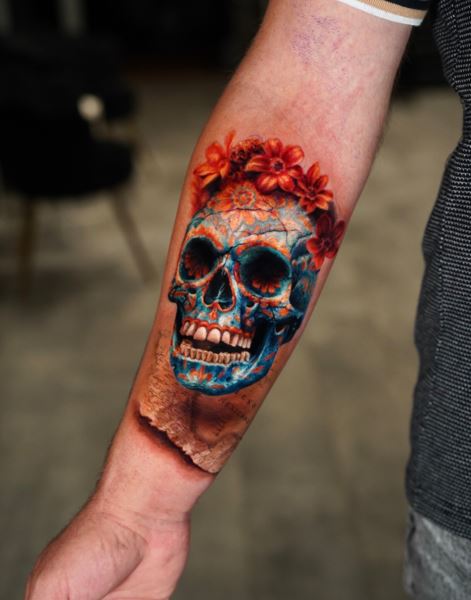
craft. My path to forming my style was gradual: step by step I
learned to work with color and textures, to find a balance between
volume and naivety, inspired by children’s ceramic toys. These toys,
with their delicate, slightly imperfect shapes and glossy glaze,
became a source of new ideas and helped me form a unique visual
signature. This style inspires me to create tattoos that carry both
childlike playfulness and deep emotional richness.
Q: Your work demonstrates a captivating fusion of realism
and surrealism. Could you tell us more about your creative process
and the sources of inspiration that drive this unique aesthetic?
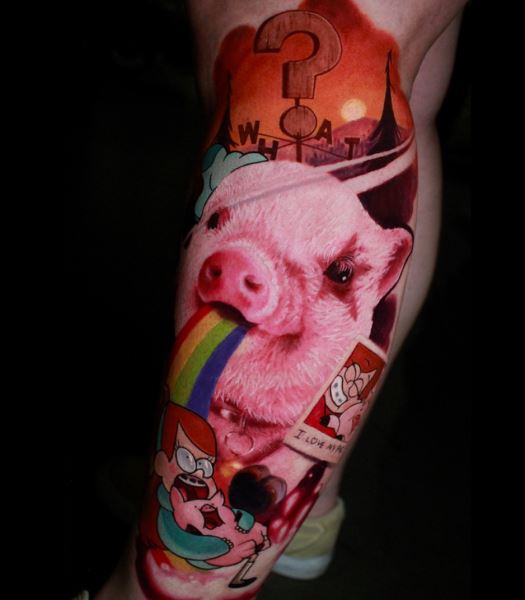
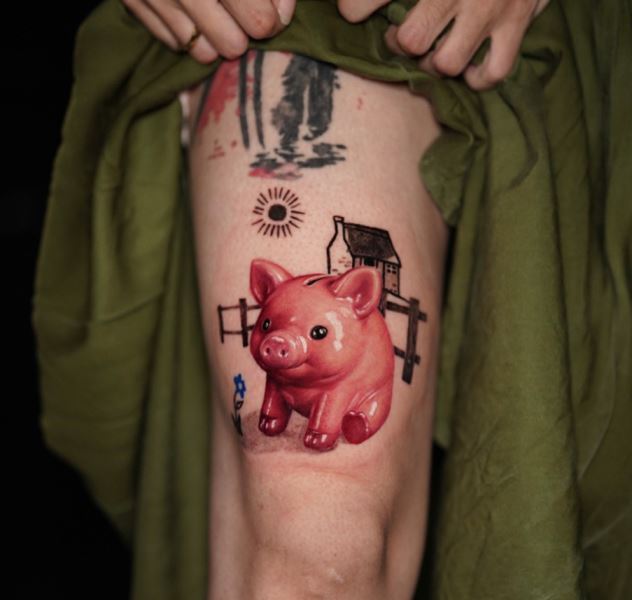
A: It all started with one project. I love the cartoon “Gravity
Falls.” I dreamed of making a character from the cartoon, a little
piglet. I searched for a model for it for three years, constantly
refining and improving this project. Ultimately, I managed to bring
this work to life at a tattoo convention in Wrocław in 2023. We took
first place in the “Best of the Show” category. This tattoo opened
up a new vision of projects within me, and now I try to consider
completely unexpected solutions with every design I work on. I think
it makes the tattoos very unusual and helps them stand out among
other designs. My creative process is a combination of meticulous
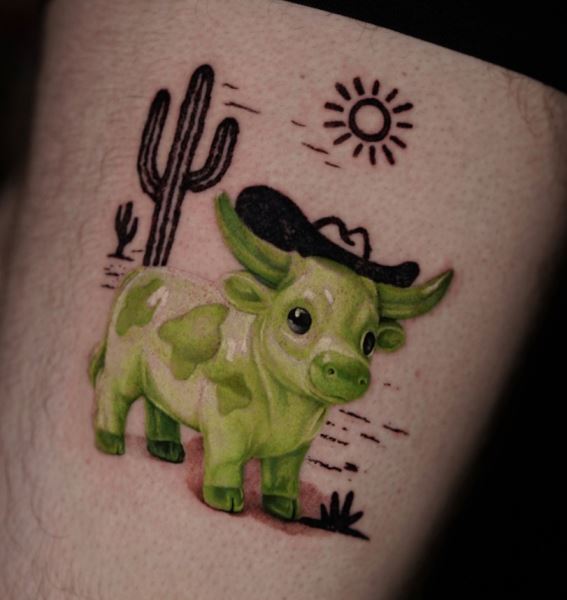
approach and emotional intuition. I am inspired by the shapes and
textures of ceramic toys, their gloss and light childlike naivety,
which give my work a special mood - like revived childhood memories,
but executed in bright and vivid colors. This fusion of realism and
surrealism is my way of creating something both unusual and
heartfelt.
Q: Which aspects of this style are closest to you, and do
you plan to explore other artistic styles in the future?
A: I like everything about this style: every carefully considered
centimeter, bright colors, original ideas, composition. I love
working with such designs. It’s very inspiring. I like both the
volumetric realistic part and the flat 2D I consider this a very
winning combination. Before I became a tattoo artist, I was crazy
about the trash polka style because of its combination of
black-and-white realism and colorful abstraction around it. This
style is less popular now, but I would like to try working on
similar projects in the future, adapting them slightly to my style.
My new ceramic style is not just a visual idea but a whole story and
mood. It inspires me to create and open new horizons. I want to
develop it further, combining it with other techniques and
experimenting with color and form to create unique, lively tattoos
that touch the heart.
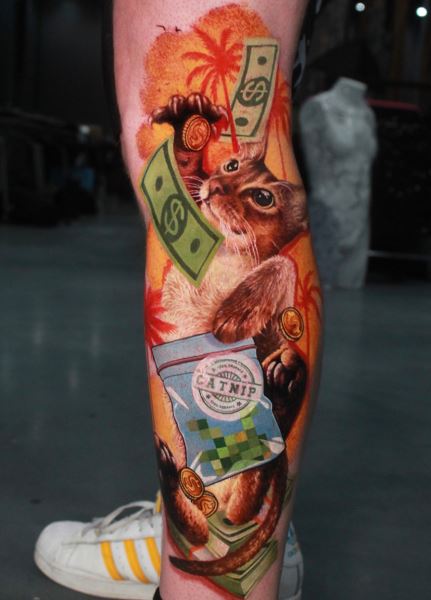
Q: Besides your individual designs, do you maintain a
library of preliminary sketches or design ideas that might be useful
for clients to visualize tattoo concepts?
A: Yes, of course. I look for models for available designs, which I
periodically post on Instagram. Sometimes these are crazy and
original ideas. I always create visualizations for clients because,
based on my experience, people often find it difficult to imagine
how a simple picture will look on their body. In our profession,
it’s very important that the client feels comfortable and
intuitively chooses exactly what suits them. Overall, it’s
encouraging that people increasingly come with interesting ideas for
projects and hardly ever use other people’s tattoos as examples.
Q: What recent project stands out as especially creatively
fulfilling, perhaps one that presented unique challenges but
delivered truly worthwhile results?
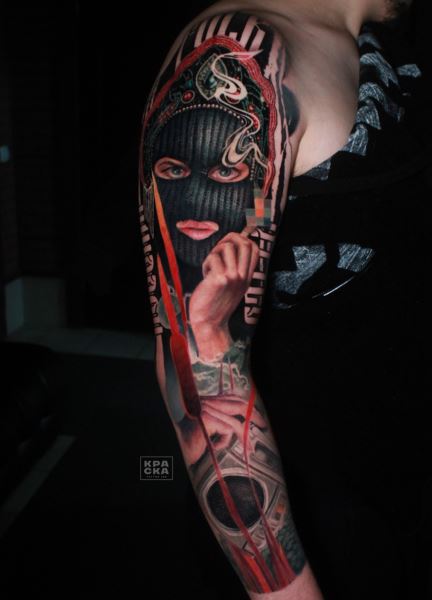
A: Recently, I did a very interesting project. The main idea was a
performer of Russian folk in a balaclava and kokoshnik. It was a
true flight of fantasy and a genuinely unique design, which I
managed to put a touch of despair and the authenticity of Russian
folklore.
Q: Your skills in both color and black-and-gray tattooing
are evident. Are there any particular nuances or difficulties in
each style that you find more challenging or intriguing?
A: I really love color, and it is more interesting to me. In the
silver style, I like to do portraits because they turn out very
realistic. Greywash is more difficult for me, but I also use it in
my new style and therefore I constantly improve.
Q: What do you like most about realism?
A: Realism didn’t immediately become the style I wanted to develop,
but I was always attracted to its impact. The era of realism on
canvases passed after the appearance of cameras, but for tattoos, it
has only just begun. New inks and modern equipment have made the
impossible possible, and with great enthusiasm, step by step, I
began trying to realize something new and impossible for myself.
Realism became a challenge to myself.
Q: The level of detail achieved in these portraits suggests
a deep understanding of human anatomy and color theory. Could you
share some insights into your artistic process, especially regarding
the difficulties of transferring a human image onto skin?
A: I work with portraits very carefully and meticulously, it is
necessary to preserve both the general and micro volume. It is
important for me to occasionally look at the work from a distance,
and of course, the eyes become the center of attention in any
portrait. It is important to concentrate on every stage of work,
there are no unimportant elements. Color theory plays a very
important role in color portrait tattooing. You can do it with two
or three shades, but the portrait will look quite flat and lifeless.
If you need to transfer a photograph onto the client’s skin so that
it looks realistic and painterly, you need to analyze the photo by
colors before working and use more vibrant skin tones. For example,
in some photos, the skin often reflects green or purple hues. Every
portrait intrigues me.
Q: Best experience working with client?
A: Every experience with the clients is unique, each client teaches
you something new, even if you don’t notice it. After several years
in the industry, the artist begins to lose the sense of novelty. You
should look at the process through the client’s eyes because for
them, it’s always new emotions. I am grateful to everyone I have met
on my path.
Q: Since collaborative tattooing is gaining popularity, are
there any artists whose particular style or approach you find
especially convincing and with whom you would be interested in
exploring a joint creative endeavor?
A: I am interested in artists with bright, unconventional styles who
are not afraid to experiment with color and form. It would be great
to work with an artist whose perspective complements mine, to create
something truly original and emotionally rich.
Q: Besides work, do you have hobbies or creative pursuits
that you are passionate about, such as painting or digital art?
A: My hobbies are much more complicated than they might seem. I try
to choose activities that I can stop and put aside at any moment.
For example, reading, it is very relaxing. From time to time, I sit
down to traditional drawing, like oil painting, but this is more
related to work and practicing new color solutions. I also create
digital art when I want to express something to the public.
Q: To allow our audience to get in touch with you, please
provide the location of your studio, website, and social media
links. Finally, kindly let us know if you are currently accepting
new clients.
A: I'm based in Warsaw, Poland right now. But I am often on the
road, so it is better to follow updates on social media. I actively
use Instagram @keasha_to, and I can also be contacted by email at
keasha1116@gmail.com. I am currently accepting new clients.
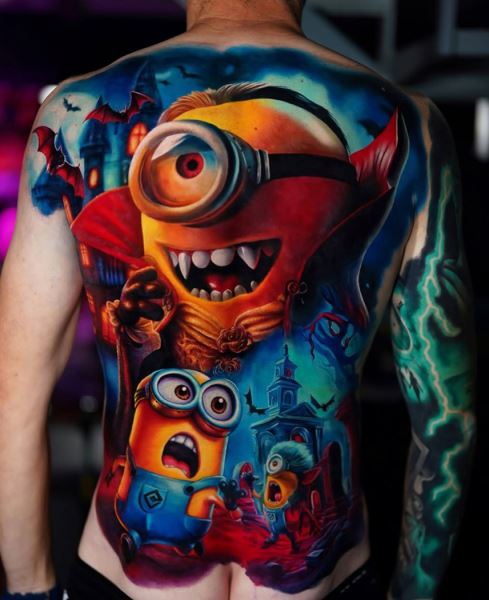
Collaboration:James Artink, Viktoria Kovtun & Tyraktattoo
Q: What are your observations
regarding the local tattoo community? Do you notice any significant
changes, such as the emergence of new artists, development of
styles, or innovative events?
A: The tattoo community in Poland is steadily doing well, many new
talented authors and original ideas are emerging. Tattoo conventions
are more popular than ever, and ordinary people have found it easier
to overcome their fear of tattoos. It seems to me that Poland has a
huge number of artists who create truly stylish tattoos. I am glad
to be part of this community.
Q: How often do you attend tattoo conventions? In your
experience, how valuable are tattoo conventions for creative growth
and building relationships with clients?
A: Lately, I try to attend conventions at least once every two
months as a participant. It is a very valuable experience in terms
of communication and new acquaintances. Here, more than anywhere,
the value is not in winning but in the overall professional
atmosphere, all artists at conventions do their best and most
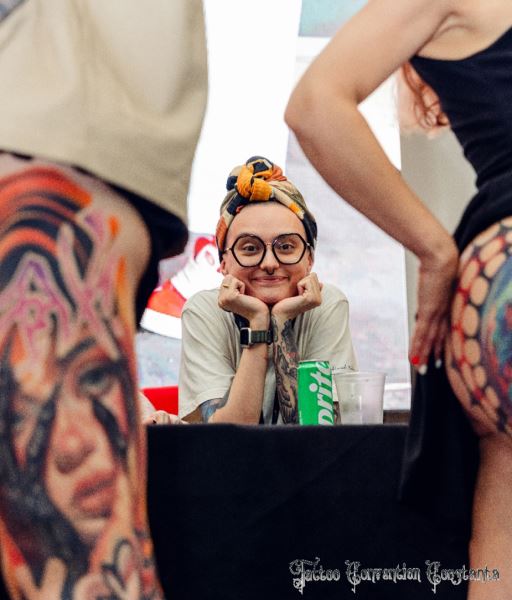
original work. Clients can come, watch how the artist works live,
ask questions, and schedule appointments. It’s amazing.
Q: How has your passion for tattooing manifested and evolved
throughout your career? Have you experienced a steady level of
enthusiasm, or has it deepened and transformed over time?
A: The beginning of my career was quite chaotic, I tried to grab
every opportunity with burning eyes. Gradually, emotions became more
controlled, and I began to rationally allocate time for development
in more specific areas. Like in any life sphere, I had emotional ups
and downs. I experimented a lot with styles and presentation. There
were also breaks when I didn’t take clients to rethink my role in
the industry.
Q: Congratulations on your partnership with Kraska Tattoo
Ink. Could you tell us when this collaboration began and how their
support has influenced your creative development and career?
A: If I remember correctly, I have been collaborating with Kraska
Tattoo Ink since 2022. At that time, the brand held a contest to
find new talents, I sent several examples of my works and
participated, that’s how I become part of their team. This year, I
also got a sponsorships from Biotatum (tattoo cosmetics) and Prohern
(cartridges). This expanded my technical and creative possibilities.
Q: If you could go back in time and give your younger self
advice regarding tattooing, what would it be?
A: If I could go back, I would say to myself: “Don’t be afraid to
try and make mistakes, it’s part of the path. Believe in your ideas
and don’t compare yourself to others. The main thing is to work hard
and not lose interest in your craft. Gradually, everything will work
out, it’s important just not to stop and always keep learning.”


