
Interview with Wilfredo Colmenares
Hello Wilfredo Colmenares,
thank you so much for taking the time to do this interview. It's a
pleasure having you here. Please start by telling us something about
yourself and your background. My name is Wilfredo
Colmenares, and art has been a part of my life for as long as I can
remember. As a child, I used to draw my favorite cartoons from
television so much that my parents even take me to the psychologist
because I couldn’t concentrate in class, I was always drawing. My
mom thought I was depressed because most of my drawings were in
grayscale, but the truth is, I was completely immersed in my
creative world. At school, my teachers noticed my talent and wanted
me to take charge of murals, but I preferred to keep my art very
personal. I think that desire for self-expression has always been a
constant in my artistic life. My grandfather, who was a military
photographer, also had a significant influence on me. He had a
particularity: he specialized in postmortem photography, which
sparked a unique artistic interest in me. He was the one who gifted
me my first drawing book, marking a before and after in my life.
Over time, I became more interested in color and immersed myself in
painting, specializing in portraits that I used to sold. When it
came time to choose my career, I had no doubts: I had to study art.
My favorite artists have always been Tim Burton and Salvador Dalí.
Both play with surrealism, but in very different ways. I love
Burton’s gothic and peculiar aesthetic, which uses a cooler palette,
while Dalí captivated me with his dreamlike approach and warm
colors. I believe both have profoundly influenced the way I conceive
art, balancing the strange with the emotional.
Q: What sparked your interest in getting into tattooing? How
it all started?
A: It all started when I was 21 and studying design. My college
girlfriend, with whom I currently live, noticed my drawing skills
and suggested I try tattooing. At first, I was very skeptical
because I was scared of mixing art with permanent marks on someone’s
skin, not to mention the responsibility of working on someone’s
body. However, one thing led to another, and we ended up buying a
machine. From the very first tattoo I did, I knew this was what I
wanted to do for the rest of my life. It was an immediate
connection, and I knew I had found my true passion.
Q: What type of tattoos you used to do as
a beginner and how long it took you to gain confidence in your
skills?
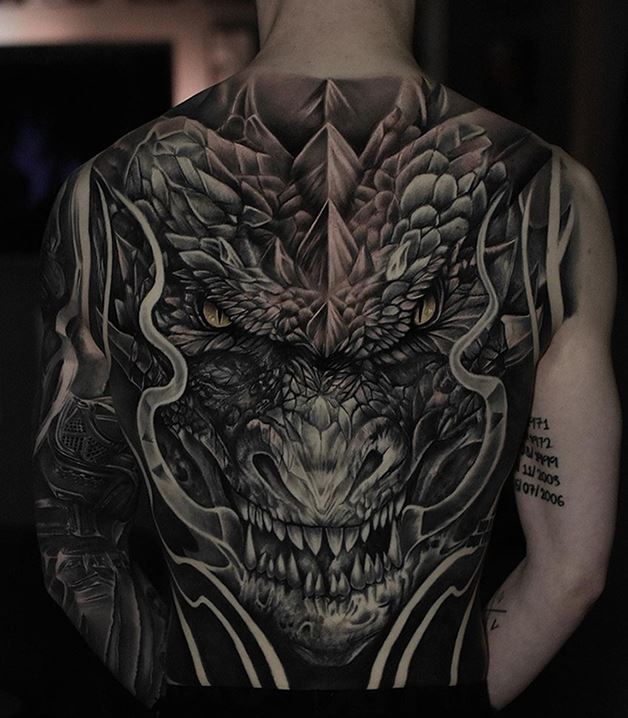
A: When I started, my first tattoos were primarily small and minimal
designs. I wanted to take it step by step, first mastering lines
before venturing into more complex techniques like shading. In fact,
my first shadows were done using the dotwork technique, as I knew it
from my college background and found it easier to manage than
shading with a palette. For the first two years, it was all an
empirical process, learning by myself. However, as I gained more
experience, I started working in studios, attending tattoo
conventions, and immersing myself more in this world. Gradually, I
lost my fear and gained confidence in my skills. I would say it took
me about four years in total, including those two early empirical
years, to feel truly confident in my work.
Q: When did you start working in a professional tattoo
studio?
A: My first experience in a professional studio came about a year
and a half after I started tattooing empirically at home. I
approached one of the oldest studios in my city (Gilbertattoo),
where one of the most experienced tattoo artists I knew worked. It
was a significant change for me, as I learned a lot about customer
service, hygiene, and how to work in a professional environment with
other tattoo artists. This experience was truly enriching and marked
an important milestone in my development as an artist.
Q: The tattoo industry is huge and the competition is
crazy... with new tattoo artists every day and many new styles it's
difficult to adjust and try to bring something unique yet the
opportunities are everywhere. How long took you to figure out your
creative direction?
A: Definitely, contributing something new to such an established
industry filled with impressive talents is a challenge. My
development as an artist has been a continuous process of exploring
what I like while learning and experimenting with different styles.
After ten years of tattooing, I’m still in the process of defining
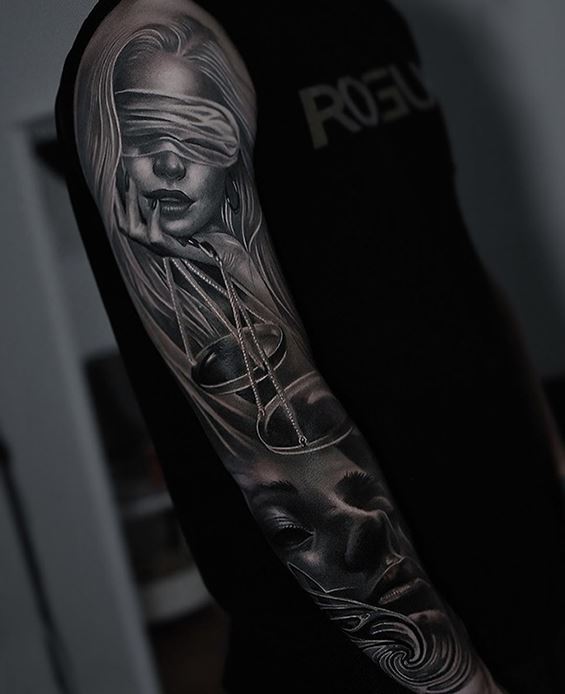
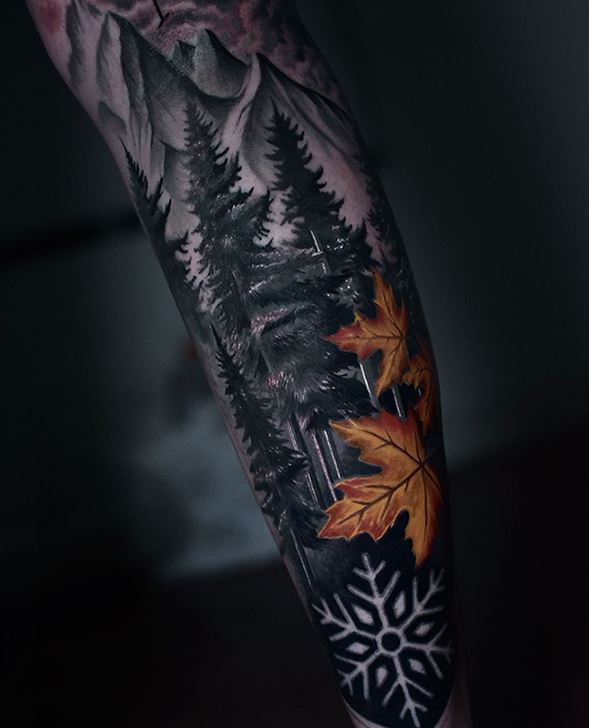
my artistic approach. I love realistic tattoos, especially large and
detailed pieces, but I also have a fascination for neotraditional
tattoos and anime style. Currently, I’m seeking a way to fuse these
three styles into a unique one that reflects my personal vision.
Q: Tattoo realism is no joke. Honestly many are trying to
work in this style but only few really succeed. I like every tattoo
in your portfolio. Especially the big tattoos like sleeves and of
course the portraits! I can only imagine how delicate and quite
difficult is to work on those tattoos. Do you have any favorite
tattoo you did, that was a bit of challenge technically but it
turned out really great in the end?
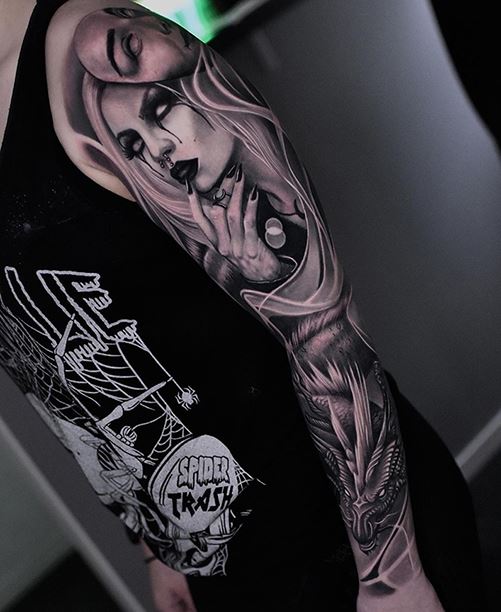
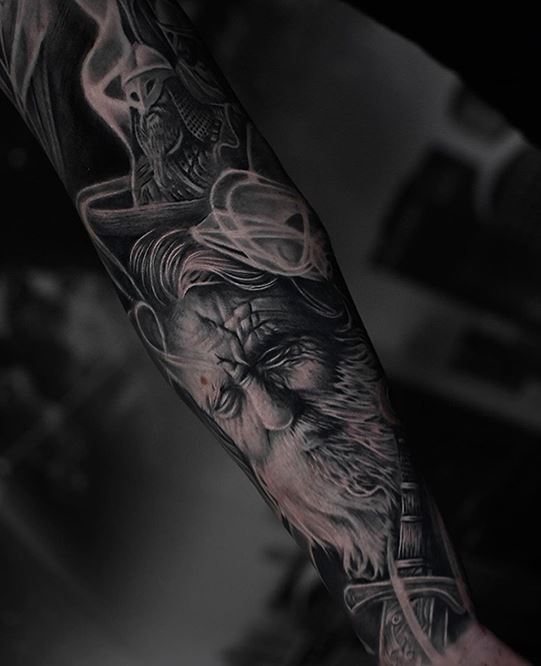
A: It’s difficult to choose a favorite tattoo because every day I
fall in love with the pieces I create. Personally, I really enjoy
sleeve tattoos, as they present a unique challenge. Working with the
anatomy of the body and creating intricate and detailed pieces that
fit the flow of the arm and muscles is a complex but rewarding task.
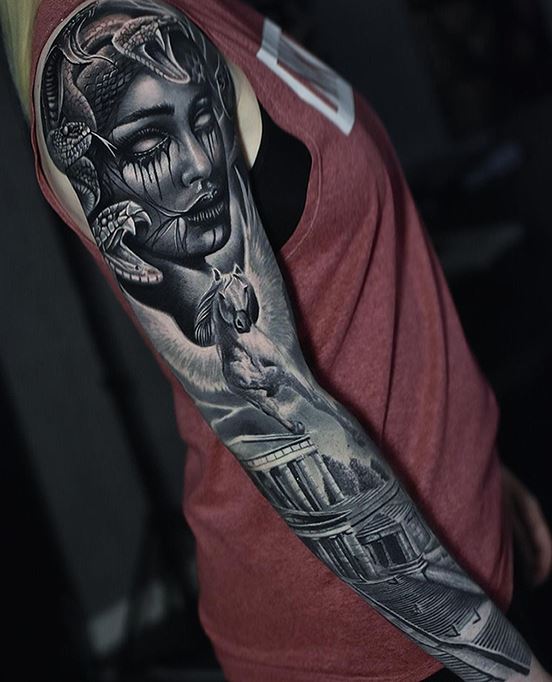
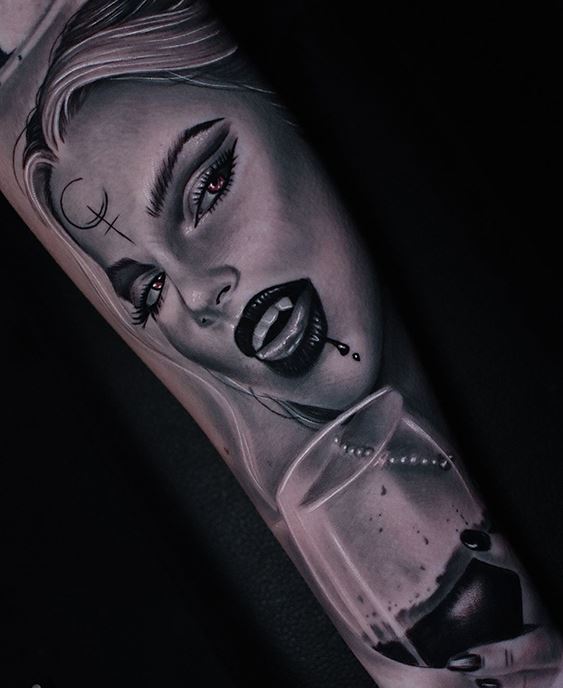
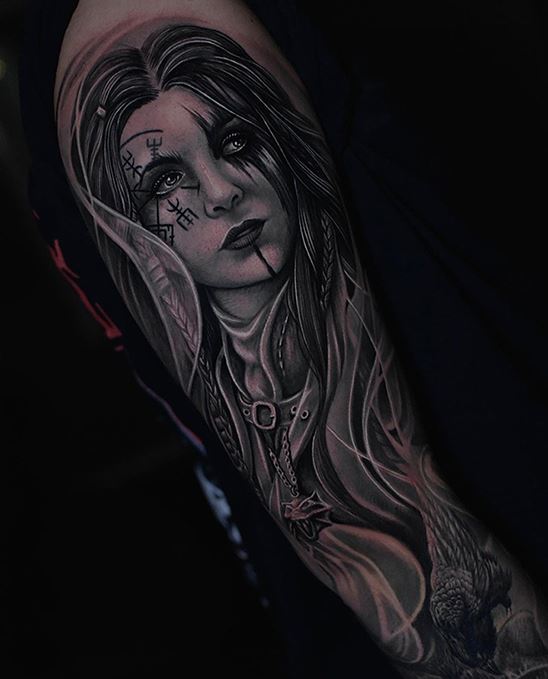
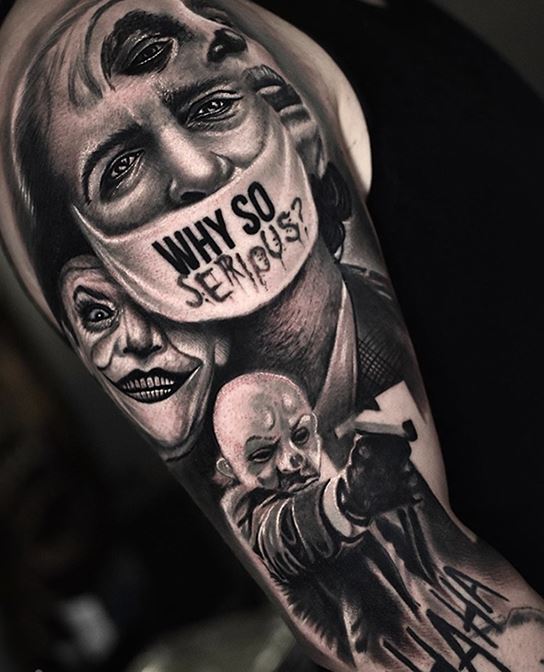
Regarding portraits, I’ve always found a challenge in making the
piece solid and durable while maintaining the softness and detail of
a face in a photograph. Both styles challenge me in different ways
and motivate me to keep perfecting my skills.
Q: What part of a portrait tattoo are the
most difficult to work on?
A: In a portrait, the most challenging aspect is staying true to the
original photograph. As artists, we often feel the temptation to add
our own touch to the piece, but in portraits, fidelity to the photo
is crucial. Every detail, from the shine in the eyes to the shadows
on the skin, must be replicated precisely for the tattoo to
genuinely resemble the person depicted. If a shine or shadow not
present in the photograph is added, there’s a risk that the portrait
will no longer look like the subject. Sometimes, even a small
adjustment in brightness or white can significantly alter the
perception of the portrait and detract from its accuracy.
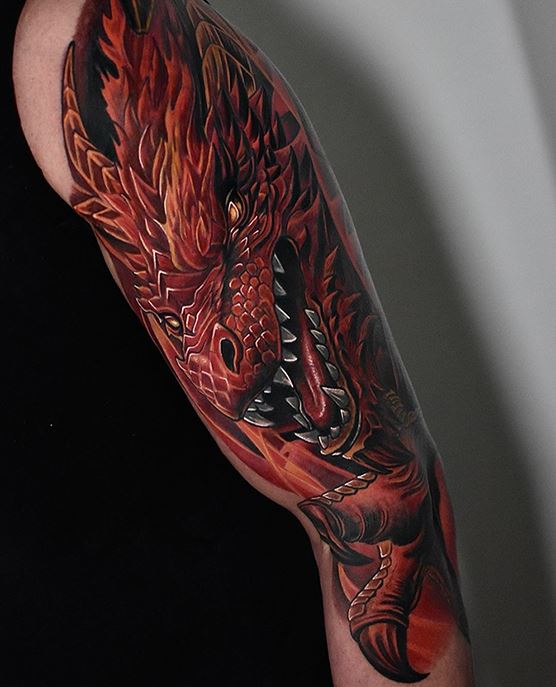
Q: Most of your tattoos are black and gray style, very few
color tattoos. Is this your preference or simply the clients like
your black and gray style more?
A: My focus on black and gray style is partly due to the preference
of clients in this region, who are often very attracted to my work
in grays. While I enjoy working with shadows and grays, I also have
a great interest in color tattooing. I would like to incorporate
more color work into my repertoire, as color is a fundamental part
of my development as an artist. In fact, I’ve had the opportunity to
present color works at conventions in Denmark and Sweden, where my
pieces have won awards. I hope to continue expanding my repertoire
and exploring more in the realm of color in the future.
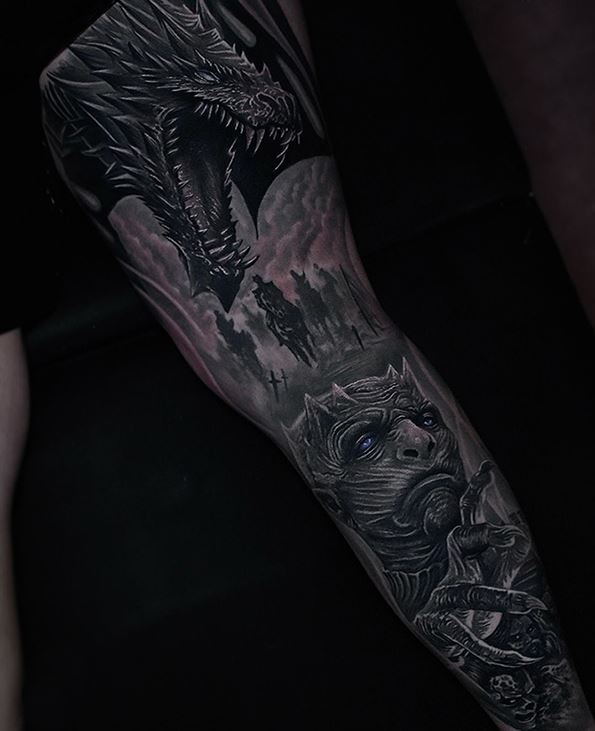
Q: Since tattoo realism is your signature style, what do you
like the most about it?
A: What I love most about realism in tattooing is the creation of
portraits, especially the process of building shadows and adding
fine details at the end. These elements create impactful and
meaningful images for the people who wear them. It’s exciting to see
how a tattoo comes to life and becomes a truly personalized and
emotionally valuable piece.
Q: You meet a lot of people every day,
hearing their stories while the session, I bet many have some really
cool stories one can learn from, however it is an honor to be able
to gift someone an art piece that they will have it forever on
themselves. What a cool great energy exchange, right?
A: Yes, for me, one of the most important aspects of tattooing is
the experience we offer to clients. Personally, I am quite
talkative, sometimes too much, and I have to remind myself not to
talk too much so I can concentrate on the tattoo. However, I believe
it’s essential to create a warm and welcoming environment where
clients feel comfortable and want to return and bring their
families. Beyond simply doing a tattoo, I like to provide a
meaningful and memorable experience.
Q: As an artist who traveled around the
world, which customers are the most "adventurous" open for more
creative tattoo ideas?
A: Through my travels, I’ve gathered diverse experiences that have
enriched my perspective on tattooing in different countries. In
Panama, where I lived for four years, I loved the city’s vibe and
their people. The rock environment and Flash Day events in local
breweries created a very dynamic atmosphere. There, I noticed
tattoos tended to be smaller and less complex, which allowed me to
have a greater connection with clients and experiment with more fun
and creative designs. In Sweden, I was impressed by clients’
commitment to large pieces. It was there that I created some of my
largest works, like full backs and entire chests. The openness of
Swedish society towards tattoos is remarkable, here, it’s common to
see professionals from various fields with visible tattoos, and
families even come together to get tattooed, something I hadn’t seen
as frequently elsewhere. In Denmark, the experience was quite
similar to that of Sweden, and I had the opportunity to work more on
color pieces and in the neotraditional style. Each country offers
its own world in terms of culture and perception of tattooing, and
what surprises me most is how personal connections with clients can
vary depending on the country and the tattoo studio where you work.
The perception of the artist can change significantly based on the
clientele and the type of studio, adding an extra layer of dynamism
to my career.
Q: Where are you located? Please write
down your studio location and website/social media links and email.
Let us know if you are available for bookings.
A: Currently, I am located in Sweden, Norrköping, and I work in my
private studio. Appointments must be scheduled in advance, and you
can do so by sending a direct message on Instagram to @itotattoo2.0.
You can also contact me by email at itotattoo2.0@gmail.com. I’m
available for bookings and would be happy to discuss your ideas for
your next tattoo.
Q: How often do you participate at local or international
tattoo conventions?
A: During my years in Panama, I attended local conventions almost
annually. The first was InkFest in 2016 when I moved there, followed
by Expo Tattoo Panama in 2017 and again in 2018. In 2018, I also
participated in HCA Ink in Denmark, where I won second place for the
best tattoo of Saturday. After some time, I resumed my participation
in conventions in 2023 at Svenska Tatueringmässan, where I won the
award for the best piece in Black and Grey and second place for best
color piece. Tattoo exhibitions are always enriching. Sharing with
artists from different countries and styles allows you to learn
about various techniques and perspectives. Each region has its own
“school” of tattooing, and being in such a creative and diverse
environment as tattoo conventions is an invaluable experience. I
recommend all tattoo artists, even if they don’t participate, to
attend these exhibitions to absorb everything they can learn in such
a dynamic setting.
Q: Are you open to work as a guest artist somewhere else?
A: Yes, of course, it’s always a great opportunity to expand your
horizons as an artist. Traveling and working as a guest artist
allows you to grow in ways that would be difficult if you always
stay in the same studio. Currently, I work in my own studio in
Sweden, but I’m completely open to the possibility of guest spots. I
would love to travel to countries like Spain, France, and Germany,
as I’ve heard that the tattoo scene is quite strong in those places.
I’m also very interested in exploring opportunities in the United
States. Traveling not only enriches you artistically, but it also
helps you grow personally. By connecting with other artists, you
learn new techniques and also understand how different economic
systems operate and how studios are managed in each country. From
the places I’ve worked, I highlight my experience in Denmark, where
I really enjoyed the tattoo scene. Panama was also a great
experience that left me with good memories. Here in Sweden, I’ve had
the opportunity to collaborate in several local studios, and every
time I travel, I feel like I evolve both as an artist and as a
person. Traveling always brings growth, and I would definitely like
to do it more often.

Q: Someone so talented and hard working as
you will succeed anywhere in my opinion. What would be the next
career highlight?
A: Thank you for those words! The next milestone in my career would
be to continue consolidating my style and exploring new
opportunities in countries where the tattoo scene is constantly
growing, like France, Germany, or the United States. I would love to
have the opportunity to open my own international studio or
collaborate in renowned studios in those regions, which would not
only allow me to expand my portfolio but also connect with a broader
audience. In the long term, I would also like to teach workshops or
seminars, sharing what I’ve learned over the years with other
artists. I believe that teaching and passing on knowledge is a way
to continue growing, both professionally and personally. Another
goal would be to participate more frequently in international
conventions and keep winning awards, which would validate my work in
the global tattoo scene.
Q: The American tattoo scene is huge and very diverse, it is
for those who are talented and ambitious. If given a chance would
you consider trying your luck in the USA?
A: Yes, of course, it’s undeniable. Any artist would tell you that
at some point, they would like to spend some time in a country like
the United States, where the tattoo scene is so strong and
recognized worldwide. Visiting the most renowned places and studios,
participating in conventions and tattoo exhibitions there, and
immersing yourself in that scene would definitely lead to
significant professional growth. For a long time, it has been said
that New York was the tattoo capital, so exploring that market and
expanding my horizons as an artist is within my plans and
possibilities. I think it would be an invaluable experience for my
career. I would love to visit cities like Denver and Miami, and also
see what the tattoo scene is like in New York. I know it’s a pretty
bustling and large city, but I’m very curious to discover what it
has to offer in the tattoo realm. Undoubtedly, Los Angeles has
always been the ultimate goal. My objective is to get there and
leave my mark, showcasing my art on as many people as possible. For
now, I don’t have other cities in mind, but those are some that
attract me the most for further growth and exploration of new
opportunities.
Q: What keeps you motivated?
A: Many things keep me motivated. I’m very excited about the
technological advancements that the tattoo industry has seen in
recent years, and I would like to delve more into that aspect. The
tools we have today for tattooing, compared to those from 10 or 20
years ago, reflect an incredible evolution. And that drives me to
keep evolving alongside the industry, which is constantly changing.
Another key factor is the impact of social media. When I started,
the most important thing was technique and doing good tattoos, with
no idea of the crucial role social media would play in our careers.
Today, managing your social media well is almost as important as
technique. It has also changed the way we design, transforming the
way tattoo artists connect with the world. Seeing how other tattoo
artists not only create art but also develop tools for the craft is
something that motivates me a lot. It inspires me to realize that
tattooing is not limited to just art, but encompasses a whole
industry in constant innovation.
Q: Do you have any interesting hobbies?
A: Yes, I have several hobbies that I’m passionate about. One of
them is painting; I really enjoy working with oil and watercolor,
although lately, I’ve leaned more towards digital painting. I’d like
to take my works into clothing and explore that field. I’m also a
big fan of video games, and I spend a lot of my free time on them.
Additionally, anime is another of my passions; I feel it helps me
stay creative and inspires me both in my artistic projects and in my
work as a tattoo artist. I also enjoy science fiction movies and try
to vary my interests so I don’t get stuck in a rut. These hobbies
enrich my life and feed my creativity.
Q: If you were starting today, what would you do
differently?
A: If I were to start tattooing today, I would feel that there are
double the things to learn compared to when I started ten years ago.
However, there is also much more knowledge available online, which
balances that difficulty. I don’t know if I would do anything
differently since I truly enjoyed my journey as a tattoo artist, and
each experience has led me to become who I am today. If I had to
give advice to those starting out, it would be to put heart and love
into their work. Do your tattoos thinking about your clients and
yourselves, without seeking the approval of other tattoo artists.
The field is very competitive, and it can be frustrating to fall
into comparison or wait for validation from others. Staying loyal to
yourself and to the people who trust your work - your clients - is
the most important thing. With that, I don’t think you need anything
more.
Q: Your advice for those who want to try
getting into professional tattooing?
A: The main thing would be to take it very seriously because this is
not a game; we are marking people for life. It’s a delicate matter
involving hygiene and health, and we must be professionals, as we
work with people who place their trust in us. We cannot take it
lightly. I would tell them that they must first have respect for the
profession and secondly, a high level of commitment if they want to
take this to a professional level and make a living from it. I don’t
think tattooing should be considered a hobby, as it is something
very serious. If someone wants to practice as a hobby, they can do
so on synthetic skins, there are many options available today. The
commitment must be high because there’s a lot at stake, both in
terms of health and the self-esteem of people. So, I reiterate:
respect, commitment, and dedication. Don’t focus on others’ careers
and avoid comparison. If they have a high level of commitment and
respect for what we do, I’m sure their moment to live this dream -
what, for me, is being a tattoo artist - will come.
Mr.Wilfredo Colmenares thank you so much for the interview,
Kind Regards
Fredrik Lindström
Editor at Skin Artists Tattoo Magazine


